
Epoxy Composite Reinforced with Bacterial Cellulose and Multi-Walled Carbon Nanotubes: Mechanical Properties and Flame Retardancy Performance
DOI:
https://doi.org/10.48048/tis.2025.9093Keywords:
Bacterial cellulose, Epoxy, Flame-retardant, Nanocomposites, Environmental, Multi-walled carbon nanotubes, Limiting oxygen index.Abstract
This study investigates the mechanical properties and flame retardancy of epoxy-based nanocomposites reinforced with bacterial cellulose (BC) and multi-walled carbon nanotubes (MWCNTs). The optimal performance was achieved with a composite containing 5 wt% BC and 0.5 wt% MWCNTs. In terms of mechanical properties, this composition exhibited superior tensile strength, flexural strength, compressive strength and impact resistance compared to other combinations. Moreover, the flame retardancy of the nanocomposite was significantly enhanced, with a limiting oxygen index (LOI) of 29.3 % and a burn rate of 16.02 mm/min. The results are attributed to the unique synergy between BC and MWCNTs, the primary components of the nanocomposite. BC, with its natural fiber structure and excellent mechanical properties, provides rigidity and strong interactions with the epoxy matrix. MWCNTs, owing to their nano-scale structure, contribute to both mechanical reinforcement and flame retardancy. This combination improves the uniformity and dispersion of the reinforcing phase within the epoxy matrix, leading to enhanced mechanical properties and flame resistance. When the BC/MWCNTs epoxy nanocomposite was further reinforced with fiberglass fabric at the optimal composition (5 wt% BC, 0.5 wt% MWCNTs), it demonstrated even higher flame retardancy, with an LOI of 30.8 % and a UL-94V rating of V1, classifying it as a highly flame-retardant material. Given these outstanding properties, the BC/MWCNTs epoxynanocomposite has potential applications not only in various industrial sectors such as aerospace, automotive and construction but also in the medical and environmental fields, where materials with high durability and flame resistance are crucial. The BC/MWCNTs material system not only demonstrates its advantages as a reinforcement in composites but also brings great prospects when fabricated into membrane form. These applications open up many new directions of development in the fields of environment, energy, biomedicine and industry, creating a solid foundation for research and practical applications.
HIGHLIGHTS
- Optimization of Nanocomposite Composition: The epoxy composite containing 5 wt% bacterial cellulose (BC) and 0.5 wt% multi-walled carbon nanotubes (MWCNTs) achieved optimal mechanical and flame retardancy performance.
- Superior Mechanical Properties: The optimized composition exhibited enhanced tensile strength, flexural strength, compressive strength, and impact resistance compared to other formulations.
- Improved Flame Retardancy: The nanocomposite achieved a limiting oxygen index (LOI) of 29.3% and a burn rate of 16.02 mm/min, demonstrating significantly enhanced fire resistance.
- Synergistic Effect of BC/MWCNTs: The combination of BC’s natural fiber structure and MWCNTs’ nanoscale characteristics improved dispersion, uniformity, and overall material properties.
- Wide Application Potential: The material holds great promise for industries such as aerospace, automotive, and construction, as well as biomedical and environmental applications due to its high durability and excellent flame resistance.
GRAPHICAL ABSTRACT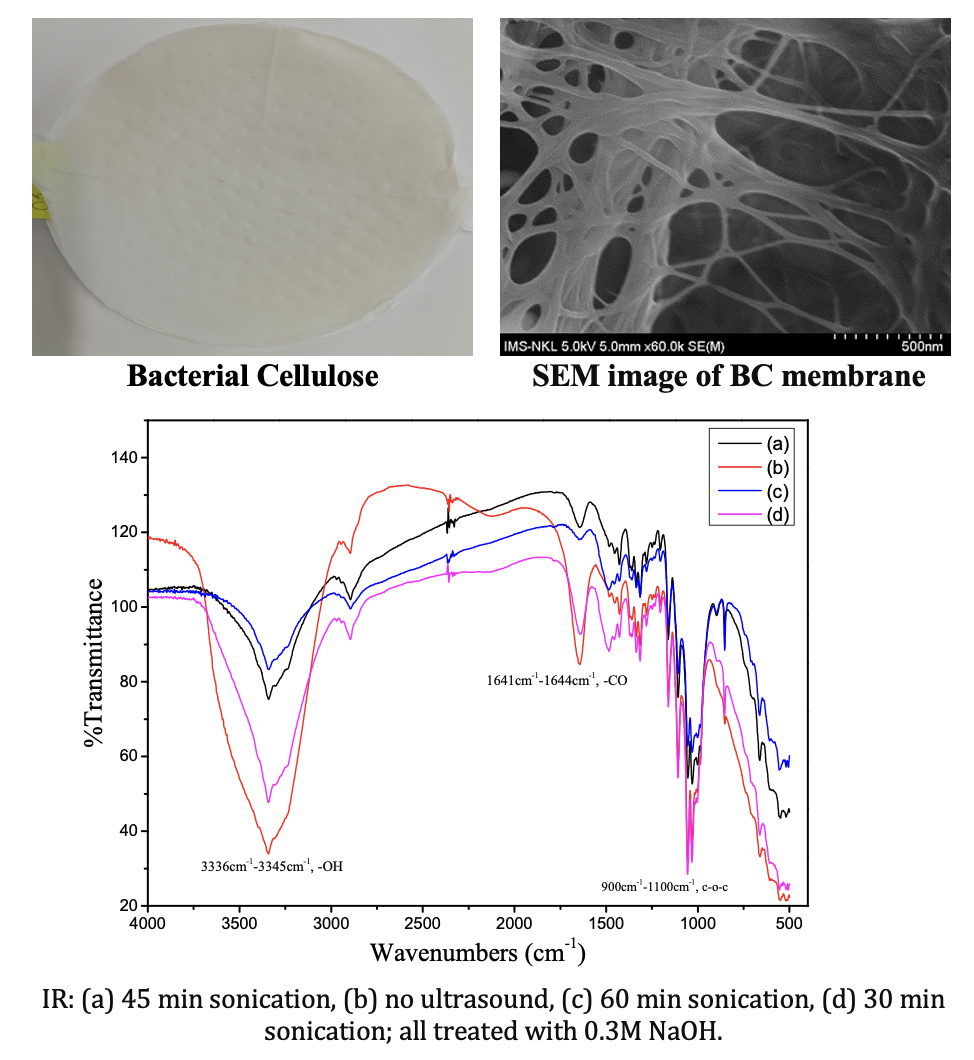
Downloads
References
M Fan, X Xia, S Li, R Zhang, L Wu, M Qu, P Tang and Y Bin. Sustainable bacterial cellulose reinforced carbon nanotube buckypaper and its multifunctionality for electromagnetic interference shielding, Joule heating and humidity sensing. Chemical Engineering Journal 2022; 441,136103.
S Kumar, BG Falzon, J Kun, E Wilson, G Graninger and SC Hawkins. High performance multiscale glass fibre epoxy composites integrated with cellulose nanocrystals for advanced structural applications. Composites Part A: Applied Science and Manufacturing 2020; 131, 105801.
S Maiti, MR Islam, MA Uddin, S Afroj, SJ Eichhorn and N Karim. Sustainable fiber‐reinforced composites: A review. Advanced Sustainable Systems 2022; 6(11), 2200258.
Z Lu, D Ning, W Dang, D Wang, F Jia, J Li and E Songfeng. Comparative study on the mechanical and dielectric properties of aramid fibrid, mica and nanofibrillated cellulose based binary composites. Cellulose 2020; 27, 8027-8037.
Y Xiao, Y Yang, Q Luo, B Tang, J Guan and Q Tian. Construction of carbon-based flame retardant composite with reinforced and toughened property and its application in polylactic acid. RSC Advances 2022; 12, 22236-22243.
MMY Zaghloul, MMY Zaghloul and M Fuseini. Recent progress in epoxy nanocomposites: Corrosion, structural, flame retardancy and applications - a comprehensive review. Polymers for Advanced Technologies 2023; 34(11), 3381-3654.
H Kim and HR Kim. Improved flame retardancy and mechanical properties of bacterial cellulose fabrics via solvent exchange and entrapment of zein and gluten. Fashion and Textiles 2024; 11, 8.
H Takagi, AN Nakagaito and H Uchida. Mechanical performance of bacterial cellulose nanofibre-reinforced epoxy composites. WIT Transactions on the Built Environment 2012; 124, 379-386.
BK Birdsong, Q Wu, MS Hedenqvist, AJ Capezza, RL Andersson, AJ Svagan, O Das, RA Mensah and RT Olsson. Flexible and fire-retardant silica/cellulose aerogel using bacterial cellulose nanofibrils as template material. Materials Advances 2024, 5, 5041-5051.
B Kumar, S Adil, DH Pham and J Kim. Environment-friendly, high-performance cellulose nanofiber-vanillin epoxy nanocomposite with excellent mechanical, thermal insulation and UV shielding properties. Heliyon 2024; 10(3), e25272.
S Adil, B Kumar, DH Pham and J Kim. Biobased, cellulose long filament-reinforced vanillin-derived epoxy composite for high-performance and flame-retardant applications. International Journal of Biological Macromolecules 2024; 256(2), 128411.
S Maiti, MR Islam, MA Uddin, S Afroj, SJ Eichhorn and N Karim. Sustainable fiber-reinforced composites: A review. Advanced Sustainable Systems 2022; 6(11), 2200258.
N Saba, M Jawaid, OY Alothman, MT Paridah and A Hassan. Recent advances in epoxy resin, natural fiber-reinforced epoxy composites and their applications. Journal of Reinforced Plastics and Composites 2015; 35(6), 447-470.
TA Nguyen and XC Nguyen. Bacterial cellulose-based biofilm forming agent extracted from vietnamese nata-de-coco tree by ultrasonic vibration method: Structure and properties. Journal of Chemistry 2022; 2022, 7502796.
TA Nguyen, QT Nguyen and TP Bach. Mechanical properties and flame retardancy of epoxy resin/nanoclay/multiwalled carbon nanotube nanocomposites. Journal of Chemistry 2019; 2019, 3105205.
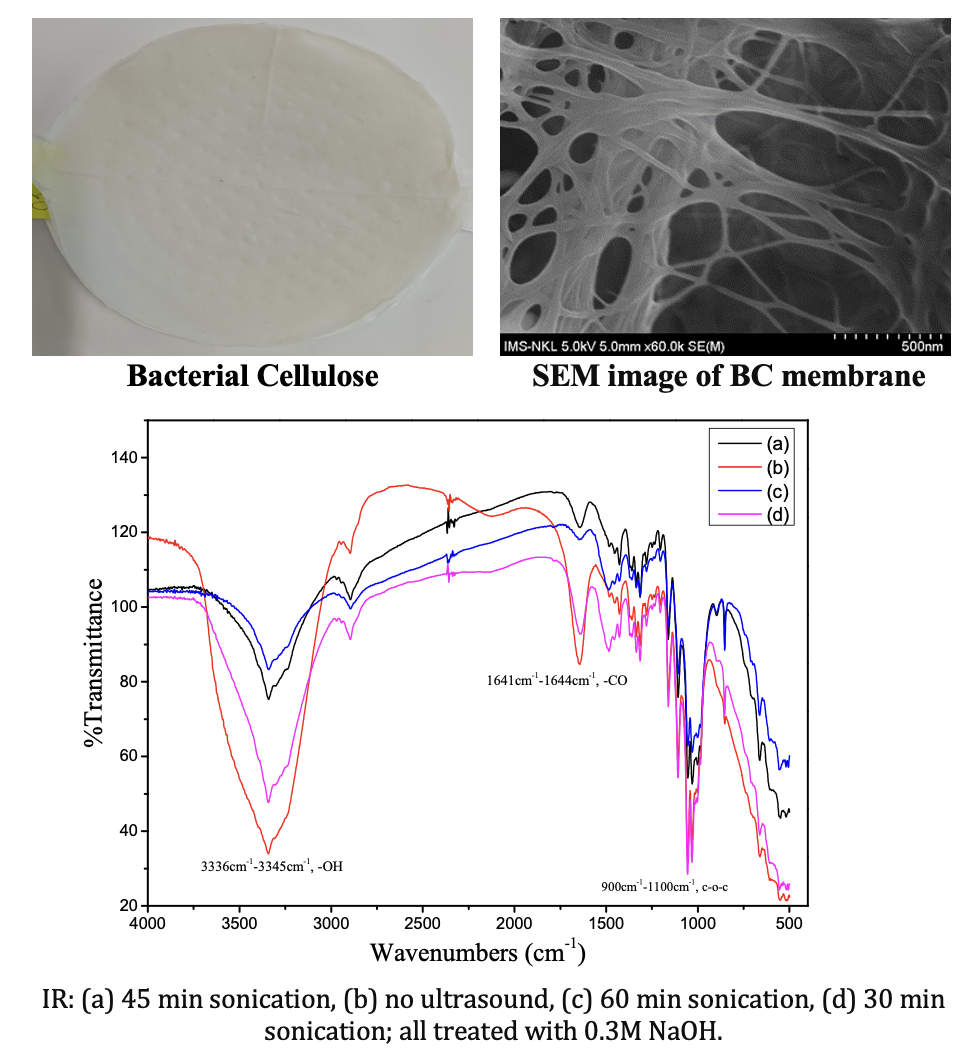
Downloads
Published
How to Cite
Issue
Section
License
Copyright (c) 2024 Walailak University

This work is licensed under a Creative Commons Attribution-NonCommercial-NoDerivatives 4.0 International License.





