
Revealing the Therapeutic Potential of Nigella Sativa Extract in Aspergillus Niger-Induced Otitis Externa: Anti-Inflammatory and Antioxidant Properties
DOI:
https://doi.org/10.48048/tis.2024.8145Keywords:
Otitis externa, Anti-inflammation, Antioxidant, NF-kB pathway, Aspergillus nigerAbstract
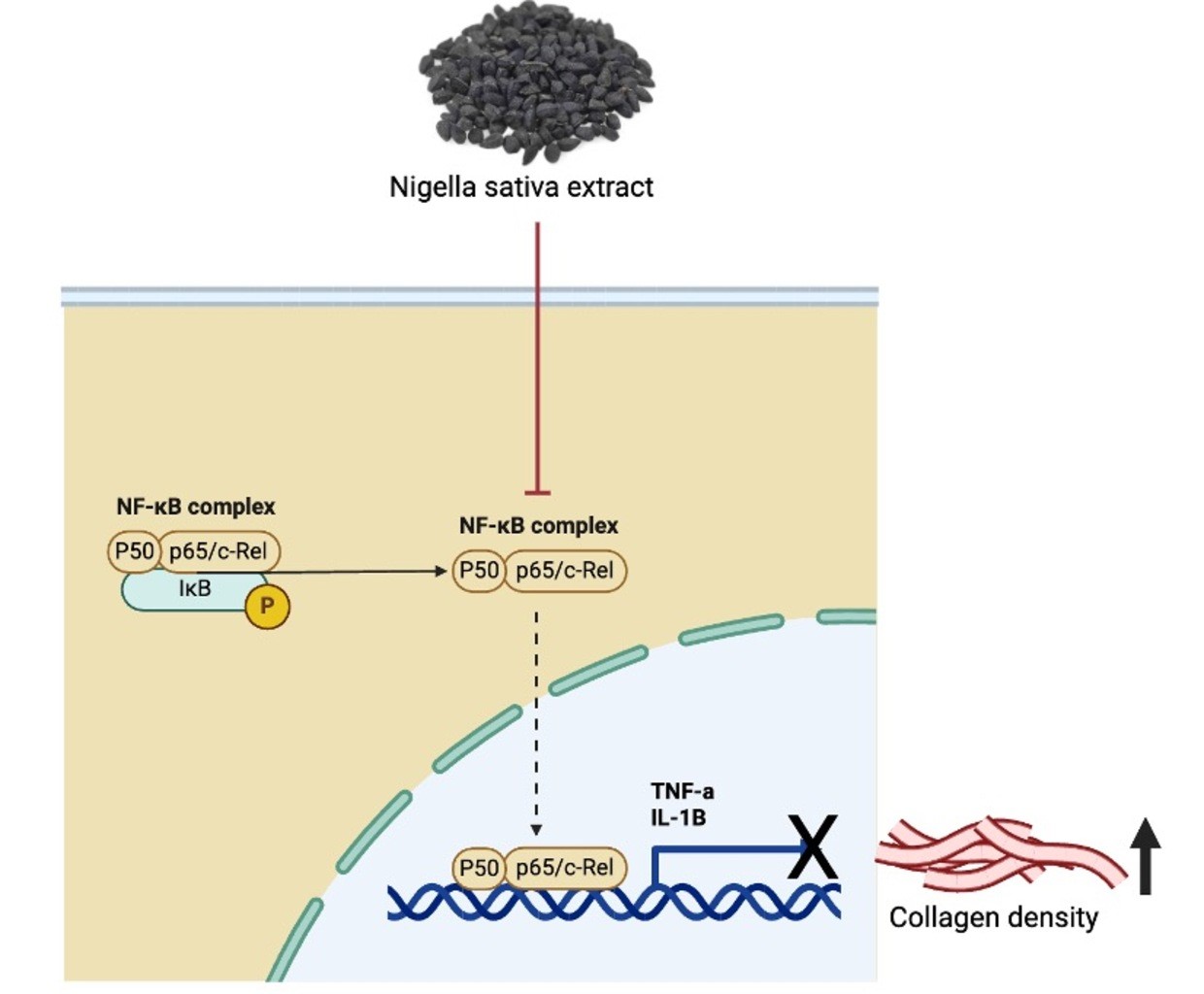
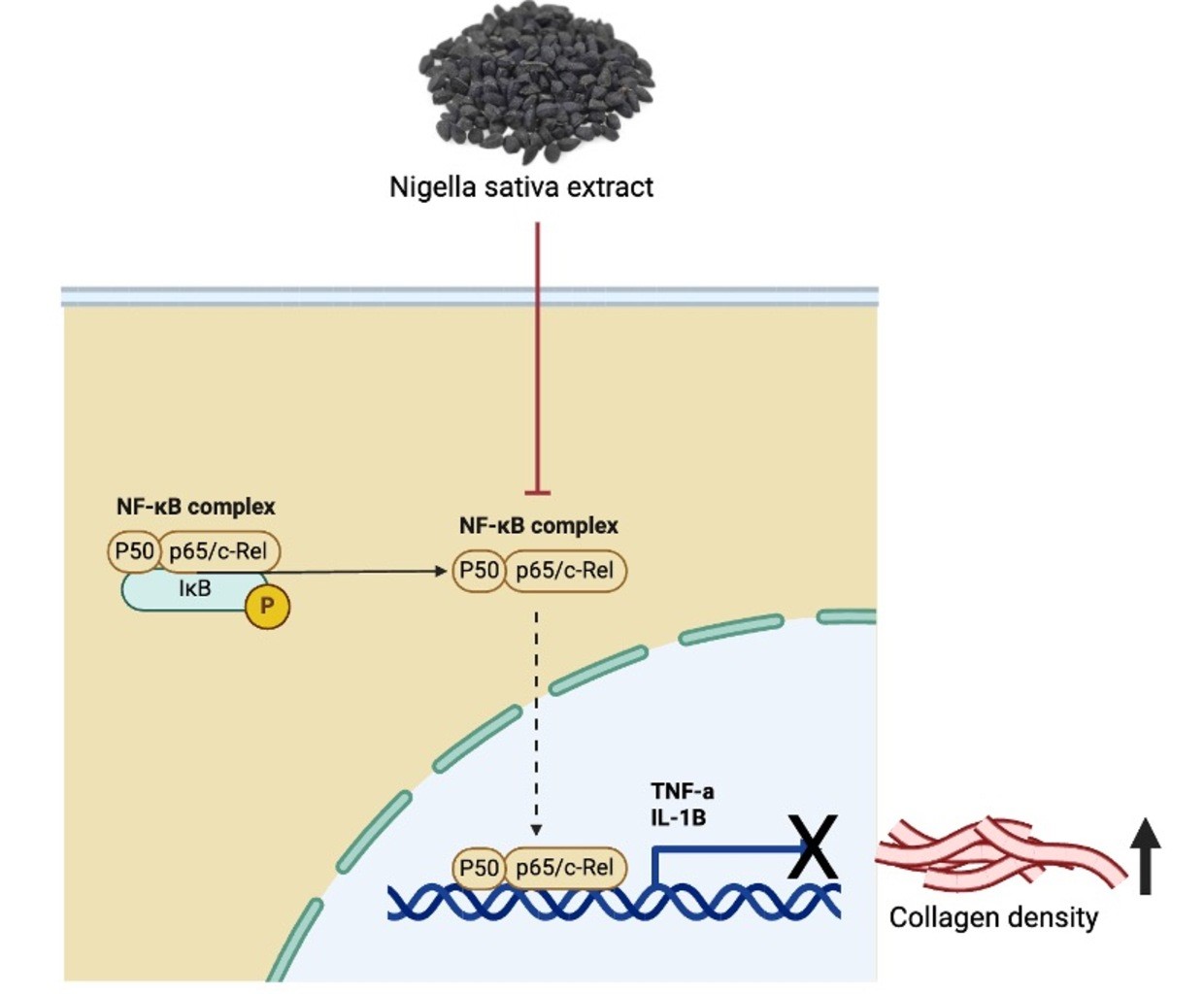
Otitis externa (OE), a fungal infection of the external auditory canal, often involving Aspergillus niger, can lead to OE externa, posing severe health risks. Establishing an animal model of OE induced by Aspergillus niger, this study aimed to evaluate the therapeutic potential of Nigella sativa (NS) extract, specifically its effect on inflammation and antioxidant activity in this OE animal model. The detection of Aspergillus niger on the 3rd day post-induction confirmed its thriving presence within the ear canal. NS extract, containing thymoquinone, significantly reduced the expression of IL-1B and TNF-a proteins. Notably, NS extract at 5 and 10 % showed comparable effects, surpassing the efficacy of topical miconazole. Evaluation of MDA protein expression, indicative of oxidative damage, revealed a significant decrease with NS extract treatment, especially at 5 % dosage. NS extract exhibited a notable decrease in subunit p50 and p65 proteins expression, particularly at the 5 % concentration. In conclusion, NS extract displayed promising anti-inflammatory effects on Aspergillus niger-induced otitis externa by modulating various inflammatory markers and pathways. These findings highlight the potential therapeutic role of NS extract in addressing inflammation associated with OE.
HIGHLIGHTS
Confirmation of Aspergillus niger presence in the ear canal on the 3rd day post-induction, establishing the infection model. Nigella sativa extract (NS), containing thymoquinone, significantly reduced the expression of pro-inflammatory proteins IL-1B and TNF-a. NS extract at 5 and 10 % concentrations demonstrated comparable or superior efficacy to topical miconazole, a common antifungal medication. Evaluation of malondialdehyde (MDA) protein expression showed a significant decrease with NS extract treatment, particularly at the 5 % dosage, indicating reduced oxidative damage. Notable decrease in the expression of inflammatory pathway-associated proteins p50 and p65 with NS extract treatment, especially at the 5 % concentration.
GRAPHICAL ABSTRACT
Downloads
References
JO Klein. Otitis externa, otitis media, and mastoiditis. In: JE Bennett, R Dolin and MJ Blaser (Eds.). Mandell, Douglas, and Bennett’s principles and practice of infectious diseases. Elsevier Inc., Amsterdam, Netherlands, 2014, p. 831-7.
EC Goodale, CA Outerbridge and SD White. Aspergillus otitis in small animals - a retrospective study of 17 cases. Vet. Dermatol. 2016; 27, 3-e2.
E Vermeulen, J Maertens, P Meersseman, V Saegeman, L Dupont and K Lagrou. Invasive Aspergillus niger complex infections in a Belgian tertiary care hospital. Clin. Microbiol. Infect. 2014; 20, O333-5.
AK Person, SM Chudgar, BL Norton, BC Tong and JE Stout. Aspergillus niger: An unusual cause of invasive pulmonary aspergillosis. J. Med. Microbiol. 2010; 59, 834-8.
MN Gamaletsou, B Rammaert, MA Bueno, B Moriyama, NV Sipsas, DP Kontoyiannis, E Roilides, V Zeller, R Prinapori, SJ Taj-Aldeen, B Brause, O Lortholary and TJ Walsh. Aspergillus osteomyelitis: Epidemiology, clinical manifestations, management, and outcome. J. Infect. 2014; 68, 478-93.
P Schaefer and RF Baugh. Acute otitis externa: An update. Am. Fam. Physician. 2012; 86, 1055-61.
DR Trune, B Kempton, FA Hausman, BE Larrain and CJ MacArthur. Correlative mRNA and protein expression of middle and inner ear inflammatory cytokines during mouse acute otitis media. Hear. Res. 2015; 326: 49-58.
RM Rosenfeld, SR Schwartz, CR Cannon, PS Roland, GR Simon, KA Kumar, WW Huang, HW Haskell and PJ Robertson. Clinical practice guideline: Acute otitis externa. Otolaryngol. Head Neck Surg. 2014; 150, S1-S24.
AS Lee, HD Lencastre, J Garau, J Kluytmans, S Malhotra-Kumar, A Peschel and S Harbarth. Methicillin-resistant Staphylococcus aureus. Nat. Rev. Dis. Primers 2018; 4, 18033.
A Lee, JR Tysome and SR Saeed. Topical azole treatments for otomycosis. Cochrane Database Syst. Rev. 2011; 5, CD009289.
M Kishimoto-Urata, S Urata, C Fujimoto and T Yamasoba. Role of oxidative stress and antioxidants in acquired inner ear disorders. Antioxidants 2022; 11, 1469.
K Lingappan. NF-κB in oxidative stress. Curr. Opin. Toxicol. 2018; 7, 81-6.
J Liu, X Han, T Zhang, K Tian, Z Li and F Luo. Reactive oxygen species (ROS) scavenging biomaterials for anti-inflammatory diseases: From mechanism to therapy. J. Hematol. Oncol. 2023; 16, 116.
D Kadam and SS Lele. Extraction, characterization and bioactive properties of Nigella sativa seedcake. J. Food Sci. Tech. 2017; 54, 3936-47.
M Dalli, O Bekkouch, SE Azizi, A Azghar, N Gseyra and B Kim. Nigella sativa L. phytochemistry and pharmacological activities: A review (2019-2021). Biomolecules 2022; 12, 20.
RM Pop, O Sabin, S Șoimița, SC Vesa, SA Socaci, VS Chedea, IC Bocsan and AD Buzoianu. Nigella Sativa’s anti-inflammatory and antioxidative effects in experimental inflammation. Antioxidants 2020; 9, 921.
AFC Silva, PI Haris, ML Serralheiro and R Pacheco. Mechanism of action and the biological activities of Nigella sativa oil components. Food Biosci. 2020; 38, 100783.
KF Shad, W Soubra and DJ Cordato. The role of thymoquinone, a major constituent of Nigella sativa, in the treatment of inflammatory and infectious diseases. Clin. Exp. Pharmacol. Physiol. 2021; 48, 1445-53.
MM Al-Oqail, ES Al-Sheddi, SM Al-Massarani, MA Siddiqui, J Ahmad, J Musarrat, AA Al-Khedhairy and NN Farshori. Nigella sativa seed oil suppresses cell proliferation and induces ROS dependent mitochondrial apoptosis through p53 pathway in hepatocellular carcinoma cells. S. Afr. J. Bot. 2017; 112, 70-8.
RE Mezayen, ME Gazzar, MR Nicolls, JC Marecki, SC Dreskin and H Nomiyama. Effect of thymoquinone on cyclooxygenase expression and prostaglandin production in a mouse model of allergic airway inflammation. Immunol. Lett. 2006; 106, 72-81.
G Sethi, SA Kwang and BB Aggarwal. Targeting nuclear factor-κB activation pathway by thymoquinone: Role in suppression of antiapoptotic gene products and enhancement of apoptosis. Mol. Canc. Res. 2008; 6, 1059-70.
N Abdollahi, A Nadjarzadeh, A Salehi-Abargouei, H Fallahzadeh, E Razmpoosh, E Lorzaedeh and S Safi. The effect of Nigella sativa on TAC and MDA in obese and overweight women: Secondary analysis of a crossover, double blind, randomized clinical trial. J. Diabetes Metab. Disord 2022; 21, 171-9.
ND Amalina, S Wahyuni and Harjito. Cytotoxic effects of the synthesized Citrus aurantium peels extract nanoparticles against MDA-MB-231 breast cancer cells. J. Phys. Conf. Ser. 2021; 1918, 032006.
M Suzery, B Cahyono and ND Amalina. Antiproliferative and apoptosis effect of hyptolide from Hyptis pectinata (L.) Poit on human breast cancer cells. J. Appl. Pharmaceut. Sci. 2020; 10, 001-006.
RI Jenie, ND Amalina, GPN Ilmawati, RY Utomo, M Ikawati, A Khumaira, JY Kato and E Meiyanto. Cell cycle modulation of CHO-K1 cells under genistein treatment correlates with cells senescence, apoptosis and ROS level but in a dose-dependent manner. Adv. Pharmaceut. Bull. 2019; 9, 453-61.
D Hermansyah, DA Paramita, AM Muhar and ND Amalina. Curcuma longa extract inhibits migration by reducing MMP-9 and Rac-1 expression in highly metastatic breast cancer cells. Res. Pharmaceut. Sci. 2024; 19, 157-66.
DA Paramita, D Hermansyah, DA Paramita and ND Amalina. Regulation of p53 and survivin by Curcuma longa extract to caspase-3 dependent apoptosis in triple negative breast cancer cells. Medicinski Glasnik 2022; 19, 189-96.
ND Amalina, IA Salsabila, UM Zulfin, RI Jenie and E Meiyanto. In vitro synergistic effect of hesperidin and doxorubicin downregulates epithelial-mesenchymal transition in highly metastatic breast cancer cells. J. Egypt. Natl. Canc. Inst. 2023; 35, 6.
M Suzery, B Cahyono and ND Amalina. Citrus sinensis (L.) peels extract inhibits metastasis of breast cancer cells by targeting the downregulation matrix metalloproteinases-9. Open Access Macedonian J. Med. Sci. 2021; 9, 464-9.
O Kadioglu, J Nass, MEM Saeed, B Schuler and T Efferth. Kaempferol is an anti-inflammatory compound with activity towards NF-ℵB pathway proteins. Anticancer Res. 2015; 35, 2645-50.
RO Saahene, E Agbo, P Barnes, ES Yahaya, B Amoani, SV Nuvor and P Okyere. A review: Mechanism of Phyllanthus urinaria in Cancers - NF- B, P13K/AKT, and MAPKs Signaling Activation. Evid. Base. Compl. Alternative Med. 2021; 2021, 4514342.
T Liu, L Zhang, D Joo and SC Sun. NF-κB signaling in inflammation. Signal Transduct. Targeted Ther. 2017; 2, 17023.
K Lingappan. NF-κB in oxidative stress. Curr. Opin. Toxicol. 2018; 7, 81-6.
N Chehl, G Chipitsyna, Q Gong, CJ Yeo and HA Arafat. Anti-inflammatory effects of the Nigella sativa seed extract, thymoquinone, in pancreatic cancer cells. HPB 2009; 11, 373-81.
Y Liu, L Huang, MY Kim and JY Cho. The role of thymoquinone in inflammatory response in chronic diseases. Int. J. Mol. Sci. 2022; 23, 10246.
H Li, NA Dasilva, W Liu, J Xu, GW Dombi, JA Dain, D Li, JC Chamcheu, NP Seeram and H Ma. Thymocid®, a standardized black cumin (Nigella sativa) seed extract, modulates collagen cross-linking, collagenase and elastase activities, and melanogenesis in murine B16F10 melanoma cells. Nutrients 2020; 12, 2146.
N Sallehuddin, A Nordin, RBH Idrus and MB Fauzi. Nigella sativa and its active compound, thymoquinone, accelerate wound healing in an in vivo animal model: A comprehensive review. Int. J. Environ. Res. Publ. Health 2020; 17, 4160.
R Susilowati and UM Rohmanningrum. Effective combination of Nigella sativa and Trigonella foenum-graecum seed extract on wound healing in diabetic mice. Jurnal Biodjati 2023; 8, 106-16.
KS Saidin, MR Jais, EN Ismail and R Ishak. The effect of nigella sativa and eucheuma cottonii in collagen-induced arthritis mice. Res. J. Pharm. Tech. 2020; 13, 1319-23.
OK Egilmez, N Kokten, MT Kalcioglu, AID Ekici, S Serifler and E Yesilada. Investigation of the protective effect of nigella sativa oil in cisplatin induced oral mucositis: An experimental study. Turk. Arch. Otorhinolaryngol. 2020; 58, 10-5.
Downloads
Published
How to Cite
Issue
Section
License
Copyright (c) 2024 Walailak University

This work is licensed under a Creative Commons Attribution-NonCommercial-NoDerivatives 4.0 International License.





