
Assessment of Trichoderma Species Isolated From Volcanic Soil of a Durian Field in Sisaket Province, Thailand for Plant Growth Promotion and Biocontrol Potential
DOI:
https://doi.org/10.48048/tis.2024.8452Keywords:
Anthracnose, Plant growth promotion, Rice, Trichoderma species, Seed germinationAbstract
Trichoderma species are ubiquitous saprophytic fungi commonly found in soil, with potential as fungal biocontrol agents for plant disease control and growth promotion. This research aimed to assess the attributes of Trichoderma sp. as plant growth promoters, focusing on nitrogen fixation, siderophore production, plant nutrient solubilization and indole-3-acetic acid production. Out of 19 isolates tested, 6 (T05, T19, T25, T27, T28 and T33) showed superior plant growth promotion abilities. These isolates were further evaluated for their capacity to enhance the germination of Khao Dawk Mali 105 rice seeds. Seeds were soaked in a suspension of conidia at a concentration of 1×10¹² conidia/mL, and germination rates were measured. The germination rate ranged between 77.67 - 86.67 %, statistically significantly higher than the control rate of 33.33 %. Among the isolates, T05 exhibited the highest promotion of plant growth, evidenced by root length (7.27 cm), shoot length (8.50 cm), fresh weight (0.54 g) and dry weight (0.27 g), all significantly different from the control. Additionally, the potential of isolates to inhibit the fungal pathogen Colletotrichum sp. MN-3 was assessed using a dual culture method, with T35 showing the highest inhibition percentage (60.90 %). Morphological classification and nucleotide sequencing of the ITS1-5.8S-ITS2 region of rDNA gene identified the isolates as T. harzianum, T. reesei, T. asperellum and T. longibrachiatum. These findings underscore the effectiveness of Trichoderma sp. in promoting plant growth and suppressing plant pathogenic fungi.
HIGHLIGHTS
Six Trichoderma isolates (T05, T19, T25, T27, T28 and T33) exhibited superior plant growth promotion abilities. These isolates significantly enhanced germination rates of Khao Dawk Mali 105 rice seeds compared to the method. Among the isolates, T05 showed the greatest promotion of plant growth, as evidenced by root length, shoot length, fresh weight and dry weight. Trichoderma isolates demonstrated potential for inhibiting the fungal pathogen Colletotrichum sp. MN-3. Morphological classification divided the Trichoderma sp. into 4 groups, and species identification through nucleotide sequencing revealed T. harzianum, T. reesei, T. asperellum and T. longibrachiatum.
GRAPHICAL ABSTRACT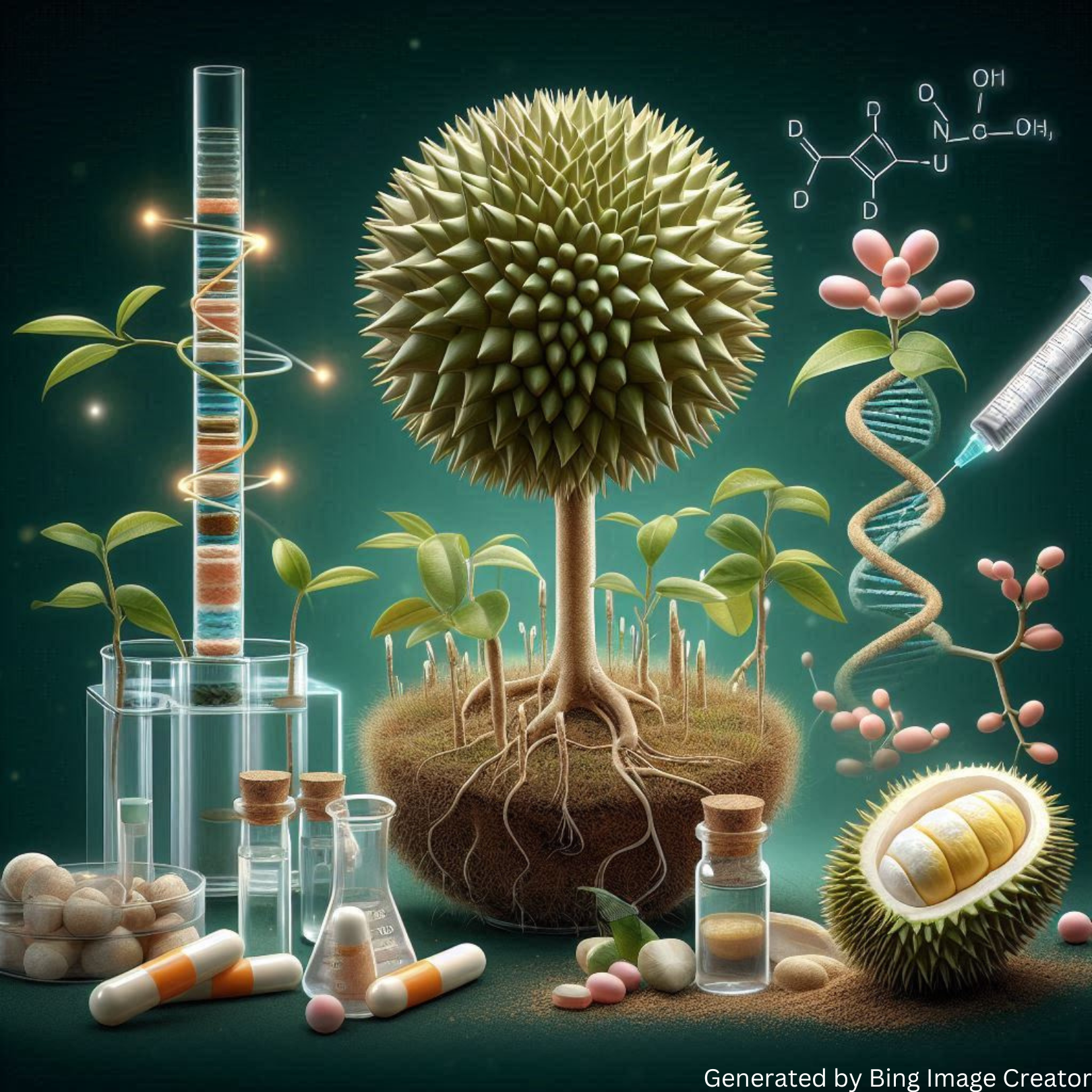
Downloads
References
GE Harman. Overview of mechanisms and uses of Trichoderma spp. Phytopathology 2006; 96, 190-4.
GE Harman, CR Howell, A Viterbo, I Chet and M Lorito. Trichoderma species - opportunistic, avirulent plant symbionts. Nat. Rev. Microbiol. 2004; 2, 43-56.
A Viterbo, U Landau, S Kim, L Chernin and I Chet. Characterization of ACC deaminase from the biocontrol and plant growth-promoting agent Trichoderma asperellum T203. FEMS Microbiol. Lett. 2010; 305, 42-8.
GE Harman and N Uphoff. Symbiotic root-endophytic soil microbes improve crop productivity and provide environmental benefits. Scientifica 2019; 2019, 9106395.
M Lorito, SL Woo, GE Harman and E Monte. Translational research on Trichoderma: From ‘omics to the field. Annu. Rev. Phytopathol. 2010; 48, 395-417.
M Shoresh, GE Harman and F Mastouri. Induced systemic resistance and plant responses to fungal biocontrol agents. Annu. Rev. Phytopathol. 2010; 48, 21-43.
R Tyśkiewicz, A Nowak, E Ozimek and J Jaroszuk-Ściseł. The current status of its application in agriculture for the biocontrol of fungal phytopathogens and stimulation of plant growth. Int. J. Mol. Sci. 2022; 23, 2329.
F Zhang, C Chen, F Zhang, L Gao, J Liu, L Chen, X Fan, C Liu, KeZhang, Y He, C Chen and X Ji. Trichoderma harzianum containing 1-aminocyclopropane-1-carboxylate deaminase and chitinase improved growth and diminished adverse effect caused by Fusarium oxysporum in soybean. J. Plant Physiol. 2017; 210, 84-94.
HK Dolatabad, MJ Nikkhah and WT Shier. Evaluation of antifungal, phosphate solubilisation, and siderophore and chitinase release activities of endophytic fungi from Pistacia vera. Mycol. Prog. 2017; 16, 777-90.
OA Hewedy, A Mansour, MG Ali, KSA Lateif, MH Ismaiel and RM El-Meihy. Comprehensive characterization and screening of different Trichoderma Isolates as plant growth promoters: Insight to metal solubilization, enzymatic activity, and antagonistic effect. Res. Square 2022; 40, 1-26.
R Chutima and S Lumyong. Production of indole-3-acetic acid by Thai native orchid-associated fungi. Symbiosis 2012; 56, 35-44.
A Mukherjee and S Kumar. An eco-friendly approach of biocontrol of aphid (Aphis gossypii Glover) by Trichoderma harzianum. Environ. Monit. Assess. 2022; 195, 102-17.
ADB Fontenelle, SD Guzzo, CMM Lucon and R Harakava. Growth promotion and induction of resistance in tomato plant against Xanthomonas euvesicatoria and Alternaria solani by Trichoderma sp. Crop Prot. 2011; 30, 1492-500.
W Sutthisa. Biological control properties of Cyathus spp. to control plant disease pathogens. J. Pure Appl. Microbiol. 2018; 12, 1755-60.
HA Contreras-Cornejo, L Macías-Rodríguez, C Cortés-Penagos and J López-Bucio. Trichoderma spp. improve growth of Arabidopsis seedlings under salt stress through enhanced root development, osmoregulation, and Na+ exclusion. Plant Physiol. 2009; 151, 1-10.
F Mastouri, T Björkman and GE Harman. Trichoderma harzianum enhances antioxidant defense of tomato seedlings and resistance to water deficit. Mol. Plant-Microbe Interact. 2012; 25, 1264-71.
R Abdenaceur, B Farida, D Mourad, H Rima, O Zahia and SH Fatma. Effective biofertilizer Trichoderma spp. isolates with enzymatic activity and metabolites enhancing plant growth. Int. Microbiol. 2022; 25, 817-29.
AN Bader, GL Salerno, F Covacevich and VF Consolo. Native Trichoderma harzianum strains from Argentina produce indole-3 acetic acid and phosphorus solubilization, promote growth and control wilt disease on tomato (Solanum lycopersicum L.). J. King Saud Univ. Sci. 2020; 32, 867-73.
B Sánchez-Montesinos, F Diánez, A Moreno-Gavíra, FJ Gea and M Santos. Role of Trichoderma aggressivum f. europaeum as plant-growth promoter in Horticulture. Agronomy 2020; 10, 1004.
H Swain, T Adak, AK Mukherjee, S Sarangi, P Samal, A Khandual, R Jena, P Bhattacharyya, SK Naik, ST Mehetre, MS Baite, S Kumar and NW Zaidi. Seed biopriming with Trichoderma strains isolated from tree bark improves plant growth, antioxidative defense system in rice and enhance straw degradation capacity. Front. Microbiol. 2021; 12, 633881.
M Yadav, MK Dubey and RS Upadhyay. Systemic resistance in chilli pepper against anthracnose (caused by Colletotrichum truncatum) induced by Trichoderma harzianum, Trichoderma asperellum and Paenibacillus dendritiformis. J. Fungi 2021; 7, 307.
AK Pandey, MK Samota, AJ Tanti and A Babu. Trichoderma reesei induces defense-related biochemical markers associated with resistance to Fusarium dieback in tea crop. Biol. Contr. 2023; 180, 105200.
SH Kim, Y Lee, K Balaraju and Y Jeon. Evaluation of Trichoderma atroviride and Trichoderma longibrachiatum as biocontrol agents in controlling red pepper anthracnose in Korea. Front. Plant Sci. 2023; 14, 1201875.
RD la Cruz-Quiroz, S Roussos, R Rodríguez-Herrera, D Hernandez-Castillo and CN Aguilar. Growth inhibition of Colletotrichum gloeosporioides and Phytophthora capsici by native Mexican Trichoderma strains. Karbala Intern. J. Mod. Sci. 2018; 4, 237e243.
W Sutthisa, A Popranom, A Taddeetrakool and S Khankhum. Development of Trichoderma formulation and application to control durian anthracnose disease. Trends Sci. 2024; 21, 7276.
WM Jaklitsch and H Voglmayr. Biodiversity of Trichoderma (Hypocreaceae) in southern Europe and macaronesia. Stud. Mycol. 2015; 80, 1-87.
A Asis, SA Shahriar, L Naher, S Saallah, HNN Fatihah, V Kumar and S Siddiquee. Identification patterns of Trichoderma strains using morphological characteristics, phylogenetic analyses and lignocellulolytic activities. Mol. Biol. Rep. 2021; 48, 3285-301.
K Saravanakumar and MH Wang. Isolation and molecular identification of Trichoderma species from wetland soil and their antagonistic activity against phytopathogens. Physiol. Mol. Plant Pathol. 2020; 109, 101458.
Downloads
Published
How to Cite
Issue
Section
License
Copyright (c) 2024 Walailak University

This work is licensed under a Creative Commons Attribution-NonCommercial-NoDerivatives 4.0 International License.





