
Development of High-Quality Organic Fertilizer from Biomass Waste and the Application of Biochar in Local Areas of Sakon Nakhon Province, Northeastern Thailand
DOI:
https://doi.org/10.48048/tis.2025.9105Keywords:
Organic fertilizer, Biomass waste, Biochar application, Sakon Nakhon Province, Sustainable agriculture, Waste management, Soil improvementAbstract
This study investigates the production of high-quality organic fertilizers from biomass waste in the Ban Wa Yai community of Sakon Nakhon Province, Northeastern Thailand, aimed at promoting sustainable agricultural practices amidst challenges such as soil degradation and reliance on chemical fertilizers. The primary objective was to develop organic fertilizers that enhance soil health and support plant growth while utilizing locally sourced biomass materials, including cow and buffalo manure, finely ground fermented leaf scraps, and weed debris. A fermentation process lasting 15 to 30 days was used, integrating biochar to improve nutrient profiles and microbial activity. Results showed optimal pH levels of 8.04 after 15 days and 7.94 after 30 days of fermentation, beneficial for addressing the region’s acidic soil conditions (pH 4.67 - 5.38). The germination index (GI) was notably high at 129 ± 1.86 after 30 days, indicating effective growth promotion potential. Analytical assessments confirmed nitrogen (N), phosphorus (P), and potassium (K) concentrations in the organic fertilizers met or exceeded organic standards, supporting plant nutrition and fostering healthy microbial ecosystems. The organic matter (OM) and organic carbon (OC) content were approximately 40 - 60 % higher than commercial alternatives, enhancing soil structure, aeration, and water retention. Additionally, calcium (Ca) and magnesium (Mg) levels improved the nutrient profile, with Ca slightly exceeding standard limits, which helps ameliorate soil acidity. Economic analysis indicated a 40 % reduction in fertilizer costs for local farmers, promoting a shift towards organic practices. Overall, this study emphasizes the significance of self-reliance and the sufficiency economy philosophy in fostering sustainable agriculture practices within the Ban Wa Yai community. By utilizing local resources and transitioning from chemical fertilizers to high-quality organic fertilizers, the community enhances agricultural productivity while promoting economic independence and resilience. Such initiatives exemplify the potential for integrating traditional practices with modern agricultural methods to ensure a sustainable future.
HIGHLIGHTS
- The study developed high-quality organic fertilizers from local biomass waste, enhancing sustainable agricultural practices in the Ban Wa Yai community.
- Fermentation resulted in optimal pH and nutrient levels (N, P, K, Ca, and Mg), surpassing commercial fertilizer standards and improving soil health.
- Transitioning to organic fertilizers led to a 40 % cost reduction for farmers, promoting self-reliance and aligning with the sufficiency economy philosophy.
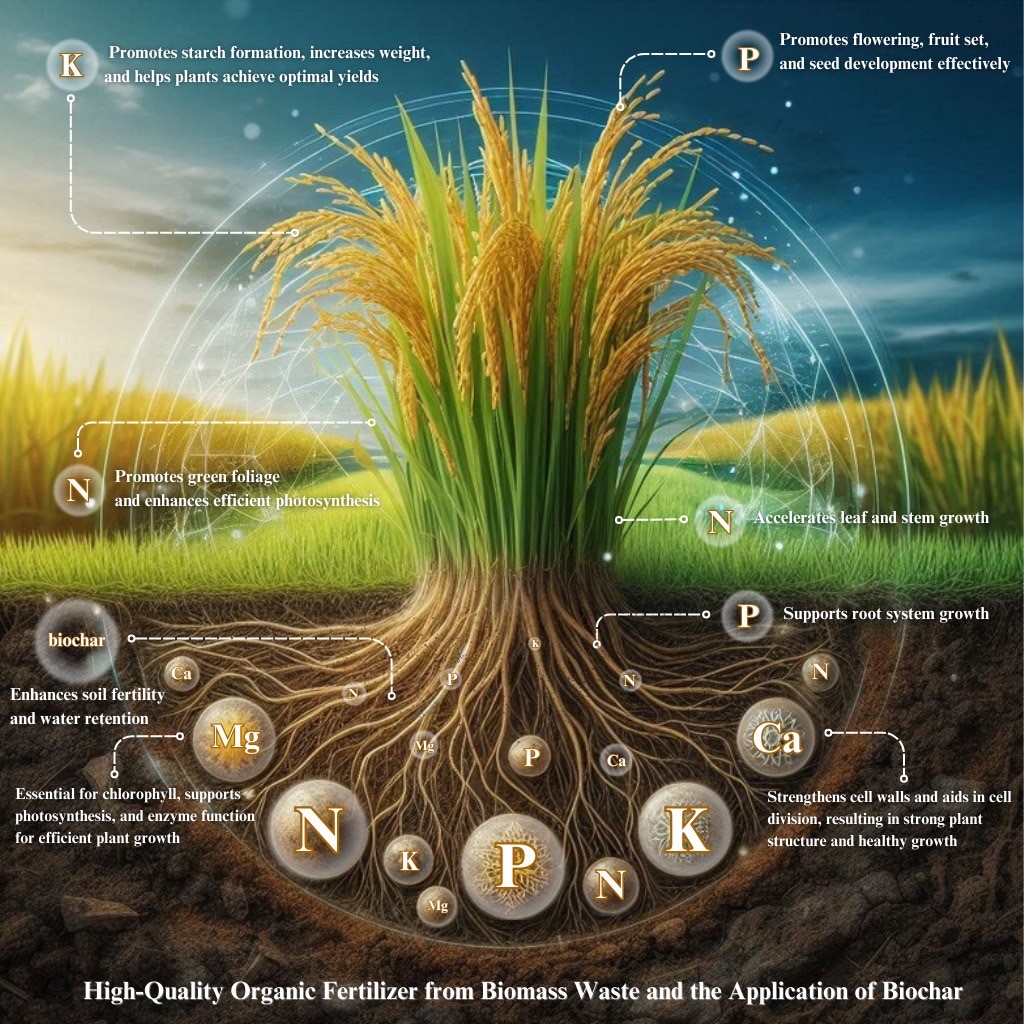
GRAPHICAL ABSTRACT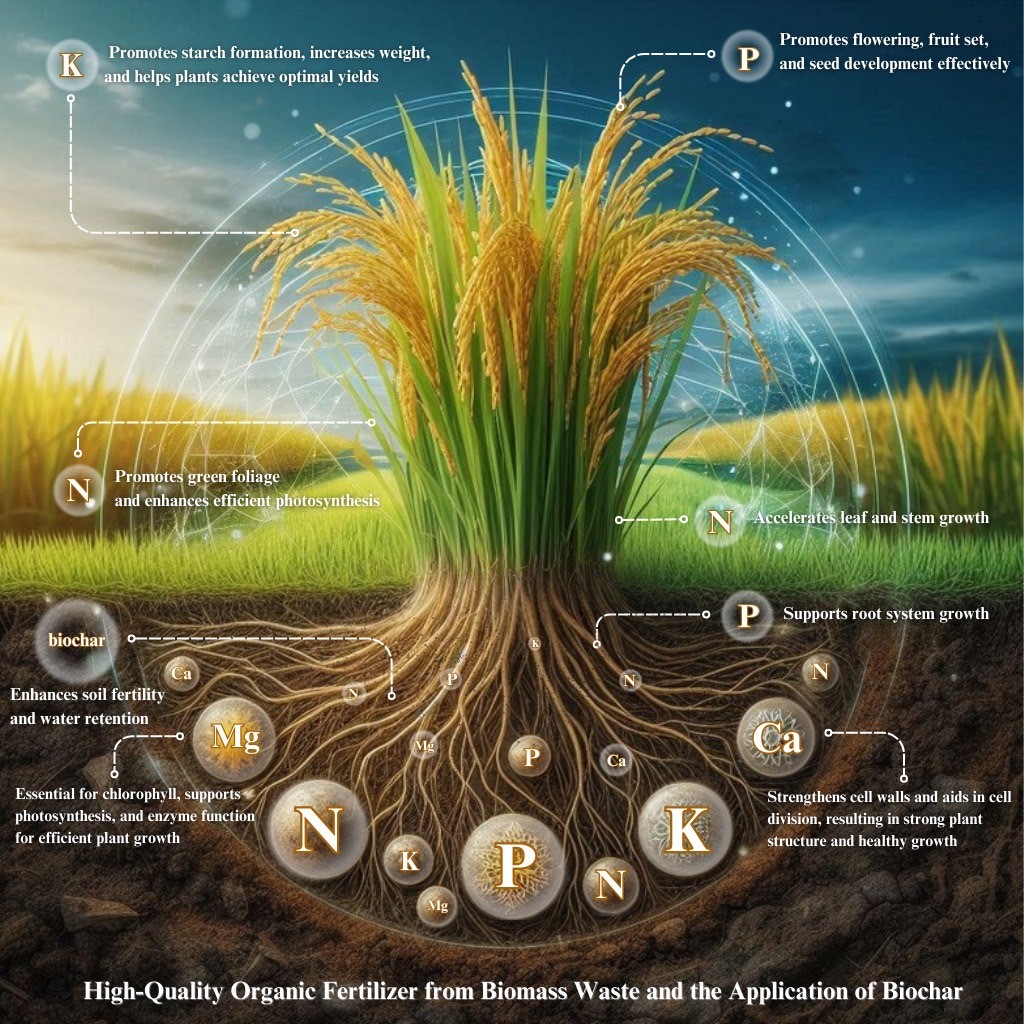
Downloads
References
W Suphannachart. A review of agricultural research system in Thailand: The development, policies, institutions, investment patterns, and impact assessment. Review of Integrative Business and Economics Research 2015; 4(4), 63-89.
A Tawatsin. Pesticides used in Thailand and toxic effects to human health. Medical Research Archives 2015; 3, 176.
W Laohaudomchok, N Nankongnaba, S Siriruttanapruk, P Klaimala, W Lianchamroon, P Ousape, M Jatiket, P Kajitvichyanukul, N Kitanah, W Siriwong, T Hemachudha, J Satayavivad, M Robson, L Jaacks, DB Barr, P Kongtip and S Woskie. Pesticide use in Thailand: Current situation, health risks, and gaps in research and policy. Human and Ecological Risk Assessment 2021; 27(5), 1147-1169.
S Chaigarun, S Somboon and S Wanchana. Insecticide residues in Isan vegetable and local foods (in Thai). KKU Journal for Public Health Research 2013; 6(3), 122-129.
TP Coulibaly, J Du and D Diakité. Sustainable agricultural practices adoption. Agriculture 2021; 67(4), 166-176.
R Sapbamrer and A Thammachai. A systematic review of factors influencing farmers’ adoption of organic farming. Sustainability 2021; 13(7), 3842.
G Király, G Rizzo and J Tóth. Transition to organic farming: A case from Hungary. Agronomy 2022; 12(10), 2435.
Y Suzuki, S Kamma, P Sookgul, N Chaichana and T Pakoktom. Effects of alternate wetting and drying water management and rice straw incorporation for sustainable rice production under dry season conditions in central Thailand. Agriculture and Natural Resources 2023; 57, 437-446.
J Kaweewong, T Kongkeawa, S Tawornprek, S Yampracha and R Yost. Nitrogen requirements of cassava in selected soils of Thailand. Journal of Agriculture and Rural Development in the Tropics and Subtropics 2013; 114(1), 13-19.
Industry Outlook 2023 - 2025: Chemical fertilizer, Available at: https://www.krungsri.com/en/ research/industry/industry-outlook/chemicals/ chemical-fertilizers/io/io-chemical-fertilizers-2023-2025, accessed September 2024.
PM Carr, MA Cavigelli, H Darby, K Delate, JO Eberly, HK Fryer, GG Gramig, JR Heckman, EB Mallory, JR Reeve, EM Silva, DH Suchoff and AL Woodley. Green and animal manure use in organic field crop systems. Agronomy Journal 2020; 112, 648-674.
B Ali, GA Shah, B Traore, SAA Shah, SUS Shah, SGM Al-Solaimani, Q Hussain, N Ali, K Shahzad, T Shahzad, A Ahmad, S Muhammadi, GM Shah, M Arshad, RA Hussain, JA Shah, A Anwar, MW Amjid and MI Rashid. Manure storage operations mitigate nutrient losses and their products can sustain soil fertility and enhance wheat productivity. Journal of Environmental Management 2019; 241, 468-478.
A Loss, RDR Couto, G Brunetto, MD Veiga, M Toselli and E Baldi. Animal manure as fertilizer: Changes in soil attributes, productivity and food composition. International Journal of Research - Granthaalayah 2019; 7(9), 307-331.
N Rayne and L Aula. Livestock manure and the impacts on soil health: A review. Soil Systems 2020; 4(4), 64.
A Kaufman and S Watanasak. Farmers and fertilizers: A socio-ecological exploration of the alternative agriculture movement in Northeastern Thailand. Environment and Natural Resources Journal 2011; 9(3), 1-11.
C Virochsaengaroon, C Piratanatsakul, P Lawongsa and TS Sukitprapanon. Rice farmers’ perceptions and behaviors on nitrogen fertilizer applications for RD6 glutinous rice cultivation in Northeast Thailand. In: Proceedings of the 7th National Soil and Fertilizer Conference 2022, Chiang Mai, Thailand. 2022, p. 340-351.
A Inthasin, P Klanarong and C Chaiprasert. The impact of rising fertilizer costs on smallholder oil palm farmers in Thailand. Agricultural Systems 2023; 92(2), 458-470.
M Yothong, L Phimphan and T Laoprapa. A study of household agricultural expenses and the role of fertilizers in crop yield improvements in Sakon Nakhon Province. Northeastern Agricultural Review 2024; 48(1), 97-108.
I Finore, A Feola, L Russo, A Cattaneo, PD Donato, B Nicolaus, A Poli and I Romano. Thermophilic bacteria and their thermozymes in composting processes: A review. Chemical and Biological Technologies in Agriculture 2023; 10, 7.
EE Ammar, HA Rady, AM Khattab, MH Amer, SA Mohamed, NI Elodamy, A AL-Farga and AAA Aioub. A comprehensive overview of eco-friendly bio-fertilizers extracted from living organisms. Environmental Science and Pollution Research 2023; 30, 113119-113137.
W Roschat, S Donrussamee, P Smanmit, S Jikjak, T Leelatam, S Phewphong, K Namwongsa, P Moonsin and V Promarak. Quality improvement of crude glycerol from biodiesel production using activated carbon derived from Krabok (Irvingia malayana) seed shells. Korean Journal of Materials Research 2024; 34(1), 1.
W Roschat, P Butthichak, N Daengdet, S Phewphong, T Kaewpuang, P Moonsin, B Yoosuk and V Promarak. Kinetics study of biodiesel production at room temperature based on eggshell-derived CaO as basic heterogeneous catalyst. Engineering and Applied Science Research 2020; 47(4), 361-373.
NN Gurusamy, N Puffer, CD Jongh, CR Gil and TJ Aspray. Effect of initial moisture content and sample storage duration on compost stability using the ORG0020 dynamic respiration test. Waste Management 2021; 125, 215-219.
A Makan, O Assobhei and M Mountadar. Effect of initial moisture content on the in-vessel composting under air pressure of organic fraction of municipal solid waste in Morocco. Iranian Journal of Environmental Health Science & Engineering 2013; 10(1), 3.
A Singh, P Kumar and S Raj. Microbial dynamics and compost quality: Evaluating the effect of fermentation time. International Journal of Agricultural Science 2023; 54(2), 312-325.
C Lee, J Park and K Kim. The impact of fermentation duration on nutrient release in organic fertilizers. Journal of Environmental Science and Technology 2022; 71(4), 98-107.
M Patel, D Sharma and R Nair. Standardized methods for analyzing compost quality during different stages of fermentation. Agricultural Research 2023; 62(1), 145-155.
Y Xie, C Li, H Chen, Y Gao, T Vancov, B Keen, LV Zwieten, Y Fang, X Sun, Y He, X Li, N Bolan, X Yang and H Wang. Methods for quantification of biochar in soils: A critical review. CATENA 2024; 241, 108082.
DLD Carmo, LBD Lima and CA Silva. Soil fertility and electrical conductivity affected by organic waste rates and nutrient inputs. Revista Brasileira de Ciência do Solo 2016; 40, e0150152.
B Ernest, A Eltigani, PZ Yanda, A Hansson and M Fridahl. Evaluation of selected organic fertilizers on conditioning soil health of smallholder households in Karagwe, Northwestern Tanzania. Heliyon 2024; 10, e26059.
AOAC International. AOAC 955.04, Nitrogen (total) in fertilizers. Official Methods of Analysis of AOAC International, 2019.
G Bekele, N Dechassa and T Tana. Effect of inorganic and organic fertilizers on productivity of groundnut (Arachis hypogaea L.) varieties in East Hararghe, Eastern Ethiopia. Oil Crop Science 2022; 7(3), 112-121.
CK Tangga, H Mohidin and S Abdullah. The effect of empty fruit bunch (EFB) compost and Trichoderma biofertilizer on growth and yield performance of chili (Capsicum annuum L. var. Kulai). IOP Conference Series Earth and Environmental Science 2022; 1114, 12070.
GAP Standards for Organic Agriculture, Available at: https://www.acfs.go.th/standard/download/ eng/ GAP_ organic_1.pdf, accessed September 2024.
WGO Solomon, RW Ndana and Y Abdulrahim. The comparative study of the effect of organic manure cow dung and inorganic fertilizer N.P.K on the growth rate of maize (Zea Mays L). International Research Journal of Agricultural Science and Soil Science 2012; 2(12), 516-519.
M Sbizzaro, SC Sampaio, RRD Reis, FDA Beraldi, DM Rosa, CMBDF Maia, CSDCMDS Cordovil, CTD Nascimento, EAD Silva and CE Borba. Effect of production temperature in biochar properties from bamboo culm and its influences on atrazine adsorption from aqueous systems. Journal of Molecular Liquids 2021; 343, 117667.
A Tomczyk, Z Sokołowska and P Boguta. Biochar physicochemical properties: Pyrolysis temperature and feedstock kind effects. Review of Environmental Science and Bio/Technology 2020; 19, 191-215.
Y Ding, Y Liu, S Liu, Z Li, X Tan, X Huang, G Zeng, L Zhou and B Zheng. Biochar to improve soil fertility: A review. Agronomy for Sustainable Development 2016; 36, 36.
J Nepal, W Ahmad, F Munsif, A Khan and Z Zou. Advances and prospects of biochar in improving soil fertility, biochemical quality, and environmental applications. Frontiers in Environmental Science 2023; 11, 1114752.
YS Ok, SS Lee, WT Jeon, SE Oh, ARA Usman and DH Moon. Application of eggshell waste for the immobilization of cadmium and lead in contaminated soil. Environmental Geochemistry and Health 2011; 33(S1), 31-39.
JSDO Spelta and AGDS Galdino. Bioceramic composite: Hen’s eggshell characterization and main applications. Revista Ifes Ciência 2018; 4(1), 9-20.
X Wei, B Xie, C Wan, R Song, W Zhong, S Xin and K Song. Enhancing soil health and plant growth through microbial fertilizers: Mechanisms, benefits, and sustainable agricultural practices. Agronomy 2024; 14(3), 609.
Downloads
Published
How to Cite
Issue
Section
License
Copyright (c) 2024 Walailak University

This work is licensed under a Creative Commons Attribution-NonCommercial-NoDerivatives 4.0 International License.





