
Antibacterial Activity of Ethanolic Extract of Cardiospermum halicacabum against Methicillin-Resistant Staphylococcus aureus
DOI:
https://doi.org/10.48048/tis.2025.8854Keywords:
Antibacterial activity, Cardiospermum halicacabum L., Methicillin-resistant Staphylococcus aureusAbstract
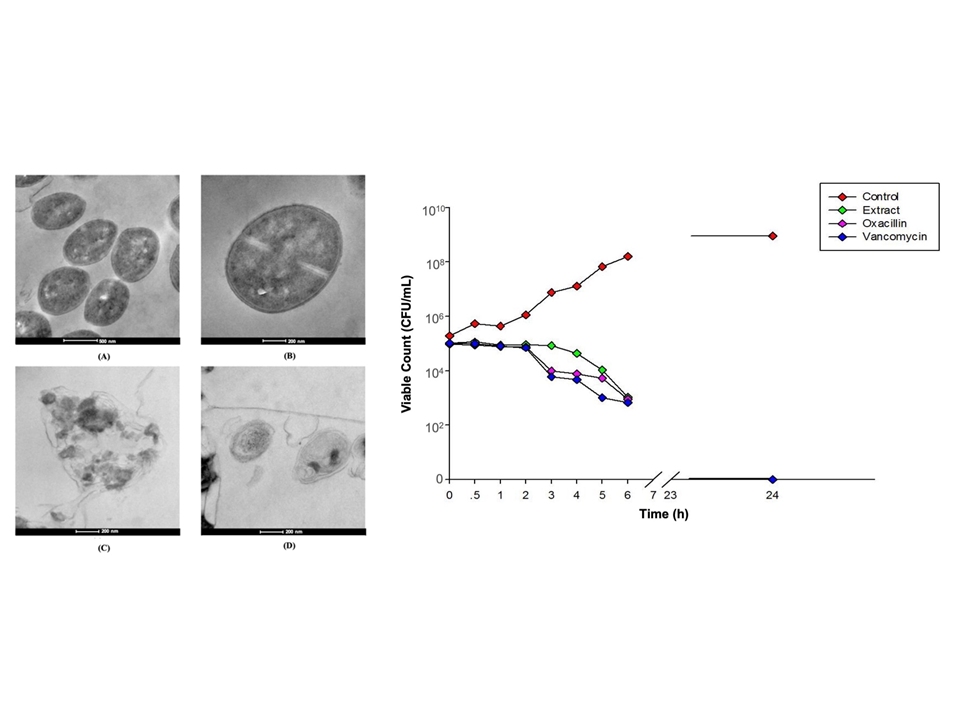
We investigated the antibacterial activity of Cardiospermum halicacabum extract against methicillin-resistant Staphylococcus aureus (MRSA) via the disk diffusion method and identified the plant’s bioactive phytochemicals. Additionally, we evaluated the synergistic effects, and primary mechanism of action of the plant extract against the S. aureus strain PB57 (MRSA). The ethanolic extract of C. halicacabum contained beneficial secondary metabolites such as the flavonoids apigenin, terpenoids and tannins. The total phenolic content, expressed as the gallic acid equivalent (g GAE/kg), was 87.66 ± 14.56 g GAE/kg at a concentration of the 1 mg/mL. The plant extract inhibited and killed the S. aureus strain PB57 with minimum inhibitory concentration (MIC) and minimum bactericidal concentration (MBC) values of 0.98 mg/mL. Electron microscopy revealed that the plant extract caused damage to the ultrastructures of the cells of the pathogens. The compounds in the extract remained below known maximum acceptable cytotoxicity thresholds for fibroblast cells, which are typically in the range of [include specific value from relevant guidelines or literature]. Further cytotoxicity assays are required to determine the precise safety margins for therapeutic use. Although the extract showed promise against MRSA, its application as a broad treatment for infectious diseases requires more specific testing on other pathogens. Based on the scope of our research, C. halicacabum could be a viable candidate for the development of treatments targeting MRSA-related infections.
HIGHLIGHTS
Our investigation revealed that the ethanolic extract of Cardiospermum halicacabum exhibited significant antibacterial activity against the methicillin-resistant Staphylococcus aureus (MRSA) strain PB57. The extract contained beneficial secondary metabolites, including flavonoids such as apigenin, as well as terpenoids and tannins. Moreover, the electron microscope shown that the extract disrupted the pathogen’s cell structures and, despite showing some cytotoxicity at higher doses, remained within safe limits, positioning C. halicacabum as a potential treatment for infectious diseases.
GRAPHICAL ABSTRACT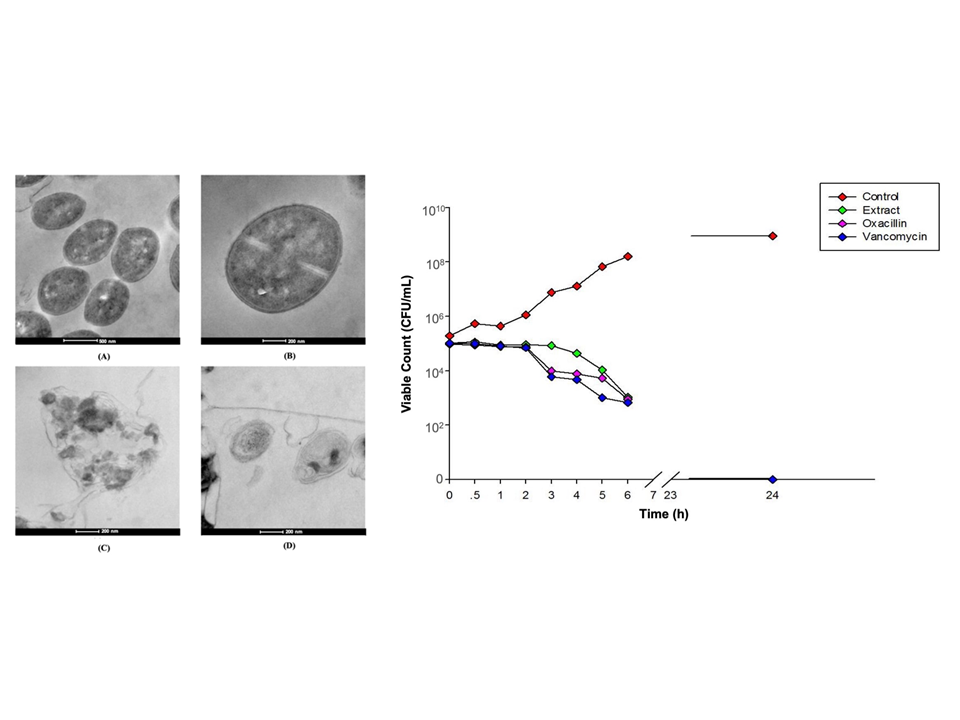
Downloads
References
F Prestinaci, P Pezzotti and A Pantosti. Antimicrobial resistance: A global multifaceted phenomenon. Pathogens and Global Health 2015; 109(7), 309-318.
CDC, Available at: https://www.cdc.gov/mrsa/ healthcare/index.html, accessed February 2022.
S Hung, L Dreher, J Diessner, S Schwarz, K Ohlsen and T Hertlein. MRSA infection in the thigh muscle leads to systemic disease, strong inflammation, and loss of human monocytes in humanized mice. Frontiers in Immunology 2022; 13, 892503.
SY Tong, JS Davis, E Eichenberger, TL Holland and VG Fowler. Staphylococcus aureus infections: Epidemiology, pathophysiology, clinical manifestations, and management. Clinical Microbiology Reviews 2015; 28(3), 603-661.
B Plackett. Why big pharma has abandoned antibiotics. Nature 2020; 586(7830), S50.
J Larsen, CL Raisen, X Ba, NJ Sadgrove, GF Padilla-González, MS Simmonds, I Loncaric, H Kerschner, P Apfalter and R Hartl. Emergence of methicillin resistance predates the clinical use of antibiotics. Nature 2022; 602(7895), 135-141.
ME Mulligan, KA Murray-Leisure, BS Ribner, HC Standiford, JF John, JA Korvick, CA Kauffman and LY Victor. Methicillin-resistant Staphylococcus aureus: A consensus review of the microbiology, pathogenesis, and epidemiology with implications for prevention and management. The American Journal of Medicine 1993; 94(3), 313-328.
A Hassoun, PK Linden and B Friedman. Incidence, prevalence, and management of MRSA bacteremia across patient populations - a review of recent developments in MRSA management and treatment. Critical Care 2017; 21, 211.
S Patel and S Saw. Daptomycin. StatPearls, Florida, United States, 2017.
S Patel, CV Preuss and F Bernice. Vancomycin. StatPearls, Florida, United States, 2021.
W Brumfitt and J Hamilton-Miller. Methicillin-resistant Staphylococcus aureus. New England Journal of Medicine 1989; 320(18), 1188-1196.
M Tajkarimi, SA Ibrahim and D Cliver. Antimicrobial herb and spice compounds in food. Food Control 2010; 21(9), 1199-1218.
F Menichini, L Losi, M Bonesi, A Pugliese, MR Loizzo and R Tundis. Chemical profiling and in vitro biological effects of Cardiospermum halicacabum L. (Sapindaceae) aerial parts and seeds for applications in neurodegenerative disorders. Journal of Enzyme Inhibition and Medicinal Chemistry 2014; 29(5), 677-685.
JD Urdampilleta, JP Coulleri, MS Ferrucci and E Forni‐Martins. Karyotype evolution and phylogenetic analyses in the genus C. ardiospermum L. (P. aullinieae, S. apindaceae). Plant Biology 2013; 15(5), 868-881.
T Deepan, V Alekhya, P Saravanakumar and M Dhanaraju. Phytochemical and anti-microbial studies on the leaves extracts of Cardiospermum halicacabum Linn. Advances in Biological Research 2012; 6(1), 14-18.
R Gaziano, E Campione, F Iacovelli, D Marino, F Pica, P Di Francesco, S Aquaro, F Menichini, M Falconi and L Bianchi. Antifungal activity of Cardiospermum halicacabum L. (Sapindaceae) against Trichophyton rubrum occurs through molecular interaction with fungal Hsp90. Drug Design, Development and Therapy 2018; 12, 2185-2193.
R Gaziano, E Campione, F Iacovelli, E Pistoia, D Marino, M Milani, P Di Francesco, F Pica, L Bianchi and A Orlandi. Antimicrobial properties of the medicinal plant Cardiospermum halicacabum L: New evidence and future perspectives. European Review for Medical & Pharmacological Sciences 2019; 23(16), 7135-7143.
SA Raza, S Hussain, H Riaz and S Mahmood. Review of beneficial and remedial aspects of Cardiospermum halicacabum L. African Journal of Pharmacy and Pharmacology 2013; 7(48), 3026-3033.
TNM Kankanamalage, RM Dharmadasa, DC Abeysinghe and RGS Wijesekara. A survey on medicinal materials used in traditional systems of medicine in Sri Lanka. Journal of Ethnopharmacology 2014; 155(1), 679-691.
R Aiyalu, A Govindarajan and A Ramasamy. Acute and sub-chronic toxicity study of methanol leaf extract of Cardiospermum halicacabum L and Vitex negundo L in rats. Pharmacognosy Communications 2015; 5(1), 39-45.
S Dubale, D Kebebe, A Zeynudin, N Abdissa and S Suleman. Phytochemical screening and antimicrobial activity evaluation of selected medicinal plants in Ethiopia. Journal of Experimental Pharmacology 2023; 15, 51-62.
RM Lamuela-Raventós. Folin-Ciocalteu method for the measurement of total phenolic content and antioxidant capacity. In: R Apak, E Capanoglu and F Shahidi (Eds.). Measurement of antioxidant activity & capacity: Recent trends and applications. John Wiley & Sons, New Jersey, 2017, p. 107-115.
A Sundowo, N Artanti, M Hanafi, Minarti and G Primahana. Phytochemical screening, total phenolic, total flavonoids contents and antioxidant activity of cinchona ledgeriana leaves ethanol extract. AIP Conference Proceedings 2017; 1904(1), 020067.
F Timurkaynak, F Can, ÖK Azap, M Demirbilek, H Arslan and SÖ Karaman. In vitro activities of non-traditional antimicrobials alone or in combination against multidrug-resistant strains of Pseudomonas aeruginosa and Acinetobacter baumannii isolated from intensive care units. International Journal of Antimicrobial Agents 2006; 27(3), 224-228.
MH Huang, SS Huang, BS Wang, CH Wu, MJ Sheu, WC Hou, SS Lin and GJ Huang. Antioxidant and anti-inflammatory properties of Cardiospermum halicacabum and its reference compounds ex vivo and in vivo. Journal of Ethnopharmacology 2011; 133(2), 743-750.
R Subramanyam, SG Newmaster, G Paliyath and CB Newmaster. Exploring ethnobiological classifications for novel alternative medicine: A case study of Cardiospermum halicacabum L (Modakathon, Balloon Vine) as a traditional herb for treating rheumatoid arthritis. Ethnobotany 2007; 19(1), 1-16.
A Annadurai, V Elangovan, S Velmurugan and R Ravikumar. Preliminary phytochemical screening and antibacterial of Cardiospermum halicacabum L. Advances in Applied Science Research 2013; 4(5), 302-308.
M Viji and S Murugesan. Phytochemical analysis and antibacterial activity of medicinal plant Cardiospermum halicacabum Linn. Journal of Phytology 2010; 2(1), 68-77.
J Dong, J Qiu, J Wang, H Li, X Dai, Y Zhang, X Wang, W Tan, X Niu and X Deng. Apigenin alleviates the symptoms of Staphylococcus aureus pneumonia by inhibiting the production of alpha-hemolysin. FEMS Microbiology Letters 2013; 338(2), 124-131.
F Xia, X Li, B Wang, P Gong, F Xiao, M Yang, L Zhang, J Song, L Hu and M Cheng. Combination therapy of LysGH15 and apigenin as a new strategy for treating pneumonia caused by Staphylococcus aureus. Applied and Environmental Microbiology 2016; 82(1), 87-94.
MF Aldawsari, MM Ahmed, F Fatima, MK Anwer, P Katakam and A Khan. Development and characterization of calcium-alginate beads of apigenin: In vitro antitumor, antibacterial, and antioxidant activities. Marine Drugs 2021; 19(8), 467.
Y Yu, HL Huang, XQ Ye, DT Cai, JT Fang, J Sun, XP Liao and YH Liu. Synergistic potential of antimicrobial combinations against methicillin-resistant Staphylococcus aureus. Frontiers in Microbiology 2020; 11, 1919.
MH Sharaf, GM El-Sherbiny, SA Moghannem, M Abdelmonem, IA Elsehemy, AM Metwaly and MH Kalaba. New combination approaches to combat methicillin-resistant Staphylococcus aureus (MRSA). Scientific Reports 2021; 11(1), 4240.
R Jeyadevi, T Sivasudha, A Ilavarasi and N Thajuddin. Chemical constituents and antimicrobial activity of Indian green leafy vegetable Cardiospermum halicacabum. Indian Journal of Microbiology 2013; 53(2), 208-213.
H Shareef, GH Rizwani, S Mahmood, R Khursheed and H Zahid. In vitro antimicrobial and phytochemical analysis of Cardiospermum halicacabum L. Pakistan Journal of Botany 2012; 44(5), 1677-1680.
H Girish, M Sudarshana and ER Rao. In vitro evaluation of the efficacy of leaf and its callus extracts of Cardiospermum halicacabum L. on important human pathogenic bacteria. Biological Research 2008; 2(1-2), 34-38.
SH Mun, DK Joung, YS Kim, OH Kang, SB Kim, YS Seo, YC Kim, DS Lee, DW Shin and KT Kweon. Synergistic antibacterial effect of curcumin against methicillin-resistant Staphylococcus aureus. Phytomedicine 2013; 20(8-9), 714-718.
PD Giudice. Skin infections caused by Staphylococcus aureus. Acta Dermato-Venereologica 2020; 100(9), 5725.
K Ponvinobala, G Kanchana and G Rubalakshmi. In vitro anticancer activity of hydro-alcohol extract of leaves of Andrographis neesiana against PC-3 and MCF-7 cell lines. International Journal of Pharmacy and Pharmaceutical Sciences 2012; 4, 396-399.
B Promraksa, J Phetcharaburanin, N Namwat, A Techasen, P Boonsiri and W Loilome. Evaluation of anticancer potential of Thai medicinal herb extracts against cholangiocarcinoma cell lines. PloS One 2019; 14(5), e0216721
V Aishwarya, AS Sheik, A Dheeba and R Renuka. In vitro antioxidant and anticancer activity of Cardiospecrmum halicacabum L. against EAC cell. International Journal of Pharmacy and Pharmaceutical Sciences 2014; 6(8), 263-268.
Downloads
Published
How to Cite
Issue
Section
License
Copyright (c) 2024 Walailak University

This work is licensed under a Creative Commons Attribution-NonCommercial-NoDerivatives 4.0 International License.





