
Increasing γ-Aminobutyric Acid in Mixed Germinated Brown Rice Via Electron Beam Irradiation
DOI:
https://doi.org/10.48048/tis.2024.8611Keywords:
Germinated brown rice, Oryza sativa L, GABA content, γ -oryzanol, Antioxidant activity, Anthocyanins activity, Health promoting compounds, Drying process, Food irradiationAbstract
Germinated brown rice (GBR) is considered a functional food due to its rich health promoting bioactive compounds such as γ-aminobutyric acid (GABA), γ-oryzanol, phenolics, and antioxidants. In this study, different germinated brown rice varieties were treated with electron beam irradiation (EBI) and x-ray irradiation to assess the effects on these compounds. Food irradiation technology endorsed by the US-FDA and WHO for improving food safety and extending shelf life was utilized. Germinated black fragrant brown rice (Hom Nil brown rice, Oryza sativa L.), and germinated brown rice (GBR) mixed with 3 varieties of brown rice (Thai Hom Mali brown rice, red cargo brown rice, and black fragrant brown rice) were treated with EBI and x-ray irradiation at a dose of 1 kGy, energy levels of 10 and 5 MeV, respectively. The results showed that EBI at the specified dose could significantly increase GABA content in a mixed GBR sample from 3.76 mg/100 g (dried weight) in a non-irradiated sample to 6.44 mg/100 g (dried weight) in an EBI sample, which was a 1.7 fold increase. Moreover, both irradiation methods did not impact any other health promoting compounds such as γ-oryzanol, total phenolic content, or antioxidant activity. However, x-ray irradiation decreased anthocyanin activity in germinated black fragrant brown rice. The Hunter Lab system was used to determine color characteristics. The results showed that EBI slightly increased the yellowness value of a mixed GBR sample. In addition, EBI and x-ray irradiations can reduce microbial contamination of total aerobic plate count and total yeast and mold count in both GBR samples to low levels of 1.30 102 1.30 10 and < 10 1.8 10 CFU/g, respectively. The results demonstrated that EBI can improve the nutritional quality and enhance consumer food safety in GBR products.
HIGHLIGHTS
- Electron beam irradiation (EBI) and x-irradiation were applied to germinated brown rice (GBR) in both single and mixed formulas for the purpose of enhancing health promoting compounds.
- A low dose of electron beam irradiation (EBI) significantly increased the gamma aminobutyric acid (GABA) content in mixed germinated brown rice, which includes Thai Hom Mali brown rice (Oryza sativa), red cargo brown rice, and black fragrant brown rice compared to the non-irradiated sample.
- The highest levels of health promoting compounds were detected in a single formula of germinated black fragrant brown rice. Both types of irradiation did not alter the GABA content or antioxidant activities of the GBR sample. However, anthocyanin activity was decreased by x-ray irradiation.
- All GBR samples showed low levels of microbial contamination.
GRAPHICAL ABSTRACT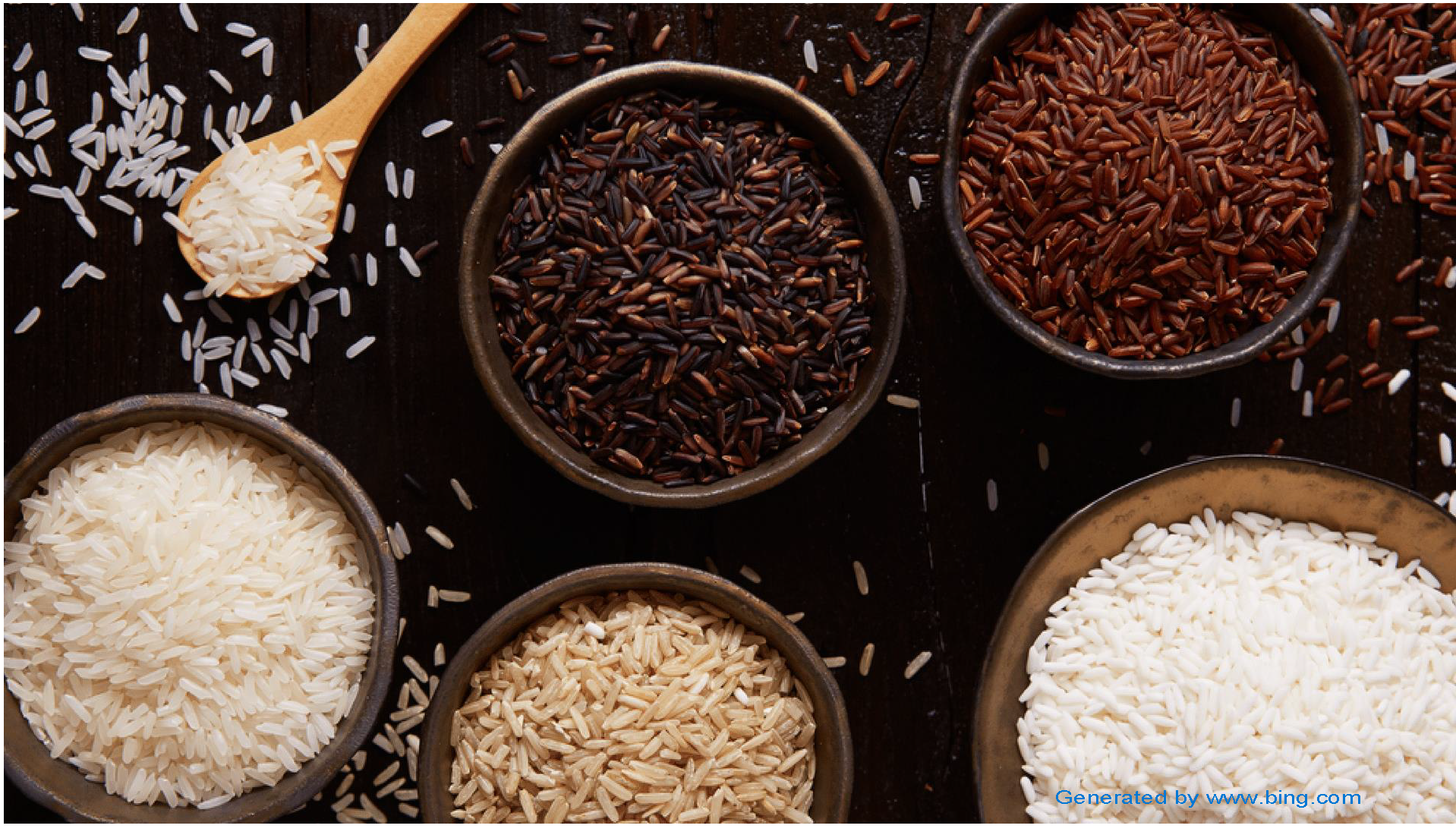
Downloads
References
M Carcea. Value of wholegrain rice in a healthy human nutrition. Agriculture 2021; 11(8), 720.
D Karladee and S Suriyong. γ-aminobutyric acid (GABA) content in different varieties of brown rice during germination. ScienceAsia 2012; 38, 13-17.
LA Nascimento, A Abhilasha, J Singh, MC Elias and R Colussi. Rice germination and its impact on technological and nutritional properties: A review. Rice Science 2022; 29(3), 201-215.
Q Xia, BD Green, Z Zhu, Y Li, SMT Gharibzahedi, S Roohinejad and JF Barba. Innovative processing techniques for altering the physicochemical properties of wholegrain brown rice (Oryza sativa L.) - opportunities for enhancing food quality and health attributes. Critical Reviews in Food Science and Nutrition 2018; 20, 3349-3370.
VSD Borba, HMP Rodigues and EB Furlong. Impact of biological contamination of rice of food safety. Food Reviews International 2019; 36(2), 1-16.
C Bourneow and N Toontam. Microbiological quality and some bioactive compounds in relation to sensory profiles during germination of brown-purple pigmented rice. International Food Research Journal 2019; 26(3), 1011-1021.
S Parnsakhon and J Langkapin. Effect of drying temperatures on physicochemical properties of germinated brown rice. LWT 2021; 152, 112334.
T Chungcharoen, S Prachayawarakorn, P Tungtrakul and S Soponronnarit. Effects of germination time and drying temperature on drying characteristics and quality of germinated paddy. Food and Bioproducts Processing 2015; 94, 707-716.
M Kongdin, S Chumanee and S Sansenya. Gamma irradiation promotes the growth rate of Thai pigmented rice as well as inducing the accumulation of bioactive compounds and carbohydrate hydrolyzing enzymes inhibitors (-Glucosidase and -Amylase) under salt conditions. Preventive Nutrition and Food Science 2023; 28(4), 463-470.
C Chinvongamorn and S Sansenya. The γ-oryzanol content of Thai rice cultivars and the effects of gamma irradiation on the γ-oryzanol content of germinate Thai market rice. Oriental Journal of Chemistry 2020; 36(5), 812-818.
International atomic energy agency. Joint FAO/IAEA centre of nuclear techniques in food and agriculture. International atomic energy agency, Vienna, Austria, 2022.
P Prakongsil, S Sajjabut, W Pewlong, R Picha and N Thamrongsiripak. Enhancing gamma aminobutyric acid (GABA) content in germinated Thai Hom Mali brown rice by low dose of electron beam irradiation. Science & Technology Asia 2023; 28(3), 210-219.
T Abe, Y Kurozumi, WB Yao and T Ubuka. High performance liquid chromatographic determination of β -alanine, β– iso aminobutyric acid and gamma-aminobutyric acid in tissue extracts and urine of normal and (aminooxy) acetate treated rats. Journal of Chromatography B: Biomedical Sciences and Applications 1998; 712(1-2), 43-49.
FAO and WHO. Standard for named vegetable oils, CXS 210-1999 Available at: https://www.fao.org/fao-who-codexalimentarius/sh-proxy/en/?lnk=1&url=https%253A%252F%252Fworkspace.fao.org%252Fsites%252Fcodex%252FStandards%252FCXS%2B210-1999%252FCXS_210e.pdf, accessed March 2024.
J Lee, R Durst and RE Wrolstad. Total monomeric anthocyanin pigment content of fruit juices, beverages, natural colorants and wines-pH different method. Journal of AOAC International 2005; 88(5), 1269-1278.
YS Velioglu, G Mazza, L Gao and BD Oomah. Antioxidant capacity and total phenolics in selected fruits, vegetable and grain products. Journal of Agricultural and Food Chemistry 1998; 46(10), 4113-4117.
IFF Benzie and JJ Strain. The ferric reducing ability of plasma (FRAP) as a measure of antioxidant power: The FRAP assay. Analytical Biochemistry 1996; 239(1), 70-76.
KF Khattak, TJ Simpson and Ihasnullah. Effect of gamma irradiation on the extraction yield, total phenolic content and free radical-scavenging activity of Nigella sativa seed. Food Chemistry 2008; 110(4), 967-972.
K Jinneman. Bacteriological Analytical Manual. In: L Maturin and JT Peeler (Eds.). Chapter 3: Aerobic plate count. U.S. Food and Drug Administration, Maryland, 1998.
K Jinneman. Bacteriological Analytical Manual. In: V Tournas, ME Stack, PB Mislivec, HA Koch and R Bandler (Eds). Chapter 18: Yeasts, Molds and Mycotoxin. U.S. Food and Drug Administration, Maryland, 1998.
S Thomas, ER Aneena, B Pathrose, ST Panjikkaran, CL Sharon, P Prameela, KH Ajisha and KA Athira. Augmentation of gamma amino butyric acid (GABA), antioxidant potential and nutrient qualities in germinated brown rice. Food and Humanity 2023; 1, 349-357.
L Pan, J Xiang, X Luo, Y Li, D Sun, Y Zhai, K Yang and Z Chen. Influence of electron beam irradiation on the moisture and properties of freshly harvested and sun-dried rice. Foods 2020; 9, 1139.
T Li, L Wang, D Sun, Y Li and Z Chen. Effect of enzymolysis – assisted electron beam irradiation on structural characteristics and antioxidant activity of rice protein. Journal of Cereal Science 2019; 89, 102789.
IO Minatel, FV Francisqueti, CR Correa and GP Lima. Antioxidant activity of γ-oryzanol: A complex network of interactions. International Journal of Molecular Sciences 2016; 17(8), 1107.
A Castanho, C Pereira, M Lageire, L Cunha and C Brites. Improving γ-oryzanol and γ-aminobutyric acid contents in rice beverage Amazake produce with brown milled and germinated rices. Foods 2023; 12, 1476.
R Mattidi, A Francisco, L Mosca and P Silva. Anthocyanins: A comprehensive review of their chemical properties and health effects on cardiovascular and neurodegenerative diseases. Molecules 2020; 25, 3809.
S Sansenya, S Chumanee and C Sricheewin. Effect of gamma irradiation on anthocyanin content and rice growth rate of Thai colored rice. Malaysian Applied Biology 2019; 48(4), 153-155.
N Pengkumsri, C Chaiyasut, C Saenjum, S Sirilun, S Peerajan, P Suwannalert, S Sirisattha and BS Sivamauthi. Physicochemical and antioxidative properties of black, brown and red rice varieties of northern Thailand. Journal of Food Science and Technology 2015; 35(2), 331-338.
D Gopinath, V Singh and A Naidu. Nutrient composition and physiochemical properties of Indian medicinal rice-Njavara. Food Chemistry 2007; 106, 165-171.
MT Munir and M Federighi. Control of foodborne biological hazard by ionizing radiations. Foods 2020; 9, 878.
ZB Zehi, A Afshari, SMA Noori, B Jannat and M Hashemi. The effects of x-ray irradiation on safety and nutritional value of food: A systematic review article. Current Pharmaceutical Biotechnology 2020; 21(10), 919-926.
Downloads
Published
How to Cite
Issue
Section
License
Copyright (c) 2024 Walailak University

This work is licensed under a Creative Commons Attribution-NonCommercial-NoDerivatives 4.0 International License.





