
Unveiling the Potential of Hyptis Capitata and Hyptis Brevipes Compounds in Overcoming Apoptosis Resistance and Inducing Targeted Cell Cycle Arrest in Breast Cancer Stem Cells
DOI:
https://doi.org/10.48048/tis.2024.8404Keywords:
Hyptis bravipes, Hyptis capitata, CSC, Apoptosis resistance, Cell cycle arrestAbstract
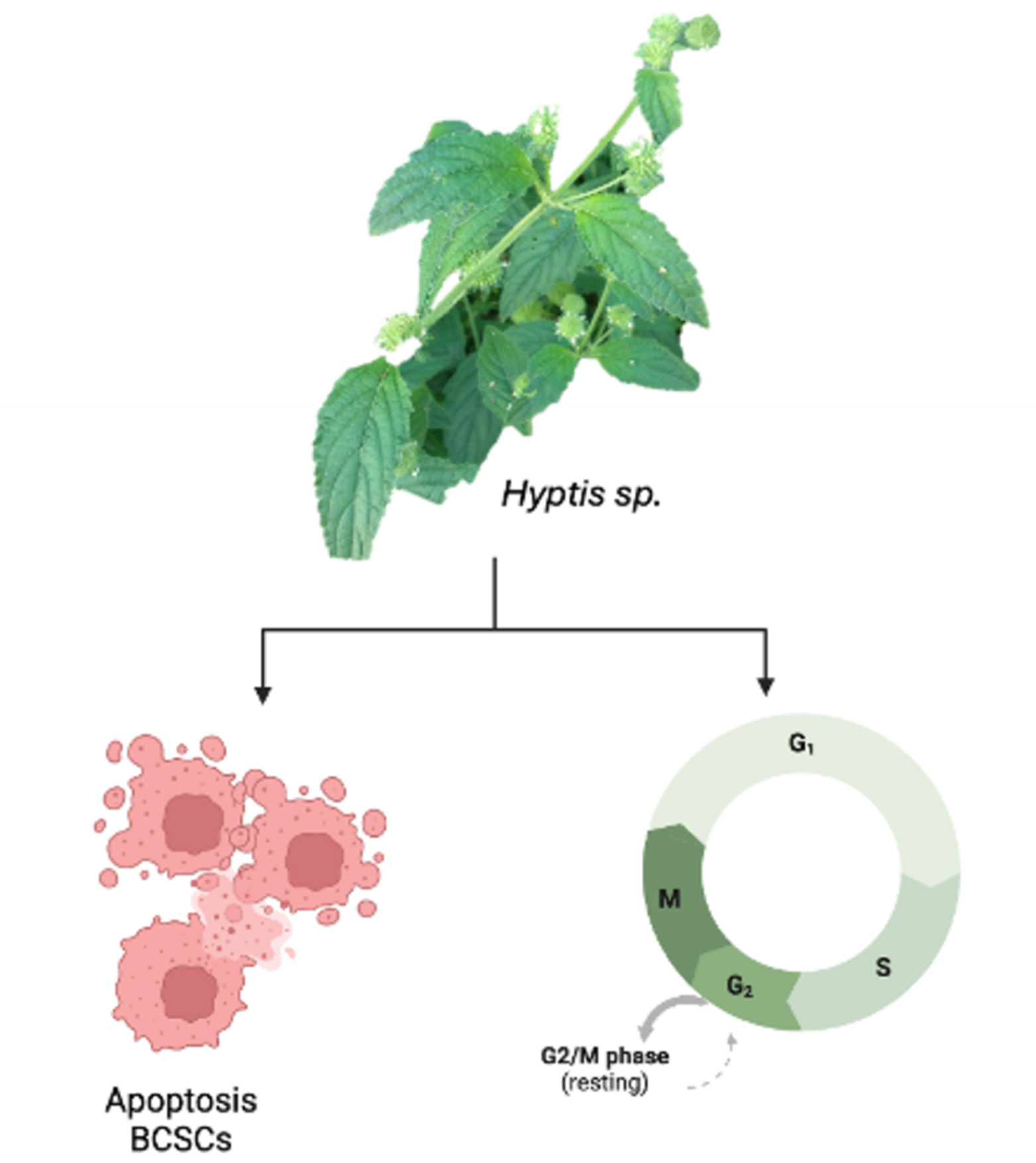
Breast cancer stem cells (CSC), as a kind of tumor cells, are able to regenerate themselves, leading to apoptosis resistance and cancer relapse. In this study, we investigated the potential of Hyptis Capitata and Hyptis Brevipes compounds in preventing apoptosis resistance and inducing targeted cell cycle arrest in CSC. The cytotoxic effects of the compounds were evaluated using 3-[4,5-dimethylthiazol-2-yl]-2,5 diphenyl tetrazolium bromide (MTT) assay and the cell cycle distribution and apoptosis induction were assessed through flow cytometry analysis. The phytochemical characterization of Hyptis bravipes extract (HBE) and Hyptis capitata extract (HCE) conducted under thin layer chromatography (TLC) and high-performance liquid chromatography (HPLC) analysis. The results revealed that Hyptis Brevipes extract (HBE) exhibited strong cytotoxicity towards CSCs, with an IC50 value of 89 µg/mL. In contrast, Hyptis Capitata extract (HCE) showed weak growth inhibition, with an IC50 value greater than 500 µg/mL. Subsequent analysis demonstrated that HBE induced cell cycle arrest in the G2/M and S phases and significantly increased apoptosis in the CSC population. Furthermore, phytochemical characterization using TLC and HPLC revealed that HBE and HCE share similar constituent compounds, with HBE exhibiting a more diverse compound content and stronger cytotoxic effects. These findings provide valuable insights into the potential of Hyptis Capitata and Hyptis Brevipes compounds as targeted agents against breast cancer stem cells and contribute to understanding their chemical profiles and pharmacological properties.
HIGHLIGHTS
- Hyptis brevipes extract induced cell cycle arrest in G2/M and S phases.
- Cytotoxicity of Hyptis brevipes leading to apoptosis induction on CSC
- Hyptis brevipes significantly targeted Breast Cancer Stem Cells
GRAPHICAL ABSTRACT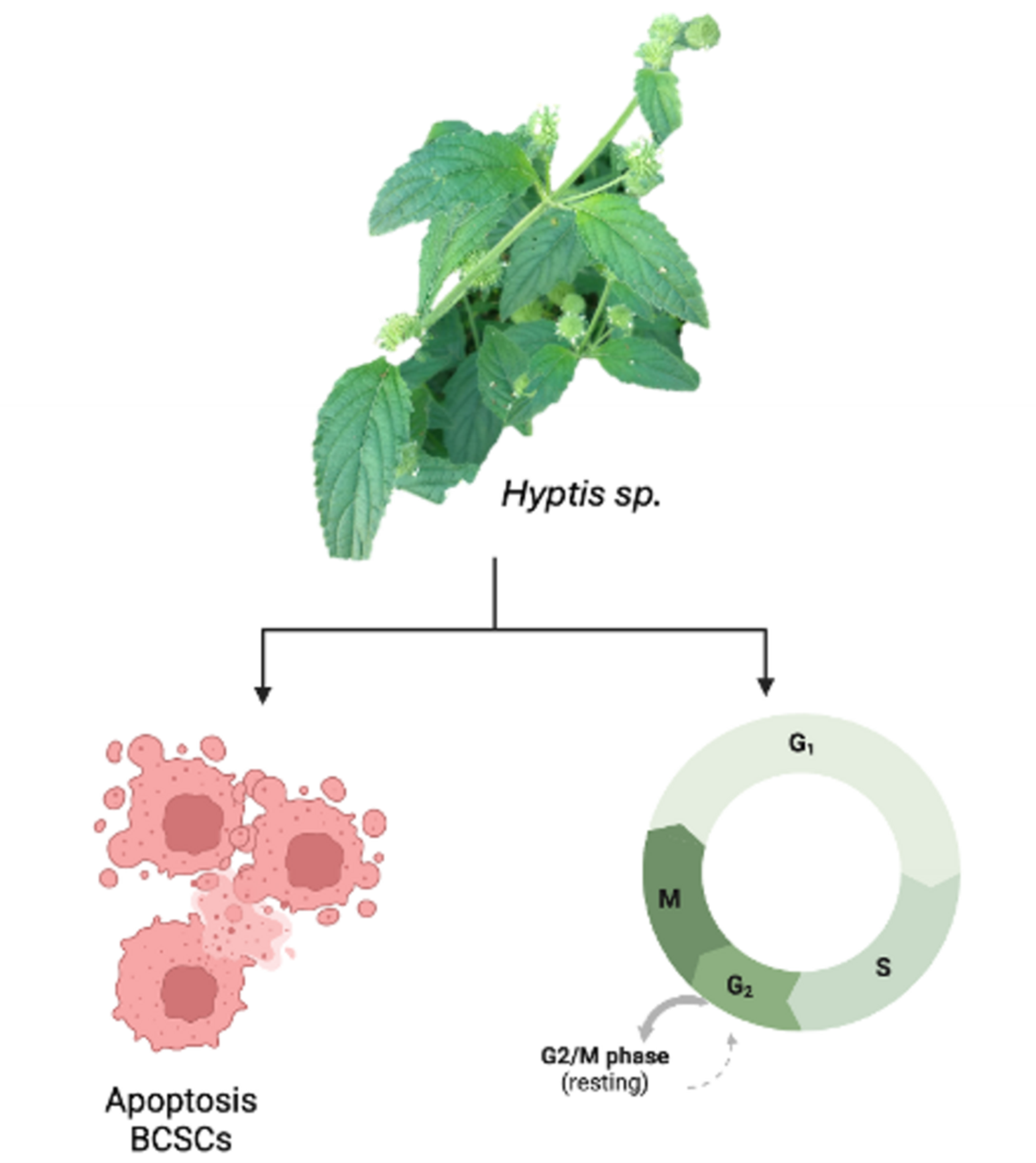
Downloads
References
SM Lima, RD Kehm and MB Terry. Global breast cancer incidence and mortality trends by region, age-groups, and fertility patterns. EClinicalMedicine 2021; 38, 100985.
AN Giaquinto, H Sung, KD Miller, JL Kramer, LA Newman, A Minihan, A Jemal and RL Sirgel. Breast cancer statistics, 2022. CA Cancer J. Clin. 2022; 72, 524-41
JS Crabtree and L Miele. Breast cancer stem cells. Biomedicines 2018; 6, 77.
NL Shan, Y Shin, G Yang, P Furmanski and N Suh. Breast cancer stem cells: A review of their characteristics and the agents that affect them. Mol. Carcinog. 2021; 60, 73-100
J Zhai, Y Wu, F Ma, V Kaklamani and B Xu. Advances in medical treatment of breast cancer in 2022. Cancer Innov. 2023; 2, 1-17.
WC Sin and CL Lim. Breast cancer stem cells: From origins to targeted therapy. Stem Cell Investig. 2017; 4, 96.
DA Paramita, D Hermansyah, DA Paramita and ND Amalina. Regulation of p53 and survivin by Curcuma longa extract to caspase-3 dependent apoptosis in triple negative breast cancer cells. Med Glas 2022; 19, 189-96.
AA Kadhim, KW Alsamarrae and KH Alobaidi. Cytotoxic activities of ferulago abbreviata total flavonoid extract on three different cancer cell lines. Nat. Vol. Essent. Oils 2022; 9, 1378-92.
V Shrihastini, P Muthuramalingam, S Adarshan, M Sujitha, JT Chen, H Shin and M Ramesh. Plant derived bioactive compounds, their anti‐cancer effects and in silico approaches as an alternative target treatment strategy for breast cancer: An updated overview. Cancers 2021; 13, 6222.
M Suzery, B Cahyono and ND Amalina. Antiproliferative and apoptosis effect of hyptolide from Hyptis pectinata (L.) Poit on human breast cancer cells. J. Appl. Pharmaceut. Sci. 2020; 10, 1-6.
V Karuppiah, W Sun and Z Li. Natural products of actinobacteria derived from marine organisms. Stud. Nat. Prod. Chem. 2016; 48, 417-46.
AR Sari, JW Wibowo, S Priyantini, A Putra and ND Amalina. Red algae extract suppresses caspase-3 gene expression and induces catalase antioxidant enzyme in testicles of rats induced by boric acid. Medicinski Glasnik 2023; 20, 214-9 .
ND Amalina, M Suzey and B Cahyono. Cytotoxic activity of hyptis pectinata extracts on MCF-7 human breast cancer cells. Indones. J. Cancer Chemoprev. 2020; 10, 1-6.
M Suzery, B Cahyono and P Astuti. The acute toxicity test of methanolic extract of Hyptis pectinata poit on liver Balb/c mice. IOP Conf. Ser. Mater. Sci. Eng. 2017; 172, 012029.
B Cahyono, M Suzery, ND Amalina, Wahyudi and DN Bima. Synthesis and antibacterial activity of epoxide from hyptolide (Hyptis pectinata (L.) Poit) against Gram-positive and Gram- negative bacteria. J. Appl. Pharmaceut. Sci. 2020; 10, 13-22.
Y Wang, H Qi, Y Liu, C Duan, X Liu, T Xia, D Chen, H Piao and H Liu. The double-edged roles of ROS in cancer prevention and therapy. Theranostics 2021; 11, 4839-57.
S Mursiti, ND Amalina and A Marianti. Inhibition of breast cancer cell development using Citrus maxima extract through increasing levels of reactive oxygen species (ROS). J. Phys. Conf. Ser. 2021; 1918, 052005.
ND Amalina, S Wahyuni and Harjito. Cytotoxic effects of the synthesized Citrus aurantium peels extract nanoparticles against MDA-MB-231 breast cancer cells. J. Phys. Conf. Ser. 2021; 1918, 032006.
S Andriyani, K Rujitoningtyas, HU Wigati and ND Amalina. The potential of moringa leaf extract to prevent aging targeted cellular senescence. Int. J. Cell Biomed. Sci. 2023; 1, 76-85.
B Cahyono, ND Amalina, M Suzery and DN Bima. Exploring the capability of indonesia natural medicine secondary metabolite as potential inhibitors of sars-cov-2 proteins to prevent virulence of COVID-19: nineand bioinformatic approach. Open Access Maced. J. Med. Sci. 2021; 9, 336-42.
EL Abhold, A Kiang, E Rahimy, SZ Kuo, J Wang-Rodriguez, JP Lopez, KJ Blair, MA Yu, M Haas, KT Brumund, X Altuna, A Patel, RA Weisman and WM Ongkeko. EGFR kinase promotes acquisition of stem cell-like properties: A potential therapeutic target in head and neck squamous cell carcinoma stem cells. PLoS One 2012; 7, e32459.
X Lü, Q Deng, H Li and Z Suo. Altered characteristics of cancer stem/initiating cells in a breast cancer cell line treated with persistent 5-FU chemotherapy. Exp. Ther. Med. 2011; 2, 821-6.
L Abdullah and EK Chow. Chemoresistance in cancer stem cells. Clin. Transl. Med. 2013; 2, e3.
HM Nawara, SM Afify, G Hassan, MH Zahra, A Sen and M Seno. Paclitaxel-based chemotherapy targeting cancer stem cells from mono- to combination therapy. Biomedicines 2021; 9, 500.
A Kabakov, A Yakimova and O Matchuk. Molecular chaperones in cancer stem cells: determinants of stemness and potential targets for antitumor therapy. Cells 2020; 9, 892.
S Wang, Y Zhang, W Cong, J Liu, Y Zhang, H Fan, Y Xu and H Lin. Breast cancer stem-like cells can promote metastasis by activating platelets and down-regulating antitumor activity of natural killer cells. J. Tradit. Chin. Med. 2016; 36, 530-7.
X Bai, J Ni, J Beretov, P Graham and Y Li. Cancer stem cell in breast cancer therapeutic resistance. Cancer Treat. Rev. 2018; 69, 152-63.
D Hermansyah, D Munir, A Lelo, A Putra, ND Amalina and I Alif. The synergistic antitumor effects of curcuma longa and phyllanthus niruri extracts on promoting apoptotic pathways in breast cancer stem cells. Thai J. Pharmaceut. Sci. 2022; 46, 541-50.
RI Jenie, ND Amalina, A Hermawan, M Suzery, A Putra and E M
eiyanto. Caesalpinia sappan reduces the stemness of breast cancer stem cells involving the elevation of intracellular reactive oxygen species. Res. Pharmaceut. Sci. 2023; 18, 708-21.
M Ikawati, RI Jenie, PY Utomo, ND Amalina, GPN Ilmawati, M Kawaichi and E Meiyanto. Genistein enhances cytotoxic and antimigratory activities of doxorubicin on 4T1 breast cancer cells through cell cycle arrest and ROS generation. J. Appl. Pharmaceut. Sci. 2020; 10, 95-104.
D Hermansyah, DA Paramita, AM Muhar and ND Amalina. Curcuma longa extract inhibits migration by reducing MMP-9 and Rac-1 expression in highly metastatic breast cancer cells. Res. Pharmaceut. Sci. 2024; 19, 157-66.
RI Jenie, ND Amalina, GPN Ilmawati, PY Utomo, M Ikawati, A Khumaira, J Kato and E Meiyanto. Cell cycle modulation of CHO-K1 cells under genistein treatment correlates with cells senescence, apoptosis and ROS level but in a dose-dependent manner. Adv. Pharmaceut. Bull. 2019; 9, 453-61.
M Chu, C Zheng, C Chen, G Song, X Hu and Z Wang. Targeting cancer stem cells by nutraceuticals for cancer therapy. Semin. Cancer Biol. 2021; 85, 234-45.
M Cabrera, N Gomez, FR Lenicov, E Echeverria, C Shayo, A Moglioni, N Fernandez and C Davio. G2/M cell cycle arrest and tumor selective apoptosis of acute leukemia cells by a promising benzophenone thiosemicarbazone compound. PLoS One 2015; 10, e0136878.
DR Pattabiraman and RA Weinberg. Tackling the cancer stem cells-what challenges do they pose? Nat. Rev. Drug Discov. 2014; 13, 497-512.
S Li, KA Goncalves, B Lyu, L Yuan and G Hu. Chemosensitization of prostate cancer stem cells in mice by angiogenin and plexin-B2 inhibitors. Commun. Biol. 2020; 3, 26.
L Ding, Y Yang, Q Lu, D Qu, P Chandrakesan, H Feng, H Chen, X Chen, Z Liao, J Du Z Cao and N Weygant. Bufalin inhibits tumorigenesis, stemness, and epithelial-mesenchymal transition in colorectal cancer through a C-Kit/Slug signaling axis. Int. J. Mol. Sci. 2022; 23, 13354.
S Muller, T Caneque, V Acevedo and R Rodriguez. Targeting cancer stem cells with small molecules. Isr. J. Chem. 2017; 57, 239-50.
RP Singh and R Agarwal. Natural flavonoids targeting deregulated cell cycle progression in cancer cells. Curr. Drug Targets 2006; 7, 345-54.
GI Evan and KH Vousden. Proliferation, cell cycle and apoptosis in cancer. Nature 2001; 411, 342-8.
Downloads
Published
How to Cite
Issue
Section
License
Copyright (c) 2024 Walailak University

This work is licensed under a Creative Commons Attribution-NonCommercial-NoDerivatives 4.0 International License.





