
Limited Salt Tolerance of Indonesian Rice Varieties Biosalin-1-Agritan and Biosalin-2-Agritan at Early Seedling Stage under NaCl Stress
DOI:
https://doi.org/10.48048/tis.2025.9305Keywords:
Abiotic stress, High-salinity tolerance, Mutant, Rice varieties seedling growthAbstract
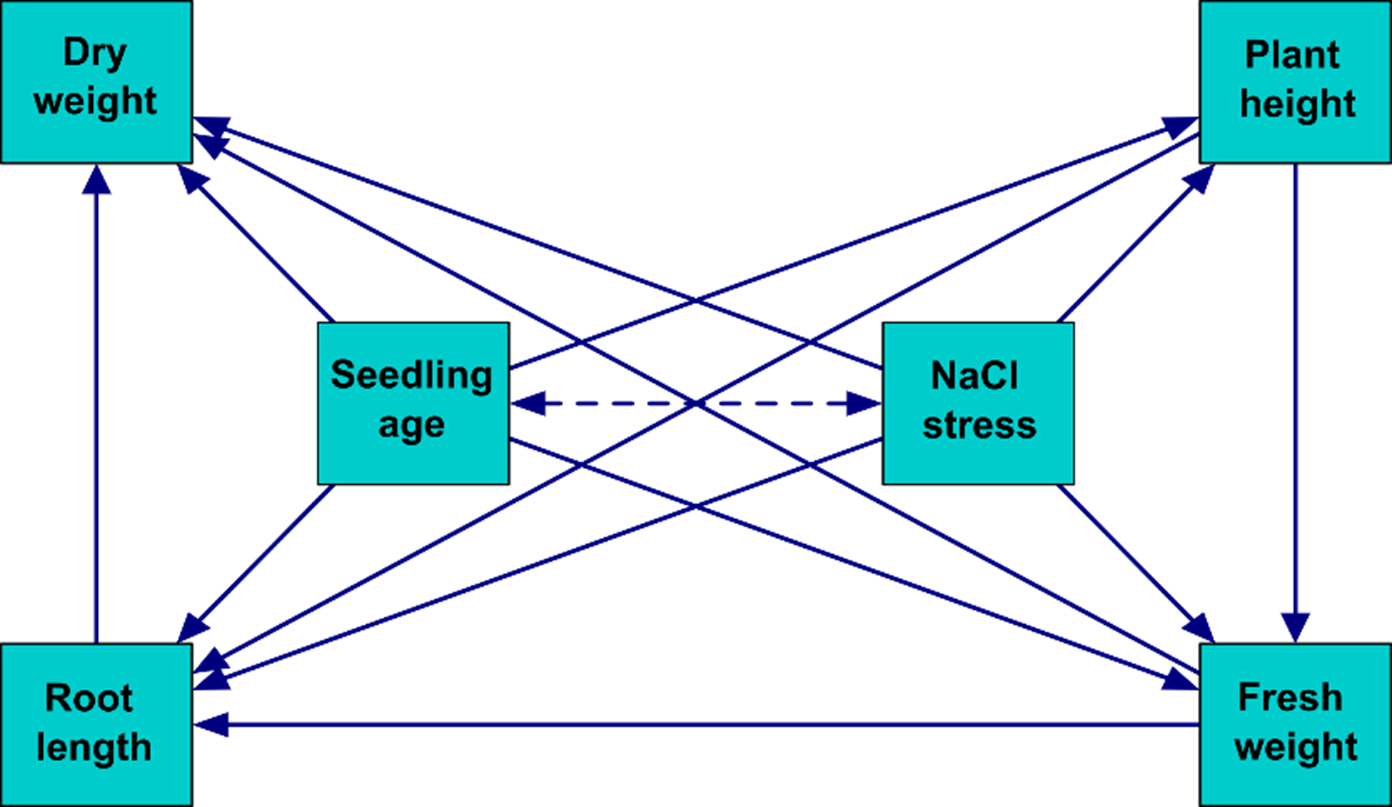
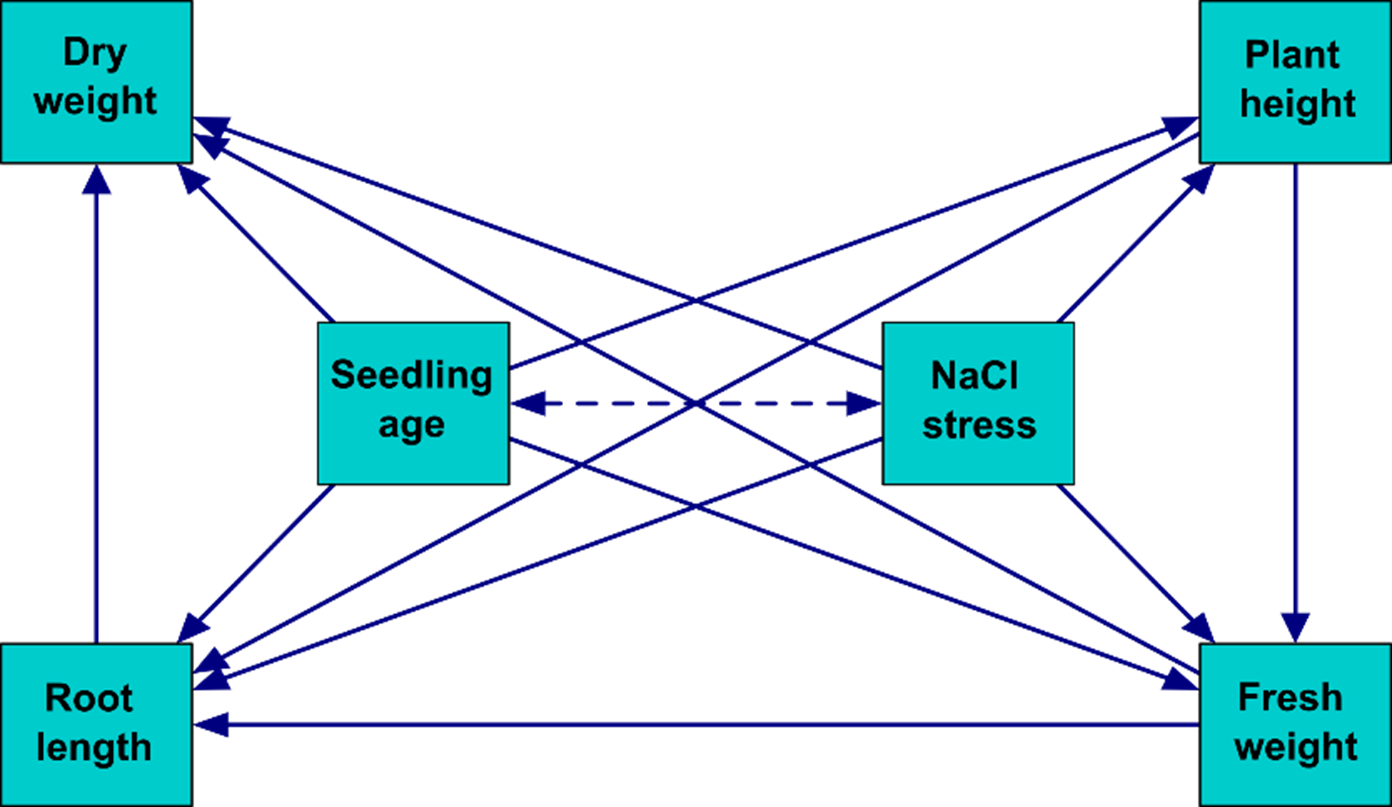
This study evaluated the salt tolerance of 2 salt tolerant rice varieties, Biosalin-1-Agritan and Biosalin-2-Agritan under NaCl concentrations ranging from 0 to 50 part-per-thousand (ppt) to assess their potential for large-scale cultivation on saline soils. Plant height, root length, fresh weight and dry weight were measured at 5 and 12 days after NaCl exposure, indicating both varieties maintained stable growth at NaCl levels up to 10 ppt, but growth metrics declined significantly at higher salinity levels. Notably, Biosalin-2-Agritan showed marginally better tolerance than Biosalin-1-Agritan, with resilience in some growth traits. Despite these observations, the limited resilience of both varieties under high salinity suggests that further genetic improvements, such as sodium azide-induced mutagenesis, are necessary to enhance their performance. This study provides essential insights into the salt tolerance of these rice varieties, supporting ongoing efforts to expand agricultural productivity in saline environments and strengthen food security in Indonesia.
HIGHLIGHTS
- Limitations of Indonesian salt-tolerant rice varieties.
- Phenotypic differences in growth responses to NaCl stress.
- Impact of extreme salinity levels on rice growth at early seedling stage.
GRAPHICAL ABSTRACT
Downloads
References
A Ansari, A Pranesti, M Telaumbanua, T Alam, Taryono, RA Wulandari, BDA Nugroho and Supriyanta. Evaluating the effect of climate change on rice production in Indonesia using multi modelling approach. Heliyon 2023; 9, e19639.
W Wagianto, N Syah, I Dewata, I Umar and A Putra. The population explosion: Indonesian’s dilemma amid limited resources. AIP Conference Proceedings 2024; 3001(1), 080013.
NE Purnama, F Muhammad and J Rambe. Analysis of the impact of rice imports, rice consumption, productivity, harvest area, and rice production on the farmer’s exchange rate for food crops in 2019-2023. International Journal of Economics, Commerce, and Management 2024; 1(4), 50-59.
L Sui, J Wang, X Yang and Z Wang. Spatial-temporal characteristics of coastline changes in Indonesia from 1990 to 2018. Sustainability 2020; 12(8), 3242.
V Karolinoerita and WA Yusuf. Land salinization and its problems in Indonesia. Jurnal Sumber Daya Lahan 2020; 14, 91-99.
FM Howari, PC Goodell and S Miyamoto. Spectral properties of salt crusts formed on saline soil. Journal of Environmental Quality 2002; 31(5), 1453-1461.
I Stavi, N Thevs and S Priori. Soil salinity and sodicity in drylands: A review of causes, effects, monitoring, and restoration measures. Frontiers in Environmental Science 2021; 9, 712831.
S Arora and JC Dagar. Salinity tolerance indicators. In: J Dagar, R Yadav and P Sharma (Eds.). Research developments in saline agriculture. Springer, Singapore, 2019, p. 155-201.
Q Li, P Zhu, X Yu, J Xu and G Liu. Physiological and molecular mechanisms of rice tolerance to salt and drought stress: Advances and future directions. International Journal of Molecular Sciences 2024; 25(17), 9404.
F Kusmiyati, E Pangestu, S Surahmanto, E Purbajanti and B Herwibawa. Production, quality, and livestock carrying capacity of Panicum maximum and Sesbania grandiflora at saline soil with different manure applications. Journal of the Indonesian Tropical Animal Agriculture 2019; 44(3), 303-313.
EM Hafez, WH Abou El Hassan, IA Gaafar and MF Seleiman. Effect of gypsum application and irrigation intervals on clay saline-sodic soil characterization, rice water use efficiency, growth, and yield. Journal of Agricultural Science 2015; 7(12), 208.
B Herwibawa, Sakhidin and TAD Haryanto. Agronomic performances of aromatic and non-aromatic M1 rice under drought stress. Open Agriculture 2019; 4(1), 575-584.
C Niha, S Te-chato, S Yenchon and KN Watanabe. In vitro salt stress responses of Thai oil palm’s embryogenic callus variety ‘SUP-PSU1’. Trends in Sciences 2023; 20(11), 6876.
Y Zhang, J Fang, X Wu and L Dong. Na+/K+ balance and transport regulatory mechanisms in weedy and cultivated rice (Oryza sativa L.) under salt stress. BMC Plant Biology 2018; 18, 375.
A Hidayah, RR Nisak, FA Susanto, TR Nuringtyas, N Yamaguchi and YA Purwestri. Seed halopriming improves salinity tolerance of some rice cultivars during seedling stage. Botanical Studies 2022; 63, 24.
M Farooq, JR Park, YH Jang, EG Kim and KM Kim. Rice cultivars under salt stress show differential expression of genes related to the regulation of Na+/K+ balance. Frontiers in Plant Science 2021; 12, 680131.
R Garg, M Verma, S Agrawal, R Shankar, M Majee and M Jain. Deep transcriptome sequencing of wild halophyte rice, Porteresia coarctata, provides novel insights into the salinity and submergence tolerance factors. DNA Research 2014; 21(1), 69-84.
LI Rodríguez-Coca, MT García González, Z Gil-Unday Z, J Jiménez-Hernández, MM Rodríguez -Jáuregui and Y Fernández-Cancio. Effects of sodium salinity on rice (Oryza sativa L.) cultivation: A review. Sustainability 2023; 15(3), 1804.
C Liu, B Mao, D Yuan, C Chu and M Duan. Salt tolerance in rice: Physiological responses and molecular mechanisms. The Crop Journal 2022; 10(1), 13-25.
DE Jharna, MM Mehedi-Hasan and KM Masum-Billah. Effect of salinity on growth and protein content of rice genotypes. Journal of Advances in Agriculture 2017; 7(2), 1057-1063.
A Mimoun, H Rey, C Jourdan, H Banamar, F Yakoubi, F Babou and M Bennaceur. Moderate salinity stimulates root plasticity and growth parameters of date palm seedlings (Phoenix dactylifera L.). Rhizosphere 2024; 30, 100876.
N Kakar, SH Jumaa, ED Redoña, ML Warburton and KR Reddy. Evaluating rice for salinity using pot-culture provides a systematic tolerance assessment at the seedling stage. Rice 2019; 12, 57.
LJ Ferreira, V Azevedo, J Maroco, MM Oliveira and AP Santos. Salt tolerant and sensitive rice varieties display differential methylome flexibility under salt stress. PLoS One 2015; 10(5), e0124060.
K Alharbi, AA Al-Osaimi and BA Alghamdi. Sodium chloride (NaCl)-induced physiological alteration and oxidative stress generation in Pisum sativum (L.): A toxicity assessment. ACS Omega 2022; 7(24), 20819-20832.
Y Li, Z Ai, Y Mu, T Zhao, Y Zhang, L Li, Z Huang, L Nie and MN Khan. Rice yield penalty and quality deterioration is associated with failure of nitrogen uptake from regreening to panicle initiation stage under salinity. Frontiers in Plant Science 2023; 14, 1120755.
NA Subekti, H Sembiring, Erythrina, D Nugraha, B Priatmojo and Nafisah. Yield of different rice cultivars at 2 levels of soil salinity under seawater intrusion in West Java, Indonesia. Biodiversitas Journal of Biological Diversity 2020; 21(1), 14-20.
R Herawati, M Simarmata, Masdar, BS Purwoko and Miswati. Systematic assessment of salt tolerance based on morpho-physiological traits and genes related in inbreed rice lines at the seedling stage. Biodiversitas Journal of Biological Diversity 2024; 24(1), 6256-6267.
E Stavridou, RJ Webster and PRH Robson. The effects of moderate and severe salinity on composition and physiology in the biomass crop Miscanthus × giganteus. Plants 2020; 9(10), 1266.
SD Wankhade, A Bahaji, I Mateu-Andrés and MJ Cornejo. Phenotypic indicators of NaCl tolerance levels in rice seedlings: Variations in development and leaf anatomy. Acta Physiologiae Plantarum 2010; 32, 1161-1169.
D Zhang, Y Hu, R Li, L Tang, L Mo, Y Pan, B Mao, Y Shao, B Zhao and D Lei. Research on physiological characteristics and differential gene expression of rice hybrids and their parents under salt stress at seedling stage. Plants 2024; 13(5), 744.
T Bhatt, A Sharma, S Puri and AP Minhas. Salt tolerance mechanisms and approaches: Future scope of halotolerant genes and rice landraces. Rice Science 2020; 27(5), 368-383.
B Herwibawa, C Lekklar, S Chadchawan and T Buaboocha. Association of a specific OsCULLIN3c haplotype with salt stress responses in local Thai rice. International Journal of Molecular Sciences 2024; 25(2), 1040.
G Padmavathi, U Bangale, KN Rao, D Balakrishnan, MN Arun, RK Singh and RM Sundaram. Progress and prospects in harnessing wild relatives for genetic enhancement of salt tolerance in rice. Frontiers in Plant Science 2024; 14, 1253726.
B Herwibawa, TAD Haryanto and S Sakhidin. The effect of gamma irradiation and sodium azide on germination of some rice cultivars. Agrivita Journal of Agricultural Science 2014; 36(1), 26-32.
B Herwibawa and F Kusmiyati. Mutagenic effects of sodium azide on the germination in rice (Oryza sativa L. cv. Inpago Unsoed 1). Jurnal Agroteknologi 2017; 7(2), 9-14.
KL Lo, YN Chen, MY Chiang, MC Chen, JP Panibe, CC Chiu, LW Liu, LJ Chen, CW Chen, WH Li and CS Wang. Two genomic regions of a sodium azide-induced rice mutant confer broad-spectrum and durable resistance to blast disease. Rice 2022; 15, 2.
Downloads
Published
How to Cite
Issue
Section
License
Copyright (c) 2024 Walailak University

This work is licensed under a Creative Commons Attribution-NonCommercial-NoDerivatives 4.0 International License.





