
In Vitro Verification of Increased Proton RBE In Human Malignant Meningioma Cells
DOI:
https://doi.org/10.48048/tis.2027.14115Keywords:
Proton therapy, Malignant meningioma, In vitro measurement, Clonogenic survival proton RBE, Cell viability, Double-Strand breaksAbstract
Proton therapy is increasingly used to treat meningiomas, particularly in unresectable cases. However, studies addressing the cellular and molecular mechanisms of meningioma response to proton therapy are still limited, and the use of a generic relative biological effectiveness (RBE) value of 1.1 for meningiomas may underestimate the absorbed dose in adjacent tissues. This study aimed to address the issue of constant RBE application in clinical practice by investigating the biological effects of a pencil beam scanning, monoenergetic 100 MeV proton beam in a malignant meningioma (HKBMM) cell line and deriving the RBE specifically for meningioma through in vitro experiments. Cell viability, DNA damage, and survival fractions were assessed as biological endpoints following proton and X-ray irradiation, and RBE values for HKBMM cells were obtained from the clonogenic cell survival assay. A significant dose-dependent increase in γH2AX foci was observed in HKBMM cells following proton irradiation. Both X-ray and proton irradiation reduced the cell viability. However, HKBMM cells were less sensitive to X-rays than to proton beams. These findings were consistent with the measured survival curves, in which the X-ray survival curve displayed a shoulder, whereas the proton survival curve exhibited a more linear slope. Based on our clonogenic survival results, we found an RBE10% of 1.28, which was higher than the constant RBE. A higher proton RBE in malignant meningiomas indicates that protons induce irreparable DNA damage. The use of accurate, tissue-specific RBE values in treatment planning can avoid excessive dose deposition in normal tissue.
HIGHLIGHTS
- HKBMM cell line exhibited greater radiosensitivity to proton beams compared to X-rays.
- Proton beams induced significant DNA damage in HKBMM cells.
- γH2AX foci increased in a dose-dependent manner following proton irradiation.
- Clonogenic survival analysis yielded a proton RBE of 1.28 for HKBMM cells.
- Clinical RBE may underestimate the biological effect of proton therapy for meningiomas.
GRAPHICAL ABSTRACT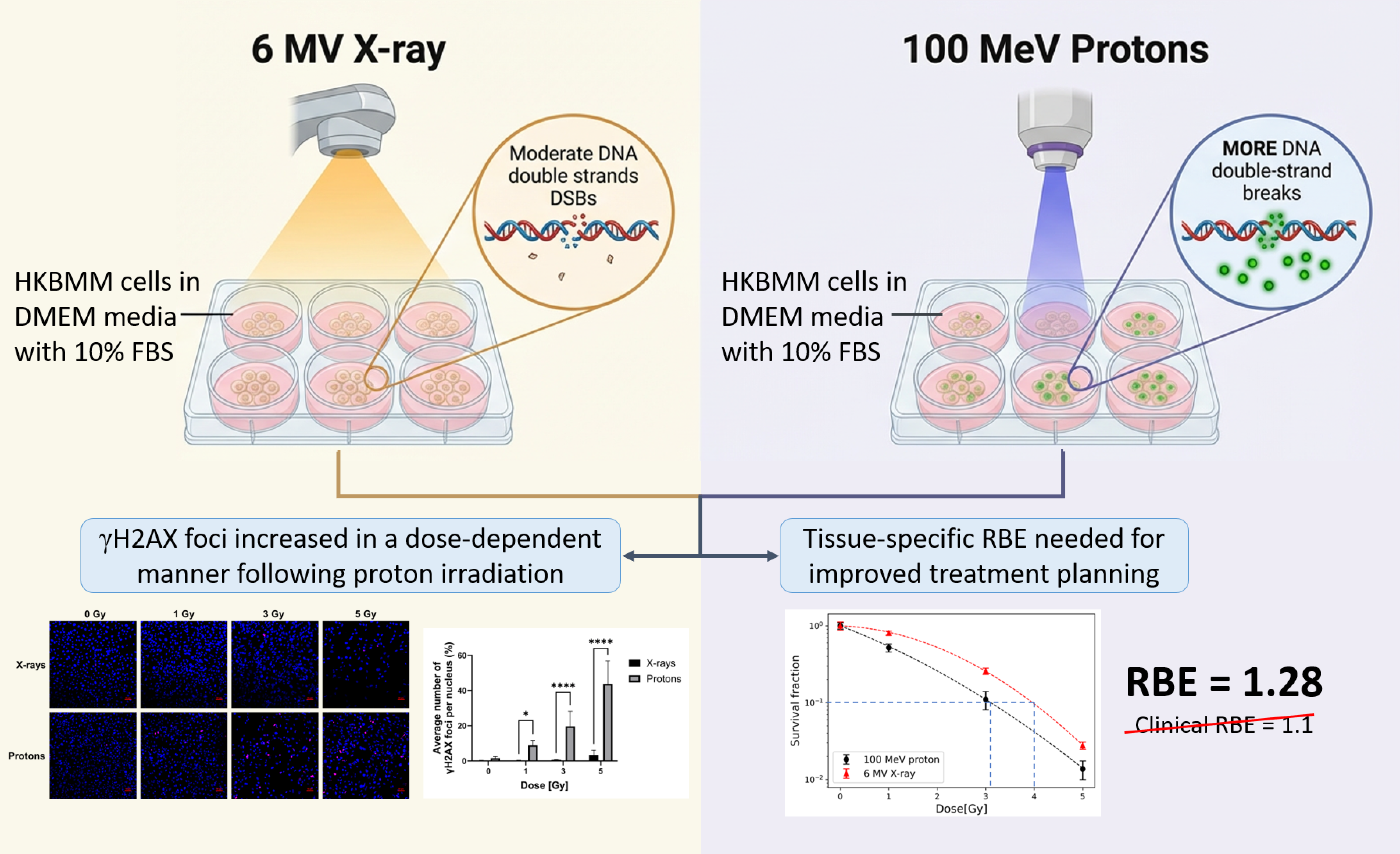
Downloads
References
FR Murray, JW Snider, A Bolsi, AJ Lomax, M Walser, U Kliebsch, RA Schneider and DC Weber. Long-term clinical outcomes of pencil beam scanning proton therapy for benign and non-benign intracranial meningiomas. International Journal of Radiation Oncology, Biology, Physics 2017; 99(5), 1190-1198.
RAE Shafie, M Czech, KA Kessel, D Habermehl, D Weber, S Rieken, N Bougatf, O Jäkel, J Debus and SE Combs. Clinical outcome after particle therapy for meningiomas of the skull base: Toxicity and local control in patients treated with active rasterscanning. Radiation Oncology 2018; 13, 54.
H Sato, M Mizumoto, T Okumura, H Sakurai, N Sakamoto, H Akutsu, E Ishikawa and K Tsuboi. Long-term outcomes of patients with unresectable benign meningioma treated with proton beam therapy. Journal of Radiation Research 2021; 62(3), 427-437.
MW McDonald, DA Plankenhorn, KP McMullen, MA Henderson, EJ Dropcho, MV Shah and AA Cohen-Gadol. Proton therapy for atypical meningiomas. Journal of Neuro-Oncology 2015; 123, 123-128.
C Champeaux-Depond and J Weller. Outcome after protontherapy for progression or recurrence of surgically treated meningioma. Brain Tumor Research and Treatment 2021; 9(2), 46-57.
R Krcek, D Leiser, M García-Marqueta, A Bolsi and DC Weber. Long term outcome and quality of life of intracranial meningioma patients treated with pencil beam scanning proton therapy. Cancers 2023; 15(12), 3099.
A Iannalfi, G Riva, S Lillo, L Ciccone, G Fontana, S Molinelli, L Trombetta, M Ciocca, S Imparato, M Pecorilla and E Orlandi. Proton therapy for intracranial meningioma: A single-institution retrospective analysis of efficacy, survival and toxicity outcomes. Journal of Neuro-Oncology 2024; 169, 683-692.
J Valentin. Relative biological effectiveness (RBE), quality factor (Q), and radiation weighting factor (wR): ICRP Publication 92: Approved by the Commission in January 2003. Annals of the ICRP 2003; 33(4), 1-117.
H Paganetti. Relative biological effectiveness (RBE) values for proton beam therapy. Variations as a function of biological endpoint, dose, and linear energy transfer. Physics in Medicine & Biology 2014; 59(22), R419-R472.
H Paganetti. Mechanisms and review of clinical evidence of variations in relative biological effectiveness in proton therapy. International Journal of Radiation Oncology, Biology, Physics 2022; 112(1), 222-236.
NAP Franken, HM Rodermond, J Stap, J Haveman and CV Bree. Clonogenic assay of cells in vitro. Nature Protocols 2006; 1, 2315-2319.
EJ Hall and AJ Giaccia. Radiobiology for the radiologist: Seventh edition. Lippincottt Williams & Wilkins, Philadelphia, 2011.
V Valdiglesias, S Giunta, M Fenech, M Neri and S Bonassi. γH2AX as a marker of DNA double strand breaks and genomic instability in human population studies. Mutation Research/Reviews in Mutation Research 2013; 753(1), 24-40.
Y Lee, Q Wang, I Shuryak, DJ Brenner and HC Turner. Development of a high-throughput γ-H2AX assay based on imaging flow cytometry. Radiation Oncology 2019; 14, 150.
QT Ostrom, M Price, C Neff, G Cioffi, KA Waite, C Kruchko and JS Barnholtz-Sloan. CBTRUS statistical report: Primary brain and other central nervous system tumors diagnosed in the United States in 2015 - 2019. Neuro-Oncology 2022; 24(5), v1-v95.
L Wang, X Wang, Y Li, S Han, J Zhu, X Wang, DP Molkentine, P Blanchard, Y Yang, R Zhang, N Sahoo, M Gillin, XR Zhu, X Zhang, JN Myers and SJ Frank. Human papillomavirus status and the relative biological effectiveness of proton radiotherapy in head and neck cancer cells. Head & Neck 2016; 39(4), 708-715.
B Lohberger, D Glänzer, N Eck, S Kerschbaum-Gruber, E Mara, S Deycmar, T Madl, K Kashofer, P Georg, A Leithner and D Georg. Activation of efficient DNA repair mechanisms after photon and proton irradiation of human chondrosarcoma cells. Scientific Reports 2021; 11, 24116.
Q Akolawala, M Rovituso, HH Versteeg, AMR Rondon and A Accardo. Evaluation of proton-induced DNA damage in 3D-engineered glioblastoma microenvironments. ACS Applied Materials & Interfaces 2022; 14(18), 20778-20789.
T Groesser, H Chang, G Fontenay, J Chen, SV Costes, MH Barcellos-Hoff, B Parvin and B Rydberg. Persistence of γ-H2AX and 53BP1 foci in proliferating and non-proliferating human mammary epithelial cells after exposure to γ-rays or iron ions. International Journal of Radiation Biology 2011; 87(7), 696-710.
K Oonishi, X Cui, H Hirakawa, A Fujimori, T Kamijo, S Yamada, O Yokosuka and T Kamada. Different effects of carbon ion beams and X-rays on clonogenic survival and DNA repair in human pancreatic cancer stem-like cells. Radiotherapy and Oncology 2012; 105(2), 258-265.
M Ghasemi, T Turnbull, S Sebastian and I Kempson. The MTT assay: Utility, limitations, pitfalls, and interpretation in bulk and single-cell analysis. International Journal of Molecular Sciences 2021; 22(23), 12827.
SJ McMahon. The linear quadratic model: Usage, interpretation and challenges. Physics in Medicine & Biology 2019; 64(1), 01TR01.
H Paganetti, A Niemierko, M Ancukiewicz, LE Gerweck, M Goitein, JS Loeffler and HD Suit. Relative biological effectiveness (RBE) values for proton beam therapy. International Journal of Radiation Oncology, Biology, Physics 2002; 53(2), 407-421.
International Atomic Energy Agency. Relative biological effectiveness in ion beam therapy. International Atomic Energy Agency, Vienna, Austria, 2008.
DA Kartini, P Karoon, Y Malad, T Tippayamontri, T Sanghangthum, C Talabnin and C Kobdaj. Human glioblastoma (U87) cells grown in 3D culture showed a radio-resistance to X-ray and proton radiation. Radiological Physics and Technology 2025; 18, 688-697.
J Song, S Aljabab, L Abduljabbar, YD Tseng, JK Rockhill, JR Fink, L Chang and LM Halasz. Radiation-induced brain injury in patients with meningioma treated with proton or photon therapy. Journal of Neuro-Oncology 2021; 153, 169-180.
S Zhou, X Ding, Y Zhang, Y Liu, X Wang, Y Guo, J Zhang, X Liu, G Gong, Y Su, L Wang, M Zhao and M Hu. Evaluation of specific RBE in different cells of hippocampus under high-dose proton irradiation in rats. Scientific Reports 2024; 14, 8193.
X Wang, Y Guo, J Zhang, M Zhao, Y Liu, X Liu, X Ding, S Zhou, X Yin, J Zhu, Y Zhang, G Gong, L Wang, Y Su, T Sun, NY Lee, J Yu and M Hu. Dose-and time-dependent relative biological effect of proton in different intracerebral cells. Scientific Reports 2026; 16, 8984.
DA Kartini, O Sokol, J Wiedemann, W Tinganelli, M Witt, G Camazzola, M Krämer, C Talabnin, C Kobdaj and MC Fuss. Validation of a pseudo-3D phantom for radiobiological treatment plan verifications. Physics in Medicine & Biology 2020; 65(22), 225039.
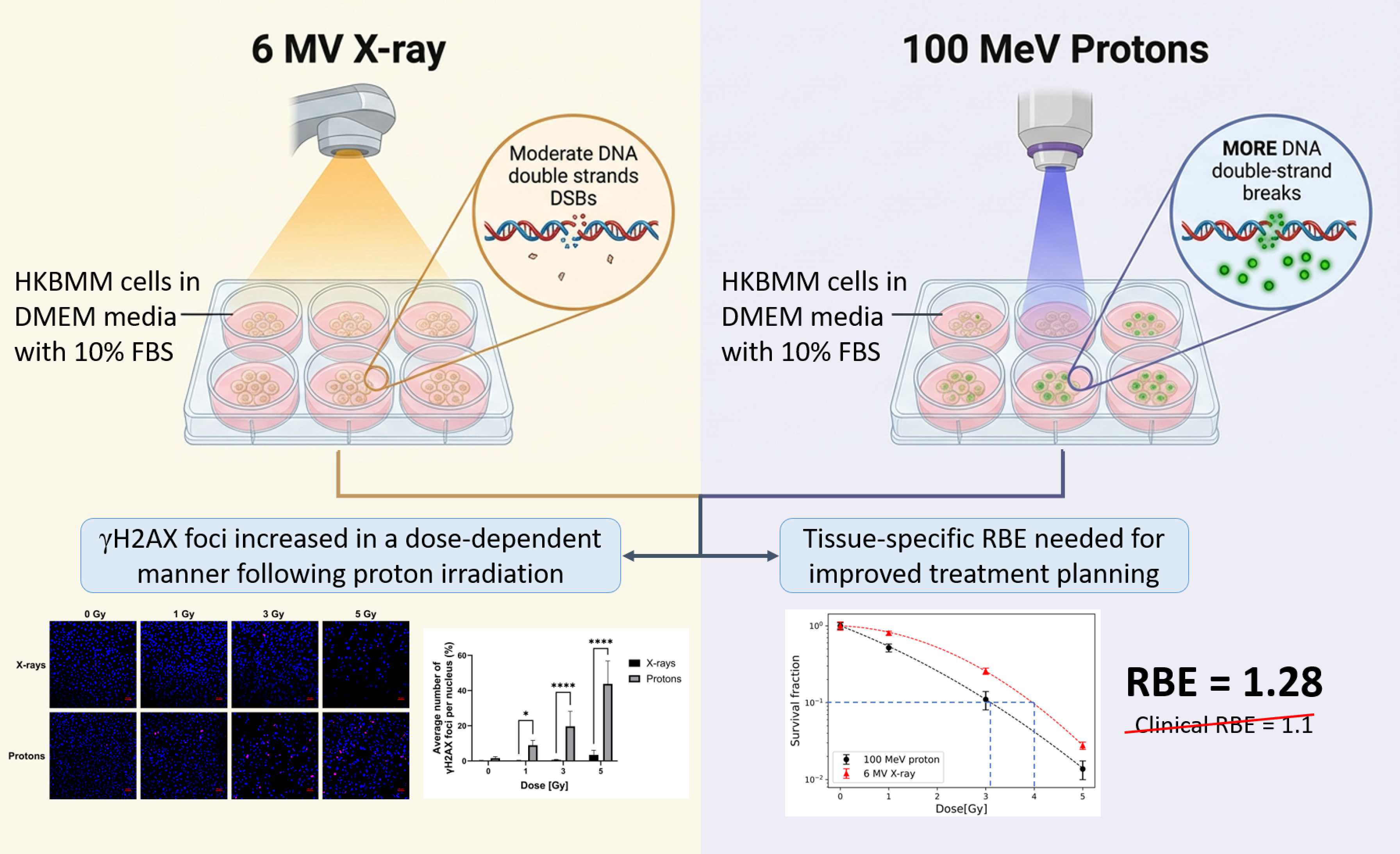
Downloads
Published
How to Cite
Issue
Section
License
Copyright (c) 2026 Walailak University

This work is licensed under a Creative Commons Attribution-NonCommercial-NoDerivatives 4.0 International License.