
Evaluation of Antitoxic and Anti-Inflammatory Activities of Water Extract from Mangrove Sonneratia caseolaris Leaves Through an In Vitro and In Silico Approaches
DOI:
https://doi.org/10.48048/tis.2026.13686Keywords:
Anti-inflammatory compound, Antitoxic compound, Natural product bioactivity, Preclinical safety assessment, Sonneratia caseolaris leaves, Sustainable bioresource utilizationAbstract
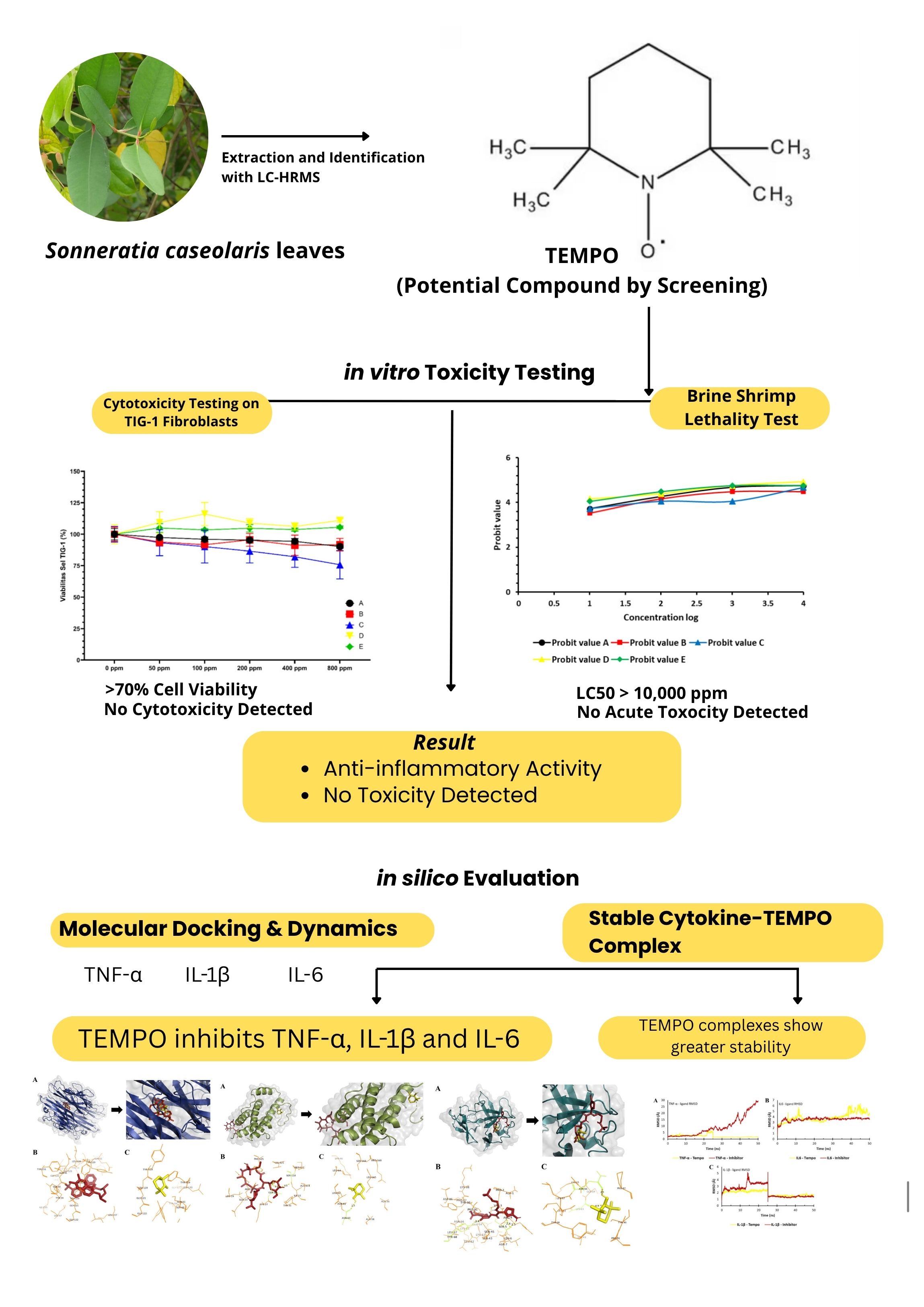
Leaves of Sonneratia caseolaris, traditionally used in Indonesia, contain various bioactive compounds including saponins, tannins, flavonoids, and phenolics, indicating potential as a source of anti-inflammatory agents. This study evaluated the bioactivity potential of TEMPO, a compound tentatively identified by LC-HRMS in S. caseolaris leaves extract, through assessed the toxicity of aqueous leaves extracts using human TIG-1 cells and Artemia salina larvae and in silico analysis. Cytotoxicity toward TIG-1 fibroblasts was assessed using cell viability assays, and the brine shrimp lethality test was used to determine LC₅₀ values of extracts prepared with different aqueous solvents. Molecular docking was performed against the pro-inflammatory cytokines TNF-α, IL-1β, and IL-6, followed by molecular dynamics simulations to examine the stability of ligand-protein interactions. Toxicity assays showed no significant cytotoxicity, with TIG-1 cell viability remaining above 70%, while LC₅₀ values for all aqueous extracts exceeded 10,000 ppm in the brine shrimp assay. Docking analysis suggested that TEMPO may interact with overlapping binding regions of TNF-α and IL-1β relative to reference ligands, while exhibiting a distinct predicted binding site on IL-6. Molecular dynamics simulations indicated stable interactions between TEMPO and the target cytokines throughout the simulation period. These findings indicate that the aqueous extracts showed low toxicity under the tested conditions and TEMPO exhibits potential anti-inflammatory activity. However, further in vitro and in vivo studies are needed to confirm the biological activity and safety of TEMPO for pharmaceutical applications.
HIGHLIGHTS
- Aqueous extracts showed low cytotoxicity toward TIG-1 fibroblasts and LC₅₀ values >10,000 ppm in salina.
- caseolaris leaves extract may represent a promising source of anti-inflammatory compounds for further investigation.
- TEMPO tentatively identified in caseolaris leaves extract showed predicted binding interactions with TNF-α, IL-1β, and IL-6 in molecular docking studies.
- Docking analysis suggested overlapping binding regions between TEMPO and reference ligands for TNF-α and IL-1β.
- Molecular dynamics simulations indicated stable cytokine–TEMPO complexes during 50 ns simulations.
GRAPHICAL ABSTRACT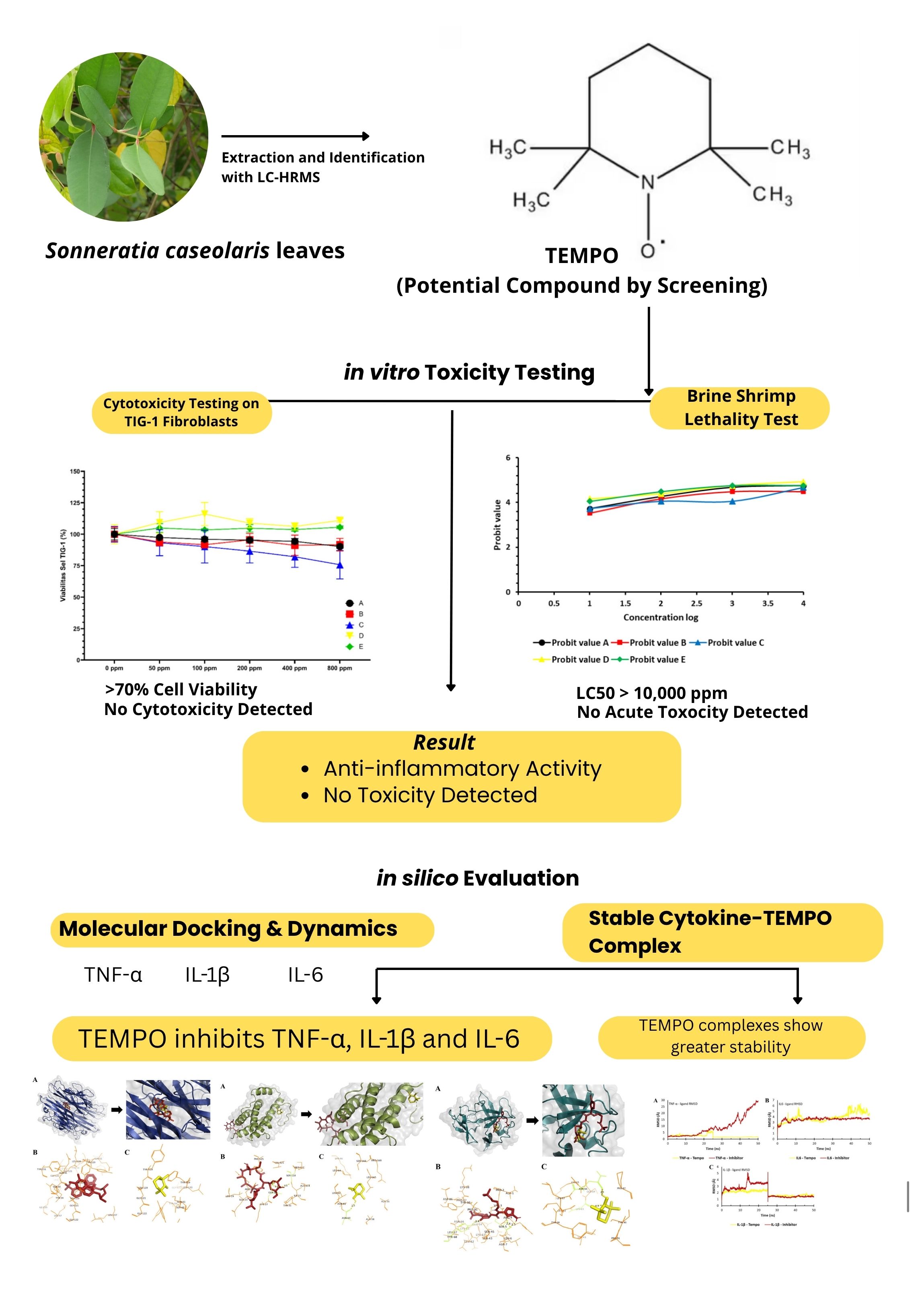
Downloads
References
AS Bagad, JA Joseph, N Bhaskaran and A Agarwal. Comparative evaluation of anti-inflammatory activity of curcuminoids, turmerones, and aqueous extract of curcuma longa. Advances in Pharmacological Sciences 2013; 2013, 805756.
L Chen, H Deng, H Cui, J Fang, Z Zuo, J Deng, Y Li, X Wang and L Zhao. Inflammatory responses and inflammation-associated diseases in organs. Oncotarget 2018; 9, 7204-7218.
Y Huang, X Guo, Y Wu, X Chen, L Feng, N Xie and G Shen. Nanotechnology’s frontier in combating infectious and inflammatory diseases: Prevention and treatment. Signal Transduction and Targeted Therapy 2024; 9, 34.
S Kany, JT Vollrath and B Relja. Cytokines in inflammatory disease. International Journal of Molecular Sciences 2019; 20(23), 6008.
F Abdallah, L Mijouin and C Pichon. Skin immune landscape: Inside and outside the organism. Mediators of Inflammation 2017; 2017, 5095293.
SA Eming, T Krieg and JM Davidson. Inflammation in wound repair: Molecular and cellular mechanisms. Journal of Investigative Dermatology 2007; 127(3), 514-525.
RPH Wang, J Huang, KWY Chan, WK Leung, T Goto, YS Ho and RCC Chang. IL-1β and TNF-α play an important role in modulating the risk of periodontitis and Alzheimer’s disease. Journal of Neuroinflammation 2023; 20, 71.
LB Silva, APDS Neto, SMAS Maia, CDS Guimarães, IL Quidute, ADA Carvalho, SA Júnior and JC Leão. The Role of TNF-α as a proinflammatory cytokine in pathological processes. The Open Dentistry Journal 2019; 13, 332-338.
A Mantovani, CA Dinarello, M Molgora and C Garlanda. Interleukin-1 and related cytokines in the regulation of inflammation and immunity. Immunity 2019; 50(4), 778-795.
K Pyrillou, LC Burzynski and MCH Clarke. Alternative pathways of IL-1 activation, and its role in health and disease. Frontiers in Immunology 2020; 11, 613170.
T Tanaka, M Narazaki and T Kishimoto. IL-6 in inflammation, immunity, and disease. Cold Spring Harbor Perspectives in Biology 2014; 6, 016295.
DI Jang, AH Lee, HY Shin, HR Song, JH Park, TB Kang, SR Lee and SH Yang. The role of tumor necrosis factor alpha (TNF-α) in autoimmune disease and current TNF-α inhibitors in therapeutics. International Journal of Molecular Sciences 2021; 22(5), 2719.
S Soomro. Oxidative stress and inflammation. Open Journal of Immunology 2019; 9(1), 1-20.
ZA Marcum and JT Hanlon. Recognizing the risks of chronic nonsteroidal anti-inflammatory drug use in older adults. Annals of Long-Term Care 2011; 18(9), 24-27.
Z Salis and A Sainsbury. Association of long-term use of non-steroidal anti-inflammatory drugs with knee osteoarthritis: A prospective multi-cohort study over 4-to-5 years. Scientific Reports 2024; 14, 6593.
R Sohail, M Mathew, KK Patel, SA Reddy, Z Haider, M Naria, A Habib, ZU Abdin, WR Chaudhry and A Akbar. Effects of Non-steroidal Anti-inflammatory Drugs (NSAIDs) and gastroprotective NSAIDs on the gastrointestinal tract: A narrative review. Cureus 2023; 15(4), e37080.
FWD Tai and ME McAlindon. Non-steroidal anti-inflammatory drugs and the gastrointestinal tract. Clinical Medicine 2021; 21(2), 131-134.
MO Mărginean, LE Meliț, S Mocanu and V Săsăran. Ibuprofen, a potential cause of acute hemorrhagic gastritis in children: A case report. The Journal of Critical Care Medicine 2018; 4(4), 143-146.
WH Frishman. Effects of nonsteroidal anti-inflammatory drug therapy on blood pressure and peripheral edema. The American Journal of Cardiology 2002; 89(6), 18-25.
CC Hsu, H Wang, YH Hsu, SY Chuang, YW Huang, YK Chang, JS Liu, CA Hsiung and HJ Tsai. Use of nonsteroidal anti-inflammatory drugs and risk of chronic kidney disease in subjects with hypertension: Nationwide longitudinal cohort study. Hypertension 2015; 66(3), 524-533.
S Wongrakpanich, A Wongrakpanich, K Melhado and J Rangaswami. A comprehensive review of non-steroidal anti-inflammatory drug use in the elderly. Aging and Disease 2018; 9(1), 143-150.
S Kuckuck, R Lengton, MR Boon, E Boersma, BWJH Penninx, M Kavousi and EFC van Rossum. Long‐term glucocorticoids in relation to the metabolic syndrome and cardiovascular disease: A systematic review and meta‐analysis. Journal of Internal Medicine 2024; 295, 2-19.
HE Tamez-Pérez, DL Quintanilla-Flores, R Rodríguez-Gutiérrez, JG González-González and AL Tamez-Peña. Steroid hyperglycemia: Prevalence, early detection and therapeutic recommendations: A narrative review. World Journal of Diabetes 2015; 6(8), 1073-1081.
DM Williams. Clinical pharmacology of corticosteroids. Respiratory Care 2018; 63(6), 655-670.
R Narayanaswamy and V Veeraragavan. Natural products as antiinflammatory agents. Studies in Natural Products Chemistry 2020; 67, 269-306.
NS Idris, MA Mustapha, N Sulaiman, S Khamis, SM Husin and NDA Darbis. The dynamics of landscape changes surrounding a firefly ecotourism area. Global Ecology and Conservation 2021; 29, 01741.
KA Audah and AS Anisa. The potential of Sonneratia caseolaris mangrove plant as functional food and medicine. Journal of Functional Food and Nutraceutical 2024; 6(1), 45-58.
KA Audah, J Ettin, J Darmadi, NN Azizah, AS Anisa, TDF Hermawan, CR Tjampakasari, R Heryanto, IS Ismail and I Batubara. Indonesian mangrove Sonneratia caseolaris leaves ethanol extract is a potential super antioxidant and anti methicillin-resistant Staphylococcus aureus drug. Molecules 2022; 27(23), 8369.
B Bokshi, MNH Zilani, H Hossain, MI Ahmed, M Anisuzzman, NN Biswas and SK Sadhu. Bioactivities of Sonneratia caseolaris (Linn) leaf and stem using different solvent systems. Biomedical Journal of Scientific & Technical Research 2020; 31(5), 24578-24582.
H Kartikaningsih, F Iranawati, LI Harlan, JN Fauziyah, HI Fathoni and MP Koentjoro. Toxicity of Aqueous Extracts of the Leaves of Sonneratia caseolaris Grown in Ujung Pangkah, Gresik, East Java. Tropical Journal of Natural Product Research 2024; 8(5), 7213-7220.
DY Pratiwi. Antimicrobial potential of Sonneratia alba and Sonneratia caseolaris against shrimp pathogens. Asian Journal of Fisheries and Aquatic Research 2021; 12(4), 7-14.
A Simlai, A Rai, S Mishra, K Mukherjee and A Roy. Antimicrobial and antioxidative activities in the bark extracts of Sonneratia caseolaris, a mangrove plant. EXCLI Journal 2014; 13, 997-1010.
NE Hasibuan and Sumartini. Potential antibacterials of pedada leaf extract (Sonneratia caseolaris) as a natural preservative in fresh mackerel (Rastrelliger sp). Jurnal Agritechno 2021; 14(2), 81-87.
S Dev, RN Acharyya, S Akter, MAA Bari, K Asma, H Hossain, KK Sarkar, NN Biswas and AK Das. Toxicological screening and evaluation of anti-allergic and anti-hyperglycemic potential of Sonneratia caseolaris (L.) Engl. fruits. Clinical Phytoscience 2021; 7, 69.
Rozirwan, A Siswanto, NN Khotimah, RY Nugroho, WAE Putri, Fauziyah, R Apri and Hartoni. Anti-inflammatory activity and phytochemical profile from the leaves of the mangrove Sonneratia caseolaris (L.) Engl. for future drug discovery. Science and Technology Indonesia 2024; 9(2), 502-516.
MS Islam, MS Munira, N Akther and SF Koly. Estimation of anti-inflammatory, analgesic and thrombolytic activities of Sonneratia caseolaris Linn. (Family: Sonneratiaceae). Journal of Analytical & Pharmaceutical Research 2019; 8(1), 20-23.
A Daina, O Michielin and V Zoete. SwissADME: A free web tool to evaluate pharmacokinetics, drug-likeness and medicinal chemistry friendliness of small molecules. Scientific Reports 2017; 7, 42717.
MJ Boulanger, DC Chow, EE Brevnova and KC Garcia. Hexameric structure and assembly of the Interleukin-6/IL-6 α-Receptor/gp130 complex. Science 2003; 300(5628), 2101-2104.
SA Halim, M Jawad, M Ilyas, Z Mir, AA Mirza and T Husnain. In silico identification of novel IL-1β inhibitors to target protein-protein interfaces. Computational Biology and Chemistry 2015; 58, 158-166.
K Zia, S Ashraf, A Jabeen, M Saeed, M Nur-e-Alam, S Ahmed, AJ Al-Rehaily and Z Ul-Haq. Identification of potential TNF-α inhibitors: From in silico to in vitro studies. Scientific Reports 2020; 10, 20974.
M Bagheri and MH Fatemi. Fluorescence spectroscopy, molecular docking and molecular dynamic simulation studies of HSA-Aflatoxin B1 and G1 interactions. Journal of Luminescence 2018; 202, 345-353.
F Deeba, MZ Malik, IH Naqvi, MSH Haider, Z Shafat, P Sinha, R Ishrat, A Ahmed and S Parveen. Potential entry inhibitors of the envelope protein (E2) of Chikungunya virus: In silico structural modeling, docking and molecular dynamic studies. Virus Disease 2017; 28(1), 39-49.
E Krieger and G Vriend. New ways to boost molecular dynamics simulations. Journal of Computational Chemistry 2015; 36(13), 996-1007.
X Guo, RA Mittelstaedt, L Guo, JG Shaddock, RH Heflich, AH Bigger, MM Moore and N Mei. Nitroxide TEMPO: A genotoxic and oxidative stress inducer in cultured cells. Toxicology in Vitro 2013; 27(5), 1496-1502.
AC Pan, DW Borhani, RO Dror and DE Shaw. Molecular determinants of drug-receptor binding kinetics. Drug Discovery Today 2013; 18(13-14), 667-673.
L Martínez. Automatic identification of mobile and rigid substructures in molecular dynamics simulations and fractional structural fluctuation analysis. PLoS One 2015; 10(3), 0119264.
Y Zhao, C Zeng and MA Massiah. Molecular dynamics simulation reveals insights into the mechanism of unfolding by the A130T/V mutations within the MID1 zinc-binding Bbox1 domain. PLoS One 2015; 10(4), 0124377.
CA Lipinski, F Lombardo, BW Dominy and PJ Feeney. Experimental and computational approaches to estimate solubility and permeability in drug discovery and development settings. Advanced Drug Delivery Reviews 2001; 46(1-3), 3-26.
G Ottaviani, DJ Gosling, C Patissier, S Rodde, L Zhou and B Faller. What is modulating solubility in simulated intestinal fluids. European Journal of Pharmaceutical Sciences 2010; 41(3-4), 452-457.
TJ Ritchie, SJF Macdonald, S Peace, SD Pickett and CN Luscombe. Increasing small molecule drug developability in sub-optimal chemical space. MedChemComm 2013; 4(4), 673-680.
B Testa and SD Krämer. The biochemistry of drug metabolism – an introduction: Part 1 principles and overview. Chemistry & Biodiversity 2006; 3(10), 1053-1101.
D Furman, J Campisi, E Verdin, P Carrera-Bastos, S Targ, C Franceschi, L Ferrucci, DW Gilroy, A Fasano, GW Miller, AH Miller, A Mantovani, CM Weyand, N Barzilai, JJ Goronzy, TA Rando, RB Effros, A Lucia, N Kleinstreuer and GM Slavich. Chronic inflammation in the etiology of disease across the life span. Nature Medicine 2019; 25, 1822-1832.
C Sostres, CJ Gargallo, MT Arroyo and A Lanas. Adverse effects of non-steroidal anti-inflammatory drugs (NSAIDs, aspirin and coxibs) on upper gastrointestinal tract. Best Practice & Research Clinical Gastroenterology 2010; 24(2), 121-132.
S Bindu, S Mazumder and U Bandyopadhyay. Non-steroidal anti-inflammatory drugs (NSAIDs) and organ damage: A current perspective. Biochemical Pharmacology 2020; 180, 114147.
R Patil, S Das, A Stanley, L Yadav, A Sudhakar and AK Varma. Optimized hydrophobic interactions and hydrogen bonding at the target-ligand interface leads the pathways of drug-designing. PLoS One 2010; 5(8), 12029.
M Majewski, S Ruiz-Carmona and X Barril. An investigation of structural stability in protein-ligand complexes reveals the balance between order and disorder. Communications Chemistry 2019; 2, 110.
R Ghosh, A Chakraborty, A Biswas and S Chowdhuri. Identification of polyphenols from Broussonetia papyrifera as SARS CoV-2 main protease inhibitors using in silico docking and molecular dynamics simulation approaches. Journal of Biomolecular Structure and Dynamics 2021; 39(17), 6747-6760.
M Kurniasih, Purwati and RS Dewi. Toxicity tests, antioxidant activity, and antimicrobial activity of chitosan. IOP Conference Series: Materials Science and Engineering 2018; 349, 012037.
R Fadilah, A Sukainah, NAS Taufieq, RP Putra and M Adriani. Analysis of bioactive compounds content and toxicity test on mangrove leaf extract. IOP Conference Series: Earth and Environmental Science 2023; 1209, 012016.
THT Nguyen, HVT Pham, NKT Pham, NDP Quach, K Pudhom, PE Hansen and KPP Nguyen. Chemical constituents from Sonneratia ovata Backer and their in vitro cytotoxicity and acetylcholinesterase inhibitory activities. Bioorganic & Medicinal Chemistry Letters 2015; 25(11), 2366-2371.
Downloads
Published
How to Cite
Issue
Section
License
Copyright (c) 2026 Walailak University

This work is licensed under a Creative Commons Attribution-NonCommercial-NoDerivatives 4.0 International License.





