
Comparison of Chemical Changes in Controlled Fermentation of Liberica Coffee (Coffea liberica) Using Lactobacillus plantarum, Aspergillus niger, and Saccharomyces cerevisiae
DOI:
https://doi.org/10.48048/tis.2026.13633Keywords:
Liberica coffee, Controlled fermentation, Bioreactor, Bioactive compounds, Antioxidant activity, Microbial fermentationAbstract
Liberica coffee (Coffea liberica), which accounts for approximately 2% of global coffee production, has received limited attention due to its relatively lower sensory quality compared to Arabica. This study investigated the chemical and sensory changes of Liberica coffee subjected to controlled fermentation in a bioreactor system. Green beans were fermented separately (single-strain fermentation) for 24 h using Lactobacillus plantarum, Aspergillus niger, and Saccharomyces cerevisiae under controlled conditions, with non-fermented samples as controls and experiments conducted in triplicate. Fermentation progress was monitored through pH and temperature profiles, while gas production (primarily CO₂ and alcohol vapor) was used as an indicator of microbial metabolic activity. The fermented beans were subsequently medium-roasted and evaluated using cupping tests, LC-MS analysis, and DPPH antioxidant assays. Statistical differences were assessed using ANOVA (p < 0.05). Fermented samples showed significantly improved sensory scores (up to 79.25, “very good” category) compared to non-fermented coffee (72.5). Antioxidant activity was also enhanced, with lower IC₅₀ values (as low as 33.16 ppm), and a greater diversity of bioactive compounds was observed (up to 18 compounds vs. 8 in non-fermented samples). Among the tested microorganisms, Aspergillus niger produced the best sensory performance, Saccharomyces cerevisiae yielded the highest diversity of bioactive compounds, and both S. cerevisiae and L. plantarum showed strong antioxidant activity. These findings demonstrate that controlled microbial fermentation is a promising and reproducible approach to enhance the sensory quality, chemical diversity, and functional properties of Liberica coffee, providing a basis for developing targeted fermentation protocols in specialty Liberica coffee processing.
HIGHLIGHTS
- Controlled fermentation of Liberica coffee using Lactobacillus plantarum, Aspergillus niger, and Saccharomyces cerevisiae in a mini-bioreactor significantly modulated pH, temperature, and gas production profiles, reflecting distinct microbial metabolic pathways.
- Microbial fermentation combined with medium roasting enhanced sensory attributes and overall cupping scores of Liberica coffee compared with non-fermented samples.
- LC-MS profiling revealed increased diversity and abundance of bioactive compounds in fermented samples, with consistent detection of caffeine, trigonelline, chlorogenic acid, umbelliferone, and metharbital.
- Fermented coffees exhibited higher antioxidant activity (lower IC₅₀ values) than non-fermented coffee, indicating improved functional properties.
- Integration of controlled bioreactor fermentation and roasting modulation provides a reproducible strategy to upgrade the chemical and sensory quality of Liberica coffee.
GRAPHICAL ABSTRACT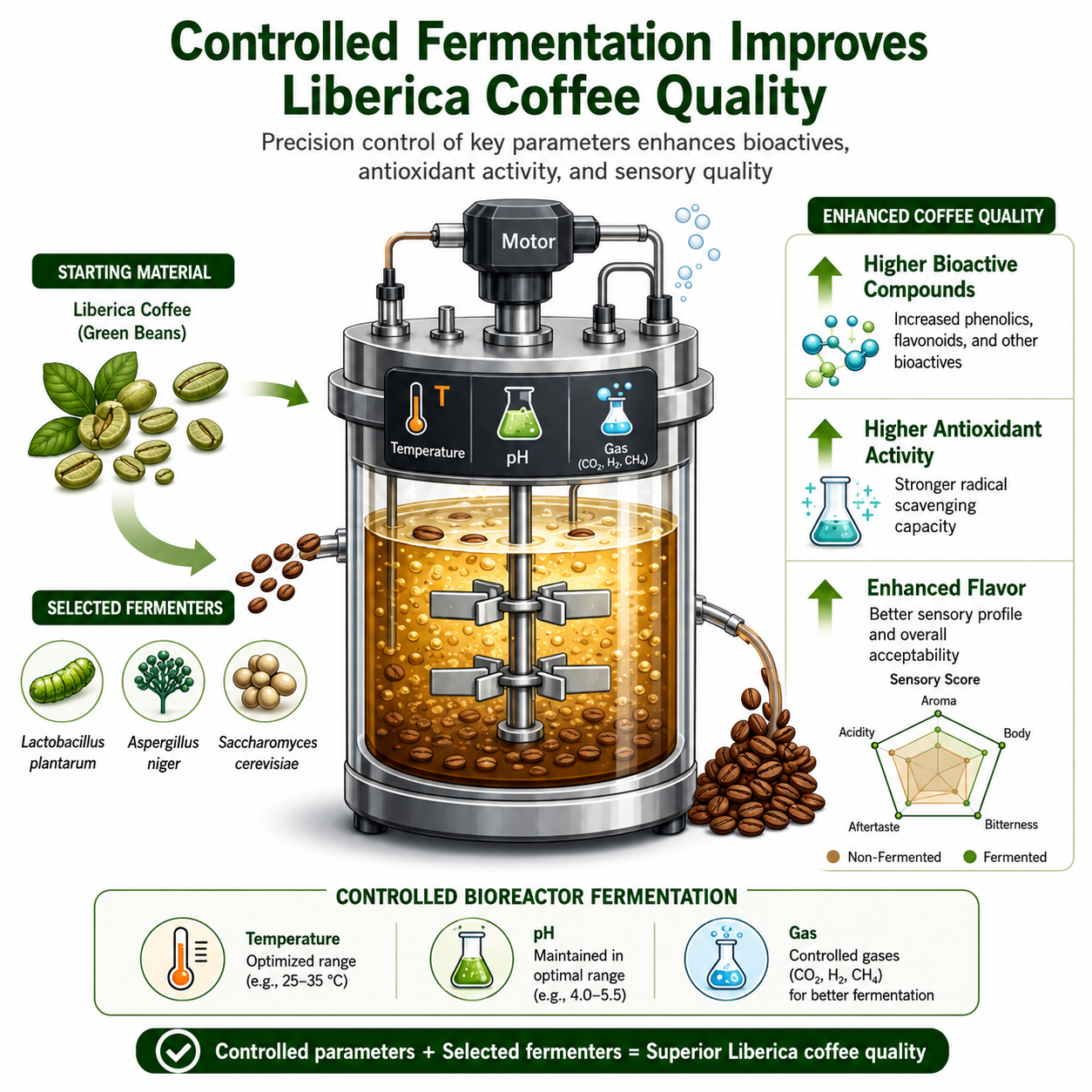
Downloads
References
SA Halim-Lim, WAAQI Wan-Mohtar, S Surapinchai and NAZ Azizan. Optimum condition of roasting process of Liberica coffee towards the local and international preference. Food Research 2022; 6(3), 115-123.
D Hanifah, D Herawati and N Andarwulan. Karakteristik fisikokimia dan kapasitas antioksidan kopi Liberika dari Kabupaten Tanjung Jabung Barat, Jambi. Jurnal Teknologi dan Industri Pangan 2022; 33(1), 39-51.
NA Wibowo, W Mangunwardoyo, TJ Santoso and Yasman. Investigation of volatile compounds of Liberica coffee beans fermented at varying degrees of roasting. Food Research 2024; 8(3), 43-53.
RA Fadri, K Sayuti, N Nazir and I Suliansyah. The effect of temperature and roasting duration on physical characteristics and sensory quality of singgalang arabica coffee (Coffea arabica) agam regency. Journal of Applied Agricultural Science and Technology 2019; 3(2), 189-201.
LJC Ferreira, M de Souza Gomes, LM de Oliveira and LD Santos. Coffee fermentation process: A review. Food Research International 2023; 169, 112793.
H Wu, CG Viejo, S Fuentes, FR Dunshea and HAR Suleria. Evaluation of spontaneous fermentation impact on the physicochemical properties and sensory profile of green and roasted arabica coffee by digital technologies. Food Research International 2024; 176, 113800.
GI Puerta Quintero. Development of controlled fermentation processes to add value to coffee quality. In: ASIC 25th International Conference on Coffee Science, Colombian. 2014, p. 42-45.
F Palladino, PRF Marcelino, AE Schlogl, ÁHM José, R de Cássia Lacerda Brambilla Rodrigues, DL Fabrino, IJB Santos and CA Rosa. Bioreactors: Applications and innovations for a sustainable and healthy future: A critical review. Applied Sciences 2024; 14(20), 9346.
AK Ilham, IL Tarigan, II Ramadhan, MF Afrianto, M Latief, Sutrisno. Preliminary Data on Monitoring the Fermentation of Liberica Coffee using a Sensor-Integrated Mini Bioreactor. Coffee Science. 2026; 21,e212420. 10.25186/.v21i.2420
MC da Silva, E da Silva G de Castro, J do N Barreto, PV de Oliveira Martins, GL da Silva, RF da Silva, DG dos Santo, O Freitas-Silva, JBP Simão, AI da Silva Junior and ADP Netto. Ochratoxin a levels in fermented specialty coffees from Caparaó, Brazil: Is it a cause of concern for coffee drinkers?. Food Additives and Contaminants - Part A 2021; 38(11), 1948-1957.
T Feng and J Wang. Oxidative stress tolerance and antioxidant capacity of lactic acid bacteria as probiotic: A systematic review. Gut Microbes 2020; 12(1), 1801944.
H Izzati, J Jalaluddin, Z Ginting, E Kurniawan and S Sulhatun. Pengaruh waktu fermentasi terhadap mutu kopi menggunakan bakteri asam laktat dari yakult. Chemical Engineering Journal Storage 2022; 2(3), 61-74.
M Haile and WH Kang. The role of microbes in coffee fermentation and their impact on coffee quality. Journal of Food Quality 2019; 2019(1), 4836709.
SA Setianingsih, EK Sari and MK Putri. Pengaruh derajat penyangraian terhadap kadar asam klorogenat kopi robusta temanggung dengan metode spektrofotometri UV-Vis. Jurnal Jamu Kusuma 2023; 3(1), 7-14.
T Dajoh, RA Bara, E Angkouw, M Ompi, RAJ Lintang and C Lumenta. Uji aktivitas antibakteri dan Anti-Uv Phyllidiella nigra dan bakteri simbiotiknya dari perairan tanjung mandolang. Jurnal Pesisir Dan Laut Tropis 2020; 8(2), 61-71.
TW Imanisa, E Mardawati, N Masruchin. Produksi enzim xilanase dari Aspergillus niger melalui metode fermentasi terendam dalam valorisasi tandan kosong kelapa sawit sebagai produk biorefineri bernilai tambah. Biomass, Biorefinery, and Bioeconomy 2023; 1(1), 14-19.
N Sa’aid, JS Tan, MS Mohamed and L Muthulakshmi. Comparative analysis of Lactobacillus spp. fermentation in five fruit drinks: Impacts on lactic acid production and cell viability. Malaysian Applied Biology 2025; 54(2), 55-64.
T Purwoko, Suranto, R Setyaningsih, SD Marliyana. Chlorogenic Acid and Caffeine Content of Fermented Robusta Bean. Biodiversitas Journal of Biological Diversity. 2022. 23(2), 902-906.
IL Tarigan, Z Adriliana Z, AA Putri, NA Febrianto, M Latief and Sutrisno. Changes in the chemical compound and sensory profiles of Liberica fermentation (Coffea liberica) with cellulolytic bacteria Alcaligenes sp and Exiguobacterium indicum. Coffee Science 2024; 19, 192258.
HA Tanauma, G Citraningtyas, WA Lolo. Aktivitas antibakteri ekstrak biji kopi robusta (Coffea canephora) terhadap bakteri Escherichia coli. Pharmacon 2016; 5(4), 243-251.
S Baliyan, R Mukherjee, A Priyadarshini, A Vibhuti, A Gupta, RP Pandey and CM Chang. Determination of antioxidants by DPPH radical scavenging activity and quantitative phytochemical analysis of Ficus religiosa. Molecules 2022; 27(4), 1326.
JM Maligan, ATE Wibowo, NZ Anggono, SU Kosasih and YK Putra. Pengujian karakteristik sensori kopi robusta tirtoyudo natural. Prosiding Seminar Nasional Instiper 2022; 1(1), 299-305.
AFP Cika, Y Uztamila, AS Effendy, A Syarif and I Hajar. Pengaruh pH fermentasi dan putaran pengadukan pada fermentasi molasses terhadap produksi bioetanol. Jurnal Pendidikan dan Teknologi Indonesia 2022; 2(1), 41-47.
H Elhalis, J Cox and J Zhao. Ecological diversity, evolution and metabolism of microbial communities in the wet fermentation of Australian coffee beans. International Journal of Food Microbiology 2020; 321, 108544.
S Avallone, B Guyot, JM Brillouet, E Olguin and JP Guiraud. Microbiological and biochemical study of coffee fermentation. Current Microbiology 2001; 42, 252-256.
J Suryadi, AR Subagja, AN Amalia and T Hariyadi. The effect of temperature and fermentation time using local microorganism on robusta coffee characteristics. FLUIDA 2025; 18(1), 1-8.
LL Pereira and TR Moreira. Quality Determinants in Coffee Production. Springer International Publishing, Germany, 2021, p. 303-308.
SR Evangelista, CF Silva, MGP da Cruz Miguel, C de Souza Cordeiro, ACM Pinheiro, WF Duarte and RF Schwan. Improvement of coffee beverage quality by using selected yeasts strains during the fermentation in dry process. Food Research International 2014; 61, 183-195.
B Zhang, M Geberekidan, Z Yan, X Yi and J Bao. Very high thermotolerance of an adaptive evolved Saccharomyces cerevisiae in cellulosic ethanol fermentation. Fermentation 2023; 9(4), 393
BP Khatri, T Bhattarai, S Shrestha and J Maharjan. Alkaline thermostable pectinase enzyme from Aspergillus niger strain MCAS2 isolated from Manaslu Conservation Area , Gorkha , Nepal. SpringerPlus 2015; 4, 488.
DC Aryani, HMW den Besten and MH Zwietering. Quantifying variability in growth and thermal inactivation kinetics of Lactobacillus plantarum. Applied and Environmental Microbiology 2016; 82(16), 4896-4908.
P Popova-krumova, S Danova, N Atanasova and D Yankov. Lactic acid production by Lactiplantibacillus plantarum AC 11S—kinetics and modeling. Microorganisms 2024; 12(4), 739.
MI Tulasi, NDFK Foeh and AIR Detha. Studi literatur senyawa metabolit bakteri asam laktat dan kegunaannya dalam mengoptimalisasi kesehatan hewan. Jurnal Veteriner Nusantara 2024; 7(2), 262-274.
GM Walker and GG Stewart. Saccharomyces cerevisiae in the production of fermented beverages. Beverages 2016; 2(4), 30.
W Sun, MH Shahrajabian and M Lin. Research progress of fermented functional foods and protein factory-microbial fermentation technology. Fermentation 2022; 8(12), 688.
HM Lisboa, MB Pasquali, AI dos Anjos, AM Sarinho, ED de Melo, R Andrade, L Batista, J Lima, Y Diniz and A Barros. Innovative and sustainable food preservation techniques: Enhancing food quality, safety, and environmental sustainability. Sustainability 2024; 16(18), 8223.
B Hariyanto, F Fanani and SE Nugroho. Rekayasa fermentasi kopi an aerobik dengan metode karbonik dan semi karbonik maserasi. Jurnal Pengembangan Potensi Laboratorium 2022; 1(2), 79-85.
C Liu, W Dong, Y Yang, W Zhao, W Zeng, Y Litti, C Liu and B Yan. The effect of CO2 sparging on high ‑ solid acidogenic fermentation of food waste. Waste Disposal & Sustainable Energy 2025; 7, 27-39.
M Guadalupe-daqui, RM Goodrich-schneider, PJ Sarnoski, JC Carriglio, CA Sims, BJ Pearson and AJ MacIntosh. The effect of CO2 concentration on yeast fermentation: Rates, metabolic products, and yeast stress indicators. Journal of Industrial Microbiology and Biotechnology 2023; 50(1), kuad001.
X Shen, Q Wang, H Wang, G Fang, Y Li, J Zhang and K Liu. Microbial characteristics and functions in coffee fermentation: A review. Fermentation 2025; 11(1), 5.
P Filannino, RD Cagno and M Gobbetti. Metabolic and functional paths of lactic acid bacteria in plant foods: Get out of the labyrinth. Current Opinion in Biotechnology 2018; 49, 64-72.
H Juniar. Pengaruh aspergillus niger pada pembuatan bioetanol dari limbah kulit ubi kayu dan kulit nanas. Jurnal Redoks 2021; 6(1), 52.
Y Guan, X Xu, C Liu, J Wang, C Niu, F Zheng and Q Li. Evaluating the physiology and fermentation performance of the lager yeast during very high gravity brewing with increased temperature. LWT 2023; 173, 114312.
E Andrada, A Marquez, EP Chagra Dib, P Gauffin-Cano, RB Medina. Corn stover silage inoculated with ferulic acid esterase Producing L. johnsonii, L. plantarum, L. fermentum, and L. brevis Strains: Fermentative and nutritional parameters. Fermentation 2023; 9(4), 331.
TP Dianda and PH Suharti. Pengaruh waktu dan kadar etanol pada maserasi lidah buaya terhadap antiseptik hand sanitizer gel. Jurnal Teknologi Separasi 2022; 22(4), 1000-1008.
P Nassanga, G Mauriello, SO Ochaya and D Ongeng. Genera of lactic acid bacteria isolated from a maize-based fermented beverage (Kwete) consumed by ethnic communities in Northern Uganda. Discover Food 2026; 6, 131
KM Muñoz-Páez, EL Alvarado-Michi, G Buitrón and I Valdez-Vazquez. Distinct effects of furfural, hydroxymethylfurfural and its mixtures on dark fermentation hydrogen production and microbial structure of a mixed culture. International Journal of Hydrogen Energy 2019; 44(4), 2289-2297.
HM Poggi-Varaldo, KM Munoz-Paez, C Escamilla-Alvarado, PN Robledo-Narváez, MT Ponce-Noyola, G Calva-Calva, E Ríos-Leal, J Galíndez-Mayer, C Estrada-Vázquez, A Ortega-Clemente and NF Rinderknecht-Seijas. Biohydrogen, biomethane and bioelectricity as crucial components of biorefinery of organic wastes: A review. Waste Management & Research: The Journal for a Sustainable Circular Economy 2014; 32(5), 353-365.
ECH Chua, SK Wee, J Kansedo, SY Lau, KH Lim, SS Dol and AN Lipton. Biological hydrogen energy production by novel strains Bacillus paramycoides and Cereibacter azotoformans through dark and photo fermentation. Energies 2023; 16(9), 3807.
MAA Rodrigues, MLA Borges, AS Franca, LS Oliveira and PC Corrêa. Evaluation of physical properties of coffee during roasting. Agricultural Engineering International: the CIGR Journal of Scientific Research and Development 2002; 4, 026030.
WB Sunarharum, DJ Williams and HE Smyth. Complexity of coffee flavor: A compositional and sensory perspective. Food Research International 2014; 62, 315-325.
N Yergenson and DE Aston. Monitoring coffee roasting cracks and predicting with in situ near-infrared spectroscopy. Journal of Food Process Engineering 2019; 43(2), 13305.
H Siebald, M Moller, F Lenz, S Kirchner and O Hensel. Acoustic condition monitoring of coffee beans, during the roasting process. LWT 2024; 199, 116119.
A Sholikhatia, BT Sukoharjantib and Y Rusidah. Potensi ekstrak kopi (Coffea Sp.) sebagai antioksidan: Review. Jurnal Medika Indonesia 2023; 4(2), 30-38.
N Konstantinidis, H Franke, S Schwarz and DW Lachenmeier. Risk assessment of trigonelline in coffee and coffee by-products. Molecules 2023; 28(8), 3460.
M Fuller and NZ Rao. The effect of time, roasting temperature, and grind size on caffeine and chlorogenic acid concentrations in cold brew coffee. Scientific Reports 2017; 7, 17979.
I Budiman, F Wahyudi, Y Yunardi and H Meilina. Studi fermentasi biji kopi menggunakan enzim proteolitik. Jurnal Serambi Engineering 2021; 6(4), 2228-2235.
E Murlida, S Noviasari, C Nilda, S Rohaya, F Rahmi and M Muzaifa. Chemical characteristics of cascara tea from several varieties of coffee in Aceh Province. IOP Conference Series: Earth and Environmental Science 2021; 667, 012078
SJ Hur, SY Lee, YC Kim, I Choi and GB Kim. Effect of fermentation on the antioxidant activity in plant-based foods. Food Chemistry 2014; 160, 346-356.
M Latief, R Maharani, IL Tarigan and Sutrisno. Coffee improvement by wet fermentation using Lactobacillus plantarum: Sensory studies, proximate analysis, antioxidants, and chemical compounds. Jurnal Rekayasa Kimia dan Lingkungan 2023; 17(2), 134-148.
AHM Fansukri, Novelina and N Nazir. The effect of saccharomyces cerevisiae addition on the antioxidant activity of arabica coffee beans (Coffea arabica) using natural fermentation method. AJARCDE (Asian Journal of Applied Research for Community Development and Empowerment). 2024; 8(2), 196-202.
Z Gülsünoğlu, R Purves, F Karbancioglu-Guler and M Kilic-Akyilmaz. Enhancement of phenolic antioxidants in industrial apple waste by fermentation with Aspergillus spp. Biocatalysis and Agricultural Biotechnology 2020; 25, 101562.
J Grzelczyk, P Fiurasek, A Kakkar and G Budryn. Evaluation of the thermal stability of bioactive compounds in coffee beans and their fractions modified in the roasting process. Food Chemistry 2022; 387, 132888.
EA Setiawan, D Rahardian and Siswanti. The effect of roasting on robusta coffee (Coffea robusta) leaves on the chemical and sensory characteristics of refresher beverage. Jurnal Teknosains Pangan 2015; 4(2), 1-9.
S Septiana, T Mahatmanto, A Salsabila and WB Sunarharum. The effect of roasting degrees and brewing techniques on the physicochemical and sensory characteristics of anaerobically fermented liberica coffee (Coffea liberica). Trend in Sciences 2025; 22(6), 9819.
F Bastian, HL Sinaga, A Syarifuddin and A Hambali. Peningkatan cita rasa kopi robusta terdekafeinasi melalui fermentasi ulang menggunakan mucilage tiruan. Agrointek : Jurnal Teknologi Industri Pertanian 2024; 18(3), 593-604.
K Sa’diyah, U Ahmad, S Widyantomo and Yusianto. Pengaruh lama perendaman buah dan fermentasi terhadap warna kulit tanduk dan citarasa kopi robusta. Journal of Industrial and Beverage Crops 2019; 6(1), 33-40.
A Kinasih, S Winarsih and EA Saati. Karakteristik sensori kopi arabica dan robusta menggunakan teknik brewing berbeda. Jurnal Teknologi Pangan dan Hasil Pertanian 2021; 16(2), 12-22.
MR Ramanda, AF Prameswari, MN Ulfa. Effect of Variations of Roasting Temperature on the Physicochemical Properties of Robusta Coffee (Coffea canephora L.). Jurnal Teknik Pertanian Lampung (Journal of Agricultural Engineering), 13(2), 405-417.
SN Lessy, L Ega and R Breemer. Pengaruh metode fermentasi dan lama penyangraian terhadap cita rasa kopi tuni asal maluku. Jurnal Agrosilvopasture-Tech 2023; 2(2), 386-393.
R Marpaung and Lutvia. Pengaruh lama penyangraian yang berbeda terhadap karakteristik dan mutu organoleptik seduhan bubuk kopi liberika tungkal komposit. Jurnal Media Pertanian 2020; 5(1), 15-21.
PJ Barragán, ÓJ Sánchez and JC Henao-Rojas. Evaluation of the growth kinetics of Lactobacillus plantarum ATCC 8014 on a medium based on hydrolyzed bovine blood plasma at laboratory and bench-scale levels and its application as a starter culture in a meat product. Fermentation 2020; 6(2), 45.
YH Lim, HL Foo, TC Loh, R Mohamad and N Abdullah. Comparative studies of versatile extracellular proteolytic activities of lactic acid bacteria and their potential for extracellular amino acid productions as feed supplements. Journal of Animal Science and Biotechnology 2019; 10, 15.
DP Larassati, ME Kustyawati, Subeki, D Sartika and S AS. Efek fermentasi basah menggunakan kultur Saccharomyces cerevisiae terhadap sifat kimia dan sensori kopi robusta (Coffea canephora). Jurnal Teknik Pertanian Lampung 2021; 10(4), 449-458.
D Mengesha, N Retta, HW Woldemariam and P Getachew. Changes in biochemical composition of Ethiopian Coffee arabica with growing region and traditional roasting. Frontiers in Nutrition 2024; 11, 1390515.
R Silaban, H Sinaga and T Karo-Karo. Pengaruh jenis kemasan terhadap karakteristik fisikokimia dan sensori kopi arabika gayo dengan metode pengolahan semi basah. Jurnal Teknologi Pangan dan Hasil Pertanian 2023; 18(2), 13-21.
MG Wardhana and MS Irwan. Analisis karakteristik kandungan kopi bening (Clear Coffee) kabupaten banyuwangi. Jurnal Agrotek Ummat 2020; 7(2), 65-72.
R Sharma, P Garg, P Kumar, SK Bhatia and S Kulshrestha. Microbial fermentation and its role in quality improvement of fermented foods. Fermentation 2020; 6(4), 106.
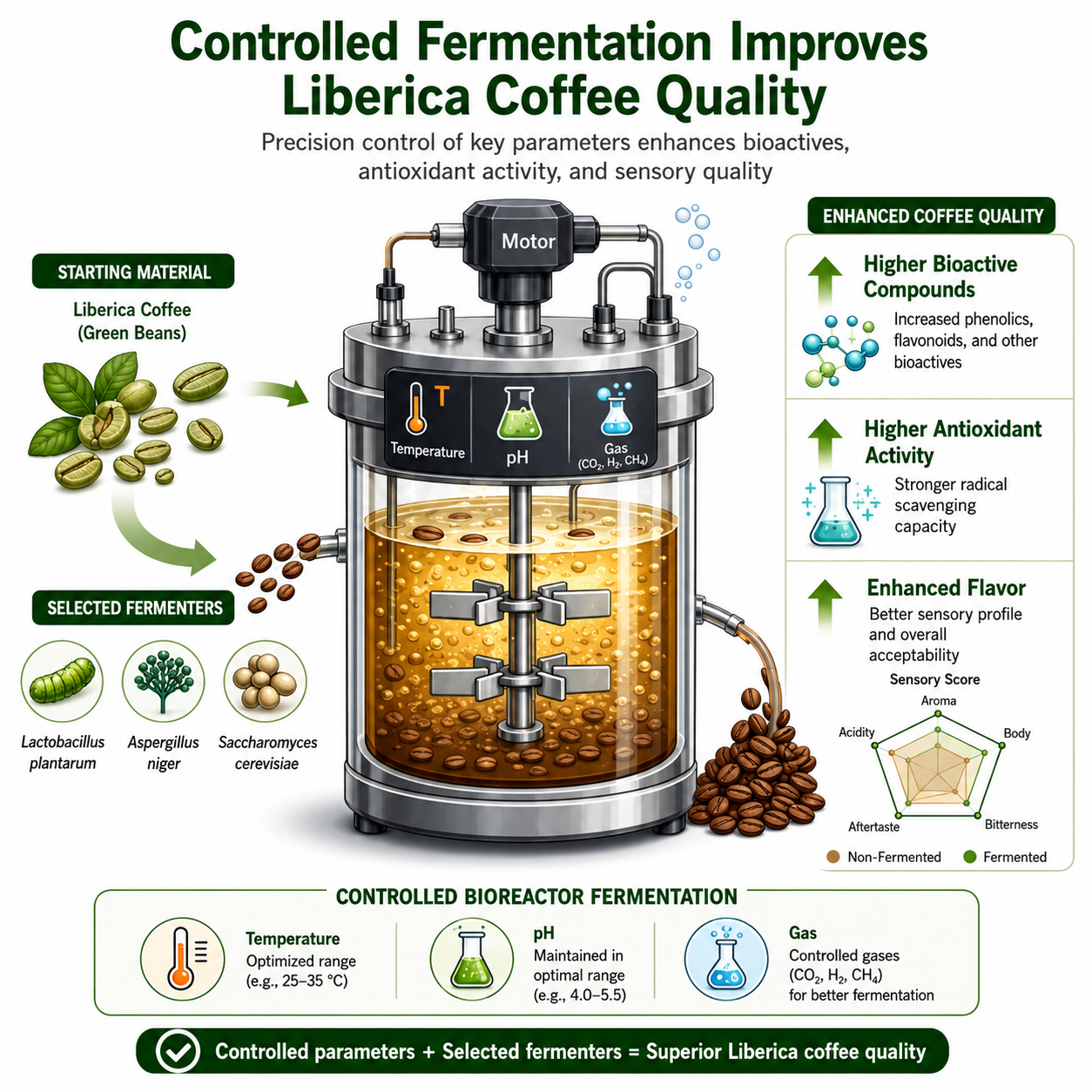
Downloads
Published
How to Cite
Issue
Section
License
Copyright (c) 2026 Walailak University

This work is licensed under a Creative Commons Attribution-NonCommercial-NoDerivatives 4.0 International License.





