
Encapsulated Plant Extracts as Potential Clean-Label Alternatives to Synthetic Preservatives in Carbohydrate-Based Foods: Mechanisms, Efficacy, and Industrial Prospects
DOI:
https://doi.org/10.48048/tis.2026.11801Keywords:
Antimicrobial activity, Bioactive compounds, Carbohydrate-based foods, Encapsulation technology, Plant extractsAbstract
Carbohydrate-based foods, including breads, noodles, cereals, and snacks, are highly susceptible to microbial spoilage and oxidative deterioration, leading to significant reliance on synthetic preservatives such as propionates, sorbates, and benzoates. Concerns about their potential health risks, environmental persistence, and negative consumer perception have intensified the search for natural, clean-label alternatives. This review aims to evaluate the potential of encapsulated plant extracts as replacements for synthetic preservatives, examining their antimicrobial mechanisms, encapsulation strategies, food applications, and industrial and regulatory considerations.
Evidence from studies published between 2000 and 2025 indicates that encapsulation substantially improves stability, bioactivity, and functionality of plant bioactives, with encapsulation efficiencies commonly reaching 70% to 95%, retention of 60% to 90% phenolics, and bioaccessibility increases of up to 4-fold compared with free compounds. Applications in breads, cookies, noodles, and cereals demonstrate extended mold-free shelf life by 2 to 3 days, lipid oxidation reductions of 20% to 40%, and in several cases performance equal to or superior to synthetic preservatives. Spray drying, freeze drying, coacervation, and electrohydrodynamic techniques each offer unique benefits, while carrier materials such as maltodextrin, gum arabic, and proteins are critical for optimizing outcomes.
These findings suggest that encapsulated plant extracts represent potentially credible clean-label preservation systems, as their demonstrated functional efficacy aligns with regulatory frameworks such as FDA GRAS provisions, EFSA additive lists, and Codex standards. Their dual grounding in scientific evidence and regulatory compatibility highlights their promise for industrial adoption as safe, effective, and consumer-preferred alternatives in carbohydrate-based foods.
HIGHLIGHTS
- Encapsulated plant extracts enhance stability, bioavailability, and controlled release of bioactive compounds in carbohydrate-based foods.
- Applications in bread, pasta, cereals, and snacks demonstrate improved shelf life, reduced microbial spoilage, and maintained sensory quality compared with synthetic preservatives.
- Industrial adoption requires optimized carrier systems, scalable encapsulation technologies, regulatory compliance, and integration of sustainability principles.
GRAPHICAL ABSTRACT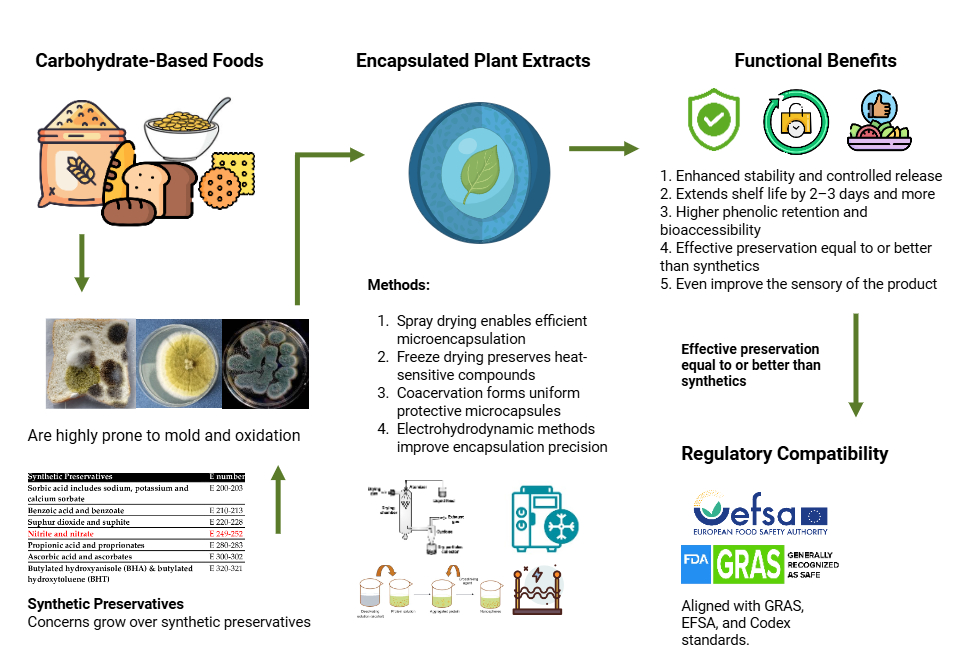
Downloads
References
A Cappelli and E Cini. Challenges and opportunities in wheat flour, pasta, bread, and bakery product production chains: A systematic review of innovations and improvement strategies to increase sustainability, productivity, and product quality. Sustainability 2021; 13(5), 2608.
A Cappelli, N Oliva and E Cini. A systematic review of gluten-free dough and bread: Dough rheology, bread characteristics, and improvement strategies. Applied Sciences 2020; 10(18), 6559.
C Axel, E Zannini and EK Arendt. Mold spoilage of bread and its biopreservation: A review of current strategies for bread shelf life extension. Critical Reviews in Food Science and Nutrition 2017; 57(16), 3528-3542.
A Vidal, V Sanchis, AJ Ramos and S Marín. Thermal stability and kinetics of degradation of deoxynivalenol, deoxynivalenol conjugates and ochratoxin A during baking of wheat bakery products. Food Chemistry 2015; 178, 276-286.
L Wu and B Wang. Evaluation on levels and conversion profiles of DON, 3-ADON, and 15-ADON during bread making process. Food Chemistry 2015; 185, 509-516.
KK Kuorwel, MJ Cran, K Sonneveld, J Miltz and SW Bigger. Essential oils and their principal constituents as antimicrobial agents for synthetic packaging films. Journal of Food Science 2011; 76(9), R164-R177.
IE Ismail, MR Farag, M Alagawany, HK Mahmoud and FM Reda. Efficacy of some feed additives to attenuate the hepato-renal damage induced by aflatoxin B1 in rabbits. Journal of Animal Physiology and Animal Nutrition 2020; 104(4), 1103-1110.
I Gutiérrez-del-Río, J Fernández and F Lombó. Plant nutraceuticals as antimicrobial agents in food preservation: Terpenoids, polyphenols and thiols. International Journal of Antimicrobial Agents 2018; 52(3), 309-315.
D Bogueva. Consumer perceptions and food. Springer Nature, Singapore, 2024.
NK Alqahtani, TM Alnemr and SA Ali. Effects of pomegranate peel extract and/or lactic acid as natural preservatives on physicochemical, microbiological properties, antioxidant activity, and storage stability of Khalal Barhi date fruits. Foods 2023; 12(6), 1160.
S Takwa, C Caleja, JCM Barreira, M Soković, L Achour, L Barros and ICFR Ferreira. Arbutus unedo L. and Ocimum basilicum L. as sources of natural preservatives for food industry: A case study using loaf bread. LWT 2018; 88, 47-55.
CMB Pinilla, RCS Thys and A Brandelli. Antifungal properties of phosphatidylcholine-oleic acid liposomes encapsulating garlic against environmental fungal in wheat bread. International Journal of Food Microbiology 2019; 293, 72-78.
Y Sahan. Effect of Prunus laurocerasus L. (Cherry Laurel) leaf extracts on growth of bread spoilage fungi. Bulgarian Journal of Agricultural Science 2011; 17(1), 83-92.
LM Fonseca, EJD Souza, M Radünz, EA Gandra, E da R Zavareze and ARG Dias. Suitability of starch/carvacrol nanofibers as biopreservatives for minimizing the fungal spoilage of bread. Carbohydrate Polymers 2021; 252, 117166.
J Yi, H Huang, Y Liu, Y Lu, Y Fan and Y Zhang. Fabrication of curcumin-loaded pea protein-pectin ternary complex for the stabilization and delivery of β-carotene emulsions. Food Chemistry 2020; 313, 126118.
S Wang, Y Lu, X Ouyang and J Ling. Fabrication of soy protein isolate/cellulose nanocrystal composite nanoparticles for curcumin delivery. International Journal of Biological Macromolecules 2020; 165, 1468-1474.
European Food Safety Authority. Re-evaluation of propionic acid - propionates (E 280 - 283) as food additives. EFSA Journal 2014; 12(7), 3779.
European Food Safety Authority. Re-evaluation of sorbic acid (E 200), potassium sorbate (E 202) and calcium sorbate (E 203) as food additives. EFSA Journal 2015; 13(6), 4144.
European Food Safety Authority. Re-evaluation of benzoic acid (E 210), sodium benzoate (E 211), potassium benzoate (E 212) and calcium benzoate (E 213) as food additives. EFSA Journal 2016; 14(3), 4433.
Electronic Code of Federal Regulations. 21 CFR §184.1754 - sodium diacetate, Available at: https://www.ecfr.
gov/current/title-21/chapter-I/subchapter-B/part-184/subpart-B/section-184.1754, accessed May 2025.
Electronic Code of Federal Regulations. 21 CFR §172.350 - Fumaric acid and salts, Available at: https://www.ecfr.
gov/current/title-21/chapter-I/subchapter-B/part-172/subpart-D/section-172.350, accessed May 2025.
Danish Environmental Protection Agency. Survey of parabens (LOUS 2012 - Final report No. 136). Danish Environmental Protection Agency, Odense, Denmark, 2013.
H Vally and NLA Misso. Adverse reactions to the sulphite additives. Gastroenterology and Hepatology from Bed to Bench 2012; 5(1), 16-23.
RB Yadav, B Singh Yadav, R Yadav, RB Yadav, M Aggarwal and BS Yadav. Studies on the effects of spice extracts on the quality characteristics and storage life of bread. Journal of Agricultural Engineering and Food Technology 2016; 3(2), 128-134.
N Ali, I Naz, S Ahmed, SA Mohsin, N Kanwal, H Fatima and S Hussain. Polarity-guided phytochemical extraction, polyphenolic characterization, and multimode biological evaluation of Seriphidium kurramense (Qazilb.) Y. R. Ling. Arabian Journal of Chemistry 2022; 15(9), 104114.
F Hu, XF Tu, K Thakur, F Hu, XL Li, YS Zhang, JG Zhang and ZJ Wei. Comparison of antifungal activity of essential oils from different plants against 3 fungi. Food and Chemical Toxicology 2019; 134, 110821.
KP Devi, SA Nisha, R Sakthivel and SK Pandian. Eugenol (an essential oil of clove) acts as an antibacterial agent against Salmonella typhi by disrupting the cellular membrane. Journal of Ethnopharmacology 2010; 130(1), 107-115.
MI Umar, A Javeed, M Ashraf, A Riaz, MM Mukhtar, S Afzal and R Altaf. Polarity-based solvents extraction of Opuntia dillenii and Zingiber officinale for in vitro antimicrobial activities. International Journal of Food Properties 2013; 16(4), 808-820.
FD Gonelimali, J Lin, W Miao, J Xuan, F Charles, M Chen and SR Hatab. Antimicrobial properties and mechanism of action of some plant extracts against food pathogens and spoilage microorganisms. Frontiers in Microbiology 2018; 9, 1639.
SAF El-nagerabi, AHM Ahmed and AE Elshafie. In vitro evaluation of selected plant extracts as biocontrol agents against black mold Aspergillus niger Van Tieghem of onion bulbs (Allium cepa L.). International Journal of Current Microbiology and Applied Sciences 2016; 5(9), 149-160.
M Kulkarni, V Hastak, V Jadhav and AA Date. Fenugreek leaf extract and its gel formulation show activity against Malassezia furfur. Assay and Drug Development Technologies 2020; 18(3), 149-156.
A Ali, XY Lim and PF Wahida. The fundamental study of antimicrobial activity of Piper betle extract in commercial toothpastes. Journal of Herbal Medicine 2018; 12, 47-52.
A Hernández, S Ruiz-Moyano, AI Galván, AV Merchán, F Pérez Nevado, E Aranda, MJ Serradilla, M de G Córdoba and A Martín. Anti-fungal activity of phenolic sweet orange peel extract for controlling fungi responsible for post-harvest fruit decay. Fungal Biology 2021; 125(3), 223-230.
M Saeed, M Azam, T Ahmad, S Akhtar, M Hussain, S Nasir and QU Ain. Utilization of pomegranate peel extract as antifungal coating agent against Fusarium oxysporum on tomatoes. Journal of Food Processing and Preservation 2022; 46(10), e17157.
V Valková, H Ďúranová, L Galovičová, NL Vukovic, M Vukic, PŁ Kowalczewski and M Kačániová. Application of 3 types of cinnamon essential oils as natural antifungal preservatives in wheat bread. Applied Sciences 2022; 12(21), 10888.
P Chávez-Quintal, T González-Flores, I Rodríguez-Buenfil and S Gallegos-Tintoré. Antifungal activity in ethanolic extracts of Carica papaya L. cv. Maradol leaves and seeds. Indian Journal of Microbiology 2011; 51(4), 452-456.
KS de Lira Mota, F de Oliveira Pereira, WA de Oliveira, IO Lima and E de Oliveira Lima. Antifungal activity of Thymus vulgaris L. essential oil and its constituent phytochemicals against Rhizopus oryzae: Interaction with ergosterol. Molecules 2012; 17(12), 14418-14433.
AT Abdullah and KF Kadhim. GC/MS analysis and antifungal activity of Matricaria chamomilla extracts against molecularly identified keratinophilic fungi. Health Biotechnology and Biopharma 2024; 7(2), 62-70.
M Khadiri, H Boubaker, L Askarne, A Farhaoui, M Taoussi, LA Haddou, M Cherrate, W Ouchari, MH Zerrouk and M Sobeh. Exploration of the antifungal potential of aqueous extracts from 2 agave species against major postharvest diseases in apples. Postharvest Biology and Technology 2024; 214, 112992.
W Chtioui, S Heleno, Q Migheli and P Rodrigues. Plant extracts as biocontrol agents against Aspergillus carbonarius growth and ochratoxin A production in grapes. International Journal of Food Microbiology 2023; 390, 110425.
W Kursa, A Jamiołkowska, J Wyrostek and R Kowalski. Antifungal effect of plant extracts on the growth of the cereal pathogen Fusarium spp. - An in vitro study. Agronomy 2022; 12(12), 3204.
Aladag. Antifungal activity of green tea leaves (Camellia sinensis L.) sampled in different harvest time. Pharmacognosy Magazine 2009; 5(20), 344-348.
S Kocić-Tanackov, G Dimić, I Tanackov, D Pejin, L Mojović and J Pejin. The inhibitory effect of oregano extract on the growth of Aspergillus spp. and on sterigmatocystin biosynthesis. LWT 2012; 49(1), 14-20.
SI Behiry, NA Hamad, FO Alotibi, AA Al-Askar, AA Arishi, AM Kenawy, IA Elsamra, NH Youssef, MM Elsharkawy and A Abdelkhalek. Antifungal and antiaflatoxigenic activities of different plant extracts against Aspergillus flavus. Sustainability 2022; 14(19), 12908.
I Muzzalupo, G Badolati, A Chiappetta, N Picci and R Muzzalupo. In vitro antifungal activity of olive (Olea europaea) leaf extracts loaded in chitosan nanoparticles. Frontiers in Bioengineering and Biotechnology 2020; 8, 151.
Z Jahanshiri, M Shams-Ghahfarokhi, A Allameh and M Razzaghi-Abyaneh. Effect of curcumin on Aspergillus parasiticus growth and expression of major genes involved in the early and late stages of aflatoxin biosynthesis. Iranian Journal of Public Health 2012; 41(6), 72-79.
CF Bezerra, JE Rocha, MK do Nascimento Silva, TS de Freitas, AK de Sousa, ATL dos Santos, RP da Cruz, MH Ferreira, JCP da Silva and AJT Machado. Analysis by UPLC-MS-QTOF and antifungal activity of guava (Psidium guajava L.). Food and Chemical Toxicology 2018; 119, 453-463.
C Chen, L Long, F Zhang, Q Chen, C Chen, X Yu, Q Liu, J Bao and Z Long. Antifungal activity, main active components and mechanism of Curcuma longa extract against Fusarium graminearum. PLoS One 2018; 13(3), e0194284.
R Di Pasqua, G Betts, N Hoskins, M Edwards, D Ercolini and G Mauriello. Membrane toxicity of antimicrobial compounds from essential oils. Journal of Agricultural and Food Chemistry 2007; 55(12), 4863-4870.
K Brudzynski, K Abubaker and D Miotto. Unraveling a mechanism of honey antibacterial action: Polyphenol/H2O2-induced oxidative effect on bacterial cell growth and on DNA degradation. Food Chemistry 2012; 133(3), 329-336.
RK Ulrey, SM Barksdale, W Zhou and ML Van Hoek. Cranberry proanthocyanidins have anti-biofilm properties against Pseudomonas aeruginosa. BMC Complementary and Alternative Medicine 2014; 14, 499.
P Alov, M Al Sharif, H Najdenski, T Pencheva, I Tsakovska, MM Zaharieva and I Pajeva. New potential pharmacological targets of plant-derived hydroxyanthraquinones from Rubia spp. Molecules 2022; 27(10), 3274.
K Brudzynski and L Maldonado-Alvarez. Polyphenol-protein complexes and their consequences for the redox activity, structure and function of honey. A current view and new hypothesis - A review. Polish Journal of Food and Nutrition Sciences 2015; 65(1), 5-17.
S Davidova, AS Galabov and G Satchanska. Antibacterial, antifungal, antiviral activity, and mechanisms of action of plant polyphenols. Microorganisms 2024; 12(12), 2502.
A Gomes and PJDA Sobral. Plant protein-based delivery systems: An emerging approach for increasing the efficacy of lipophilic bioactive compounds. Molecules 2022; 27(1), 55.
Y Xu, X Yan, H Zheng, J Li, X Wu, J Xu, Z Zhen and C Du. The application of encapsulation technology in the food industry: Classifications, recent advances, and perspectives. Food Chemistry: X 2024; 21, 101240.
M Calderón-Oliver and E Ponce-Alquicira. The role of microencapsulation in food application. Molecules 2022; 27(5), 1499.
D Raharjo, D Praseptiangga, MZ Zaman and A Yunus. Chitosan and gum arabic as wall materials to encapsulate Hopea beccariana Burck stem bark extract into powder form by spray drying. Bioresource Technology Reports 2025; 30, 102131.
J Baranauskaite, L Ivanauskas, R Masteikova, D Kopustinskiene, A Baranauskas and J Bernatoniene. Formulation and characterization of Turkish oregano microcapsules prepared by spray-drying technology. Pharmaceutical Development and Technology 2017; 22(6), 792-803.
M Ganje, S Saeed and M Reza. Physicochemical properties, microstructure, and encapsulation efficiency of rosemary (Rosmarinus officinalis L.) extract microencapsulated by freeze-drying using whey protein isolate and maltodextrin. Carbohydrate Polymer Technologies and Applications 2025; 10, 100861.
S Chheng, M Fikry, S Jafari, DK Mishra and K Assatarakul. Storage stability and packaging impact on spray-dried encapsulated Sesbania flower extract during long-term storage. Journal of Stored Products Research 2025; 112, 102660.
CI Piñón-Balderrama, C Leyva-Porras, Y Terán-Figueroa, V Espinosa-Solís, C Álvarez-Salas and MZ Saavedra-Leos. Encapsulation of active ingredients in food industry by spray-drying and nano spray-drying technologies. Processes 2020; 8(8), 889.
MIL Neves, S Desobry-Banon, IT Perrone, S Desobry and J Petit. Encapsulation of curcumin in milk powders by spray-drying: Physicochemistry, rehydration properties, and stability during storage. Powder Technology 2019; 345, 342-350.
M Alam, S Sid, S Giri, R Das, A Kishore and N Kumar. Encapsulated kinnow peel powder using freeze drying: Effect of maltodextrin and gum arabic concentrations on physiochemical, functional and thermal properties. Food and Humanity 2025; 4(2), 100546.
A Akram, JS Murugan, K Barathikannan, SK Tammina, K Sridhar, M Keewan and F Banat. Pea protein-potato peel starch complex coacervation for the encapsulation of bioactive date seed extract: Bio-functional characterization and in vitro release. International Journal of Biological Macromolecules 2025; 310(P4), 143484.
H Rajabi and SMA Razavi. Co-encapsulation of saffron petal and Stachys schtschegleevii extracts via complex coacervation and graphene oxide-assisted spray drying for co-delivery and stability enhancement. LWT 2025; 223, 117705.
HM Bayomy, DPT Blackmore, ES Alamri, NA Ozaybi, SE Almasoudi, S Pearson, L Eyouni, NA AlFaris, GM Alshammari, M Muhammed and MAM Hussein. Developing sustainable approach for controlling foodborne pathogens, based on Chlorella vulgaris extract/alginate nanoemulsion, and enhanced via the dispersed zinc oxide nanoparticles. International Journal of Biological Macromolecules 2025; 305(P2), 141241.
Y Ozogul, GT Karsli, M Durmuş, H Yazgan, HM Oztop, DJ McClements and F Ozogul. Recent developments in industrial applications of nanoemulsions. Advances in Colloid and Interface Science 2022; 304, 102685.
N Aliabbasi, S Mehrabi, M Kheirandish, S Gashtasbi, M Mokhtarian, M Hosseini-Isfahani, A Vakilinezami, P Vakilinezami, T Mostaghim and H Rezaeinia. The novel nano-electrospray delivery of curcumin via ultrasound assisted Balangu (Lallemantia royleana) hydrocolloid-chickpea protein interaction. Food Chemistry 2025; 484, 144388.
V Rivero-Buceta, L García-Fernández, C Campano, N Hernández-Herreros, MR Aguilar and MA Prieto. Design and synthesis of hollow particles based on bacterial cellulose and polyhydroxybutyrate for microbial entrapping using coaxial electrospray technology. Carbohydrate Polymer Technologies and Applications 2025; 10, 100791.
F Sereti, M Alexandri, H Papapostolou, A Papadaki and N Kopsahelis. Recent progress in carotenoid encapsulation: Effects on storage stability, bioaccessibility and bioavailability for advanced innovative food applications. Food Research International 2025; 203, 115861.
CAS Rabelo, N Taarji, N Khalid, I Kobayashi, M Nakajima and MA Neves. Formulation and characterization of water-in-oil nanoemulsions loaded with açaí berry anthocyanins: Insights of degradation kinetics and stability evaluation of anthocyanins and nanoemulsions. Food Research International 2018; 107, 418-426.
P Griep, LM da Silva, BP Tres, R Colet, A Junges, C Steffens, J Zeni and E Valduga. Effects of encapsulating agents and temperature in the microencapsulation of carotenogenic extracts from Sporidiobolus salmonicolor CBS 2636 and storage stability. Biointerface Research in Applied Chemistry 2023; 13(5), 449-462.
Q Guo, I Bayram, X Shu, J Su, W Liao, Y Wang and Y Gao. Improvement of stability and bioaccessibility of β-carotene by curcumin in pea protein isolate-based complexes-stabilized emulsions: Effect of protein complexation by pectin and small molecular surfactants. Food Chemistry 2022; 372, 130726.
F Baghi, S Ghnimi, E Dumas and A Gharsallaoui. Microencapsulation of antimicrobial trans-cinnamaldehyde: Effect of emulsifier type, pH, and drying technique. Applied Sciences 2023; 13(10), 6184.
K Šavikin, N Nastić, T Janković, D Bigović, B Miličević, S Vidović, N Menković and J Vladić. Effect of type and concentration of carrier material on the encapsulation of pomegranate peel using spray drying method. Foods 2021; 10(9), 1876.
ME da Silva Júnior, MVRL Araújo, ACS Martins, M dos Santos Lima, FLH da Silva, A Converti and MIS Maciel. Microencapsulation by spray-drying and freeze-drying of extract of phenolic compounds obtained from ciriguela peel. Scientific Reports 2023; 13, 40390.
JA Zokti, BS Baharin, AS Mohammed and F Abas. Green tea leaves extract: Microencapsulation, physicochemical and storage stability study. Molecules 2016; 21(8), 940.
KL Baltrusch, MD Torres and H Domínguez and N Flórez-Fernández. Spray-drying microencapsulation of tea extracts using green starch, alginate or carrageenan as carrier materials. International Journal of Biological Macromolecules 2022; 205, 469-478.
TTA Tran and HVH Nguyen. Effects of spray-drying temperatures and carriers on physical and antioxidant properties of lemongrass leaf extract powder. Beverages 2018; 4(4), 80.
T Jović, I Elez Garofulić, P Čulina, S Pedisić, E Dobroslavić, E Cegledi, V Dragović-Uzelac and Z Zorić. The effect of spray-drying conditions on the characteristics of powdered Pistacia lentiscus leaf extract. Processes 2023; 11(4), 1229.
LS Kuck and CPZ Norena. Microencapsulation of grape (Vitis labrusca var. Bordo) skin phenolic extract using gum arabic, polydextrose, and partially hydrolyzed guar gum as encapsulating agents. Food Chemistry 2016; 194, 569-576.
YRRS Rezende, JP Nogueira and N Narain. Microencapsulation of extracts of bioactive compounds obtained from acerola (Malpighia emarginata DC) pulp and residue by spray and freeze drying: Chemical, morphological and chemometric characterization. Food Chemistry 2018; 254, 281-291.
MNG dos Santos, EP da Silva, HT Godoy, FA da Silva, SMC Celestino, L de O Pineli and C Damiani. Effect of freezing and atomization on bioactive compounds in cagait (Eugenya dysenterica DC) fruit. Food Science and Technology 2018; 38(3), 508-515.
Z Fang and B Bhandari. Encapsulation of polyphenols - A review. Trends in Food Science and Technology 2010; 21(10), 510-523.
DF Rocha-Parra, MC Lanari, MC Zamora and J Chirife. Influence of storage conditions on phenolic compounds stability, antioxidant capacity and colour of freeze-dried encapsulated red wine. LWT 2016; 70, 162-170.
S Akhavan Mahdavi, SM Jafari, E Assadpoor and D Dehnad. Microencapsulation optimization of natural anthocyanins with maltodextrin, gum arabic and gelatin. International Journal of Biological Macromolecules 2016; 85, 379-385.
RV Tonon, C Brabet and MD Hubinger. Anthocyanin stability and antioxidant activity of spray-dried açai (Euterpe oleracea Mart.) juice produced with different carrier agents. Food Research International 2010; 43(3), 907-914.
JM Mar, LS Silva, MS Rabelo, MP Muniz, SM Nunomura, RF Correa, VF Kinupp, PH Campelo, JA de Bezerra and EA Sanches. Encapsulation of Amazonian blueberry juices: Evaluation of bioactive compounds and stability. LWT 2020; 127, 109152.
RVDB Fernandes, SV Borges and DA Botrel. Gum arabic/starch/maltodextrin/inulin as wall materials on the microencapsulation of rosemary essential oil. Carbohydrate Polymers 2014; 101, 524-532.
EG Donhowe, FP Flores, WL Kerr, L Wicker and F Kong. Characterization and in vitro bioavailability of β-carotene: Effects of microencapsulation method and food matrix. LWT 2014; 57(1), 42-48.
M Cano-Chauca, PC Stringheta, AM Ramos and J Cal-Vidal. Effect of the carriers on the microstructure of mango powder obtained by spray drying and its functional characterization. Innovative Food Science and Emerging Technologies 2005; 6(4), 420-428.
M Ferrari, F Ravera, E De Angelis and L Navarini. Interfacial properties of coffee oils. Colloids and Surfaces A: Physicochemical and Engineering Aspects 2010; 365(1-3), 79-85.
DRSF Paim, SDO Costa, EHM Walter and RV Tonon. Microencapsulation of probiotic jussara (Euterpe edulis M.) juice by spray drying. LWT 2016; 74, 21-27.
J Guo, P Li, L Kong and B Xu. Microencapsulation of curcumin by spray drying and freeze drying. LWT 2020; 132, 109892.
S Ersus and U Yurdagel. Microencapsulation of anthocyanin pigments of black carrot (Daucus carota L.) by spray drier. Journal of Food Engineering 2007; 80(3), 805-812.
E Zandona, M Vukelić, K Hanousek Čiča, A Zandona, J Mrvčić, M Katalinić, I Cindrić, A Abdurramani, IB Jurina and IB Zandona. Bioactive properties of the microwave-assisted olive leaf extract and its incorporation into a whey protein isolate coating of semi-hard cheese. Foods 2025; 14(9), 1496.
N Coşkun, S Sarıtaş, Y Jaouhari, M Bordiga and S Karav. The impact of freeze drying on bioactivity and physical properties of food products. Applied Sciences 2024; 14(20), 9317.
F Weinbreck, M Minor and CG De Kruif. Microencapsulation of oils using whey protein/gum arabic coacervates. Journal of Microencapsulation 2004; 21(6), 667-679.
S Liu, NH Low and MT Nickerson. Entrapment of flaxseed oil within gelatin-gum arabic capsules. Journal of the American Oil Chemists’ Society 2010; 87(7), 809-815.
XY Qv, ZP Zeng and JG Jiang. Preparation of lutein microencapsulation by complex coacervation method and its physicochemical properties and stability. Food Hydrocolloids 2011; 25(1), 159-165.
CP Chang, TK Leung, SM Lin and CC Hsu. Release properties on gelatin-gum arabic microcapsules containing camphor oil with added polystyrene. Colloids and Surfaces B: Biointerfaces 2006; 50(2), 136-140.
LAC Zuanon, CR Malacrida and VRN Telis. Production of turmeric oleoresin microcapsules by complex coacervation with gelatin-gum arabic. Journal of Food Process Engineering 2013; 36(2), 154-161.
P Kaushik, K Dowling, S McKnight, CJ Barrow and B Adhikari. Microencapsulation of flaxseed oil in flaxseed protein and flaxseed gum complex coacervates. Food Research International 2016; 86, 1-8.
D Dong, Z Qi, Y Hua, Y Chen, X Kong and C Zhang. Microencapsulation of flaxseed oil by soya proteins-gum arabic complex coacervation. International Journal of Food Science and Technology 2015; 50(7), 1635-1641.
A Habibi, J Keramat, M Hojjatoleslamy and F Tamjidi. Preparation of fish oil microcapsules by complex coacervation of gelatin-gum arabic and their utilization for fortification of pomegranate juice. Journal of Food Process Engineering 2017; 40(2), e12385.
K Zhang, H Zhang, X Hu, S Bao and H Huang. Synthesis and release studies of microalgal oil-containing microcapsules prepared by complex coacervation. Colloids and Surfaces B: Biointerfaces 2012; 89, 61-66.
F Amani, A Rezaei, MS Damavandi, AS Doost and SM Jafari. Colloidal carriers of almond gum/gelatin coacervates for rosemary essential oil: Characterization and in-vitro cytotoxicity. Food Chemistry 2022; 366, 131998.
TA Comunian, D Freitas, G Drouin, A Maudhuit, G Roelens, D Poncelet, S Drusch and A Brodkorb. Microencapsulation of flaxseed oil in pea protein-gum arabic complex coacervates delays lipid digestion in liquid yoghurt. Food Research International 2024; 187, 114307.
M Yang, J Peng, Y Zi, C Shi, G Kan, X Wang and J Zhong. Encapsulation of fish oil by complex coacervation and freeze drying with modified starch aid. Food Hydrocolloids 2023; 136, 108371.
SA Khatibi, A Ehsani, M Nemati and A Javadi. Microencapsulation of Zataria multiflora Boiss. essential oil by complex coacervation using gelatin and gum arabic: Characterization, release profile, antimicrobial and antioxidant activities. Journal of Food Processing and Preservation 2021; 45(10), e15823.
J Sun, Y Cheng, T Zhang and J Zang. Microencapsulation of carvacrol by complex coacervation of walnut meal protein isolate and gum arabic: Preparation, characterization and bio-functional activity. Foods 2022; 11(21), 3382.
Z Dong, S Zhao, L Sun and J Li. Preparation of CMC/gum arabic/gelatin microcapsules encapsulating orange oil by complex coacervation. Journal of Chinese Institute of Food Science and Technology 2013; 13(1), 73-80.
A Bušić, D Komes, A Belšćak-Cvitanovic, IV Cebin, I Špoljarić, G Mršić and S Miao. The potential of combined emulsification and spray drying techniques for encapsulation of polyphenols from rosemary (Rosmarinus officinalis L.) leaves. Food Technology and Biotechnology 2018; 56(4), 470-478.
R Berendsen, C Güell and M Ferrando. Spray dried double emulsions containing procyanidin-rich extracts produced by premix membrane emulsification: Effect of interfacial composition. Food Chemistry 2015; 175, 471-478.
DA Sebben, SV Macwilliams, L Yu, PT Spicer, V Bulone, M Krasowska and DA Beattie. Influence of aqueous phase composition on double emulsion stability and colour retention of encapsulated anthocyanins. Foods 2022; 11(1), 36.
P Koirala, J Sriprablom and T Winuprasith. Anthocyanin-rich butterfly pea petal extract loaded double Pickering emulsion containing nanocrystalline cellulose: Physicochemical properties, stability, and rheology. Foods 2023; 12(22), 4173.
BE Ozcan, O Saroglu, CY Karakas and A Karadag. Encapsulation of purple basil leaf extract by electrospraying in double emulsion (W/O/W) filled alginate-carrageenan beads to improve the bioaccessibility of anthocyanins. International Journal of Biological Macromolecules 2023; 244, 126207.
LG Teixeira, S Rezende, A Fernandes, IP Fernandes, L Barros, JCM Barreira, FV Leimann, ICFR Ferreira and MF Barreiro. Water-in-oil-in-water double emulsions as protective carriers for Sambucus nigra L. coloring systems. Molecules 2022; 27(2), 552.
J Liu, Y Tan, H Zhou, JL Muriel Mundo and DJ McClements. Protection of anthocyanin-rich extract from pH-induced color changes using water-in-oil-in-water emulsions. Journal of Food Engineering 2019; 263, 1-9.
K Frank, E Walz, V Gräf, R Greiner, K Köhler and HP Schuchmann. Stability of anthocyanin-rich W/O/W emulsions designed for intestinal release in gastrointestinal environment. Journal of Food Science 2012; 77(1), N46-N53.
L Gracher-Teixeira, SCS Pituco, G Colucci, A Santamaria-Echart, AM Peres, MM Dias and MF Barreiro. Developing high-coloring natural systems using double emulsions with Daucus carota L. extract to meet high-performance requirements. Foods 2024; 13(24), 4177.
LB Norcino, JF Mendes, JA de Figueiredo, NL Oliveira, DA Botrel and LHC Mattoso. Development of alginate/pectin microcapsules by a dual process combining emulsification and ultrasonic gelation for encapsulation and controlled release of anthocyanins from grapes (Vitis labrusca L.). Food Chemistry 2022; 372, 133256.
K Toledo-Madrid, T Gallardo-Velázquez and G Osorio-Revilla. Microencapsulation of purple cactus pear fruit (Opuntia ficus indica) extract by the combined method W/O/W double emulsion-spray drying and conventional spray drying: A comparative study. Processes 2018; 6(10), 182.
A de Jesús Cenobio-Galindo, G Díaz-Monroy, M Medina-Pérez, M Jesús Franco-Fernández, FE Ludeña-Urquizo, R Vieyra-Alberto and RG Campos-Montiel. Multiple emulsions with extracts of cactus pear added in a yogurt: Antioxidant activity, in vitro simulated digestion and shelf life. Foods 2019; 8(10), 429.
YT Dang, H Tran and TC Kha. Encapsulation of W/O/W acerola emulsion by spray drying: Optimization, release kinetics, and storage stability. Foods 2024; 13(10), 1483.
N Kanha, JM Regenstein, S Surawang, P Pitchakarn and T Laokuldilok. Properties and kinetics of the in vitro release of anthocyanin-rich microcapsules produced through spray and freeze-drying complex coacervated double emulsions. Food Chemistry 2021; 341, 127950.
BSB Bamba, J Shi, CC Tranchant, SJ Xue, CF Forney, LT Lim, W Xu and G Xu. Coencapsulation of polyphenols and anthocyanins from blueberry pomace by double emulsion stabilized by whey proteins: Effect of homogenization parameters. Molecules 2018; 23(10), 2588.
R Pérez-Masiá, R López-Nicolás, MJ Periago, G Ros, JM Lagaron and A López-Rubio. Encapsulation of folic acid in food hydrocolloids through nanospray drying and electrospraying for nutraceutical applications. Food Chemistry 2015; 168, 124-133.
LG Gómez-Mascaraque and A López-Rubio. Protein-based emulsion electrosprayed micro- and submicroparticles for the encapsulation and stabilization of thermosensitive hydrophobic bioactives. Journal of Colloid and Interface Science 2016; 465, 259-270.
L Phuong Ta, E Bujna, S Kun, D Charalampopoulos and VV Khutoryanskiy. Electrosprayed mucoadhesive alginate-chitosan microcapsules for gastrointestinal delivery of probiotics. International Journal of Pharmaceutics 2021; 597, 120342.
M Soleimanifar, SM Jafari, E Assadpour and A Mirarab. Electrosprayed whey protein nanocarriers containing natural phenolics: Thermal and antioxidant properties, release behavior and stability. Journal of Food Engineering 2021; 292, 110644.
JA Tapia-Hernández, CL Del-Toro-Sánchez, FJ Cinco-Moroyoqui, S Ruiz-Cruz, J Juárez, DD Castro-Enríquez, CG Barreras-Urbina, GA López-Ahumada and F Rodríguez-Félix. Gallic acid-loaded zein nanoparticles by electrospraying process. Journal of Food Science 2019; 84(5), 818-829.
F Rodríguez-Félix, CL Del-Toro-Sánchez, FJ Cinco-Moroyoqui, J Juárez, GA López-Ahumada, E Carvajal-Millan, DD Castro-Enríquez, CG Barreras-Urbina and JA Tapia-Hernández. Preparation and characterization of quercetin-loaded zein nanoparticles by electrospraying and study of in vitro bioavailability. Journal of Food Science 2019; 84(8), 2341-2351.
J He, Z Wang, L Wei, Y Ye, ZU Din, J Zhou, X Cong, S Cheng and J Cai. Electrospray-assisted fabrication of dextran-whey protein isolation microcapsules for the encapsulation of selenium-enriched peptide. Foods 2023; 12(5), 1008.
S Rahbari, H Tavakolipour and A Kalbasi-Ashtari. Application of electro-spraying technique and mathematical modelling for nanoencapsulation of curcumin. Heliyon 2024; 10(1), e25680.
NE Rahmani-Manglano, EM Guadix, C Jacobsen and PJ García-Moreno. Comparative study on the oxidative stability of encapsulated fish oil by monoaxial or coaxial electrospraying and spray-drying. Antioxidants 2023; 12(2), 266.
P Paximada, E Kanavou, E Apostolidis and IG Mandala. Encapsulation of catechin in electrosprayed food-grade particles. Food Hydrocolloids for Health 2021; 1, 100021.
H Jayan, MM Maria Leena, SK Sivakama Sundari, JA Moses and C Anandharamakrishnan. Improvement of bioavailability for resveratrol through encapsulation in zein using electrospraying technique. Journal of Functional Foods 2019; 57, 157-166.
N Fani, MH Enayati, H Rostamabadi and SR Falsafi. Encapsulation of bioactives within electrosprayed κ-carrageenan nanoparticles. Carbohydrate Polymers 2022; 291, 119761.
JL Guía-García, AV Charles-Rodríguez, P Silva, A Robledo-Olivo, MA Cerqueira and ML Flores-López. Electrosprayed hydroxypropyl methylcellulose microcapsules containing Rhus microphylla fruit extracts and their application in strawberry (Fragaria × ananassa) preservation. LWT 2023; 186, 115048.
M Panagiotopoulou, S Papadaki and M Krokida. Formation and characterization of zein electrosprayed nanoparticles containing bioactive compounds. South African Journal of Chemical Engineering 2022; 39, 117-124.
CE Figueroa-Enriquez, F Rodríguez-Félix, M Plascencia-Jatomea, A Sánchez-Escalante, JM Vargas-López, JA Tapia-Hernández, DF Canizales-Rodríguez, DD Castro-Enriquez, S Ruiz-Cruz and I Santos-Sauceda. Nanoparticles of betalain–gelatin with antioxidant properties by coaxial electrospraying: Preparation and characterization. ACS Omega 2023; 8(41), 37924-37935.
L Feng Li, X Shi, SM Qi, XT Zhang, HY Fung, QR Li and QB Han. Strategies, techniques and applications for food authentication based on carbohydrates: A review. Carbohydrate Polymers 2024; 344, 122533.
F Islam, F Saeed, A Imran, U Shehzadi, R Ali, F Nosheen, A Chauhan, A Asghar, M Ojukwu and A Asghar. Bio-preservatives and essential oils as an alternative to chemical preservatives in the baking industry: A concurrent review. Journal of Food Science and Technology 2024; 61(9), 4493-4506.
Fİ Şahin and N Acaralı. Extending shelf life and optimizing effective parameters by using clove oil (Syzygium aromaticum oleum)/orange oil (Citrus aurantium var. dulcis oleum) in bread: Thermal, morphological and sensory approach. Journal of Food Science and Technology 2023; 60(10), 3055-3067.
T Bojňanská, A Kolesárová, M Čech, D Tančinová and D Urminská. Extracts with nutritional potential and their influence on the rheological properties of dough and quality parameters of bread. Foods 2024; 13(3), 82.
YH Chang, CM Chang and PT Chuang. Shelf-life assessment of bread partially substituted with soy protein isolate. Applied Sciences 2023; 13(6), 3960.
NA Esaulko, ES Romanenko, MV Selivanova, EA Mironova, TS Aisanov, VE Miltiusov and MS German. Quality improvement and shelf life extension of functional bakery products with the use of stevia. IOP Conference Series: Earth and Environmental Science 2019; 315(2), 022019.
ND Qumbisa, NZ Ngobese, U Kolanisi, M Siwela and GF Cynthia. Effect of Amaranthus leaf powder addition on the nutritional composition, physical quality and consumer acceptability of instant noodles. South African Journal of Botany 2022; 146, 499-506.
F Shahabinejad, M Ghorbani, S Abbaszadeh, M Nejatian and M Taghdir. Functional instant noodle formulation for emergency conditions: Sensory and stability characteristics. Food Science and Nutrition 2024; 12(7), 4605-4614.
X Li, Z Xu, X Xu, K Zheng, S Pan, JM Regenstein, H Wang and L Wang. Carbohydrate-based fat mimetics: A focus on fat-mimicking mechanisms and a tribology perspective. Trends in Food Science and Technology 2025; 157, 104885.
DJ McClements. Food emulsions: Principles, practices, and techniques. 3rd ed. CRC Press, Boca Raton, United States, 2015.
ME da Silva Júnior, MVRL Araújo, ACS Martins, M dos Santos Lima, FLH Da Silva, A Converti and MIS Maciel. Microencapsulation by spray-drying and freeze-drying of extract of ciriguela peel. Food Chemistry Advances 2023; 2, 100151.
SC Lourenço, M Moldão-Martins and VD Alves. Microencapsulation of pineapple peel extract by spray drying using maltodextrin, inulin, and arabic gum as wall matrices. Foods 2020; 9(6), 718.
D Escobar-Avello, C Mardones, G Montenegro, D von Baer, J Luengo, RM Lamuela-Raventós, A Vallverdú-Queralt and C Gómez-Gaete. Encapsulation of phenolic compounds from a grape cane pilot-plant extract in hydroxypropyl beta-cyclodextrin and maltodextrin by spray drying. Antioxidants 2021; 10(11), 1823.
W Medfai, I Oueslati, E Dumas, Z Harzalli, C Viton, R Mhamdi and A Gharsallaoui. Physicochemical and biological characterization of encapsulated olive leaf extracts for food preservation. Antibiotics 2023; 12(6), 987.
H Pashazadeh, O Zannou, M Ghellam, I Koca, CM Galanakis and TMS Aldawoud. Optimization and encapsulation of phenolic compounds extracted from maize waste by freeze-drying, spray-drying, and microwave-drying using maltodextrin. Foods 2021; 10(6), 1396.
RT Rigon and CPZ Norena. Microencapsulation by spray-drying of bioactive compounds extracted from blackberry. Journal of Food Science and Technology 2016; 53(1), 151-160.
C Castro-López, C Espinoza-González, R Ramos-González, VD Boone-Villa, MA Aguilar-González, GCG Martínez-Ávila, CN Aguilar and JM Ventura-Sobrevilla. Spray-drying encapsulation of microwave-assisted extracted polyphenols from Moringa oleifera: Influence of tragacanth, locust bean, and carboxymethyl-cellulose formulations. Food Research International 2021; 144, 110291.
K Yadav, RK Bajaj, S Mandal and B Mann. Encapsulation of grape seed extract phenolics using whey protein concentrate, maltodextrin and gum arabic blends. Journal of Food Science and Technology 2020; 57(2), 426-434.
E Cegledi, I Elez Garofulić, Z Zorić, M Roje and V Dragović-Uzelac. Effect of spray drying encapsulation on nettle leaf extract powder properties, polyphenols and their bioavailability. Foods 2022; 11(18), 2852.
LM de MC Ferreira, RR Pereira, FB Carvalho-Guimarães, MSN Remígio et al. Microencapsulation by spray drying and antioxidant activity of phenolic compounds from tucuma coproduct (Astrocaryum vulgare Mart.) almonds. Polymers 2022; 14(14), 2905.
M Galante, F Blando, M Guerra, L Milella, WLR Barbosa, RM Ribeiro-Costa and JOC Silva-Júnior. Microencapsulation by spray drying of yerba mate extract in β-cyclodextrin: Influence of particle morphology on microcapsules functional and physicochemical properties. Food Research International 2025; 174, 117237.
SSDOS SANTOS, CM Paraíso, SCDA Costa, CYL Ogawa, F Sato and GS Madrona. Recovery of bioactive compounds from an agro-industrial waste: Extraction, microencapsulation, and characterization of jaboticaba (Myrciaria cauliflora Berg) pomace as a source of antioxidant. Anais da Academia Brasileira de Ciências 2022; 94(4), e20191372.
C López de Dicastillo, C Piña, L Garrido, C Arancibia and MJ Galotto. Enhancing thermal stability and bioaccesibility of açaí fruit polyphenols through electrohydrodynamic encapsulation into zein electrosprayed particles. Antioxidants 2019; 8(10), 464.
PN Ezhilarasi, D Indrani, BS Jena and C Anandharamakrishnan. Microencapsulation of Garcinia fruit extract by spray drying using different wall materials: Physicochemical and release characteristics in staged simulated gastrointestinal conditions. Journal of the Science of Food and Agriculture 2014; 94(7), 1482-1490.
D Pasrija, PN Ezhilarasi, D Indrani and C Anandharamakrishnan. Microencapsulation of green tea polyphenols and its effect on incorporated bread quality. LWT 2015; 64(1), 289-296.
A Czubaszek, A Czaja, A Sokół-Łętkowska, J Kolniak-Ostek and AZ Kucharska. Changes in antioxidant properties and amounts of bioactive compounds from Saskatoon berry in wheat bread enriched with fruit microcapsules during in vitro digestion. Molecules 2021; 26(20), 6292.
S Lachowicz, M Świeca and E Pejcz. Biological activity, phytochemical parameters, and potential bioaccessibility of wheat bread enriched with powder and microcapsules made from Saskatoon berry. Food Chemistry 2021; 338, 128026.
W Bińkowska, A Szpicer, A Stelmasiak, I Wojtasik-Kalinowska and A Półtorak. Utilization of microencapsulated polyphenols to enhance the bioactive compound content in whole grain bread: Recipe optimization. Applied Sciences 2024; 14(22), 10156.
SH Peighambardoust, A Akbarmehr and K Sarabandi. Exploring the physicochemical and functional properties of stabilized corn pollen protein hydrolysates via spray-drying for application in bread formulation. Journal of Agriculture and Food Research 2025; 21, 101918.
G Davidov-Pardo, A Álvarez, E Saldanha, I Mignani, DJ McClements and O de Paredes López. Sensory and consumer perception of the addition of grape seed extracts in cookies. Journal of Food Science 2012; 77(12), S430-S438.
M Paciulli, M Grimaldi, M Rinaldi, A Cavazza, F Flamminii, C Di Mattia, M Gennari and E Chiavaro. Microencapsulated olive leaf extract enhances physicochemical stability of biscuits. Future Foods 2023; 7, 100209.
C Ciont, G Difonzo, A Pasqualone, MS Chis, F Ranga, K Szabo, E Simon, A Naghiu, L Barbu-Tudoran, F Caponio, OL Pop and DC Vodnar. Phenolic profile of micro- and nano-encapsulated olive leaf extract in biscuits during in vitro gastrointestinal digestion. Food Chemistry 2023; 428, 136778.
V Tumbas Šaponjac, G Ćetković, J Čanadanović-Brunet, B Pajin, S Djilas, J Petrović, I Lončarević, S Stajčić and J Vulić. Sour cherry pomace extract encapsulated in whey and soy proteins: Incorporation in cookies. Food Chemistry 2016; 207, 27-33.
D Pędziwiatr, MC Lamadrid and A Wojdyło. Cookies fortified with polyphenols extracts: Impact on phenolic content, antioxidant activity, inhibition of α-amylase and α-glucosidase enzyme, colour and sensory attractiveness. Antioxidants 2024; 13(9), 1108.
R Dordoni, G Duserm Garrido, L Marinoni, M Torri, M Di Mattia and G Spigno. Enrichment of whole wheat cocoa biscuits with encapsulated grape skin extract. International Journal of Food Science 2019; 2019, 1269340.
R Dordoni, A Bassani, C Rossetti, GD Garrido, A Frustace and G Spigno. Encapsulated walnut paste with grape skin extract addition: Oxidative stability and use in biscuits. Chemical Engineering Transactions 2021; 87, 73-78.
JM Lee, HK Kwak, SH Lee, EY Kim, HA Kim and JH Kim. Value-added crackers enriched with red onion skin (Allium cepa L.) anthocyanin microcapsules. Processes 2021; 9(7), 1122.
EM Elsebaie and RY Essa. Microencapsulation of red onion peel polyphenols fractions by freeze drying technicality and its application in cake. Journal of Food Processing and Preservation 2018; 42(1), e13654.
TTN Nhung, NTB Chau, LTM Hien, VTH Linh, NL Ha and DTA Dong. Characteristics of sponge cake preserved by green tea extract powder. Journal of Food Processing and Preservation 2022; 46(9), e16939.
M Zamankhani, S Moeini, PM Shotorbani, HM Ghazi and A Jafarpour. Improvement of the oxidative stability of instant fried noodles using free and microencapsulated borage (Echium amoenum) and black hollyhock (Althaea rosea var. nigra) extracts. Food Science & Nutrition 2024; 12(8), 508-525.
Y Xu, X Yan, H Zheng, J Li, X Wu, J Xu, Z Zhen and C Du. The application of encapsulation technology in the food industry: Classifications, recent advances, and perspectives. Food Chemistry: X 2024; 21, 101240.
V Conti, C Piccini, M Romi, P Salusti, G Cai and C Cantini. Pasta enriched with carrot and olive leaf flour retains high levels of accessible bioactives after in vitro digestion. Foods 2023; 12(19), 3540.
G Natrella, M Miccolis, GR Caponio, A Di Michele, L Zago, C Di Mattia and G Difonzo. Physicochemical and nutritional properties of functional fresh pasta with free and microencapsulated olive pomace extract. Food Frontiers 2025; 6(4), 2035-2051.
EM Elsebaie, A Elkelawy, A Abdallah, R Ahmed, M Aboelnaga, S Hafez, MM El-Desoky, A Ali, MA El-Magd and S Abdel-Gawad. Technological and sensory aspects of macaroni with free and encapsulated fenugreek aerial parts extract. Foods 2022; 11(3), 384.
HA No, MY Ryu, Y Choi, SM Yoon, SH Lee, HJ Park, JH Lee, JH Lee and JM Park. Preparation of functional rice cake by using β-carotene-encapsulated emulsion powder. Journal of Food Science and Technology 2020; 57(10), 3449-3458.
M López-Astorga, M Leon-Bejarano, N Gámez-Meza, CL Del Toro-Sánchez, S Simsek and M Ovando-Martínez. Microencapsulated grape pomace extract as an antioxidant ingredient added to Greek-style yogurt: Storage stability and in vitro bioaccessibility. Food Chemistry 2025; 477, 143550.
V Kuchtová, Z Kohajdová, J Karovičová and M Lauková. Physical, textural and sensory properties of cookies incorporated with grape skin and seed preparations. Polish Journal of Food and Nutrition Sciences 2018; 68(4), 309-317.
MV Vieira, SM Oliveira, IR Amado, LH Fasolin, AA Vicente, LM Pastrana and P Fuciños. 3D printed functional cookies fortified with Arthrospira platensis: Evaluation of its antioxidant potential and physical-chemical characterization. Food Hydrocolloids 2020; 107, 105893.
M Grassia, MC Messia, E Marconi, OS Demirkol, F Erdoğdu, F Sarghini, L Cinquanta and D Corona. Microencapsulation of phenolic extracts from cocoa shells to enrich chocolate bars. Plant Foods for Human Nutrition 2021; 76(4), 449-457.
M Krzywonos, G Difonzo and A Pasqualone. Challenges and technological requirements in agri-food waste upcycling: The case study of olive leaf extract. Future Foods 2025; 11, 100547.
B Samakar, AS Tajani, BS Fazly Bazzaz and V Soheili. Fortified bread with encapsulated ingredients: Impacts and potential applications. Journal of the Science of Food and Agriculture 2024; 104(6), 2811-2823.
M Tayefe, LF Fadayi Eshkiki, Z Rahbar Dalir, AN Masoule and A Rahimi. Optimization of green tea extract, rosemary extract, and rice bran in multifunctional bread: A concept for reduction of acrylamide and phytic acid. Heliyon 2025; 11(1), e41182.
US Food and Drug Administration. Packaging & food contact substances (FCS). FDA, Maryland, United States, 2024.
European Food Safety Authority. Novel food & traditional food applications. European Food Safety Authority, Parma, Italy, 2023.
Codex Alimentarius Commission. General Standard for Food Additives (GSFA) online database. Codex Alimentarius, Rome, Italy 2023.
Badan Pengawas Obat dan Makanan (BPOM). Pedoman label pangan olahan. BPOM RI, Jakarta, Indonesia, 2020.
H Onyeaka, P Passaretti, T Miri and ZT Al-Sharify. The safety of nanomaterials in food production and packaging. Current Research in Food Science 2022; 5, 763-774.
C Alae-Carew, R Green, C Stewart, B Cook, AD Dangour and PFD Scheelbeek. The role of plant-based alternative foods in sustainable and healthy food systems: Consumption trends in the UK. Science of the Total Environment 2022; 807, 151041.
US Food Standards Australia New Zealand (FSANZ). Novel foods, Available at https://www.foodstandards.
gov.au/business/novel, accesed May 2025.
Health Canada. Lists of permitted food additives. Health Canada, Ottawa, Canada, 2017.
National Health Commission of the People’s Republic of China (NHC). Laws & policies overview. NHC, Beijing, China, 2024.
Ministry of Health, Labour and Welfare (Japan). Food additives - Designated and existing additives. Ministry of Health, Labour and Welfare, Tokyo, Japan, 2024.
Agência Nacional de Vigilância Sanitária (ANVISA). Resolução RDC no 778/2023 - Aditivos e coadjuvantes de tecnologia. ANVISA, Brasília, Brazil, 2023.
AFR Silva, M Monteiro, R Nunes, A Baião, SS Braga, B Sarmento, MA Coimbra, AMS Silva and SM Cardoso. Bread enriched with resveratrol: Influence of the delivery vehicles on its bioactivity. Food Bioscience 2022; 49, 101887.
Y Zhang, H Ning, J Xu and L Lu. Layer-by-layer assembly of modified halloysite nanotube using chitosan and sodium alginate to control the release of carvacrol and improve its stability. International Journal of Biological Macromolecules 2024; 282, 137091.
J He, G Goksen, X Cong, MR Khan, N Ahmad and W Zhang. Development and characterization of zein co-encapsulated wampee essential oil and propolis extract films for food preservation. Food Control 2025; 168, 110855.
H Fasihi, N Noshirvani and M Hashemi. Novel bioactive films integrated with Pickering emulsion of ginger essential oil for food packaging application. Food Bioscience 2023; 51, 102269.
F Khodadadi, M Nikzad and S Hamedi. Lignin nanoparticles as a promising nanomaterial for encapsulation of Rosa damascena essential oil: Physicochemical, structural, antimicrobial and in vitro release properties. Colloids and Surfaces A: Physicochemical and Engineering Aspects 2024; 687, 133580.
A Rehman Sheikh, RA Wu-Chen, A Matloob, MH Mahmood and M Javed. Nanoencapsulation of volatile plant essential oils: A paradigm shift in food industry practices. Food Innovation and Advances 2024; 3(3), 305-319.
M Yang, H Chao, Z Hou, L Wang, W Xu and X Zhao. Antimicrobial activity of octyl gallate nanoemulsion combined with photodynamic technology and its effect on food preservation. International Journal of Food Microbiology 2025; 429, 111023.
Y Zhang, C Liu, Y Lin, H Wu, Y Lin, F Zhao and S Han. Development of food-grade xylanase encapsulation using electrospray dextran microparticles. Food Hydrocolloids 2024; 150, 109716.
W Bińkowska, A Szpicer, I Wojtasik-Kalinowska and A Półtorak. Innovative methods of encapsulation and enrichment of cereal-based pasta products with biofunctional compounds. Applied Sciences 2024; 14(4), 1871.
SM Jafari, A Elham, H Yinghe and B Bhandari. Encapsulation efficiency of food flavours and oils during spray drying. Drying Technology 2008; 26(7), 816-835.
F Yu, Z Li, T Zhang, Y Wei, Y Xue and C Xue. Influence of encapsulation techniques on the structure, physical properties, and thermal stability of fish oil microcapsules by spray drying. Journal of Food Process Engineering 2017; 40(6), e12576.
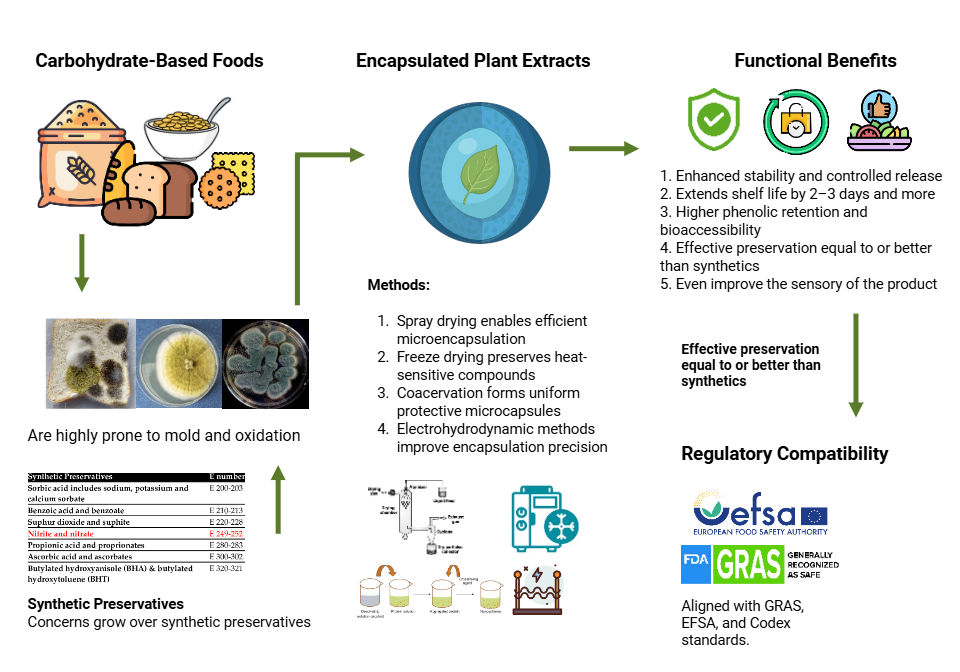
Published
How to Cite
Issue
Section
License
Copyright (c) 2025 Walailak University

This work is licensed under a Creative Commons Attribution-NonCommercial-NoDerivatives 4.0 International License.





