
Exploring the Therapeutic Effects of Allium chinense G. Don Extract on Pancreatic Histopathology and Apoptosis Biomarker Modulation in Diabetic Rat Models
DOI:
https://doi.org/10.48048/tis.2025.10638Keywords:
Allium chinense, Polyphenol, Antioxidant, Antidiabetic, Histopathology, ApoptosisAbstract
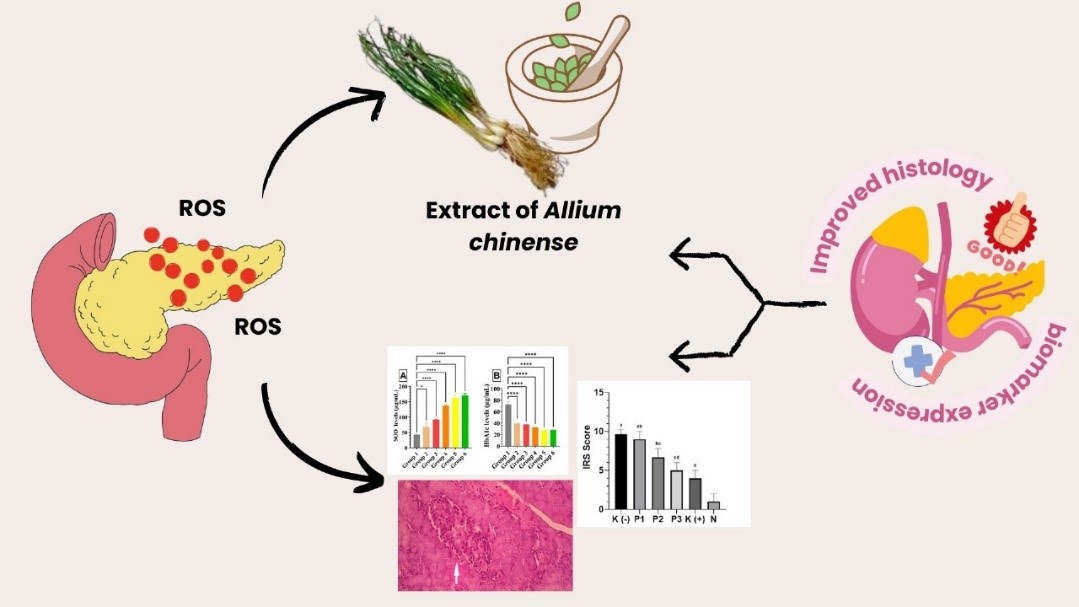
Diabetes mellitus is a chronic metabolic disorder characterized by persistent hyperglycemia due to insulin resistance and β cell dysfunction. This study aimed to evaluate the antidiabetic activity of an ethanolic extract of Allium chinense. Phytochemical analysis using thin-layer chromatography (TLC) and liquid chromatography-high-resolution mass spectrometry (LC-HRMS) confirmed the presence of bioactive flavonoids and phenolic compounds, including quercetin and 3-hydroxyflavanone, in the extracts. The extract exhibited moderate antioxidant activity (IC₅₀ = 232.0 ± 15.2 μg/mL), with total phenolic and flavonoid contents of 18.06 ± 0.05 mg GAE/g and 5.73 ± 0.04 mg QE/g, respectively. In vivo evaluation was conducted using 30 male Wistar rats divided into 6 groups: Normal group (N), diabetic control (K−), glibenclamide-treated group (K+, 0.45 mg/kg BW), and treatment groups P1, P2, and P3 receiving 200, 400 and 600 mg/kg BW of extract, respectively, for 28 days. The measured parameters included fasting blood glucose, HbA1c, superoxide dismutase (SOD), pancreatic histopathology, and expression of insulin, inducible nitric oxide synthase (iNOS), and caspase-3. The results showed that extract significantly reduced blood glucose and HbA1c levels, increased SOD activity, improved pancreatic structure, and modulated insulin, iNOS, and caspase-3 expression. The most effective response was observed in group P3 (600 mg/kg BW), which showed outcomes comparable to those of group K(+). In conclusion, A. chinense demonstrated significant antidiabetic effects through antioxidant, anti-inflammatory, and antiapoptotic mechanisms and may serve as a promising natural adjuvant in the management of diabetes.
HIGHLIGHTS
- The ethanol extract of Allium chinense is rich in phenolic and flavonoid compounds, exhibiting strong antioxidant activity.
- The extract significantly reduced blood glucose and HbA1c levels and enhanced SOD activity in STZ-induced diabetic rats.
- Histopathological analyses showed improved pancreatic structure, increased insulin expression, and decreased iNOS and caspase-3 expression, particularly at 600 mg/kg BW.
- Allium chinense demonstrates potential as a natural adjuvant for diabetes management through its antioxidant and antiapoptotic mechanisms, warranting further studies on its active constituents and safety.
GRAPHICAL ABSTRACT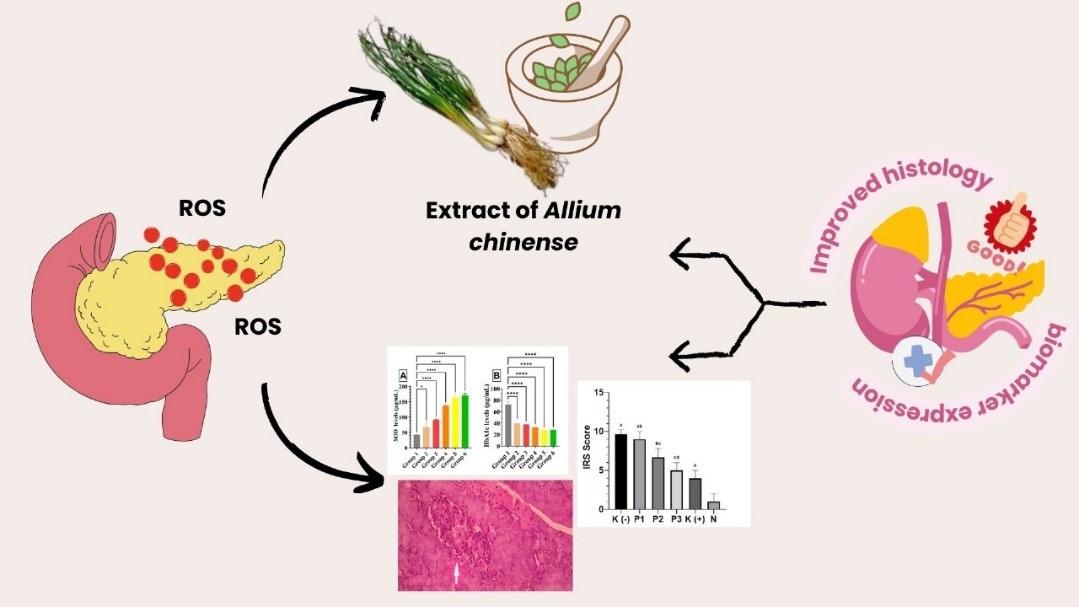
Downloads
References
S Mohan and AM Egan. Diagnosis and treatment of hyperglycemia in pregnancy: Type 2 diabetes mellitus and gestational diabetes. Endocrinology and Metabolism Clinics 2024; 53(3), 335-347.
J Blahova, M Martiniakova, M Babikova, V Kovacova, V Mondockova and R Omelka. Pharmaceutical drugs and natural therapeutic products for the treatment of type 2 diabetes mellitus. Pharmaceuticals 2021; 14(8), 806.
G Tomar, M Singh, I Sharma, A Nautiyal, S Aggarwal, S Chandra, HR Chitme, CR Medeiros, M de Azevedo Lima, L Raquel de Lima, HDM Coutinho and B Kumar. Metformin reduces testosterone level in type 2 diabetes mellitus patients and its therapy by traditional medicine. Clinical Traditional Medicine and Pharmacology 2024; 5, 200167.
E Arora, R Regan, VU Surendra and A Arumugam. Prevalence of peripheral arterial disease among individuals with type 2 diabetes mellitus in India - A systematic review and meta-analysis. Diabetes and Metabolic Syndrome: Clinical Research and Reviews 2024; 18(9), 103124.
Y Sakamoto, K Kawamura, H Yoshimatsu, T Doi and T Miyake. Analysis of the impact of periodontal disease management before the onset of type 2 diabetes mellitus on medical costs using administrative claims database. Journal of Oral and Maxillofacial Surgery, Medicine, and Pathology 2024; 37(3), 493-499.
B Chen, L Tao, M Tian and Z Ji. Efficacy and safety of combination of semaglutide and basal insulin in patients with of type 2 diabetes mellitus: A systematic review and meta-analysis. Clinical Nutrition ESPEN 2025; 66, 564-572.
A Vignarajah, MC Tan, N Vigneswaramoorthy, K Tamirisa, LR Scott, O Wazni and JZ Lee. Cardiovascular outcomes with GLP-1 RAs in patients with type 2 diabetes mellitus and atrial fibrillation. Heart Rhythm 2025. https://doi.org/10.1016/j.hrthm.2025.01.023
RF Hu and XB Sun. Design of new traditional Chinese medicine herbal formulae for treatment of type 2 diabetes mellitus based on network pharmacology. Chinese Journal of Natural Medicines 2017; 15(6), 436-441.
LEO Ramirez, DFÁ Ibáñez, CCA Morales, LKO Arango, M Plazas and ID Escobar. Cost-effectiveness analysis of pharmacological treatment with insulin and insulin analogs for type 1 and type 2 diabetes mellitus in Colombia. Value in Health Regional Issues 2025; 47, 101073.
C Ye, Y Li, J Shi, L He, X Shi, W Yang, W Lei, S Quan, X Lan and S Liu. Network pharmacology analysis revealed the mechanism and active compounds of jiao tai wan in the treatment of type 2 diabetes mellitus via SRC/PI3K/AKT signaling. Journal of Ethnopharmacology 2025; 337(P2), 118898.
S Kumari, R Patil and BR Tubaki. Efficacy of integrated Ayurveda treatment protocol in uncontrolled type 2 diabetes mellitus: A randomized controlled study. European Journal of Integrative Medicine 2025; 73, 102424.
C Xie, W Gao, X Li, S Luo, D Wu and FY Chye. Garlic (Allium sativum L.) polysaccharide ameliorates type 2 diabetes mellitus (T2DM) via the regulation of hepatic glycogen metabolism. NFS Journal 2023; 31, 19-27.
HY Lukman, Y Kuo, MS Owolabi, B Lawal, LC Chen, OT Ajenifujah, AO Fadaka, F Olawale, SA Onikanni, S Sani, MD Waard, D Fouad, G El-Saber Batiha, S Sabiu, ATH Wu and HS Huang. Evaluation of terpenes rich Hura crepitans extract on glucose regulation and diabetic complications in STZ-induced diabetic rats. Biomedicine and Pharmacotherapy 2024; 179, 117308.
P Sun, X Wang, M An, Q Feng, S Huang, Y Wang and B Li. The ethanol extract of Garcinia kola seeds ameliorates renal injury in HFD/STZ-induced diabetic rats and inhibits mesangial cells apoptosis via improving mitochondrial dysfunction. Journal of Functional Foods 2024; 119, 106341.
M Rahimi-Madiseh, E Heidarian, S Kheiri and M Rafieian-Kopaei. Effect of hydroalcoholic Allium ampeloprasum extract on oxidative stress, diabetes mellitus and dyslipidemia in alloxan-induced diabetic rats. Biomedicine and Pharmacotherapy 2017; 86, 363-367.
KA Obaid. Anti-angiogenesis efficacy of the aqueous extract of Allium sativum and its combination with melatonin in an animal model: In vivo and ex vivo studies. Pharmacia 2024; 71, 1-8.
J Li, G Ye, Z Zhou, J Wang, J Wang, T Ju, A Cifuentes, E Ibañez, D Baranenko, H Zhao and W Lu. Ultrasound-assisted extraction of polysaccharide from Allium chinense G. Don epidermal waste: Evaluation of extraction mechanism, physicochemical properties, and bioactivities. Ultrasonics Sonochemistry 2025; 112, 107210.
Q He, S Huang, Y Wu, W Zhang, F Wang, J Cao, Q Sheng, Z Liang, L Liu and WB Ou. Comparative study on the composition of free amino acids and derivatives in the 2 botanical origins of an edible Chinese herb “Xiebai”, i.e., Allium chinense G. Don and Allium macrostemon Bunge species. Food Research International 2018; 106, 446-457.
Y Wang, J Ma, Y Tong, N Li, J Li and Z Qi. Antidiabetic effects and mechanisms of Cyclocarya paliurus leaf flavonoids via PIK3CA. Journal of Functional Foods 2024; 113, 106031.
SP Subramanian and GS Prasath. Antidiabetic and antidyslipidemic nature of trigonelline, a major alkaloid of fenugreek seeds studied in high-fat-fed and low-dose streptozotocin-induced experimental diabetic rats. Biomedicine and Preventive Nutrition 2014; 4(4), 475-480.
S Jiang, L Xu, Y Xu, Y Guo, L Wei, X Li and W Song. Antidiabetic effect of Momordica charantia saponins in rats induced by high-fat diet combined with STZ. Electronic Journal of Biotechnology 2020; 43, 41-47.
YH Yu, F Liu, LQ Li, MY Jin, X Yu, X Liu, Y Li, L Li and JK Yan. Recent advances in dietary polysaccharides from Allium species: Preparation, characterization, and bioactivity. International Journal of Biological Macromolecules 2024; 277(P1), 134130.
A Laabar, I Kabach, S El Asri, A Kchikich, S Drioua, A El Hamri and M El Abbes Faouzi. Investigation of antioxidant, antidiabetic, and antiglycation properties of Sonchus oleraceus and Lobularia maritima (L.) Desv. extracts from Taza, Morocco. Food Chemistry Advances 2025; 6, 100912.
N Zekeya, M Ibrahim, B Mamiro, H Ndossi, M Kilonzo, M Mkangara, M Chacha, J Chilongola and J Kideghesho. Potential of natural phenolic antioxidant compounds from Bersama abyssinica (Meliathacea) for treatment of chronic diseases. Saudi Journal of Biological Sciences 2022; 29(6), 103273.
MF Lubis, PAZ Hasibuan, VE Kaban and R Astyka. Phytochemicals analysis and cytotoxic activity of lansium domesticum corr extract-cisplatin combination against panc-1 cell line. Rasayan Journal of Chemistry 2023; 16(1), 32-37.
PAZ Hasibuan, JM Keliat and MF Lubis. Microwave-assisted extraction impacts on pharmacological activity of vernonia amygdalina delile leaf extracts and FT-IR application for phytochemicals analysis. Rasayan Journal of Chemistry 2023; 16(3), 1677-1685.
MF Lubis, S Sumaiyah, LD Lubis, K Fitri and R Astyka. Application of Box-Behnken design for optimization of Vernonia amygdalina stem bark extract in relation to its antioxidant and anti-colon cancer activity: The Effect of Vernonia amygdalina stem bark extract against WiDR cells. Arabian Journal of Chemistry 2024; 17(4), 105702.
LD Lubis, AT Prananda, NA Juwita, MA Nasution, RA Syahputra, S Sumaiya, RR Lubish, MF Lubisc, R Astykac and JF Atiqahi. Unveiling antioxidant capacity of standardized chitosan-tripolyphosphate microcapsules containing polyphenol-rich extract of Portulaca oleraceae. Heliyon 2024; 10(8), e29541.
MF Lubis, H Syahputra, DN Illian and VE Kaban. Antioxidant activity and nephroprotective effect of Lansium parasiticum leaves in doxorubicin-induced rats. Journal of Research in Pharmacy 2022; 26(3), 565-573.
AS Dias, M Porawski, M Alonso, N Marroni, PS Collad and J González-Gallego. Quercetin decreases oxidative stress, NF-κB activation, and iNOS overexpression in liver of streptozotocin-induced diabetic rats. Journal of Nutrition 2005; 135(10), 2299-2304.
MS Othman, AM Khaled, AH Al-Bagawi, MA Fareid, RA Ghany, OA Habotta and AEA Moneim. Hepatorenal protective efficacy of flavonoids from Ocimum basilicum extract in diabetic albino rats: A focus on hypoglycemic, antioxidant, anti-inflammatory and anti-apoptotic activities. Biomedicine and Pharmacotherapy 2021; 144, 112287.
YP Lin, LY Lin, HY Yeh, CH Chuang, SW Tseng and YH Yen. Antihyperlipidemic activity of Allium chinense bulbs. Journal of Food and Drug Analysis 2016; 24(3), 516-526.
N Oršolić, G Gajski, V Garaj-Vrhovac, D Crossed D Signikić, ZŠ Prskalo and D Sirovina. DNA-protective effects of quercetin or naringenin in alloxan-induced diabetic mice. European Journal of Pharmacology 2011; 656(1-3), 110-118.
I Ibero-Baraibar, A Perez-Cornago, MJ Ramirez, JA Martínez and MA Zulet. An increase in plasma homovanillic acid with cocoa extract consumption is associated with the alleviation of depressive symptoms in overweight or obese adults on an energy restricted diet in a randomized controlled trial. Journal of Nutrition 2016; 146(4), 897S-904S.
Z Wei, X Gu, J Zhang, Y Chen, T Jiang, D Hu, M Miao, H Zhou, R Cheng, AT Teichmann and Y Yang. Beneficial biological effects of Flavokawain A, a chalcone constituent from kava, on surgically induced endometriosis rat model. Journal of Ethnopharmacology 2024; 318(PA), 116896.
N Nagy, KS Czepiel, G Kaber, D Stefanovski, A Hargil, N Pennetzdorfer, R Targ, SC Reghupaty, TN Wight, RB Vernon, RL Hull-Meichle, P Marshall, CO Medina, H Martinez, A Kalinowski, RD Paladini, S Garantziotis, JW Knowles and PL Bollyky. Hymecromone promotes longevity and insulin sensitivity in mice. Cells 2024; 13(20), 1-14.
SI Pillai, SP Subramanian and M Kandaswamy. Evaluation of antioxidant efficacy of vanadium-3-hydroxyflavone complex in streptozotocin-diabetic rats. Chemico-Biological Interactions 2013; 204(2), 67-74.
W Wang, J Li, H Zhang, X Wang, J Fan and X Zhang. Phenolic compounds and bioactivity evaluation of aqueous and methanol extracts of Allium mongolicum Regel. Food Science and Nutrition 2019; 7(2), 779-787.
H Nurcahyo, SA Sumiwi, E Halimah and G Wilar. Total flavonoid levels of ethanol extract and ethyl acetate fraction dry shallots (Allium cepa L. var. Garden Onion of Brebes) with maceration methods using UV-Vis spectrophotometry. Systematic Reviews in Pharmacy 2020; 11(10), 286-289.
MA Ebrahimzadeh, SF Nabavi, SM Nabavi and B Eslami. Antihemolytic and antioxidant activities of Allium paradoxum. Central European Journal of Biology 2010; 5(3), 338-345.
C Moldovan, O Frumuzachi, M Babotă, J Pinela, L Barros, G Rocchetti, V López, L Lucini, G Crișan and A Mocan. Untargeted phytochemical profiling and biological activity of small yellow onion (Allium flavum L.) from different regions of Romania. Food Chemistry 2023; 426, 136503.
TL Abreu, GS Silva, ADJ de Farias Marques, JS de Espindola, BBT de Assis, KB Sampaio, T Mariano, R de Albuquerque, MTB Pacheco, FAB Galland, EL de Souza, M Magnani, MS Madruga and TK Alencar Bezerra. Organic arabic coffee husk: Antioxidant and cytoprotective properties and potential impacts on selected human intestinal bacterial populations of individuals with diabetes. Food Research International 2024; 192, 114730.
S Nzekwe, A Morakinyo, M Ntwasa, S Lebelo, O Oguntibeju, O Oyedapo and A Ayeleso. Flavonoid-rich fraction of Monodora tenuifolia Benth seeds improves antioxidant status in male Wistar rats with streptozotocin-induced Diabetes mellitus. Phytomedicine Plus 2024; 4(4), 100646.
F Nasirian, M Dadkhah, N Moradi-Kor and Z Obeidavi. Effects of Spirulina platensis microalgae on antioxidant and anti-inflammatory factors in diabetic rats. Diabetes, Metabolic Syndrome and Obesity: Targets and Therapy 2018; 11, 375-380.
AV González‐de‐peredo, M Vázquez‐espinosa, E Espada‐bellido, C Carrera, M Ferreiro‐gonzález, GF Barbero and M Palma. Flavonol composition and antioxidant activity of onions (Allium cepa l.) based on the development of new analytical ultrasound‐assisted extraction methods. Antioxidants 2021; 10(2), 273.
J Xie, W Song, X Liang, Q Zhang, Y Shi, W Liu and X Shi. Protective effect of quercetin on streptozotocin-induced diabetic peripheral neuropathy rats through modulating gut microbiota and reactive oxygen species level. Biomedicine and Pharmacotherapy 2020; 127, 110147.
N Omar, CAN Ismail and I Long. Tannins in the treatment of diabetic neuropathic pain: Research progress and future challenges. Frontiers in Pharmacology 2022; 12, 805854.
AR El Barky, SA Hussein, AA Alm-Eldeen, YA Hafez and TM Mohamed. Anti-diabetic activity of Holothuria thomasi saponin. Biomedicine and Pharmacotherapy 2016; 84, 1472-1487.
ME Cerf. Beta cell dysfunction and insulin resistance. Frontiers in Endocrinology 2013; 4, 37.
U Fırat, S Kaya, A Çim, H Büyükbayram, O Gökalp, MS Dal and MN Tamer. Increased caspase-3 immunoreactivity of erythrocytes in STZ diabetic rats. Experimental Diabetes Research 2012; 2012(1), 316384.
S Mallik, B Paria, SM Firdous, HS Ghazzawy, NK Alqahtani, Y He, X Li and MM Gouda. The positive implication of natural antioxidants on oxidative stress-mediated diabetes mellitus complications. Journal of Genetic Engineering and Biotechnology 2024; 22(4), 100424.
DA Omoboyowa, MD Agoi, SA Shodehinde, OA Saibu and JA Saliu. Antidiabetes study of Spondias mombin (Linn) stem bark fractions in high-sucrose diet-induced diabetes in Drosophila melanogaster. Journal of Taibah University Medical Sciences 2023; 18(4), 663-675.
S Ismail, TI Chandel, J Ramakrishnan, RH Khan, K Poomani and N Devarajan. Phytochemical profiling, human insulin stability and alpha glucosidase inhibition of Gymnema latifolium leaves aqueous extract: Exploring through experimental and in silico approach. Computational Biology and Chemistry 2023; 107, 107964.
SM Jeong, MJ Kang, HN Choi, JH Kim and JI Kim. Quercetin ameliorates hyperglycemia and dyslipidemia and improves antioxidant status in type 2 diabetic db/db mice. Nutrition Research and Practice 2012; 6(3), 201-207.
F Aghababaei and M Hadidi. Recent advances in potential health benefits of quercetin. Pharmaceuticals 2023; 16(7), 1020.
AH Rahmani, MA Alsahli, AA Khan and SA Almatroodi. Quercetin, a plant flavonol attenuates diabetic complications, renal tissue damage, renal oxidative stress and inflammation in streptozotocin-induced diabetic rats. Metabolites 2023; 13(1), 130.
HOA Alharbi, M Alshebremi, AY Babiker and AH Rahmani. The role of quercetin, a flavonoid in the management of pathogenesis through regulation of oxidative stress, inflammation, and biological activities. Biomolecules 2025; 15(1), 151.
Q Jin, T Liu, Y Qiao, D Liu, L Yang, H Mao, F Ma, Y Wang, L Peng and Y Zhan. Oxidative stress and inflammation in diabetic nephropathy: Role of polyphenols. Frontiers in Immunology 2023; 14, 1185317.
I Yehuda, Z Madar, A Leikin-Frenkel and S Tamir. Glabridin, an isoflavan from licorice root, downregulates iNOS expression and activity under high-glucose stress and inflammation. Molecular Nutrition and Food Research 2015; 59(6), 1041-1052.
CH Wu, CF Wu, HW Huang, YC Jao and GC Yen. Naturally occurring flavonoids attenuate high glucose-induced expression of proinflammatory cytokines in human monocytic THP-1 cells. Molecular Nutrition and Food Research 2009; 53(8), 984-995.
RK Al-Ishaq, M Abotaleb, P Kubatka, K Kajo and D Büsselberg. Flavonoids and their anti-diabetic effects: Cellular mechanisms and effects to improve blood sugar levels. Biomolecules 2019; 9(9), 430.
M Azeem, M Hanif, K Mahmood, N Ameer, FRS Chughtai and U Abid. An insight into anticancer, antioxidant, antimicrobial, antidiabetic and anti-inflammatory effects of quercetin: A review. Polymer Bulletin 2023; 80(1), 241-262.
DP Wati and S Ilyas. Renoprotective potential of flavonoids-rich against doxorubicin-induced in animal models : A review. International Journal of Applied Pharmaceutics 2024; 16(6), 28-37.
L Zhang, LY Xu, F Tang, D Liu, XL Zhao, JN Zhang, J Xia, JJ Wu, Y Yang, C Peng and H Ao. New perspectives on the therapeutic potential of quercetin in non-communicable diseases: Targeting Nrf2 to counteract oxidative stress and inflammation. Journal of Pharmaceutical Analysis 2024; 14(6), 100930.
A Eidi, M Eidi and E Esmaeili. Antidiabetic effect of garlic (Allium sativum L.) in normal and streptozotocin-induced diabetic rats. Phytomedicine 2006; 13(9-10), 624-629.
SS Roh, OJ Kwon, JH Yang, YS Kim, SH Lee, JS Jin, YD Jeon, T Yokozawa and HJ Kim. Allium hookeri root protects oxidative stress-induced inflammatory responses and β-cell damage in pancreas of streptozotocin-induced diabetic rats. BMC Complementary and Alternative Medicine 2016; 16(1), 63.
Published
How to Cite
Issue
Section
License
Copyright (c) 2025 Walailak University

This work is licensed under a Creative Commons Attribution-NonCommercial-NoDerivatives 4.0 International License.





