
The Comparison of Antibacterial Efficacy, Cell Proliferation, and Wound Healing Properties in Extracts Derived from Leaves and Inflorescences of Hang Kra Rog Phu Phan ST1 (Cannabis sativa L.)
DOI:
https://doi.org/10.48048/tis.2024.8446Keywords:
Wound healing, Cannabis sativa, Hang Kra Rog Phu Phan, Anti-bacterial, Human fibroblast, Proliferation, Cell migrationAbstract
The therapeutic potential of Cannabis sativa extracts in wound healing applications has garnered significant interest due to their diverse pharmacological properties. This study aimed to comparatively evaluate the antibacterial properties and wound-healing activity of ethanolic extracts derived from C. sativa leaves and inflorescences of the Hang Kra Rog Phu Phan ST1 cultivar. The extracts were prepared using ethanol, and their antibacterial properties, cytotoxicity and ability to promote cell proliferation and migration were investigated. The antibacterial activity was assessed against Staphylococcus epidermidis TISTR 518, Klebsiella pneumoniae TISTR 1383, Pseudomonas aeruginosa TISTR 2370, Staphylococcus aureus TISTR 1466 and Bacillus cereus TISTR 2373 using the disk diffusion method and broth microdilution assay. Cell viability and proliferation were evaluated using the MTT assay on human fibroblasts in serum-supplemented and serum-depleted media. The scratch wound healing assay was employed to quantify cell migration and wound closure. The results demonstrated that both leaf and inflorescence extracts exhibited antibacterial activity, with the inflorescence extract showing higher efficacy against S. aureus. Furthermore, the extracts enhanced fibroblast proliferation and migration in a concentration-dependent manner. Notably, the leaf extract outperformed the inflorescence extract in promoting fibroblast proliferation and migration, particularly at earlier time points. These findings suggest that C. sativa extracts, particularly from the leaves, possess wound-healing properties and could be developed as novel therapeutic agents for promoting efficient wound repair and managing chronic non-healing wounds.
HIGHLIGHTS
This research is the inaugural exploration into the antibacterial properties and wound healing capabilities of the Cannabis sativa L. Hang Kra Rog Phu Phan ST1 cultivar, a unique variant of Cannabis sativa. This strain has received official recognition and registration from the Rajamangala University of Technology Isan, Thailand. Our findings reveal that extracts derived from the leaves and inflorescences of the Hang Kra Rog Phu Phan ST1 strain display potent antibacterial activity against five tested pathogenic bacteria, namely Staphylococcus epidermidis TISTR 518, Klebsiella pneumoniae TISTR 1383, Pseudomonas aeruginosa TISTR 2370, Staphylococcus aureus TISTR 1466, and Bacillus cereus TISTR 2373. Moreover, these extracts stimulate the growth and movement of human fibroblasts. These compelling results underscore the potential for harnessing this plant as an efficacious agent for wound healing.
GRAPHICAL ABSTRACT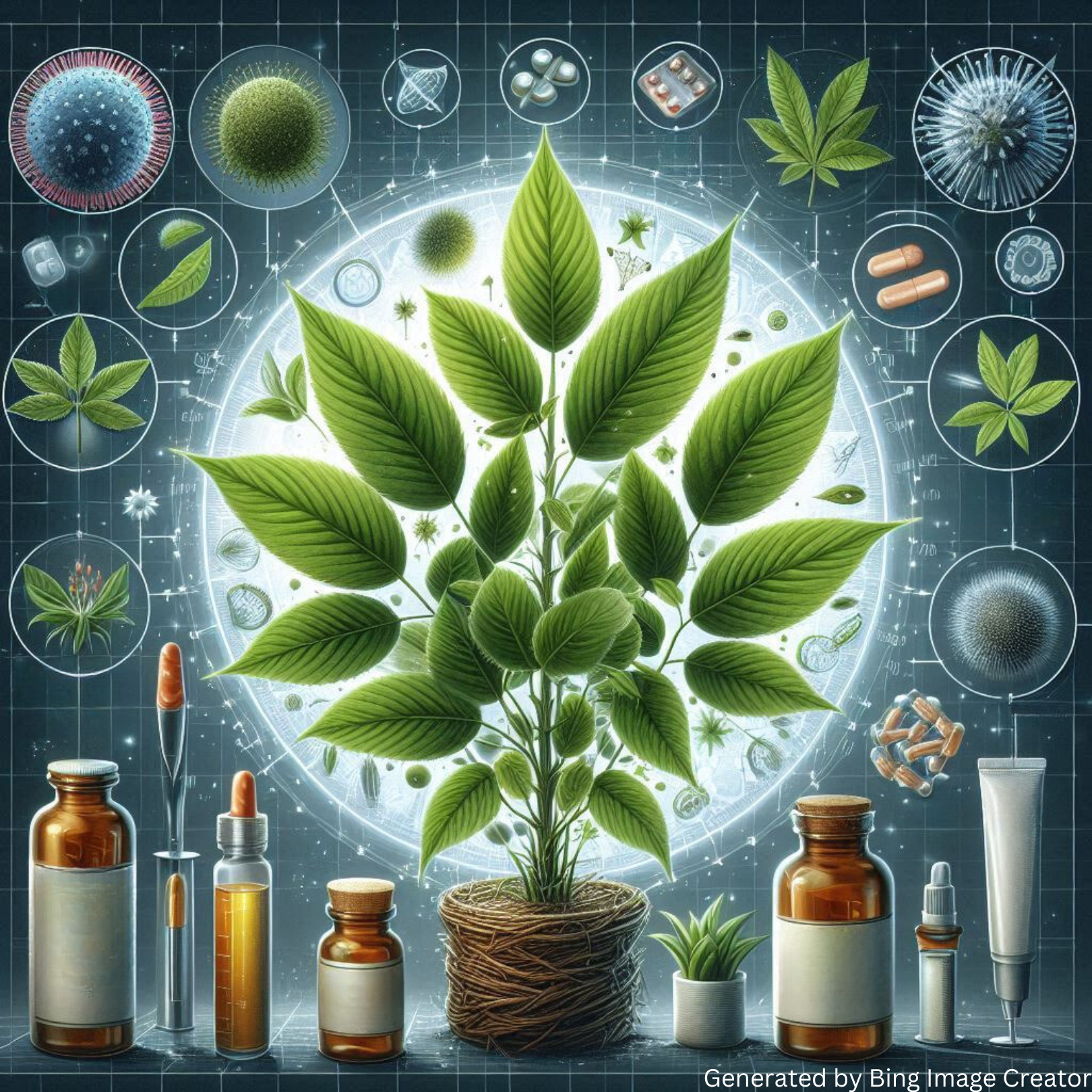
Downloads
References
S Khanam. A systematic review on wound healing and its promising medicinal plants. IP Int. J. Compr. Adv. Pharmacol. 2021; 5, 170-6.
MS Criollo-Mendoza, LA Contreras-Angulo, N Leyva-López, EP Gutiérrez-Grijalva, L AbJiménez-Ortega and JB Heredia. Wound healing properties of natural products: Mechanisms of action. Molecules 2023; 28, 598.
S El-Ashram, LM El-Samad, AA Basha and A El-Wakil. Naturally-derived targeted therapy for wound healing: Beyond classical strategies. Pharmacol. Res. 2021; 170, 105749.
S Vitale, S Colanero, M Placidi, GD Emidio, C Tatone, F Amicarelli and A D’Alessandro. Phytochemistry and biological activity of medicinal plants in wound healing: An overview of current research. Molecules 2022; 27, 3566.
SPS Yadav, M Kafle, NP Ghimire, NK Shah, P Dahal and S Pokhrel. An overview of phytochemical constituents and pharmacological implications of Cannabis sativa L. J. Herb. Med. 2023; 42, 100798.
CR Healy, G Gethin, A Pandit and DP Finn. Chronic wound-related pain, wound healing and the therapeutic potential of cannabinoids and endocannabinoid system modulation. Biomed. Pharmacother. 2023; 27, 3566.
MA Weigelt, R Sivamani and H Lev-Tov. The therapeutic potential of cannabinoids for integumentary wound management. Exp. Dermatol. 2021; 30, 201-11.
GV Niekerk, T Mabin and AM Engelbrecht. Anti-inflammatory mechanisms of cannabinoids: An immunometabolic perspective. Inflammopharmacology 2019; 27, 39-46.
FR Henshaw, LS Dewsbury, CK Lim and GZ Steiner. The effects of cannabinoids on pro- and anti-inflammatory cytokines: A systematic review of in vivo studies. Cannabis Cannabinoid Res. 2021; 6, 177-95.
M Gerasymchuk, G Robinson, A Groves, L Haselhorst, S Nandakumar, C Stahl, O Kovalchuk and I Kovalchuk. Phytocannabinoids stimulate rejuvenation and prevent cellular senescence in human dermal fibroblasts. Cells 2022; 11, 3939.
P Montreekachon, N Chaichana, A Makeudom, V Kerdvongbundit, W Krisanaprakornkit and S Krisanaprakornkit. Proliferative effect of cannabidiol in human gingival fibroblasts via the mitogen-activated extracellular signal-regulated kinase (MEK) 1/2. J. Periodontal Res. 2023; 58, 1223-1234.
MS Mahmud, MS Hossain, ATMF Ahmed, MZ Islam, ME Sarker and MR Islam. Antimicrobial and antiviral (SARS-CoV-2) potential of cannabinoids and Cannabis sativa: A comprehensive review. Molecules 2021; 26, 7216.
MAT Blaskovich, AM Kavanagh, AG Elliott, B Zhang, S Ramu, M Amado, GJ Lowe, AO Hinton, DMT Pham, J Zuegg, N Beare, D Quach, MD Sharp, J Pogliano, AP Rogers, D Lyras, L Tan, NP West, DW Crawford, ML Peterson, …, M Thurn. The antimicrobial potential of cannabidiol. Commun. Biol. 2021; 4, 7.
M Zagórska-Dziok, T Bujak, A Ziemlewska and Z Nizioł-Łukaszewska. Positive effect of Cannabis sativa L. herb extracts on skin cells and assessment of cannabinoid-based hydrogels properties. Molecules 2021; 26, 802.
K Kongkadee, W Wisuitiprot, K Ingkaninan and N Waranuch. Anti-inflammation and gingival wound healing activities of Cannabis sativa L. subsp. sativa (hemp) extract and cannabidiol: An in vitro study. Arch. Oral. Biol. 2022; 140, 105464.
C Monton, T Tanpao, C Navakul, T Pengkum, S Santasanasuwan, J Suksaeree, L Charoenchai and T Songsak. Cannabidiol, ∆9-tetrahydrocannabinol, and cannabinol contents of Cannabis sativa L. inflorescences claimed to be Hang Kra Rog Phu Phan cultivar cultivated outdoors in various locations of Thailand. Phytochem. Lett. 2023; 57, 126-32.
C Tyavambiza, M Meyer, AD Wusu, AM Madiehe and S Meyer. The antioxidant and in vitro wound healing activity of Cotyledon orbiculata aqueous extract and the synthesized biogenic silver nanoparticles. Int. J. Mol. Sci. 2022; 23, 16094.
S Rattanasuk and T Phiwthong. A new potential source of anti-pathogenic bacterial substances from Zamioculcas zamiifolia (Lodd.) Engl. extracts. Pak. J. Biol. Sci. 2021; 24, 235-40.
S Rattanasuk, K Wechgama, T Chumroenph, OA Chaiyachet and K Charoensop. Potential antibacterial activity of ethanolic Curcuma longa L. rhizome extract against antibiotic-resistant bacteria. Pak. J. Biol. Sci. 2023; 26, 119-23.
S Rattanasuk, R Boongapim and T Phiwthong. Antibacterial activity of Cathormion umbellatum. Bangladesh J. Pharmacol. 2021; 16, 91-5.
S Rattanasuk, R Boongapim, T Phiwthong, S Phuangsrika and N Putthanach. Antibacterial profile of Cissus quadrangularis extracts against antibiotic-resistant bacteria isolated from Roi Et Hospital. Int. J. Pharmacol. 2021; 17, 97-102.
N Armassa, D Wongsorn, B Saenmahaya, S Rayan and S Rattanasuk. In vitro antibacterial activity of ethanolic Tanao Si Kan Dang RD1 (Cannabis sativa L.) extracts against human antibiotic-resistant bacteria. Pak. J. Biol. Sci. 2024; 27, 119-24.
A Grada, M Otero-Vinas, F Prieto-Castrillo, Z Obagi and V Falanga. Research techniques made simple: Analysis of collective cell migration using the wound healing assay. J. Invest. Dermatol. 2017; 137, e11-e16.
YH Almadani, J Vorstenbosch, PG Davison and AM Murphy. Wound healing: A comprehensive review. Semin. Plast. Surg. 2021; 35, 141-4.
D Jin, K Dai, Z Xie and J Chen. Secondary metabolites profiled in cannabis inflorescences, leaves, stem barks, and roots for medicinal purposes. Sci. Rep. 2020; 10, 3309.
S Pagano, M Coniglio, C Valenti, M Federici, G Lombardo, S Cianetti and L Marinucci. Biological effects of cannabidiol on normal human healthy cell populations: Systematic review of the literature. Biomed. Pharmacother. 2020; 132, 110728.
N Tassaneesuwan, C Thammarat and P Khongkow. Safety and potential effects of cannabidiol on skin cells. J. Health Sci. Med. Res. 2023; 41, 2023919.
JL Yao Q He, X Chang, J Wu, T Duan and K Wang. Effects of Δ(9)-tetrahydrocannabinol (THC) on human amniotic epithelial cell proliferation and migration. Toxicology 2018; 394, 19-26.
L Siracusa, G Ruberto and L Cristino. Recent research on Cannabis sativa L.: Phytochemistry, new matrices, cultivation techniques, and recent updates on its brain-related effects (2018 - 2023). Molecules 2023; 28, 3387.
E Sangiovanni, M Fumagalli, B Pacchetti, S Piazza, A Magnavacca, S Khalilpour, G Melzi, G Martinelli and M Dell’Agli. Cannabis sativa L. extract and cannabidiol inhibit in vitro mediators of skin inflammation and wound injury. Phytother. Res. 2019; 33, 2083-93.
EMM Ali, AZ Almagboul, SME Khogali and UMA Gergeir. Antimicrobial activity of Cannabis sativa L.. Chin. Med. 2012; 3, 61-4.
L Schofs, MD Sparo, and SF Sánchez Bruni. The antimicrobial effect behind Cannabis sativa. Pharmacol Res Perspect. 2021; 9(2); e00761.
S Rattanasuk and T Phiwthong. Evaluation of the antibacterial activity of Spathiphyllum wallisii extracts against human pathogenic bacteria. Pak. J. Biol. Sci. 2020; 23, 1436-41.
L Serventi, G Flores, G Cusumano, D Barbaro, B Tirillini, R Venanzoni, P Angelini, A acquaviva, S DiSimone, G Zengin, L Menghini and C Ferrante. Comparative investigation of antimicrobial and antioxidant effects of the extracts from the inflorescences and leaves of the Cannabis sativa L. cv. strawberry. Antioxidants 2023; 12, 219.
AC Csakvari C Moisa, D Radu, L Olariu, A Lupiyu, A Panda, G Pop, D Chambre, V Socoliuc, L Copolovici and D Copolovici. Green synthesis, characterization, and antibacterial properties of silver nanoparticles obtained by using diverse varieties of Cannabis sativa leaf extracts. Molecules 2021; 26, 4041.
R Iseppi, V Brighenti, M Licata, A Lambertini, C Sabia, P Messi, F Pellati and S Benvenuti. Chemical characterization and evaluation of the antibacterial activity of essential oils from fibre-type Cannabis sativa L. (Hemp). Molecules 2019; 24, 2302.
S Frassinetti, M Gabriele, E Moccia, V Longo and DD Gioia. Antimicrobial and antibiofilm activity of Cannabis sativa L. seeds extract against Staphylococcus aureus and growth effects on probiotic Lactobacillus spp. LWT 2020; 124, 109149.
Downloads
Published
How to Cite
Issue
Section
License
Copyright (c) 2024 Walailak University

This work is licensed under a Creative Commons Attribution-NonCommercial-NoDerivatives 4.0 International License.





