
Effect of Drying Methods and Harvest Age on the Quality of Sliced Tiwai Onion (Eleutherine americana Merr) as A Potential Functional Food
DOI:
https://doi.org/10.48048/tis.2024.8401Keywords:
Tiwai powder, Proximate, Polyphenol, Functional groups, Phytochemistry, Morphological, Antioxidant capacityAbstract
Tiwai onion (Eleutherine americana L. Merr) is renowned for therapeutic properties due to the bioactive constituents, including polyphenol, flavonoid, and tannin. Therefore, this study aimed to characterize water content, ash, fat, protein, polyphenol, flavonoid, tannin, and antioxidant capacity, as well as to observe the functional groups and morphology of dried tiwai powder. The methodology comprised 2 factors, namely harvest age and drying methods. The results showed significant effects of harvest age and drying methods on water, fat, total phenol, total flavonoid, anthocyanin content, and antioxidant capacity, while ash, protein, and tannin content were not significantly affected. In Fourier Transform Infrared Spectroscopy (FTIR) analysis, changes in functional groups were observed, although not significant in wave numbers range of 1,800 - 1,350 and 1,200 - 950 cm−1. Specifically, an increase was observed in signals from C-C, C-O, and C-O-C vibrations. Scanning Electron Microscopy (SEM) at 1000x magnification showed that air drying at 5 months of harvest age produced dense granules, while electric oven and microwave drying of older harvests led to a flatter structure and crumbly texture.
HIGHLIGHTS
- Tiwai Onion's Medicinal Properties: Tiwai onion (Eleutherine americana Merr) is traditionally used in Indonesia for its medicinal properties, including high levels of polyphenols, flavonoids, and tannins, which contribute to its antioxidant potential, protecting cells from free radicals and supporting overall health.
- Impact of Drying Methods: The study compares three drying methods-air, electric oven, and microwave-on the water content and bioactive compounds in tiwai. Microwave drying is shown to preserve bioactive compounds like phenols and flavonoids better, while air drying is more suited for heat-sensitive products.
- Chemical Content Variability: The drying method and harvest age significantly affect the chemical composition of tiwai, including water, fat, protein, and phenolic content. Microwave drying at 5 and 7 months resulted in the highest total phenol content, while air drying retained the most flavonoids at 9 months.
- Antioxidant Capacity: Despite the different drying methods, no significant variation was observed in the antioxidant capacity of tiwai at different harvest ages. However, microwave drying shows promising results in preserving the active compounds and antioxidant properties.
- Microstructural Effects: Scanning Electron Microscopy (SEM) revealed that air drying leads to denser, irregular granules with lower solubility, while microwave drying creates more brittle, compact structures, improving solubility and rehydration capacity.
GRAPHICAL ABSTRACT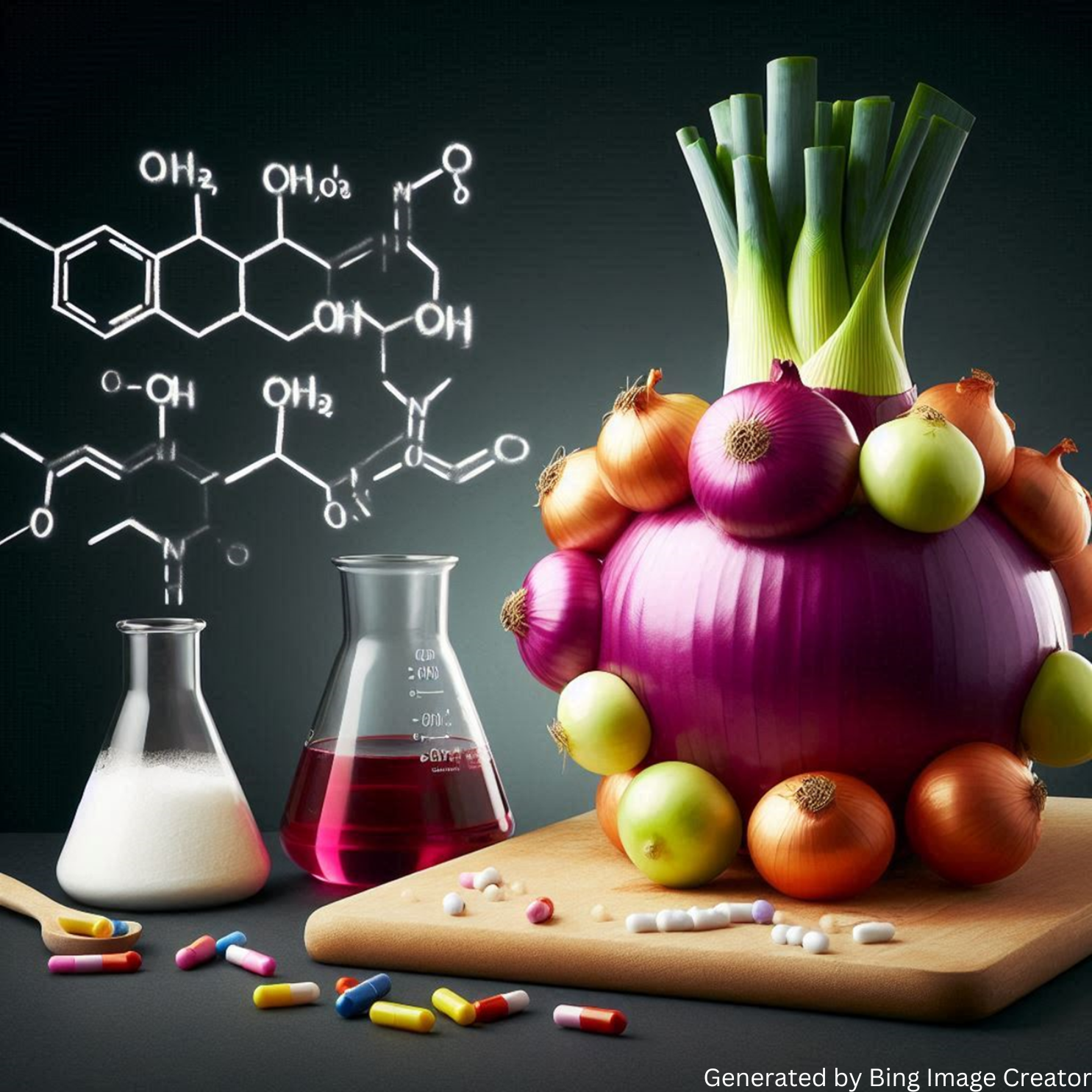
Downloads
References
SH Saputra, S Ismail and PE Yustini. The effect of tiwai onion extract drink on the malondialdehyde levels in mice (Mus musculus L.). IOP Conf. Ser. Mater. Sci Eng. 2020; 980, 012036.
V Anggi and Magfirah. The effect hypoglycemic of ethanol extract combination red betel leaf (Piper crocatum) and dayak onion (Eleutherine palmifolia Merr) in streptozotocin-Induced. Pharmacogn. J. 2019; 11, 1401-5.
V Sindhi, V Gupta, K Sharma, S Bhatnagar, R Kumari and N Dhaka. Potential applications of antioxidants - a review. J. Pharm. Res. 2013; 7, 828-35.
B Saragih, M Pasiakan, Saraheni and D Wahyudi. Effect of herbal drink plants tiwai (Eleutherine americana Merr) on lipid profile of hypercholesterolemia patients. Int. Food Res. J. 2014; 21, 1163-7.
ES Syamsul and S Supomo. Formulation of effervescent powder of water extract of bawangtiwai (Eleuterine palmifolia) as a healthy drink. Trad. Med. J. 2014; 19, 113-7.
R Puspadewi, P Adirestuti and R Menawati. Khasiatumbiba wangdayak (Eleutherine palmifolia (L.) Merr.) sebagai herbal antimikroba kulit. Jurnal Ilmiah Farmasi 2013; 1, 31-7.
N Martins, S Petropoulos and ICFR Ferreira. Chemical composition and bioactive compounds of garlic (Allium sativum L.) as affected by pre-and post-harvest conditions: A review. Food Chem. 2016; 211, 41-50.
G Agnieszka, D Mariola, P Anna, K Piotr, W Natalia, S Aneta, O Marci, Bogna, L Zdzislaw, P Aurelia, M Magdalena, MP Lukasz and W Karolina. Qualitative and quantitative analyses of bioactive compounds from ex vitro Chamaenerion angustifolium (L.) (Epilobium augustifolium) herb in different harvest times. Ind. Crops Prod. 2018; 123, 208-20.
R Muthia, K Kartini, WB Jamaludin and L Damayanti. Characterization and determination of total phenol levels of ethanolic extract of bawangdayak bulbs (Eleutherine bulbosa urb.) based on variation in growing time of plants. Jurnal Ilmiah Farmasi 2023; 20, 83-93.
X Si, Q Chen, J Bi, X Wu, J Yi, L Zhou and Z Li. Comparison of different drying methods on the physical properties, bioactive compounds and antioxidant activity of raspberry powders. J. Sci. Food Agr. 2016; 96, 2055-62.
MAZ Benjamin, SY Ng, FH Saikim and NA Rusdi. The effects of drying techniques on phytochemical contents and biological activities on selected bamboo leaves. Molecules 2022; 27, 6458.
AOAC International and GW Latimer. Official Methods of Analysis of AOAC International. 19th ed. Oxford University Press, Oxford, 2012.
A Mu’nisa, T Wresdiyati, N Kusumorini and W Manalu. Aktivitas antioksidan ekstrak daun cengkeh. J. Vet. 2012; 13, 272-7.
Y Zou, Y Lu and D Wei. Antioxidant activity of flavonoid rich extract of Hypericum pertoratum L. in Vitro. J. Agr. Food Chem. 2004; 52, 5032-9.
RP Lahare, HS Yadav, YK Bisen and AK Dashahre. Estimation of total phenol, flavonoid, tannin and alkaloid content in different extracts of Catharanthus roseus from Durg district, Chhattisgarh, India. Scholars Bull. 2021; 7, 1-6.
P Molyneux. The use of the stable free radical diphenylpicrylhydrazyl (DPPH) for estimating antioxidant activity. Songklanakarin J. Sci. Tech. 2004; 26, 211-9.
SR Falsafi, H Rostamabadi, K Nishinari, R Amani and SM Jafari. The role of emulsification strategy on the electrospinning of β-carotene-loaded emulsions stabilized by gum arabic and whey protein isolate. Food Chem. 2022; 374, 131826.
N Oliyaei, M Moosavi-Nasab, AM Tamaddon and M Fazaeli. Encapsulation of fucoxanthin in binary matrices of porous starch and halloysite. Food Hydrocolloids 2013; 100, 105458.
D Arslan, MM Ozcan and HO Mengeş. Evaluation of drying methods with respect to drying parameters, some nutritional and colour characteristics of peppermint (Mentha x piperita L.). Energ. Convers. Manage. 2010; 51, 2769-75.
KS Raja, FS Taip, MMZ Azmi and MRI Shishir. Effect of pre-treatment and different drying methods on the physicochemical properties of Carica papaya L. leaf powder. J. Saudi Soc. Agr. Sci. 2019; 18, 150-6.
AMC Nirmaan, BDR Prasantha and BL Peiris. Comparison of microwave drying and oven-drying techniques for moisture determination of three paddy (Oryza sativa L.) varieties. Chem. Biol. Tech. Agr. 2020; 7, 1.
AK Babu, G Kumaresan, VAA Raj and R Velraj. Review of leaf drying: Mechanism and influencing parameters, drying methods, nutrient preservation, and mathematical models. Renewable Sustainable Energ. Rev. 2018; 90, 536-56.
M Igual, E Garcia-Martinez, ME Martin-Esparza N Martínez-Navarrete. Effect of processing on the drying kinetics and functional value of dried apricot. Food Res. Int. 2012; 47, 284-90.
S Lenaerts, MVD Borght, A Callens and LV Campenhout. Suitability of microwave drying for mealworms (Tenebrio molitor) as alternative to freeze drying: Impact on nutritional quality and colour. Food Chem. 2018; 254, 129-36.
SM Oliveira, TR Brandao and CL Silva. Influence of drying processes and pretreatments on nutritional and bioactive characteristics of dried vegetables: A review. Food Eng. Rev. 2016; 8, 134-63.
AR Maray, MK Mostafa and AEMA El‐Fakhrany. Effect of pretreatments and drying methods on physico‐chemical, sensory characteristics and nutritional value of oyster mushroom. J. Food Process. Preserv. 2018; 42, e13352.
C Bonazzi and E Dumoulin. Quality changes in food materials as influenced by drying processes. In: E Tsotsas and AS Mujumdar (Eds.). Modern drying technology: Volume 3: Product quality and formulation. Wiley-VCH Verlag GmbH & Co. KGaA, Weinheim, Germany, 2011.
F Alferez, DUD Carvalho and D Boakye. Interplay between Abscisic acid and gibberellins, as related to ethylene and sugars, in regulating maturation of non-climacteric fruit. Int. J. Mol. Sci. 2021; 22, 669.
L Barden and EA Decker. Lipid oxidation in low-moisture food: A review. Crit. Rev. Food Sci. Nutr. 2016; 56, 2467-82.
E Uribe, A Vega-Galvez, V García, A Pasten, J Lopez and G Goni. Effect of different drying methods on phytochemical content and amino acid and fatty acid profiles of the green seaweed, Ulva spp. J. Appl. Phycol. 2019; 31, 1967-79.
Y Deng, Y Luo, Y Wang and Y Zhao. Effect of different drying methods on the myosin structure, amino acid composition, protein digestibility and volatile profile of squid fillets. Food Chem. 2015; 171, 168-76.
P Saez-Plaza, T Michałowski, MJ Navas, AG Asuero and S Wybraniec. An overview of the Kjeldahl method of nitrogen determination. part I. early history, chemistry of the procedure, and titrimetric finish. Crit. Rev. Anal. Chem. 2013; 43, 178-223.
Z Zhu, H Chen, J Ren, JJ Lu, C Gu, KB Lynch, S Wu, Z Wang, C Cao and S Liu. Two-dimensional chromatographic analysis using three second-dimension columns for continuous comprehensive analysis of intact proteins. Talanta 2018; 179, 588-93.
BT Kiremire, E Musinguzi, JK Kikafunda and FB Lukwago. Effects of vegetable drying techniques on nutrient content: A case study of south-western Uganda. Afr. J. Food Agr. Nutr. Dev. 2010; 10, 2587-600.
IG Munteanu and C Apetrei. Analytical methods used in determining antioxidant activity: A review. Int. J. Mol. Sci. 2021; 22, 3380.
F Tinello and A Lante. Recent advances in controlling polyphenol oxidase activity of fruit and vegetable products. Innov. Food Sci. Emerg. Tech. 2018; 50, 73-83
JA Torres, PMB Chagas, MC Silva, CDD Santos and AD Correa. Enzymatic oxidation of phenolic compounds in coffee processing wastewater. Water Sci. Tech. 2016; 73, 39-50.
R Wu, C Qian, Y Yang, Y Liu, L Xu, W Zhang and J Ou. Integrative transcriptomic and metabolomic analyses reveal the phenylpropanoid and flavonoid biosynthesis of Prunus mume. J. Plant Res. 2024; 137, 95-109.
KJ Marsh, IR Wallis, C Kulheim, R Clark, D Nicolle, WJ Foley and J Salminen. New approaches to tannin analysis of leaves can be used to explain in vitro biological activities associated with herbivore defence. New Phytol. 2020; 225, 488-98.
B Enaru, G Drețcanu, TD Pop, A Stanila and Z Diaconeasa. Anthocyanins: Factors affecting their stability and degradation. Antioxidants 2021; 10, 1967.
O Pramiastuti, DIK Solikhati and A Suryani. Aktivitas Antioksidan Fraksi Umbi Bawang Dayak (Eleutherine bulbosa (Mill.) Urb) Dengan Metode DPPH (1, 1-difenil-2-pikrilhidrazil). J. Wiyata 2021; 8, 55-66.
Q Xiao, Q Tong and L Lim. Drying process of pullulan edible films forming solutions studied by ATR-FTIR with two-dimensional correlation spectroscopy. Food Chem. 2014; 150, 267-73.
T Caykara, S Demirci, MS Eroglu and O Guven. Poly (ethylene oxide) and its blends with sodium alginate. Polymer 2005; 46, 10750-7.
G Lawrie, I Keen, B Drew, A Chandler-Temple, L Rintoul, P Fredericks and L Grondahl. Interactions between alginate and chitosan biopolymers characterized using FTIR and XPS. Biomacromolecules 2007; 8, 2533-41.
D Leal, B Matsuhiro, M Rossi and F Caruso. FT-IR spectra of alginic acid block fractions in three species of brown seaweeds. Carbohydr. Res. 2008; 343, 308-16.
P Wongsa, P Phatikulrungsun and S Prathumthong. FT-IR characteristics, phenolic profiles and inhibitory potential against digestive enzymes of 25 herbal infusions. Sci. Rep. 2022; 22, 6631.
CL Leverette, C Wills, MA Perkins and SA Jacobs. Structural analysis of nanofilms using FTIR spectroscopy. an introduction to the spectroscopic analysis of nanostructures for undergraduate students. J. Chem. Educ. 2009; 86, 719.
MG Miguel, C Cruz, L Faleiro, MT Simoes, AC Figueiredo, JG Barroso and LG Pedro. Foeniculum vulgare essential oils: Chemical composition, antioxidant and antimicrobial activities. Nat. Prod. Commun. 2010; 5, 319-28.
P Chumsri, W Panpipat, L Cheong, M Nisoa and M Chaijan. Comparative evaluation of hydrothermally produced rice starch-phenolic complexes: Contributions of phenolic type, plasma-activated water, and ultrasonication. Foods 2022; 11, 3826.
D Guo. Starch structure, functionality and application in foods. 1st ed. Springer, Singapore, 2020.
MA Gasmalla, HA Tessema, K Alahmed, X Hua, X Liao and Yang R. Effect of different drying techniques on the volatile compounds, morphological characteristics and thermal stability of Stevia rebaudiana Bertoni leaf. Trop. J. Pharmaceut. Res. 2017; 16, 1399-406.
N Izll and E Isik. Effect of different drying methods on drying characteristics, colour and microstructure properties of barbunia bean (Phaseolus vulgaris L.). J. Agr. Fac. Gaziosmanpaşa Univ. 2016; 33, 79-88.
R Lemus‐Mondaca, L Zura‐Bravo, K Ah‐Hen and KD Scala. Effect of drying methods on drying kinetics, energy features, thermophysical and microstructural properties of Stevia rebaudiana leaves. J. Sci. Food Agr. 2021; 101, 6484-95.
Downloads
Published
How to Cite
Issue
Section
License
Copyright (c) 2024 Walailak University

This work is licensed under a Creative Commons Attribution-NonCommercial-NoDerivatives 4.0 International License.





