
The Effect of Roasting Method on the Physico-Chemical and Functional Properties of H. itama Bee Pollen Coffee from East Kalimantan
DOI:
https://doi.org/10.48048/tis.2026.12212Keywords:
Bee pollen coffee, Bioactive compounds, East Kalimantan, Heterotrigona itama, Physicochemical and functional properties, Roasting methodAbstract
This study aimed to evaluate the effect of roasting methods and levels on the physicochemical and bioactive compound profiles of Heterotrigona itama bee pollen-enriched coffee from East Kalimantan. Coffee beans were roasted manually (wok) and semi-industrially (controlled machine) at 3 levels: Light, medium, and dark roast. Parameters analyzed included proximate composition, density, particle size, color (L*, a*, b*), water activity (Aw), solubility, and bioactive compounds (alkaloids, flavonoids, phenolics, tannins, saponins) along with caffeine content. Phytochemical screening revealed that increasing roasting temperature significantly reduced bioactive compound intensity. The manual light roast (80 - 100 °C) exhibited the strongest reactions (+++) for alkaloids, flavonoids, and phenolics, while dark semi-industrial roasting (200 - 220 °C) caused marked degradation, with several compounds undetected. FTIR spectra (4,000 - 500 cm⁻¹) confirmed the presence of O–H, C=O, and C=C aromatic groups (phenolics, C₆H₆O) and C–H, C–N, C–O bands from lipids and proteins. The decreasing intensity of –OH and C=C peaks indicated phenolic degradation and lipid oxidation linked to Maillard and caramelization reactions. Manual light roasting produced the best profile with the highest alkaloid (1.20 ± 0.55 µg/mL), phenolic (45.00 ± 0.80 mg GAE/g), flavonoid (12.50 ± 0.40 mg QE/g), and caffeine (1.85 ± 0.49 µg/mL) contents, maintaining optimal solubility and color. These findings demonstrate that roasting parameters critically influence the stability and functional quality of bee pollen coffee.
HIGHLIGHTS
- Roasting method and intensity significantly affected the physicochemical and functional properties of itama bee pollen coffee.
- Semi-industrial roasting produced darker and more uniform color than manual roasting.
- Increasing roasting level reduced brightness and some bioactive contents (phenolics, flavonoids).
- Optimal roasting preserved product quality.
- Results support the development of functional, low-caffeine coffee from East Kalimantan.
GRAPHICAL ABSTRACT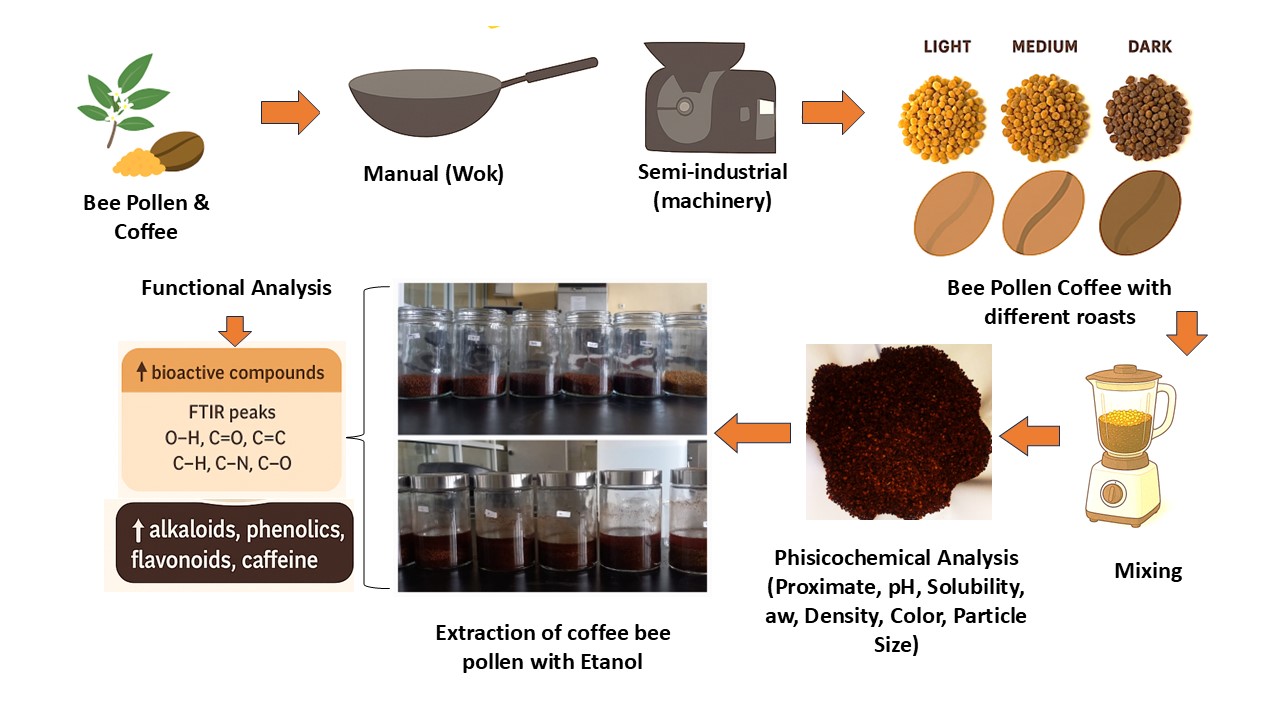
Downloads
References
A Bano, T A Qadri, M and N Khan. Bioactive metabolites of plants and microbes and their role in agricultural sustainability and mitigation of plant stress. South African Journal of Botany 2023; 159, 98-109.
N Selwal, F Rahayu, A Herwati, E Latifah, SC Suhara, IBK Suastika, WM Mahayu and AK Wani. Enhancing secondary metabolite production in plants: Exploring traditional and modern strategies. Journal of Agriculture and Food Research 2023; 14, 100702.
CP Mungwari, CK King’ondu, P Sigauke and BA Obadele. Conventional and modern techniques for bioactive compounds recovery from plants: Review. Scientific African 2025; 27, e02509.
NM Naibaho, W Fatriasari, IW Kusuma and ET Arung. Phytochemical screening, antioxidant and anti-inflammatory properties of several stingless bee pollens processed using different drying methods. Uludağ Arıcılık Dergisi 2023; 23(2), 153-166.
P Ganguly, S Chatterjee, S Kumari, PP Pati and K Julekha. Pharmacognostical, phytochemical and phytopharmacological activitiesof Solanum torvum utilized as a traditional medicinal herb: A review. Journal of Applied and Natural Science 2024; 16(3), 1317-1334.
T Lu, Y Sun, Y Huang and X Chen. Effects of roasting on the chemical compositions, color, aroma, microstructure, and the kinetics of changes in coffee pulp. Journal Food Science 2023; 88(4), 1430-1444.
GHH Oliveira and APLR de Oliveira. Coffee roasting, blending, and grinding: Nutritional, sensorial and sustainable aspects. Agriculture 2023; 13(11), 2116.
M Borucka, M Celiński, K Salasinska and A Gajek. Identification of volatile and semi-volatile organic compounds emitted during thermal degradation and combustion of triadimenol. Journal of Thermal Analysis and Calorimetry 2019; 139(2), 1493-1506.
EB Tarigan, E Wardiana, YS Hilmi and NA Komarudin. The changes in chemical properties of coffee during roasting: A review. IOP Conference Series: Earth and Environmental Science 2022; 974(1), 012115.
V Gottstein, K Krumbügel, T Kuballa, S Schwarz, P Walch and D W Lachenmeier. Monitoring of chemical changes in coffee beans during the roasting process using different roasting technologies with nuclear magnetic resonance spectroscopy. Beverages 2023; 9(4), 87.
А Lohinova and О Petrusha. Maillard reaction in food technologies. Ukrainian Journal of Food Science 2023; 11(2), 81-109.
EC Aytar and B Aydın. Investigation of chemical composition, antioxidant properties, and molecular docking in different roasting stages of coffee beans. Food and Bioprocess Technology 2023; 18, 1464-1482.
LE Hosry, V Elias, V Chamoun, M Halawi, P Cayot, A Nehme and E Bou-Maroun. Maillard reaction: Mechanism, influencing parameters, advantages, disadvantages, and food industrial applications: A review. Foods 2025; 14(11), 1881.
L Sun, D Wang, Z Huang, W Elfalleh, L Qin and D Yu. Structure and flavor characteristics of Maillard reaction products derived from soybean meal hydrolysates-reducing sugars. LWT 2023; 185, 115097.
CA Araújo, RS Lima, GF Oliveira, DB Nascimento, FS Campos, GC Gois, TGF Silva, ALR Magalhães and GGL Araújo. Carbohydrate fractionation and nitrogen compounds, mineral status, and gas production in arboreal cotton and cactus silages. Arquivo Brasileiro de Medicina Veterinária e Zootecnia 2025. https://doi.org/10.1590/1678-4162-13274
A Karim, L Mohammadi, EF Osse, M Aider, M Saqui-Salces and S Khalloufi. Effect of polysaccharide-induced viscosity on the digestion of proteins, fats, and carbohydrates in food: A comprehensive review and future perspectives. Trends in Food Science & Technology 2024; 153, 104757.
JLR Stéphanie, ELRSKB Rega and C Bonazzi. Unravelling caramelization and Maillard reactions in glucose and glucose + leucine model cakes: Formation and degradation kinetics of precursors, α-dicarbonyl intermediates and furanic compounds during baking. Food Chemistry 2021; 376(3), 131917.
M Kurzyna-Szklarek, J Cybulska and A Zdunek. Analysis of the chemical composition of natural carbohydrates - An overview of methods. Food Chemistry 2022; 394, 133466.
P Alonso-Riaño, A Illera, O Benito-Román, R Melgosa, A Bermejo-López, S Beltrán and M Sanz. Degradation kinetics of sugars (glucose and xylose), amino acids (proline and aspartic acid) and their binary mixtures in subcritical water: Effect of Maillard reaction. Food Chemistry 2024; 442, 138421.
S He, L Niu, C Sun, Z Zeng and J Xiao. Effects of different roasting conditions on sugars profile, volatile compounds, carotenoids and antioxidant activities of orange-fleshed sweet potato. Food Chemistry: X 2025; 25, 102201.
R Rusinek, B Dobrzański, M Gawrysiak-Witulska, A Siger, A Żytek, H Karami, A Umar, T Lipa and M Gancarz. Effect of the roasting level on the content of bioactive and aromatic compounds in Arabica coffee beans. International Agrophysics 2024; 38, 31-42.
M Fikry, YA Yusof, AM Al-Awaadh, RA Rahman, NL Chin, E Mousa and LS Chang. Effect of the roasting conditions on the physicochemical, quality and sensory attributes of coffee-like powder and brew from defatted palm date seeds. Foods 2019; 8(2), 61.
H Xue, J Zhao, Y Wang, Z Shi, K Xie, X Liao and J Tan. Factors affecting the stability of anthocyanins and strategies for improving their stability: A review. Food Chemistry: X 2024; 24, 101883.
Association of Official Analytical Chemist. Official methods of analysis of the Association of Official Analytical Chemists. Association of Official Analytical Chemist, Marlyand, 2006.
NM Naibaho, HD Salusu, RB Saragih, IW Kusuma, W Fatriasari and ET Arung. Sensory evaluation and antibacterial activity of bee pollen extracts isolated from several stingless bees in two drying methods. Biodiversitas Journal of Biological Diversity 2023; 24(5), 2682-2688.
J Harbone. Metode Fitokimia (Terjemahan). ITB Bandung, Bandung, Indonesia, 1987.
H Kurniawan, S Nurbaeti, F Nugraha and I Fajriaty. Penetapan kadar metabolit sekunder:Steroid, alkaloid, dan tanin ekstrak daun bintangur (Calophyllum soulattri) (in Indonesian). Sasambo Journal of Pharmacy 2024; 5(2), 83-90.
MHA Rahman, YM Jusoh and Z Hashim. Total phenolic, total flavonoid and antioxidant activity of capsicum annuum seed and pericarp extracts. Bioprocessing and Biomass Technology 2024; 3(2), 107-111.
RR Sihombing, S Priyono and L Hartanti. The effect of exselsa coffee roasting temperature and time on the physicochemical and sensory properties of coffee powder. FoodTech 2022; 1(1), 1-12.
EH Muhari, RP Sihombing, YT Sarungu, A Marlina, U Leoanggraini and T Hariyadi. Effect of fruit ripening level and roasting temperature on robusta coffee bean quality. International Journal of Applied Technology Research 2023; 4(1), 41-52.
T Dippong, M Dan, KM Haydee, ED Kovacs, EA Levei and O Cadar. Analysis of volatile compounds, composition, and thermal behavior of coffee beans according to variety and roasting intensity. Foods 2022; 11(19), 3146.
K Arwizet, D Leni, L H Peng, R Sumiati and Y P Kusuma. The effect of temperature and roasting time on changes in the characteristics and physical properties of solok arabika coffee beans. International Journal of MultidisCiplinary Rsearch and Literature 2024; 7(2), 100-108.
YK Kim, JM Lim, YJ Kim and W Kim. Alterations in pH of coffee bean extract and properties of chlorogenic acid based on the roasting degree. Foods 2024; 13(11), 1757.
NP Lestari, M Misto and E Purwandar. Chlorogenic acid content of local robusta coffee at variations of roasting temperature. Jurnal Pendidikan Fisika Indonesia 2022; 18(1), 25-32.
GV Gautério, RM Silva, FC Karraz, MAZ Coelho, BD Ribeiro and AC Lemes. Cell disruption and permeabilization methods for obtaining yeast bioproducts. Cleaner Chemical Engineering 2023; 6, 100112.
S Septiana, T Mahatmanto, A Salsabila and W Sunarharum. The effect of roasting degrees and brewing techniques on the physicochemicaland sensory characteristics of anaerobically fermented liberica coffee (coffea liberica). Trends in Sciences 2025; 22(6), 9819.
F Zhao, Z Wang and H Huang. Physical cell disruption technologies for intracellular compound extraction from microorganisms. Processes 2024; 12(10), 2059.
CR Balcázar-Zumaeta, K Reyna-Gonzales, DI Diaz, AJ Pajuelo-Muñoz, AF Iliquin-Chavez, I Yoplac, M Medina-Mendoza, D Mori-Mestanza, ISC Colca and E Castro-Alayo. Optimizing roasting time and temperature to enhance the physicochemical properties, and retention of bioactive compounds of three coffee arabica subvarieties. Applied Food Research 2025; 1, 100987.
DJM Abreu, MS Lorenço, GL Machado, J M Silva, EC Azevedo and EN Carvalho. Influence of drying methods on the post-harvest quality of coffee: Effects on physicochemical, sensory, and microbiological composition. Foods 2025; 14(9), 1463.
S Aghajanzadeh, A Sultana, AM Ziaiifar and S Khalloufi. Formation of pores and bubbles and their impacts on the quality attributes of processed foods: A review. Food Research International 2024; 188, 114494.
S Olivares-Galván, M Marina and M García. Extraction of valuable compounds from brewing residues: Malt rootlets, spent hops, and spent yeast. Trends in Food Science & Technology 2022; 127, 181-197.
J Oracz and E Nebesny. Effect of roasting parameters on the physicochemical characteristics of high-molecular-weight Maillard reaction products isolated from cocoa beans of different Theobroma cacao L. groups. European Food Research and Technology 2019; 245(1), 111-128.
B Kitchen and G Williamson. Melanoidins and (poly)phenols: An analytical paradox. Current Opinion in Food Science 2024; 60, 101217.
VS Sharanagat, R Suhag, P Anand, G Deswal, R Kumar, A Chaudhary, L Singh, OS Kushwah, S Mani, Y Kumar and PK Nema. Physico-functional, thermo-pasting and antioxidant properties of microwave roasted sorghum [Sorghum bicolor (L.) Moench]. Journal of Cereal Science 2019; 85, 111-119.
S Lin and J Xiao. Chapter One - Impact of thermal processing on dietary flavonoids. Advances in Food and Nutrition Research 2024; 108, 1-34.
M Li, X Chen, J Deng, D Ouyang, D Wang, Y Liang, Y Chen and Y Sun. Effect of thermal processing on free and bound phenolic compounds and antioxidant activities of hawthorn. Food Chemistry 2020; 332, 127429.
C Bitwell, S Indra, C Luke and MK Kakoma. A review of modern and conventional extraction techniques and their applications for extracting phytochemicals from plants. Scientific African 2023; 19, e01585.
M O Agunloye, D U Owu, O Onaadepo, F N Ugwu and O M Ogunyemi. Phytochemical characterization of ethanolic and ethyl acetate extracts of avocado Persea americana leaves by FT-IR and GC-MS reveals potential bioactive compounds. Science Reports 2025; 15(1), 27035.
M Maswal, M Pandita and S Bashir. Terpenes, terpenoids and steroids: Properties, biosynthesis and functions. In: AH Banday (Ed.). Steroids and their medicinal potential. Bentham Science Publisher, Singapore, 2023.
N Maiyah, S Kerdpiboon, S Supapvanich, WL Kerr, P Sriprom, N Chotigavin, W Klaypradit and T Puttongsiri. Recovering bioactive compounds and antioxidant capacity of medium roasted spent coffee grounds through varied hydrothermal brewing cycles. Journal of Agriculture and Food Research 2025; 20, 101789.
V S Reddy, S Shiva, S Manikantan and S Ramakrishna. Pharmacology of caffeine and its effects on the human body. European Journal of Medicinal Chemistry Reports 2024; 10, 100138.
JE Cherewyk, TJ Grusie-Ogilvie, S Parker, BR Blakley and AN Al-Dissi. The impact of storage temperature and time on ergot alkaloid concentrations. Toxins 2023; 15(8), 497.
D Franco-Ulloa, MD Luaces-Alberto, AC Valdés-Gonzalez, L Agüero-Luztonó and AN Baeza-Fonte. Determination of total phenolic compounds in Cuban monofloral honeys by reverse flow injection analysis Folin-Ciocalteau method. Microchemical Journal 2024; 204, 111008.
Y Gao, W Xia, P Shao, W Wu, H Chen, X Fang, H Mu, J Xiao and H Gao. Impact of thermal processing on dietary flavonoids. Current Opinion in Food Science 2022; 48, 100915.
A Ghani, NYA Rashid, DLA Razak, MA Manan and M Mansor. The effect of heat treatments on the bioactive compounds, antioxidant activity, and cosmeceutical properties (anti-pigmentation and anti-ageing) of fermented broken rice. Food Research 2023; 6(2), 155-162.
K Rzyska-Szczupak, A Przybylska-Balcerek, M Buśko, L Szwajkowska-Michałek, T Szablewski and K Stuper-Szablewska. Roasting temperature as a factor modifying the caffeine and phenolic content of ethiopian coffee. Processes 2025; 13(7), 2037.
AM Obando and JG Figueroa. Effect of roasting level on the development of key aroma-active compounds in coffee. Molecules 2024; 29(19), 4723.
A Abdelazez, G Abady, M Basiony, A Abd El-Rahman, SMA El-Shafei, ES Shaker, G Alshehry, E Algarni, H Aljumayi and AM Hassan. Carob Pod Nanoparticles: Enhancing physicochemical, antioxidant, and antibacterial properties of innovative functional frozen yogurt. Science of Food 2025; 9, 162.
KY Hsiao, RJ Chung, P Chang and TH Tsai. Identification of hydroxyl and polysiloxane compounds via infrared absorption spectroscopy with targeted noise analysis. Polymers 2025; 17(11), 1533.
A Kassem, L Abbas, O Coutinho, S Opara, H Najaf, D Kasperek, K Pokhrel, X Li, X Li and S Tiquia-Arashiro. Applications of Fourier Transform-Infrared spectroscopy in microbial cell biology and environmental microbiology: Advances, challenges, and future perspectives. Frontiers in Microbiology 2023; 14, 1304081.
GM Alcantara, LC Martins, WP Gomes, D Dresch, FR Rocha and WR Melchert. Effect of roasting on chemical composition of coffee. Food Chemistry 2025; 477, 143169.
M Dev and M Mukadam. Functional group profiling of medicinal plants using FTIR spectroscopy. World Journal of Biology Pharmacy and Health Sciences 2025; 21(1), 243-249.
S Pasieczna-Patkowska, M Cichy and J Flieger. Application of Fourier Transform Infrared (FTIR) spectroscopy in characterization of green synthesized nanoparticles. Molecules 2025; 30(3), 683.
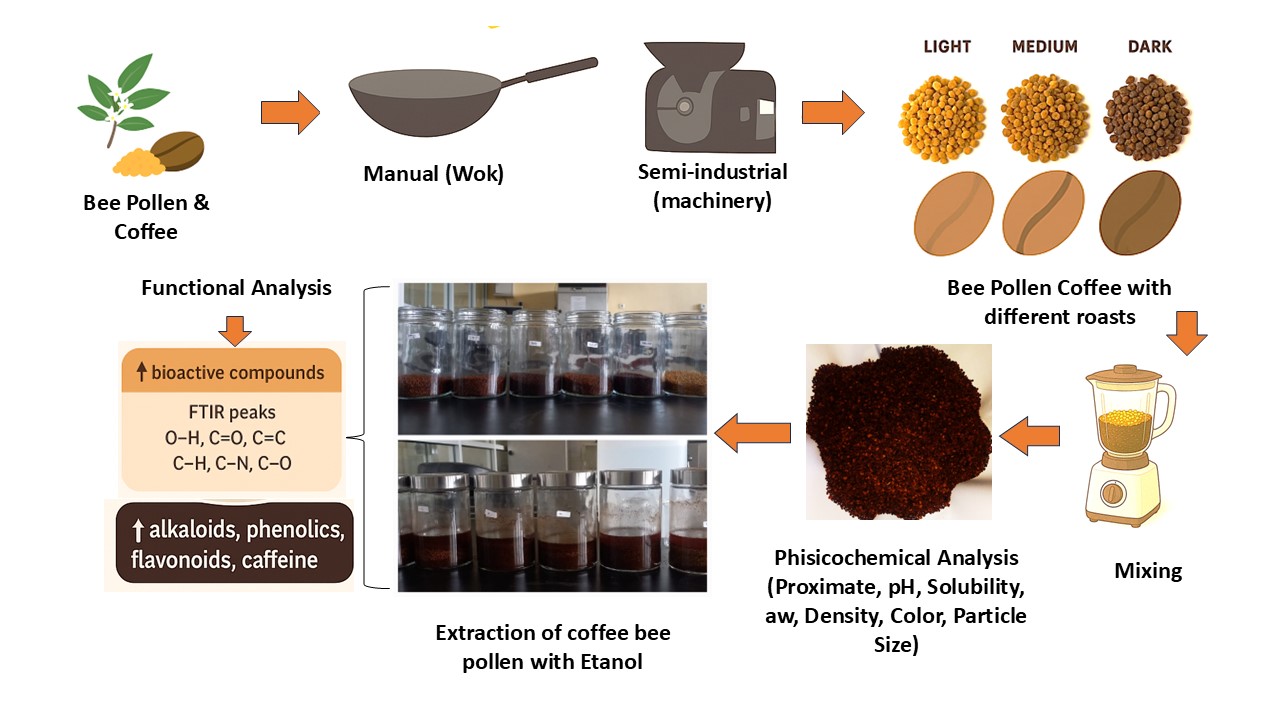
Published
How to Cite
Issue
Section
License
Copyright (c) 2025 Walailak University

This work is licensed under a Creative Commons Attribution-NonCommercial-NoDerivatives 4.0 International License.





