
Astrocytic Changes in the Striatum and Hippocampus in A Rat Model of Human Methamphetamine Abuse
DOI:
https://doi.org/10.48048/tis.2026.13366Keywords:
Methamphetamine, Striatum, Nucleus accumbens, Hippocampus, Astrocyte, Glial Fibrillary Acidic Protein, Astrogliosis, Immunohistochemistry, Methamphetamine, Striatum, Nucleus accumbens, Hippocampus, Astrocyte, Glial fibrillary acidic protein, Astrogliosis, ImmunohistochemistryAbstract
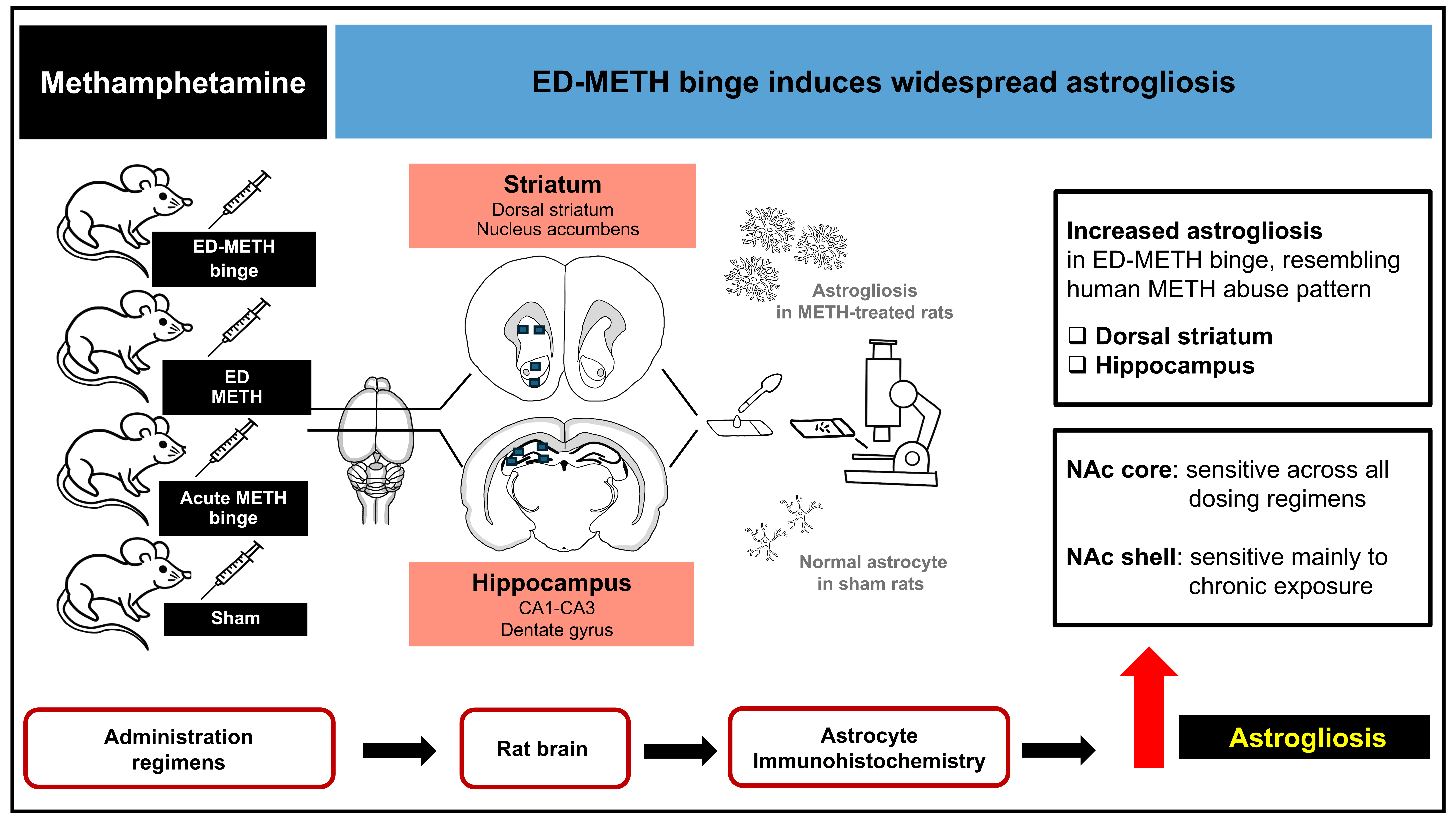
Methamphetamine (METH) is a highly addictive psychostimulant that exerts profound effects on the central nervous system, including psychosis, cognitive impairment, and memory disturbances. Chronic METH use disrupts neurotransmitter homeostasis and neuronal circuitry, contributing to long-term neurotoxicity. Astrocytes, as key regulators of synaptic transmission and brain homeostasis, are likely involved in METH-induced neuropathology. This study investigated astrocytic responses in specific brain regions, namely the striatum, nucleus accumbens, and hippocampus, using a rodent METH exposure paradigm that mimics human patterns of abuse. Immunohistochemical analysis of glial fibrillary acidic protein (GFAP) was performed in sham control, acute binge, escalating dose, and escalating dose-binge METH groups. Results showed increased GFAP immunoreactivity consistent with reactive astrogliosis, particularly in the escalating dose-binge group, suggesting heightened susceptibility in the striatum and hippocampus. Notably, region-specific astrocytic responses were observed: increased numbers of GFAP-positive cells without corresponding GFAP area expansion in the nucleus accumbens core, nucleus accumbens shell, and hippocampal CA2 subregion, suggesting a relatively mild astrocyte reactivity with limited cytoskeletal remodeling. In contrast, increased GFAP area without a corresponding increase in the number of GFAP-positive cells in the dorsolateral subregion of the striatum suggested features consistent with astrocytic hypertrophy or process elongation. These findings underscore the complementary roles of GFAP-positive cell counts and GFAP area in assessing astrogliosis. The observed profiles resemble those found in neurodegenerative and psychiatric disorders, raising the possibility of shared pathological mechanisms. Although functional outcomes were not directly assessed, these structural changes provide insight into METH-related brain alterations and highlight astrocytes as potential targets for therapeutic intervention.
HIGHLIGHTS
- METH exposure in rats induces reactive astrogliosis.
- Elevated astrogliosis reflects METH-induced neurotoxicity.
- Escalating dose-METH binge increases astrogliosis in striatum and hippocampus.
- Astrogliosis indicates a pathological correlate of psychosis and cognitive decline.
GRAPHICAL ABSTRACT
Downloads
References
Y Li, X Zheng, C Gao, S Li, Z Liu, M Lv, F Xiao and Y Bai. Higher levels of D2R and D3R in the frontal-striatal regions are associated with reduced perseverative reward seeking after opioid abstinence. Frontiers in Behavioral Neuroscience 2025; 19, 1552055.
K Schmack, M Bosc, T Ott, JF Sturgill and A Kepecs. Striatal dopamine mediates hallucination-like perception in mice. Science 2021; 372(6537), eabf4740.
L Marti-Prats, C Giuliano, A Domi, M Puaud, Y Pena-Oliver, M Fouyssac, C McKenzie, BJ Everitt and D Belin. The development of compulsive coping behavior depends on dorsolateral striatum dopamine-dependent mechanisms. Molecular Psychiatry 2023; 28(11), 4666-4678.
Y Xu, Y Lin, M Yu and K Zhou. The nucleus accumbens in reward and aversion processing: Insights and implications. Frontiers in Behavioral Neuroscience 2024; 18, 1420028.
AL Eagle, C Sugimoto, MA Doyle, D Anderson, SL Mousavi, MM Dykstra, HM Kuhn, BR Murray, RM Bastle, S Simmons, J He, I Maze, MS Mazei-Robison and AJ Robison. Transcriptional regulation of ventral hippocampus-nucleus accumbens circuit excitability drives cocaine seeking. Science Advances 2026; 12(10), eadv1236.
RJ McDonald, NS Hong, A Atwood, AV Tyndall and B Kolb. An assessment of the functional effects of amphetamine-induced dendritic changes in the nucleus accumbens, medial prefrontal cortex, and hippocampus on different types of learning and memory function. Neurobiology of Learning and Memory 2021; 180, 107408.
LM Lin, M Febo, AW Bruijnzeel, L Phan, A Gopinath, J Seibold, E Miller and H Khoshbouei. TNF-α signaling mediates the dopaminergic effects of methamphetamine by stimulating dopamine transporters and L-type Ca2+ channels. Science Signaling 2025; 18(917), eady8676.
CM Chandler, JR Nickell, AG Wilson, JP Culver, PA Crooks, MT Bardo and LP Dwoskin. Vesicular monoamine transporter-2 inhibitor JPC-141 prevents methamphetamine-induced dopamine toxicity and blocks methamphetamine self-administration in rats. Biochemical Pharmacology 2024; 228, 116189.
MR Stocco, AA El-Sherbeni, B Zhao, M Novalen and RF Tyndale. The role of CYP2D in rat brain in methamphetamine-induced striatal dopamine and serotonin release and behavioral sensitization. Psychopharmacology 2021; 238(7), 1791-1804.
Y Peng, Y Wang, L Liu, G Yang, D Zhang, S Hong and L Li. The effects of ketamine and methamphetamine on neurotransmitters, glutamate receptors, and conditioned place preference in rat. Legal Medicine 2023; 65, 102328.
B Čechová, J Jurčovičová, I Petríková, Š Vaculín, Š Šandera and R Šlamberová. Impact of altered environment and early postnatal methamphetamine exposure on serotonin levels in the rat hippocampus during adolescence. Laboratory Animal Research 2024; 40(1), 1.
T He, N Li, P Shi, X Xu, J Nie, X Lu, P Yu, Y Fan, F Ge and X Guan. Electroacupuncture alleviates spatial memory deficits in METH withdrawal mice by enhancing astrocyte-mediated glutamate clearance in the dCA1. Addiction Biology 2022; 27(1), e13068.
T He, C Han, C Liu, J Chen, H Yang, L Zheng, JL Waddington and X Zhen. Dopamine D1 receptors mediate methamphetamine-induced dopaminergic damage: involvement of autophagy regulation via the AMPK/FOXO3A pathway. Psychopharmacology 2022; 239(3), 951-964.
B Yang, X Tan, Y Chen, J Lin, J Liang, X Yue, D Qiao, H Wang and S Du. The neuroprotective effects of caffeic acid phenethyl ester against methamphetamine-induced neurotoxicity. Ecotoxicology and Environmental Safety 2024; 279, 116497.
Y Tizabi, B Getachew, SR Hauser, V Tsytsarev, AC Manhães and VDA da Silva. Role of Glial Cells in Neuronal Function, Mood Disorders, and Drug Addiction. Brain Sciences 2024; 14(6), 558.
S Shi, T Chen and M Zhao. The crosstalk between neurons and glia in methamphetamine-induced neuroinflammation. Neurochemical Research 2022; 47(4), 872-884.
S Ramirez, A Mukherjee, S Sepulveda, A Becerra-Calixto, N Bravo-Vasquez, C Gherardelli, M Chavez and C Soto. Modeling traumatic brain injury in human cerebral organoids. Cells 2021; 10(10), 2683.
T Sarkar, N Patro and IK Patro. Perinatal exposure to synergistic multiple stressors leads to cellular and behavioral deficits mimicking Schizophrenia-like pathology. Biology Open 2022; 11(3), bio058870.
W Pelkmans, M Shekari, A Brugulat-Serrat, G Sanchez-Benavides, C Minguillon, K Fauria, JL Molinuevo, O Grau-Rivera, A Gonzalez Escalante, G Kollmorgen, M Carboni, NJ Ashton, H Zetterberg, K Blennow, M Suarez-Calvet and JD Gispert. Astrocyte biomarkers GFAP and YKL-40 mediate early Alzheimer's disease progression. Alzheimer's & Dementia 2024; 20(1), 483-493.
B Li, M Xia, R Zorec, V Parpura and A Verkhratsky. Astrocytes in heavy metal neurotoxicity and neurodegeneration. Brain Research 2021; 1752, 147234.
DS Bouvier, S Fixemer, T Heurtaux, F Jeannelle, KBM Frauenknecht and M Mittelbronn. The multifaceted neurotoxicity of astrocytes in ageing and age-related neurodegenerative diseases: A translational perspective. Frontiers in Physiology 2022; 13, 814889.
GI Gómez, TF Alvear, DA Roa, A Farias-Pasten, SA Vergara, LA Mellado, CJ Martinez-Araya, J Prieto-Villalobos, C García-Rodríguez, N Sánchez, JC Sáez, FC Ortíz and JA Orellana. Cx43 hemichannels and panx1 channels contribute to ethanol-induced astrocyte dysfunction and damage. Biological Research 2024; 57(1), 15.
W Yin, M Fandaros, Y Liu, R Lei, G Pittas, S Lee, Y Pan, DA Rubenstein and C Du. Cocaine affects astrocyte iNOS expression. Brain Research 2026; 1870, 150068.
N Bortell, L Basova, S Semenova, HS Fox, T Ravasi and MC Marcondes. Astrocyte-specific overexpressed gene signatures in response to methamphetamine exposure in vitro. Journal of Neuroinflammation 2017; 14(1), 49.
T Wang, SQ Wu, XH Tan, CX Chen, X Yue, HJ Wang, SH Du and DF Qiao. Transcriptomic changes of astrocytes in the brain of rats with subacute METH exposure. Fa Yi Xue Za Zhi 2021; 37(6), 806-812.
RB Badisa, C Wiley, K Randell, SF Darling-Reed, LM Latinwo, M Agharahimi, KFA Soliman and CB Goodman. Identification of cytotoxic markers in methamphetamine treated rat C6 astroglia-like cells. Scientific Reports 2019; 9(1), 9412.
RA Leitão, CA Fontes-Ribeiro and AP Silva. The effect of parthenolide on methamphetamine-induced blood-brain barrier and astrocyte alterations. European Journal of Clinical Investigation 2022; 52(4), e13694.
DS Segal, R Kuczenski, ML O'Neil, WP Melega and AK Cho. Escalating dose methamphetamine pretreatment alters the behavioral and neurochemical profiles associated with exposure to a high-dose methamphetamine binge. Neuropsychopharmacology 2003; 28(10), 1730-1740.
BD Dufour, T Bartley, E McBride, E Allen, YA McLennan, RJ Hagerman and V Martínez-Cerdeño. FXTAS neuropathology includes widespread reactive astrogliosis and white matter specific astrocyte degeneration. Annals of Neurology 2024; 95(3), 558-575.
B Mota, AR Bras, L Araujo-Andrade, A Silva, PA Pereira, MD Madeira and A Cardoso. High-caloric diets in adolescence impair specific GABAergic subpopulations, neurogenesis, and alter astrocyte morphology. International Journal of Molecular Sciences 2024; 25(10), 5524.
I Macikova, A Perzelova, P Mraz, I Bizik and J Steno. GFAP-positive astrocytes are rare or absent in primary adult human brain tissue cultures. Biologia 2009; 64(4), 833-839.
A Verkhratsky, A Butt, B Li, P Illes, R Zorec, A Semyanov, Y Tang and MV Sofroniew. Astrocytes in human central nervous system diseases: A frontier for new therapies. Signal Transduction and Targeted Therapy 2023; 8(1), 396.
S Wakasa, N Shiiya, T Tachibana, T Ooka and Y Matsui. A semiquantitative analysis of reactive astrogliosis demonstrates its correlation with the number of intact motor neurons after transient spinal cord ischemia. Journal of Thoracic and Cardiovascular Surgery 2009; 137(4), 983-990.
C Escartin, E Galea, A Lakatos, JP O’Callaghan, GC Petzold, A Serrano-Pozo, C Steinhäuser, A Volterra, G Carmignoto, A Agarwal, NJ Allen, A Araque, L Barbeito, A Barzilai, DE Bergles, G Bonvento, AM Butt, WT Chen, M Cohen-Salmon, …, A Verkhratsky. Reactive astrocyte nomenclature, definitions, and future directions. Nature Neuroscience 2021; 24(3), 312-325.
H An, H Lee, S Yang, W Won, CJ Lee and MH Nam. Adenovirus-induced reactive astrogliosis exacerbates the pathology of Parkinson's disease. Experimental Neurobiology 2021; 30(3), 222-231.
A Kumar, IC Fontana and A Nordberg. Reactive astrogliosis: A friend or foe in the pathogenesis of Alzheimer's disease. Journal of Neurochemistry 2023; 164(3), 309-324.
Y Yuan, H Liu, Z Dai, C He, S Qin and Z Su. From physiology to pathology of astrocytes: Highlighting their potential as therapeutic targets for CNS injury. Neuroscience Bulletin 2025; 41(1), 131-154.
C Munoz-Ballester and S Robel. Astrocyte-mediated mechanisms contribute to traumatic brain injury pathology. WIREs Mechanisms of Disease 2023; 15(5), e1622.
S Iamjan, S Veerasakul, GP Reynolds, S Thanoi and S Nudmamud-Thanoi. Regional-specific changes in rat brain BDNF in a model of methamphetamine abuse. Neuroscience Letters 2024; 836, 137880.
S Veerasakul, S Thanoi, GP Reynolds and S Nudmamud-Thanoi. Effect of methamphetamine exposure on expression of calcium binding proteins in rat frontal cortex and hippocampus. Neurotoxicity Research 2016; 30(3), 427-433.
A Ito, N Usui, M Doi and S Shimada. Adolescent methamphetamine exposure drives neuroinflammation and aberrant neurogenesis linked to anxiety and cognitive impairments in adult mice. Translational Psychiatry 2025; 15(1), 364.
Y Razavi, F Keyhanfar, A Haghparast, R Shabani and M Mehdizadeh. Cannabidiol promotes neurogenesis in the dentate gyrus during an abstinence period in rats following chronic exposure to methamphetamine. Metabolic Brain Disease 2021; 36(6), 1381-1390.
H Qiu, M Zhang, C Chen, H Wang and X Yue. Decreasing beta-Catenin leads to altered endothelial morphology, increased barrier permeability and cognitive impairment during chronic methamphetamine exposure. International Journal of Molecular Sciences 2025; 26(4), 1514.
L Pang and Y Wang. Overview of blood-brain barrier dysfunction in methamphetamine abuse. Biomedicine & Pharmacotherapy 2023; 161, 114478.
H Su, L Zhu, L Su, M Li, R Wang, J Zhu, Y Chen and T Chen. Impact of miR-29c-3p in the nucleus accumbens on methamphetamine-induced behavioral sensitization and neuroplasticity-related proteins. International Journal of Molecular Sciences 2024; 25(2), 942.
Y Kusui, N Izuo, R Tokuhara, T Asano and A Nitta. Neuronal activation of nucleus accumbens by local methamphetamine administration induces cognitive impairment through microglial inflammation in mice. Journal of Pharmacological Sciences 2024; 154(3), 127-138.
S Shi, Y Sun, G Zan and M Zhao. The interaction between central and peripheral immune systems in methamphetamine use disorder: current status and future directions. Journal of Neuroinflammation 2025; 22(1), 40.
LM Rossi, I Reverte, D Ragozzino, A Badiani, M Venniro and D Caprioli. Role of nucleus accumbens core but not shell in incubation of methamphetamine craving after voluntary abstinence. Neuropsychopharmacology 2020; 45(2), 256-265.
JR Funke, EK Hwang, AM Wunsch, R Baker, KA Engeln, CH Murray, M Milovanovic, AJ Caccamise and ME Wolf. Persistent neuroadaptations in the nucleus accumbens core accompany incubation of methamphetamine craving in male and female rats. eNeuro 2023; 10(3), 1-18.
G Lepreux, AM Henricks, G Wei, BS Go, CM Erikson, RM Abella, A Pham and BM Walker. Kappa-opioid receptor antagonism in the nucleus accumbens shell distinguishes escalated alcohol consumption and negative affective-like behavior from physiological withdrawal in alcohol-dependence. Pharmacology Biochemistry and Behavior 2024; 243, 173840.
K Akhoundzadeh and S Shafia. Association between GFAP-positive astrocytes with clinically important parameters including neurological deficits and/or infarct volume in stroke-induced animals. Brain Research 2021; 1769, 147566.
TL Hagemann, S Coyne, A Levin, L Wang, MB Feany and A Messing. STAT3 drives GFAP accumulation and astrocyte pathology in a mouse model of Alexander disease. Cells 2023; 12(7), 978.
ND Volkow, L Chang, GJ Wang, JS Fowler, D Franceschi, MJ Sedler, SJ Gatley, R Hitzemann, YS Ding, C Wong and J Logan. Higher cortical and lower subcortical metabolism in detoxified methamphetamine abusers. American Journal of Psychiatry 2001; 158(3), 383-389.
DR Miller, M Bu, A Gopinath, LR Martinez and H Khoshbouei. Methamphetamine dysregulation of the central nervous system and peripheral immunity. Journal of Pharmacology and Experimental Therapeutics 2021; 379(3), 372-385.
R Kuczenski, IP Everall, L Crews, A Adame, I Grant and E Masliah. Escalating dose-multiple binge methamphetamine exposure results in degeneration of the neocortex and limbic system in the rat. Experimental Neurology 2007; 207(1), 42-51.
M Pekny and M Pekna. Astrocyte reactivity and reactive astrogliosis: Costs and benefits. Physiological Reviews 2014; 94(4), 1077-1098.
F Leipp, J Vialaret, P Mohaupt, S Coppens, A Jaffuel, AC Niehoff, S Lehmann and C Hirtz. Glial fibrillary acidic protein in Alzheimer's disease: A narrative review. Brain Communications 2024; 6(6), fcae396.
JE Burda and MV Sofroniew. Reactive gliosis and the multicellular response to CNS damage and disease. Neuron 2014; 81(2), 229-248.
S Tolomeo and R Yu. Brain network dysfunctions in addiction: A meta-analysis of resting-state functional connectivity. Translational Psychiatry 2022; 12(1), 41.
X Wen, L Yue, Z Du, L Li, Y Zhu, D Yu and K Yuan. Implications of neuroimaging findings in addiction. Psychoradiology 2023; 3, kkad006.
A Sivils, JQ Wang and XP Chu. Striatonigrostriatal spirals in addiction. Frontiers in Neural Circuits 2021; 15, 803501.
SN Haber, JL Fudge and NR McFarland. Striatonigrostriatal pathways in primates form an ascending spiral from the shell to the dorsolateral striatum. The Journal of Neuroscience 2000; 20(6), 2369-2382.
LH Corbit, H Nie and PH Janak. Habitual alcohol seeking: Time course and the contribution of subregions of the dorsal striatum. Biological Psychiatry 2012; 72(5), 389-395.
FS Alshehri, YS Althobaiti and Y Sari. Effects of administered ethanol and methamphetamine on glial glutamate transporters in rat striatum and hippocampus. Journal of Molecular Neuroscience 2017; 61(3), 343-350.
A Zahra, O Samareh, N Somayeh, VN Saeed, RA Navid, A Mohammad-Amin, T Foozhan, M Gholam-Reza, A Hojjat Allah and D Shahram. Exploring amygdala structural changes and signaling pathways in postmortem brains: Consequences of long-term methamphetamine addiction. Anatomy & Cell Biology 2024; 57(1), 70-84.
S Jayanthi, AP Daiwile and JL Cadet. Neurotoxicity of methamphetamine: Main effects and mechanisms. Experimental Neurology 2021; 344, 113795.
X Chen, F Qiu, X Zhao, J Lu, X Tan, J Xu, C Chen, F Zhang, C Liu, D Qiao and H Wang. Astrocyte-derived lipocalin-2 is involved in mitochondrion-related neuronal apoptosis induced by methamphetamine. ACS Chemical Neuroscience 2020; 11(8), 1102-1116.
T Canedo, CC Portugal, R Socodato, TO Almeida, AF Terceiro, J Bravo, AI Silva, JD Magalhaes, S Guerra-Gomes, JF Oliveira, N Sousa, A Magalhaes, JB Relvas and T Summavielle. Astrocyte-derived TNF and glutamate critically modulate microglia activation by methamphetamine. Neuropsychopharmacology 2021; 46(13), 2358-2370.
AS Gibson, PJ West and KA Keefe. Effects of methamphetamine-induced neurotoxicity on striatal long-term potentiation. Psychopharmacology 2022; 239(1), 93-104.
J Ding, J Huang, X Tang, L Shen, S Hu, J He, T Liu, Z Yu, Y Liu, Q Wang, J Wang, N Zhao, X Qi and J Huang. Low and high dose methamphetamine differentially regulate synaptic structural plasticity in cortex and hippocampus. Frontiers in Cellular Neuroscience 2022; 16, 1003617.
M Gonzalez-Rodriguez, S Villar-Conde, V Astillero-Lopez, P Villanueva-Anguita, I Ubeda-Banon, A Flores-Cuadrado, A Martinez-Marcos and D Saiz-Sanchez. Neurodegeneration and astrogliosis in the human CA1 hippocampal subfield are related to hsp90ab1 and bag3 in Alzheimer's disease. International Journal of Molecular Sciences 2021; 23(1), 165.
LA Welikovitch, A Mate de Gerando, A Khasnavis, H Bhavsar, JC Meltzer, L Buee, LB Chibnik, T Bussiere and BT Hyman. Tau, synapse loss and gliosis progress in an Alzheimer's mouse model after amyloid-beta immunotherapy. Brain 2025; 148(4), 1316-1328.
P Shi, Z Li, T He, N Li, X Xu, P Yu, X Lu, J Nie, D Liu, Q Cai, Y Guan, F Ge, J Wang and X Guan. Astrocyte-selective STAT3 knockdown rescues methamphetamine withdrawal-disrupted spatial memory in mice via restoring the astrocytic capacity of glutamate clearance in dCA1. Glia 2021; 69(10), 2404-2418.
Y Schneider, C Gauer, M Andert, A Hoffmann, MJ Riemenschneider, W Krebs, N Chalmers, C Lötzsch, UJ Naumann, W Xiang, V Rothhammer, R Beckervordersandforth, JCM Schlachetzki and J Winkler. Distinct forebrain regions define a dichotomous astrocytic profile in multiple system atrophy. Acta Neuropathologica Communications 2024; 12(1), 1.
T Samikkannu, KVK Rao, AAA Salam, VSR Atluri, EM Kaftanovskaya, M Agudelo, S Perez, C Yoo, AD Raymond, H Ding and MPN Nair. HIV subtypes B and C gp120 and methamphetamine interaction: Dopaminergic system implicates differential neuronal toxicity. Scientific Reports 2015; 5, 11130.
Downloads
Published
How to Cite
Issue
Section
License
Copyright (c) 2026 Walailak University

This work is licensed under a Creative Commons Attribution-NonCommercial-NoDerivatives 4.0 International License.





