
Protective Effect of Pre-Germinated Brown Rice on Withdrawal Symptoms and Glutamate N-Methyl-D-Aspartate Receptor Subunit 1 Expression in Hippocampus in A Rat Model of Drug Withdrawal
DOI:
https://doi.org/10.48048/tis.2026.12104Keywords:
Pre-germinated brown rice, Drug withdrawal, Dextromethorphan, N-methyl-D-aspartate glutamate receptor, Hippocampus, Gamma aminobutyric acid-enriched food, Pre-germinated brown rice, Drug withdrawal, Dextromethorphan, N-methyl-D-aspartate glutamate receptor, Hippocampus, Gamma aminobutyric acid-enriched foodAbstract
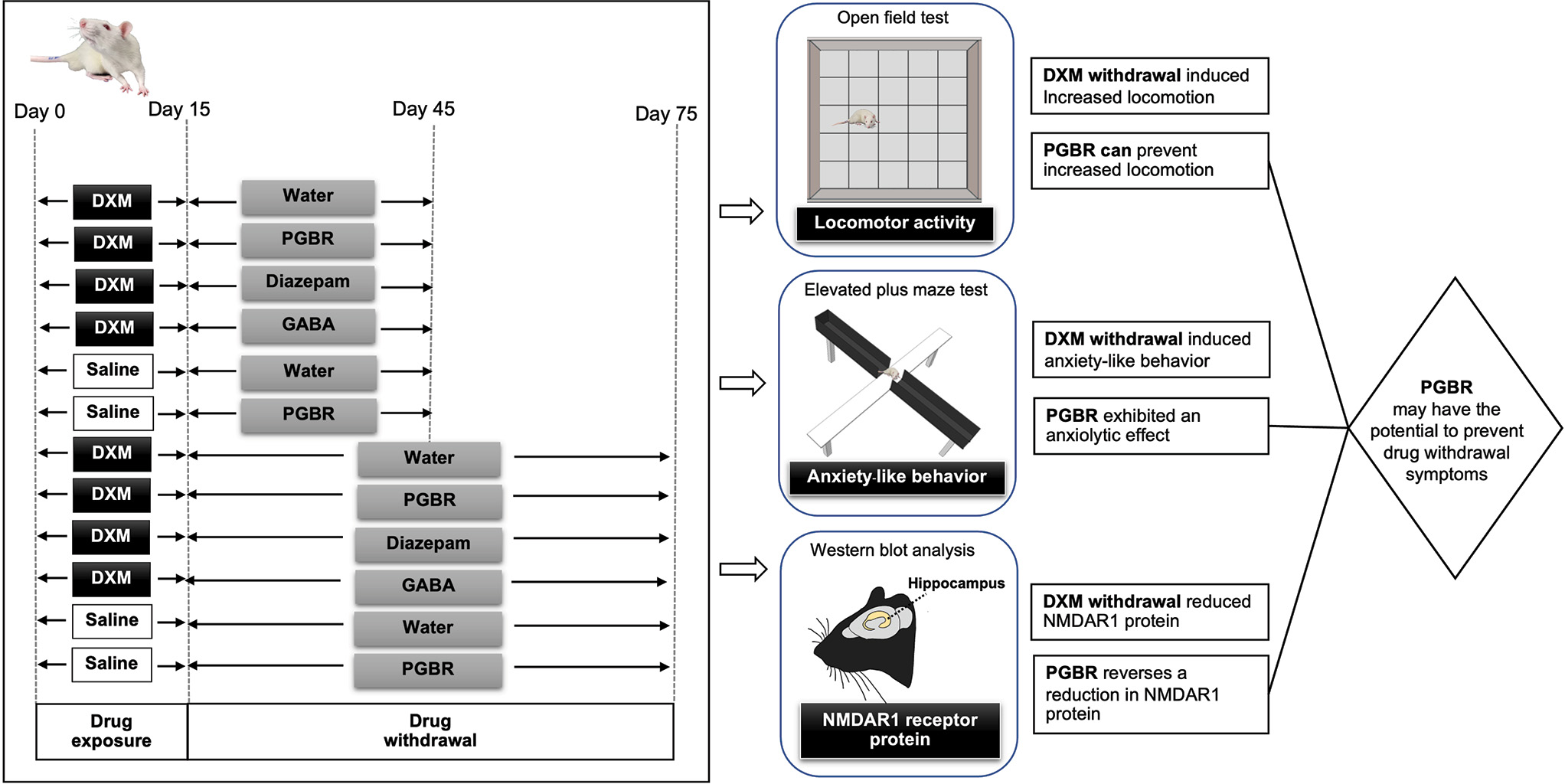
Drug withdrawal is recognized as a global health issue. Abuse of dextromethorphan (DXM), an over-the-counter antitussive, leads to addiction and withdrawal symptoms by acting on glutamate N-methyl-D-aspartate (NMDA) receptors. Nonetheless, effective agents for alleviating withdrawal symptoms remain limited, underlining the crucial need for novel treatments which ideally would include natural, acceptable and accessible preparations derived from functional foods. This study aimed to explore the effects of treatment with pre-germinated brown rice (PGBR), considered a functional food due to its bioactive components, on behaviors and hippocampal NMDA glutamate receptor subunit 1 (NMDAR1) protein in a rat model of drug withdrawal from DXM administration. Locomotor activity, anxiety-like behavior, and NMDAR-1 protein levels in the hippocampus were assessed after PGBR treatment in DXM-induced withdrawal rats compared with diazepam, a drug commonly used to treat withdrawal symptoms, and gamma-aminobutyric acid (GABA), a compound enriched in PGBR for 30 and 60 days. PGBR treatment, starting from 30 days, effectively prevented the increase in locomotor activity, anxiogenic-like behavior, and the decrease of NMDAR1 protein in the hippocampus during DXM-induced withdrawal. GABA treatment partially restored locomotor activity and NMDAR1 protein levels at 60 days. Diazepam showed only partial recovery in the anxiety test after 30 days, whereas anxiety-like behavior re-emerged following 60 days of treatment. Our results indicate that PGBR impacts drug withdrawal symptoms and influences glutamate neurotransmission through modulation of glutamate NMDAR1 receptor, possibly due to the complex actions of various bioactive compounds. Furthermore, long-term PGBR treatment showed no adverse effect on behavior and NMDAR1 protein. These findings suggest that PGBR may serve as a natural agent to mitigate behavioral and molecular alterations associated with drug withdrawal in rodent models, thereby endorsing its potential for further translational research beyond the current preclinical phase.
HIGHLIGHTS
- Pre-germinated brown rice (PGBR) has potential as a treatment for the consequences of withdrawal from drug addiction with no adverse effect on behaviors.
- Treatment with PGBR for 30 and 60 days can prevent increased locomotor activity during drug withdrawal.
- Treatment with PGBR for 30 and 60 days during drug withdrawal can prevent anxiety-like behavior on elevated plus-maze tests.
- After 30 days of PGBR administration, NMDAR1 protein in hippocampus returned to a normal level, and this rise was seen after 60 days compared to withdrawal rats.
GRAPHICAL ABSTRACT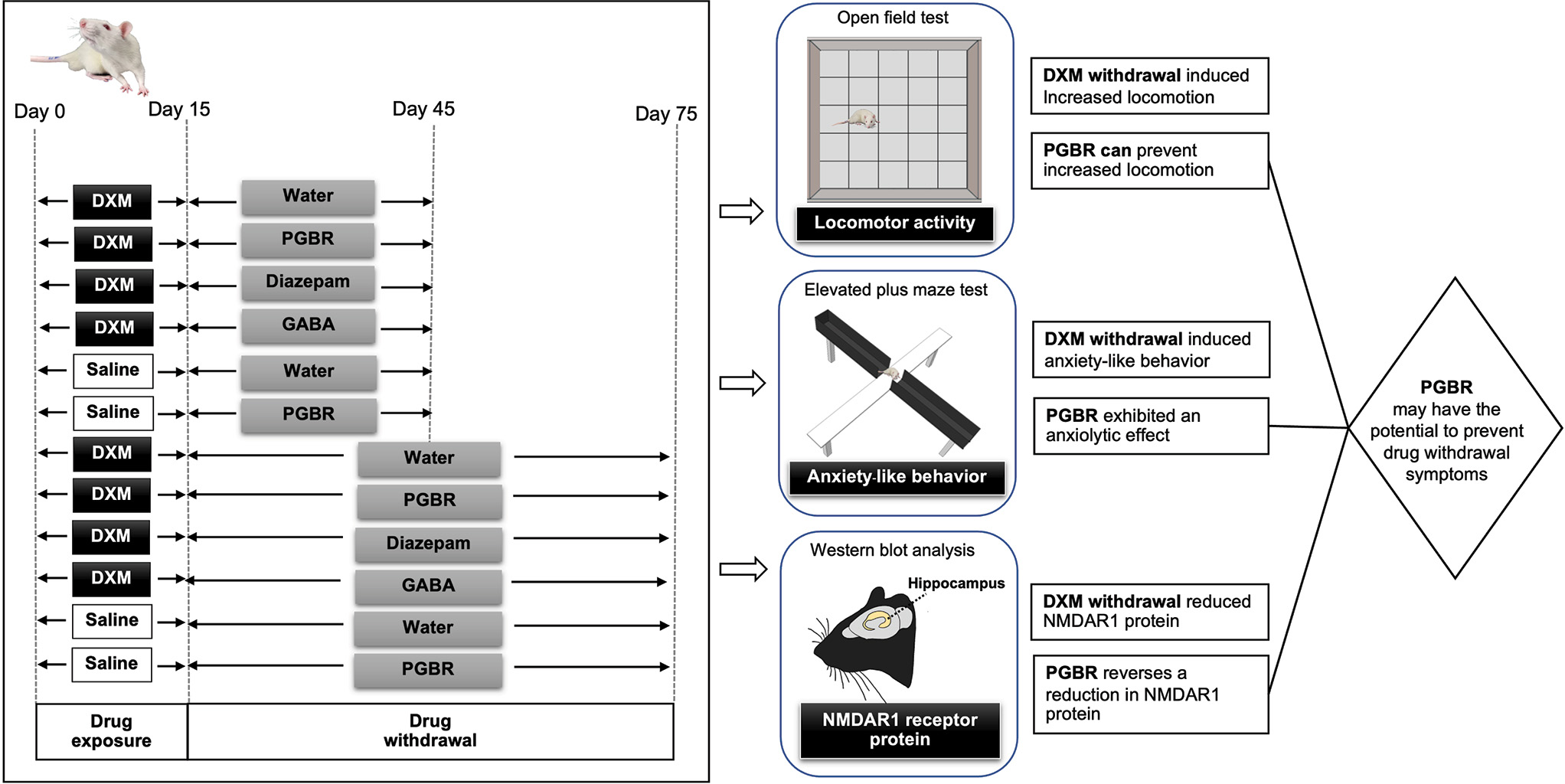
Downloads
References
X Lu, Y Fan, Y Peng, W Pan, D Du, X Xu, N Li, T He, J Nie, P Shi, F Ge, D Liu, Y Chen and X Guan. Gegen-Qinlian decoction alleviates anxiety-like behaviors in methamphetamine-withdrawn mice by regulating Akkermansia and metabolism in the colon. Chinese Medicine 2023; 18(1), 85.
MG Ghilotti, RP Fortuna, KOA Ayensu, D Stern and EM Unterwald. The effects of ketamine on methamphetamine withdrawal-induced anxiety and drug-seeking behaviors in the rat. bioRxiv 2025; 276, 112861.
I Reverte, C Marchetti, S Pezza, SF Zenoni, G Scaringi, L Ferrucci, G D'Ottavio, A Pignataro, D Andolina, M Raspa, F Scavizzi, M Venniro, LA Ramsey, C Gross, D Caprioli and D Ragozzino. Microglia-mediated calcium-permeable AMPAR accumulation in the nucleus accumbens drives hyperlocomotion during cocaine withdrawal. Brain, Behavior, and Immunity 2024; 115, 535-542.
JH Anneken, JI Cunningham, SA Collins, BK Yamamoto and GA Gudelsky. MDMA increases glutamate release and reduces parvalbumin-positive GABAergic cells in the dorsal hippocampus of the rat: Role of cyclooxygenase. Journal of NeuroImmune Pharmacology 2013; 8(1), 58-65.
M Marszalek-Grabska, E Gibula-Bruzda, A Bodzon-Kulakowska, P Suder, K Gawel, J Filarowska, J Listos, W Danysz and JH Kotlinska. Effects of the positive allosteric modulator of metabotropic glutamate receptor 5, VU-29, on impairment of novel object recognition induced by acute ethanol and ethanol withdrawal in rats. Neurotoxicity Research 2018; 33(3), 607-620.
CJ Reissig, LP Carter, MW Johnson, MZ Mintzer, MA Klinedinst and RR Griffiths. High doses of dextromethorphan, an NMDA antagonist, produce effects similar to classic hallucinogens. Psychopharmacology 2012; 223(1), 1-15.
S Miller. Dextromethorphan psychosis, dependence and physical withdrawal. Addiction Biology 2005; 10(4), 325-327.
AV Ferrer-Montiel, JM Merino, R Planells-Cases, W Sun and M Montal. Structural determinants of the blocker binding site in glutamate and NMDA receptor channels. Neuropharmacology 1998; 37(2), 139-147.
JS Saavedra, PI Garrett, SC Honeycutt, AM Peterson, JW White and TM Hillhouse. Assessment of the rapid and sustained antidepressant-like effects of dextromethorphan in mice. Pharmacology Biochemistry and Behavior 2020; 197, 173003.
MLS Bates and KA Trujillo. Repeated dextromethorphan administration in adolescent rats produces long-lasting behavioral alterations. Pharmacology, Biochemistry, and Behavior 2023; 227-228, 173581.
HQ Tran, YH Chung, EJ Shin, WK Kim, JC Lee, JH Jeong, MB Wie, CG Jang, K Yamada and T Nabeshima. High-dose dextromethorphan produces myelinoid bodies in the hippocampus of rats. Journal of Pharmacological Sciences 2016; 132(2), 166-170.
WW Wang, R Cao, ZR Rao and LW Chen. Differential expression of NMDA and AMPA receptor subunits in DARPP-32-containing neurons of the cerebral cortex, hippocampus and neostriatum of rats. Brain Research 2004; 998(2), 174-183.
G Forster, J Barr and B Bray. The hippocampus as a neural link between negative affect and vulnerability for psychostimulant relapse. In: A Stuchlik (Ed.). The hippocampus - plasticity and functions. IntechOpen, Rijeka, Croatia, 2017, p. 127-167.
M Flores-Soto, V Chaparro-Huerta, M Escoto-Delgadillo, E Vazquez-Valls, R González-Castañeda and C Beas-Zarate. Structure and function of NMDA-type glutamate receptor subunits. Neurología 2012; 27(5), 301-310.
J Roboon, S Nudmamud‐Thanoi and S Thanoi. Recovery effect of pre‐germinated brown rice on the alteration of sperm quality, testicular structure and androgen receptor expression in rat model of depression. Andrologia 2017; 49(1), e12596.
NN Wu, R Li, ZJ Li and B Tan. Effect of germination in the form of paddy rice and brown rice on their phytic acid, GABA, γ-oryzanol, phenolics, flavonoids and antioxidant capacity. Food Research International 2022; 159(2022), 111603.
T Mamiya, T Asanuma, M Kise, Y Ito, A Mizukuchi, H Aoto and M Ukai. Effects of pre-germinated brown rice on β-amyloid protein-induced learning and memory deficits in mice. Biological and Pharmaceutical Bulletin 2004; 27(7), 1041-1045.
T Mamiya, M Kise, K Morikawa, H Aoto, M Ukai and Y Noda. Effects of pre-germinated brown rice on depression-like behavior in mice. Pharmacology, Biochemistry, and Behavior 2007; 86(1), 62-67.
S Thanoi, J Roboon and S Nudmamud-Thanoi. Recovery effect of pre-germinated brown rice on the changes of sperm quality, testicular structure and androgen receptor expression in a rat model of drug addiction. International Journal of Medical Sciences 2018; 15(9), 921.
Y Nam, EJ Shin, BK Yang, JH Bach, JH Jeong, YH Chung, ES Park, Z Li, KW Kim, YB Kwon, T Nabeshima and HC Kim. Dextromethorphan-induced psychotoxic behaviors cause sexual dysfunction in male mice via stimulation of σ-1 receptors. Neurochemistry International 2012; 61(6), 913-922.
S Guo, V Manning, Y Yang, PK Koh, E Chan, NN de Souza, PN Assam, R Sultana, R Wijesinghe, J Pangjaya, G Kandasami, C Cheok, KM Lee and KE Wong. Lofexidine versus diazepam for the treatment of opioid withdrawal syndrome: A double-blind randomized clinical trial in Singapore. Journal of Substance Abuse Treatment 2018; 91, 1-11.
E Day and C Daly. Clinical management of the alcohol withdrawal syndrome. Addiction 2022; 117(3), 804-814.
T Wscieklica, M de Barros Viana, L Le Sueur Maluf, KC Pouza, RC Spadari and IC Céspedes. Alcohol consumption increases locomotion in an open field and induces Fos-immunoreactivity in reward and approach/withdrawal-related neurocircuitries. Alcohol 2016; 50(2016), 73-82.
KS Tatem, JL Quinn, A Phadke, Q Yu, H Gordish-Dressman and K Nagaraju. Behavioral and locomotor measurements using an open field activity monitoring system for skeletal muscle diseases. Journal of Visualized Experiments 2014; (91), 51785.
W Kerdsan, S Thanoi and S Nudmamud-Thanoi. Changes in glutamate/NMDA receptor subunit 1 expression in rat brain after acute and subacute exposure to methamphetamine. BioMed Research International 2009; 2009(1), 329631.
L Mihalčíková, A Ochozková and R Šlamberová. Effect of methamphetamine exposure on sexual behavior and locomotor activity of adult male rats. Physiological Research 2019; 68(S3), S339-S346.
L Du, L Xiao, C Zou and J Huang. Vanillin attenuates the ethanol withdrawal syndrome and ethanol withdrawal induced anxiety by regulating the neurochemical balance. Folia Neuropathologica 2022; 60(3), 316-323.
EJ Shin, BT Nguyen, JH Jeong, BC Hoai Nguyen, NKC Tran, N Sharma, DJ Kim, SY Nah, D Lichtstein, T Nabeshima and HC Kim. Ouabain inhibitor rostafuroxin attenuates dextromethorphan-induced manic potential. Food and Chemical Toxicology 2021; 158(4), 112657.
KT Po, AMH Siu, BWM Lau, JNM Chan, KF So and CC Chan. Repeated, high-dose dextromethorphan treatment decreases neurogenesis and results in depression-like behavior in rats. Experimental Brain Research 2015; 233(7), 2205-2214.
J Xu, H Ou, P Sun, S Qin and TF Yuan. Brief report: Predictors of relapse for patients with dextromethorphan dependence. The American Journal on Addictions 2021; 30(2), 192-194.
Y Zhang, F He, T Hua and Q Sun. Green tea polyphenols ameliorate ethanol-induced spatial learning and memory impairments by enhancing hippocampus NMDAR1 expression and CREB activity in rats. Neuroreport 2018; 29(18), 1564-1570.
YL Wang, QQ Han, WQ Gong, DH Pan, LZ Wang, W Hu, M Yang, B Li, J Yu and Q Liu. Microglial activation mediates chronic mild stress-induced depressive- and anxiety-like behavior in adult rats. Journal of Neuroinflammation 2018; 15(1), 21.
MR Hudson, E Sokolenko, TJ O'Brien and NC Jones. NMDA receptors on parvalbumin-positive interneurons and pyramidal neurons both contribute to MK-801 induced gamma oscillatory disturbances: Complex relationships with behaviour. Neurobiology of Disease 2020; 134(2020), 104625.
M Yuzaki, D Forrest, LM Verselis, SC Sun, T Curran and JA Connor. Functional NMDA receptors are transiently active and support the survival of Purkinje cells in culture. Journal of Neuroscience 1996; 16(15), 4651-4661.
D Tian, Y Guo, D Zhang, Q Gao, G Liu, J Lin, Z Chang, Y Wang, R Su and Z Han. Shenzhi Jiannao formula ameliorates vascular dementia in vivo and in vitro by inhibition glutamate neurotoxicity via promoting clathrin-mediated endocytosis. Chinese Medicine 2021; 16(1), 65.
HJ Park, CE Gonzalez-Islas, Y Kang, JM Li and I Choi. Deletion of the Na/HCO3 transporter NBCn1 protects hippocampal neurons from NMDA-induced seizures and neurotoxicity in mice. Scientific Reports 2019; 9(1), 1-12.
R Sattler and M Tymianski. Molecular mechanisms of glutamate receptor-mediated excitotoxic neuronal cell death. Molecular Neurobiology 2001; 24(1), 107-129.
NH Azmi, M Ismail, N Ismail, MU Imam, NBM Alitheen and MA Abdullah. Germinated brown rice alters Aβ (1-42) aggregation and modulates alzheimer’s disease-related genes in differentiated human SH-SY5Y cells. Evidence-Based Complementary and Alternative Medicine 2015; 2015(8), 1-12.
GE Tsai, P Ragan, R Chang, S Chen, VMI Linnoila and JT Coyle. Increased glutamatergic neurotransmission and oxidative stress after alcohol withdrawal. American Journal of Psychiatry 1998; 155(6), 726-732.
HL Liang, PW Cheng, HL Lin, CL Hao, LY Ke, HY Chou, YH Tseng, HW Yen and KP Shen. Extract of pre-germinated brown rice protects against cardiovascular dysfunction by reducing levels of inflammation and free radicals in a rat model of type II diabetes. Journal of Functional Foods 2020; 75(2020), 104218.
A Moongngarm and N Saetung. Comparison of chemical compositions and bioactive compounds of germinated rough rice and brown rice. Food Chemistry 2010; 122(3), 782-788.
C Ren, B Hong, X Zheng, L Wang, Y Zhang, L Guan, X Yao, W Huang, Y Zhou and S Lu. Improvement of germinated brown rice quality with autoclaving treatment. Food Science & Nutrition 2020; 8(3), 1709-1717.
SM Araujo, VC Bortolotto, MR Poetini, MMM Dahleh, SdF Couto, FC Pinheiro, LB Meichtry, EAS Musachio, BP Ramborger and R Roehrs. γ-Oryzanol produces an antidepressant-like effect in a chronic unpredictable mild stress model of depression in Drosophila melanogaster. Stress 2021; 24(3), 282-293.
NH Azmi, N Ismail, MU Imam, J Ooi and SNH Oslan. Modulation of high-fat diet-induced brain oxidative stress by ferulate-rich germinated brown rice ethyl acetate extract. Molecules 2022; 27(15), 4907.
TY Lin, CW Lu, SK Huang and SJ Wang. Ferulic acid suppresses glutamate release through inhibition of voltage-dependent calcium entry in rat cerebrocortical nerve terminals. Journal of Medicinal Food 2013; 16(2), 112-119.
T Norikura, A Kojima-Yuasa, D Opare Kennedy and I Matsui-Yuasa. Protective effect of gamma-aminobutyric acid (GABA) against cytotoxicity of ethanol in isolated rat hepatocytes involves modulations in cellular polyamine levels. Amino Acids 2007; 32(3), 419-423.
HEC Chang. Production of γ-aminobutyric acid (GABA) by Lactobacillus buchneri isolated from kimchi and its neuroprotective effect on neuronal cells. Journal of Microbiology and Biotechnolog 2007; 17(1), 104-109.
W Li, M Wei, J Wu, X Rui and M Dong. Novel fermented chickpea milk with enhanced level of γ-aminobutyric acid and neuroprotective effect on PC12 cells. PeerJ 2016; 4, e2292.
Y Deng, W Wang, P Yu, Z Xi, L Xu, X Li and N He. Comparison of taurine, GABA, Glu, and Asp as scavengers of malondialdehyde in vitro and in vivo. Nanoscale Research Letters 2013; 8(1), 1-9.
N Eltahawy, H Saada and A Hammad. Gamma amino butyric acid attenuates brain oxidative damage associated with insulin alteration in streptozotocin-treated rats. Indian Journal of Clinical Biochemistry 2017; 32(2), 207-213.
J Xu, Z Ge, H Wang, C Zhang, J Xu, Y Li, X Yang, L Zhang, Z Li, Z Liu, G Wang and J Du. Long-term GABA supplementation mitigates anxiety by modulating complement and neuroinflammatory pathways. NPJ Science of Food 2025; 9(1), 60.
J Zhang, LD Melton, A Adaim and MA Skinner. Cytoprotective effects of polyphenolics on H2O2-induced cell death in SH-SY5Y cells in relation to their antioxidant activities. European Food Research and Technology 2008; 228(1), 123-131.
LC Chen, MC Lai, TY Hong and IM Liu. γ-Oryzanol from rice bran antagonizes glutamate-induced excitotoxicity in an in vitro model of differentiated HT-22 cells. Nutrients 2024; 16(8), 1237.
P Prakhongsil, S Sajjabut, W Pewlong, K Khemthong, J Eamsiri, R Picha and N Thamrongsiripak. Increasing γ-Aminobutyric Acid in Mixed Germinated Brown Rice Via Electron Beam Irradiation. Trends in Sciences 2024; 22(1), 8611.
J Saikia, P Borah, D Borah, AM Baruah, M Sinha, KJ Devi, SK Semmichon, G Kalsi and M Gogoi. Effects of Germination on γ-aminobutyric acid (GABA) content and cooking quality of ahu rice landrace. Journal of Food Science 2025; 90(8), e70501.
M Wu, X Qiu, C Chen, K Chen, M Li, H Xu, X Wu, Y Shimasaki and Y Oshima. Short-term and persistent impacts of sublethal exposure to diazepam on behavioral traits and brain GABA levels in juvenile zebrafish (Danio rerio). Science of The Total Environment 2020; 740, 140392.
MG de Oliveira, LK da Silva Moreira, LC Turones, D de Souza Almeida, AN Martins, TLS Oliveira, VB da Silva, LL Borges, EA Costa and JR de Paula. Mechanism of action involved in the anxiolytic-like effects of Hibalactone isolated from Hydrocotyle umbellata L. Journal of Traditional and Complementary Medicine 2022; 12(4), 318-329.
BA Hughes, JP Bohnsack, TK O'Buckley, MA Herman and AL Morrow. Chronic ethanol exposure and withdrawal impair synaptic GABAA receptor-mediated neurotransmission in deep-layer prefrontal cortex. Alcoholism, Clinical and Experimental Research 2019; 43(5), 822-832.
JE Kralic, HE Criswell, JL Osterman, TK O’Buckley, ME Wilkie, DB Matthews, K Hamre, GR Breese, GE Homanics and AL Morrow. Genetic essential tremor in γ-aminobutyric acidA receptor α1 subunit knockout mice. The Journal of Clinical Investigation 2005; 115(3), 774-779.
SJ Weintraub. Should chlordiazepoxide and diazepam be avoided when treating alcohol withdrawal syndrome in patients with hepatic insufficiency? Clinical Toxicology 2025; 63(5), 303-309.
F Peña and R Tapia. Seizures and neurodegeneration induced by 4-aminopyridine in rat hippocampus in vivo: role of glutamate- and GABA-mediated neurotransmission and of ion channels. Neuroscience 2000; 101, 547-561.
KH Brickel, EK Hodge, D Zavgorodnyaya, JM Schroeder, LH Brown and MJ Daley. A comparison of injectable diazepam and lorazepam in the goal-directed management of severe alcohol withdrawal. Annals of Pharmacotherapy 2024; 58, 453-460.
G Addolorato, L Leggio, L Abenavoli, R Agabio, F Caputo, E Capristo, G Colombo, GL Gessa and G Gasbarrini. Baclofen in the treatment of alcohol withdrawal syndrome: A comparative study vs diazepam. The American Journal of Medicine 2006; 119(3), e13-276.
S Guo, V Manning, Y Yang, PK Koh, E Chan, NN de Souza, PN Assam, R Sultana, R Wijesinghe, J Pangjaya, G Kandasami, C Cheok, KM Lee and KE Wong. Lofexidine versus diazepam for the treatment of opioid withdrawal syndrome: A double-blind randomized clinical trial in Singapore. Journal of Substance Abuse Treatment 2018; 91, 1-11.
Published
How to Cite
Issue
Section
License
Copyright (c) 2025 Walailak University

This work is licensed under a Creative Commons Attribution-NonCommercial-NoDerivatives 4.0 International License.





