
Green Synthesis of Zinc Oxide Nanoparticles Using Fruit Peel Waste Extract of Nypa fruticans Via Microwave-Assisted as Antioxidant and Antibacterial Agents
DOI:
https://doi.org/10.48048/tis.2026.12908Keywords:
Zinc oxide nanoparticles, Nypa fruticans waste, Microwave irradiation, Antioxidant, AntibacterialAbstract
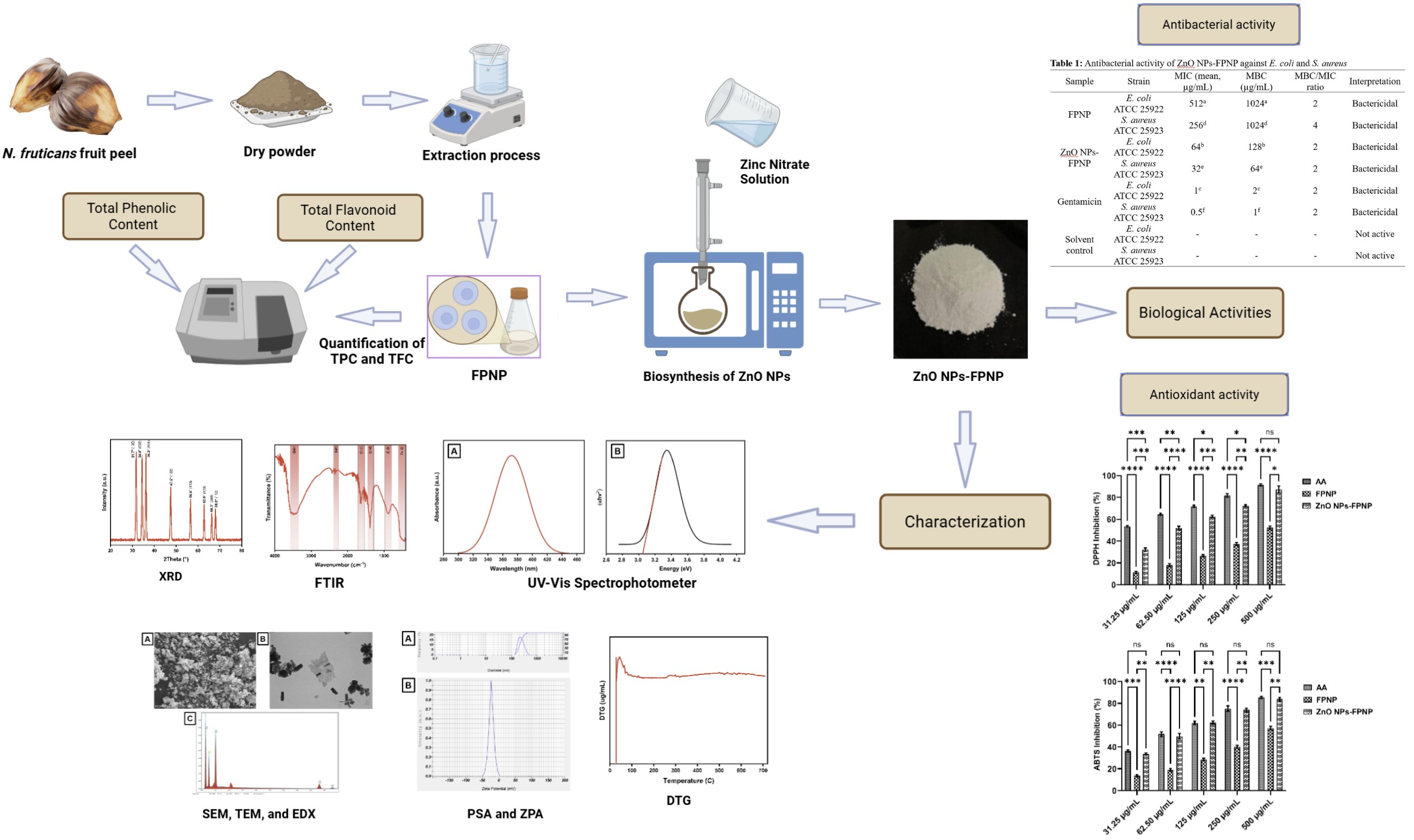
Nanostructured particles exhibit broad applicability in nanotechnology-related fields, with their properties strongly influenced by the synthesis method and material source. This study reports an eco-friendly, microwave-assisted approach for synthesizing zinc oxide nanoparticles (ZnO NPs) using Nypa fruticans fruit peel extract (FPNP). The quantification of the total phenolic (TPC) and flavonoid content (TFC) of FPNP was determined using a calorimetric assay. Whereas, the biosynthesis of ZnO NPs-FPNP was characterized with several instrumental methods, including UV-Vis spectrophotometer, Fourier transform infrared spectroscopy (FT-IR), particle size and zeta potential analyzer (PSA and ZPA), scanning electron microscopy (SEM), transmission electron microscopy (TEM), energy-dispersive X-ray spectroscopy (EDX), x-ray diffraction (XRD), and thermogravimetric analysis (TGA). Therefore, the antioxidant and antibacterial activities of ZnO NPs-FPNP were observed to evaluate the biological activity of nanoparticles. Furthermore, the FPNP contains TPC and TFC were 20.53 ± 1.20 mg GAE/g and 15.80 ± 1.46 mg QE/g, respectively. Meanwhile, the ZnO NPs-FPNP was acquired as an amorphous yellowish-white powder, devoid of any discernible odour, and was comprehensively characterised. The visible spectra revealed a significant peak at 370 nm, correlating to a band gap energy of 3.04 eV, thus confirming the synthesis of the nanoparticles. FTIR spectra indicated that the peak at 497 cm−1 corresponds to the stretching vibration of Zn-O, which is the characteristic peak for the formation of ZnO NPs-FPNP. The particle size of ZnO NPs-FPNP, as determined by particle size analysis, is 234 ± 59.5 nm, with a polydispersity index of 0.516. The zeta potential of ZnO NPs-FPNP was measured at ‒25.7 ± 1.50 mV, signifying the stability of the ZnO NPs-FPNP. The SEM image displayed an uneven morphology, with primary particle sizes at the nanometre scale that tend to combine into micrometre clusters. TEM investigation revealed that ZnO NPs-FPNP predominantly exhibited a rod-like morphology, with lengths varying from approximately 50 to 150 nm and diameters between 20 and 40 nm. The ZnO NPs-FPNP were confirmed to comprise three elements: zinc, oxygen, and carbon. The XRD pattern confirmed that the ZnO NPs-FPNP have a wurtzite crystal structure, demonstrating significant stability at temperatures above 400 °C. This study exhibited that the no significant difference in the antioxidant activity to inhibit radical DPPH and ABTS between ascorbic acid and ZnO NPs-FPNP at the highest concentration. Then, the ZnO NPs-FPNP have demonstrated bactericidal effect against Escherichia coli and Staphylococcus aureus. Nonetheless, ZnO NPs-FPNP have potential applications in pharmaceuticals, cosmeceuticals, and agriculture.
HIGHLIGHTS
- Green synthesis using fruticans waste
- Microwave-assisted ZnO NP formation
- Stable rod-shaped wurtzite ZnO NPs
- Antioxidant activity comparable to vitamin C
- Strong bactericidal activity against pathogens
GRAPHICAL ABSTRACT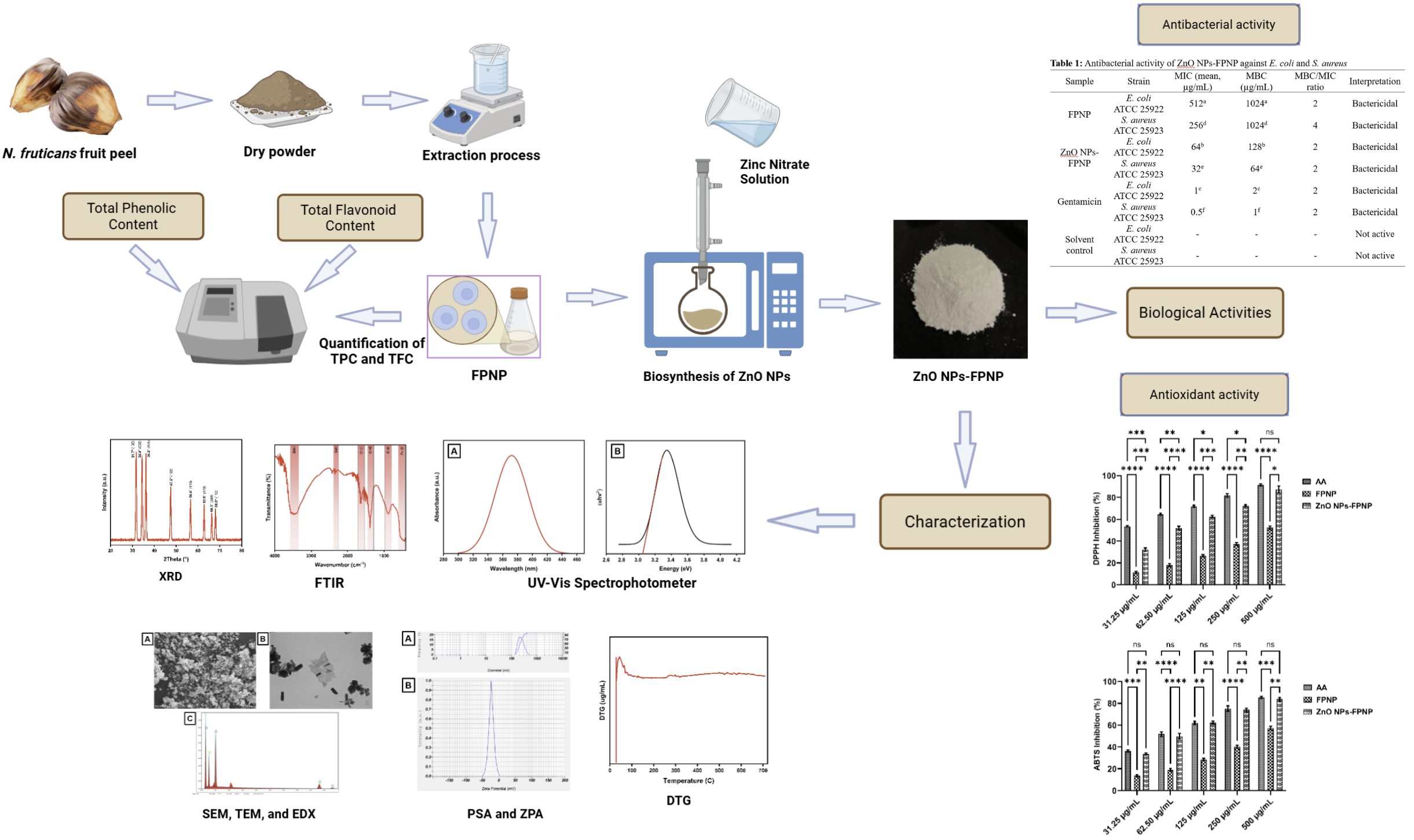
Downloads
References
AW Digisu, AB Yaebyo, WL Kebede, DY Kebede and DK Molla. Biogenic synthesis, optimization, and characterization of zinc oxide nanoparticles using Rumex abyssinicus Jacq root extract for antioxidant and antibacterial activities. Results in Chemistry 2024; 12, 101857.
KV Dhandapani, D Anbumani, AD Gandhi, P Annamalai, BS Muthuvenkatachalam, P Kavitha and B Ranganathan. Green route for the synthesis of zinc oxide nanoparticles from Melia azedarach leaf extract and evaluation of their antioxidant and antibacterial activities. Biocatalysis and Agricultural Biotechnology 2020; 24, 101517.
H Chandra, D Patel, P Kumari, JS Jangwan and S Yadav. Phyto-mediated synthesis of zinc oxide nanoparticles of Berberis aristata: Characterization, antioxidant activity and antibacterial activity with special reference to urinary tract pathogens. Materials Science and Engineering: C 2019; 102, 212-220.
S Dey, D lochan Mohanty, N Divya, V Bakshi, A Mohanty, D Rath, S Das, A Mondal, S Roy and R Sabui. A critical review on zinc oxide nanoparticles: Synthesis, properties and biomedical applications. Intelligent Pharmacy 2025; 3(1), 53-70.
Jayalekshmi C, R Periakaruppan, V Romanovski, KSVSelvaraj and N Al-Dayan. Calotropis gigantea latex-derived zinc oxide nanoparticles: Biosynthesis, characterization, and biofunctional applications. Eng 2024; 5(3), 1399-1406.
AK Khajuria, A Kandwal, RK Sharma, RK Bachheti, LA Worku and A Bachheti. In vitro antioxidant and antibacterial activities of biogenic synthesized zinc oxide nanoparticles using leaf extract of Mallotus philippinensis Mull. Arg. Scientific Reports 2025; 15, 6541.
MM Abisha, D Usha, BM Ashwin, A Yardily and MS Dennison. Microwave-assisted green synthesized ZnO nanoparticles: An experimental and computational investigation. Discover Applied Sciences 2025; 7, 177.
MS Kang and KY Hyun. Antinociceptive and anti-inflammatory effects of Nypa fruticans wurmb by suppressing TRPV1 in the sciatic neuropathies. Nutrients 2020; 12(1), 135.
S Sudirman, AK Wardana, Herpandi, I Widiastuti, DI Sari and M Janna. Antioxidant activity of polyphenol compounds extracted from Nypa fruticans Wurmb. (Nipa palm) fruit husk with different ethanol concentration. International Journal of Secondary Metabolite 2024; 11(2), 355-363.
M Ashaduzzaman, MAA Muhit, SC Dey, MM Rahaman, HNM Hasan, N Mustary, MK Hossain and MK Das. Microwave assisted starch stabilized green synthesis of zinc oxide nanoparticles for antibacterial and photocatalytic applications. Scientific Reports 2025; 15, 28288.
M Hasanpoor, M Aliofkhazraei and H Delavari. Microwave-assisted synthesis of zinc oxide nanoparticles. Procedia Materials Science 2015; 11, 320-325.
Y Hao, Y Wang, L Zhang, F Liu, Y Jin, J Long, S Chen, G Duan and H Yang. Advances in antibacterial activity of zinc oxide nanoparticles against Staphylococcus aureus (Review). Biomedical Reports 2024; 21(5), 161.
C Mallikarjunaswamy, VL Ranganatha, R Ramu, Udayabhanu and G Nagaraju. Facile microwave-assisted green synthesis of ZnO nanoparticles: Application to photodegradation, antibacterial and antioxidant. Journal of Materials Science: Materials in Electronics 2020; 31, 1004-1021.
CA Acar, MA Gencer, S Pehlivanoglu, S Yesilot and S Donmez. Green and eco-friendly biosynthesis of zinc oxide nanoparticles using Calendula officinalis flower extract: Wound healing potential and antioxidant activity. International Wound Journal 2023; 21(1), 14413.
H Jan, M Shah, H Usman, MA Khan, M Zia, C Hano and BH Abbasi. Biogenic synthesis and characterization of antimicrobial and antiparasitic zinc oxide (ZnO) nanoparticles using aqueous extracts of the himalayan columbine (Aquilegia pubiflora). Frontiers in Materials 2020; 7, 00249.
S Sumaiyah, R Murwanti, DN Illian, MF Lubis and K Tampubolon. New insights of response surface methodology approach in optimizing total phenolic content of Zanthoxylum acanthopodium DC. fruit extracted using microwave-assisted extraction and the impact to antioxidant activity. Indonesian Journal of Chemistry 2024; 24(6), 1743-1759.
MF Lubis, PAZ Hasibuan, H Syahputra, JM Keliat, VE Kaban and R Astyka. Duku (Lansium domesticum) leaves extract induces cell cycle arrest and apoptosis of HepG2 cells via PI3K/Akt pathways. Trends in Sciences 2023; 20(2), 6437.
IE Doicin, MD Preda, IA Neacsu, VL Ene, AC Birca, BS Vasile and E Andronescu. Tailoring zinc oxide nanoparticles via microwave-assisted hydrothermal synthesis for enhanced antibacterial properties. Applied Sciences 2024; 14(17), 7854.
PK Jha, T Jaidumrong, D Rokaya and C Ovatlarnporn. Callistemon viminalis leaf extract phytochemicals modified silver-ruthenium bimetallic zinc oxide nanocomposite biosynthesis: Application on nanocoating photocatalytic Escherichia coli disinfection. RSC Advances 2024; 14(16), 11017-11026.
P Basnet, PK Jha, A Gupta and S Chatterjee. Synergistic effect of tea-phytochemicals, noble metals and zno nano-photo-composites for combating resistance of bacterial growth. Journal of Nano Research 2021; 70, 53-66.
RD Wouters, PCL Muraro, DM Druzian, AR Viana, E de Oliveira Pinto, JKL da Silva, BS Vizzotto, YPM Ruiz, A Galembeck, G Pavoski, DCR Espinosa and WL da Silva. Zinc oxide nanoparticles: Biosynthesis, characterization, biological activity and photocatalytic degradation for tartrazine yellow dye. Journal of Molecular Liquids 2023; 371, 121090.
FMA Albarakaty, MI Alzaban, N Alharbi, FS Bagrwan, ARM Abd El-Aziz and MA Mahmoud. Zinc oxide nanoparticles, biosynthesis, characterization and their potent photocatalytic degradation, and antioxidant activities. Journal of King Saud University - Science 2022; 35(1), 102434.
MS Jamal, MS Chowdhury, S Bajgai, M Hossain, A Laref, PK Jha and K Techato. Comparative studies on the morphological, structural and optical properties of NiO thin films grown by vacuum and non-vacuum deposition techniques. Materials Research Express 2021; 8, 126404.
PK Jha, C Chawengkijwanich, C Pokum, P Soison and K Techato. Antibacterial activities of biosynthesized zinc oxide nanoparticles and silver-zinc oxide nanocomposites using camellia sinensis leaf extract. Trends in Sciences 2023; 20(3), 5649.
PK Jha, C Chawengkijwanich, K Techato, W Limbut and M Luengchavanon. Callistemon viminalis leaf extract mediated biosynthesis of Ag, rGO-Ag-ZnO nanomaterials for catalytic PEM fuel cell application. Trends in Sciences 2022; 19(11), 493.
LD Lubis, AT Prananda, NA Juwita, MA Nasution, RA Syahputra, S Sumaiyah, RR Lubis, MF Lubis, R Astyka and JF Atiqah. Unveiling antioxidant capacity of standardized chitosan-tripolyphosphate microcapsules containing polyphenol-rich extract of Portulaca oleraceae. Heliyon 2024; 10(8), 29541.
A Klančnik, S Piskernik, B Jeršek and SS Možina. Evaluation of diffusion and dilution methods to determine the antibacterial activity of plant extracts. Journal of Microbiological Methods 2010; 81(2), 121-126.
G Adwan, B Abu-Shanab and K Adwan. Antibacterial activities of some plant extracts alone and in combination with different antimicrobials against multidrug-resistant Pseudomonas aeruginosa strains. Asian Pacific Journal of Tropical Medicine 2010; 3(4), 266-269.
GD Nugroho, M Wiraatmaja, PS Pramadaningtyas, S Febriyanti, N Liza, DM Naim, YI Ulumuddin and A Setyawan. Review: Phytochemical composition, medicinal uses and other utilization of Nypa fruticans. International Journal of Bonorowo Wetlands 2020; 10(1), 51-65.
F Martin, NS Boris, SR Kengne, TE Chia, TN Guy, AKB Gabin, JL Ngondi and G Innocent. Antioxidant and postprandial glucose-lowering potential of the hydroethanolic extract of Nypa fruticans seed mesocarp. Biology and Medicine 2017; 9(4), 1000407.
MF Lubis, S Sumaiyah, LD Lubis, K Fitri and R Astyka. Application of Box-Behnken design for optimization of Vernonia amygdalina stem bark extract in relation to its antioxidant and anti-colon cancer activity. Arabian Journal of Chemistry 2024; 17(4), 105702.
Y Fitri, Y Yusni, T Suryadi and M Mudatsir. Characteristic and bioactivities value of Nypa fruticans from coastal area in West Aceh District, Indonesia as a candidate antidiabetic agent. Biodiversitas 2023; 24(10), 5260-5269.
N Moonrungsee, J Jakmunee, N Peamaroon, A Boonmee, T Kasemsuk, S Seeda and S Suwancharoen. Phytochemical and xanthine oxidase inhibitory activity in Nypa fruticans Wurmb. fruit extracts. Trends in Sciences 2022; 19(4), 2583.
N Prasad, B Yang, KW Kong, HE Khoo, J Sun, A Azlan, A Ismail and ZB Romli. Phytochemicals and antioxidant capacity from Nypa fruticans Wurmb. Fruit. Evidence-Based Complementary and Alternative Medicine 2013; 2013, 154606.
N Chamkouri, Z Koolivand, F Niazvand and A Mojaddami. Phytochemical analysis, characterization, and biosynthesis of gold nanoparticles, zinc oxide nanoparticles, and gold-zinc oxide nanocomposites from phoenix dactylifera L. seeds: Biological evaluation. Inorganic Chemistry Communications 2023; 156, 111146.
R Sharma, N Kumar, P Sharma, A Yadav and NK Aggarwal. Biosynthesis, characterisation and therapeutic potential of green coconut waste derived zinc oxide nanoparticles. Results in Surfaces and Interfaces 2025; 18, 100372.
J Gangwar, B Balasubramanian, AP Singh, A Meyyazhagan, M Pappuswamy, AM Alanazi, KRR Rengasamy and JK Sebastian. Biosynthesis of zinc oxide nanoparticles mediated by Strobilanthes hamiltoniana: Characterizations, and its biological applications. Kuwait Journal of Science 2024; 51(1), 100102.
D Suresh, PC Nethravathi, Udayabhanu, H Rajanaika, H Nagabhushana and SC Sharma. Green synthesis of multifunctional zinc oxide (ZnO) nanoparticles using Cassia fistula plant extract and their photodegradative, antioxidant and antibacterial activities. Materials Science in Semiconductor Processing 2015; 31, 446-454.
HM Yusof, NAA Rahman, R Mohamad, UH Zaidan and AA Samsudin. Optimization of biosynthesis zinc oxide nanoparticles: Desirability-function based response surface methodology, physicochemical characteristics, and its antioxidant properties. OpenNano 2022; 8, 100106.
N Jomehzadeh, Z Koolivand, E Dahdouh, A Akbari, A Zahedi and N Chamkouri. Investigating in-vitro antimicrobial activity, biosynthesis, and characterization of silver nanoparticles, zinc oxide nanoparticles, and silver-zinc oxide nanocomposites using Pistacia Atlantica Resin. Materials Today Communications 2021; 27, 102457.
H Mirzaei and M Darroudi. Zinc oxide nanoparticles: Biological synthesis and biomedical applications. Ceramics International 2017; 43(1), 907-914.
A Mohammadi, N Hashemi, M Ghassabzadeh, A Sharafi, A Yazdinezhad and H Danafar. Green synthesis and toxicological evaluation of zinc oxide nanoparticles utilizing Punica granatum fruit Peel extract: An eco-friendly approach. Scientific Reports 2025; 15, 20853.
DR Jaishi, I Ojha, G Bhattarai, R Baraili, I Pathak, DR Ojha, DK Shrestha and KR Sharma. Plant-mediated synthesis of zinc oxide (ZnO) nanoparticles using Alnus nepalensis D. Don for biological applications. Heliyon 2024; 10(20), 39255.
A Jayachandran, TR Aswathy and AS Nair. Green synthesis and characterization of zinc oxide nanoparticles using Cayratia pedata leaf extract. Biochemistry and Biophysics Reports 2021; 26, 100995.
A Raja, S Ashokkumar, RP Marthandam, J Jayachandiran, CP Khatiwada, K Kaviyarasu, RG Raman and M Swaminathan. Eco-friendly preparation of zinc oxide nanoparticles using Tabernaemontana divaricata and its photocatalytic and antimicrobial activity. Journal of Photochemistry and Photobiology B: Biology 2018; 181, 53-58.
AR Maheo, BSM Vithiya and TAA Prasad. Biosynthesis of chitosan and Eupatorium adenophorum mediated zinc oxide nanoparticles and their biological and photocatalytic activities. Materials Today: Proceedings 2022; 65(1), 298-312.
YA Selim, MA Azb, I Ragab and MHMA El-Azim. Green synthesis of zinc oxide nanoparticles using aqueous extract of Deverra tortuosa and their Cytotoxic Activities. Scientific Reports 2020; 10, 3445.
AU Khan, N Malik, B Singh, NH Ansari, M Rehman and A Yadav. Biosynthesis, and characterization of Zinc oxide nanoparticles (ZnONPs) obtained from the extract of waste of strawberry. Journal of Umm Al-Qura University for Applied Sciences 2023; 9, 268-275.
TUD Thi, TT Nguyen, YD Thi, KHT Thi, BT Phan and KN Pham. Green synthesis of ZnO nanoparticles using orange fruit peel extract for antibacterial activities. RSC Advances 2020; 10(40), 23899-23907.
RS Dangana, RC George and FK Agboola. The biosynthesis of zinc oxide nanoparticles using aqueous leaf extracts of Cnidoscolus aconitifolius and their biological activities. Green Chemistry Letters and Reviews 2023; 16(1), 2169591.
RK Rusli, M Hilmi, ME Mahata, A Yuniza, Z Zurmiati, S Reski, R Mutia and C Hidayat. Green synthesis of zinc oxide nanoparticles utilizing extract from Garcinia mangostana leaves: Characterization and optimization of calcination temperature. Journal of Advanced Veterinary and Animal Research 2024; 11(3), 573-582.
NA Hussien, MAEF Khalil, M Schagerl and SS Ali. Green synthesis of zinc oxide nanoparticles as a promising nanomedicine approach for anticancer, antibacterial, and anti-inflammatory therapies. International Journal of Nanomedicine 2025; 20, 4299-4317.
S Faisal, H Jan, SA Shah, S Shah, A Khan, MT Akbar, M Rizwan, F Jan, Wajidullah, N Akhtar, A Khattak and S Syed. Green synthesis of zinc oxide (ZnO) nanoparticles using aqueous fruit extracts of Myristica fragrans: Their characterizations and biological and environmental applications. ACS Omega 2021; 6(14), 9709-9722.
Z Wang, C Tang, X Mi, D Yao, Z Chen, C Guo, Y Zhao, X Xue, W Chang and Y Li. Zinc oxide nanoparticles alleviated vanadium-induced inhibition by regulating plant hormone signal transduction and phenylpropanoid biosynthesis in maize seedlings (Zea may L.). Environmental Technology & Innovation 2024; 35, 103696.
W Ibrahim, Muhlisin, Zuprizal and R Martien. Green synthesis of zinc nanoparticles using bioreductor from Azadirachta indica extract and its characteristics. Indonesian Journal of Pharmacy 2025; 36(2), 286-298.
DN Mishra, L Prasad and U Suyal. Synthesis of zinc oxide nanoparticles using Trichoderma harzianum and its bio-efficacy on Alternaria brassicae. Frontiers in Microbiology 2025; 16, 1506695.
D Jain, Shivani, AA Bhojiya, H Singh, HK Daima, M Singh, SR Mohanty, BJ Stephen and A Singh. Microbial fabrication of zinc oxide nanoparticles and evaluation of their antimicrobial and photocatalytic properties. Frontiers in Chemistry 2020; 8, 00778
H Hamrayev, SD Jazayeri, M Yusefi, Brianna, SY Teow, YS Wu, A Anwar, S Korpayev, A Kartouzian and K Shameli. Green chemical approach for the synthesis of ZnO nanoparticles and investigation of their cytotoxicity. Particle and Particle Systems Characterization 2024; 41(8), 2400009.
AR Mendes, CM Granadeiro, A Leite, O Geiss, I Bianchi, J Ponti, D Mehn, E Pereira, P Teixeira, and F Pocas. Functional properties and safety considerations of zinc oxide nanoparticles under varying conditions. Nanomaterials 2025; 15(12), 892.
FH Abdullah, NHHA Bakar and MA Bakar. Low temperature biosynthesis of crystalline zinc oxide nanoparticles from Musa acuminata peel extract for visible-light degradation of methylene blue. Optik 2020; 206, 164279.
AE Alprol, A Eleryan, A Abouelwafa, AM Gad and TM Hamad. Green synthesis of zinc oxide nanoparticles using Padina pavonica extract for efficient photocatalytic removal of methylene blue. Scientific Reports 2024; 14, 32160.
M Mahajan, S Kumar, J Gaur, S Kaushal, J Dalal, G Singh, M Misra and DS Ahlawat. Green synthesis of ZnO nanoparticles using Justicia adhatoda for photocatalytic degradation of malachite green and reduction of 4-nitrophenol. RSC Advances 2025; 15(4), 2958-2980.
S Zhou, R Liu, X Ma, Y Xie, X Xu, Q Du and Z Zhou. Antibacterial effect of novel dental resin composites containing rod-like zinc oxide. Nanotechnology Reviews 2024; 13, 20230195.
A Bharathi, R Meena, D Ravichandran, D Natarajan, MK Gatasheh, A Ahamed, R Kawuri and S Murugesan. Green route to synthesize zinc oxide nanoparticles (ZnO-NPs) using leaf extracts of Merremia quinquefolia (L.) Hallier f. and their potential applications. Journal of Molecular Structure 2024; 1317, 139110.
BL da Silva, MP Abuçafy, EB Manaia, JAO Junior, BG Chiari-Andréo, RCLR Pietro and LA Chiavacci. Relationship between structure and antimicrobial activity of zinc oxide nanoparticles: An overview. International Journal of Nanomedicine 2019; 14, 9395-9410.
MG Demissie, FK Sabir, GD Edossa and BA Gonfa. Synthesis of zinc oxide nanoparticles using leaf extract of Lippia adoensis (Koseret) and evaluation of its antibacterial activity. Journal of Chemistry 2020; 2020, 7459042.
MA Abomuti, EY Danish, A Firoz, N Hasan and MA Malik. Green synthesis of zinc oxide nanoparticles using Salvia officinalis leaf extract and their photocatalytic and antifungal activities. Biology 2021; 10(11), 1075.
S Azizi, MM Shahri and R Mohamad. Green synthesis of zinc oxide nanoparticles for enhanced adsorption of lead Ions from aqueous solutions: Equilibrium, kinetic and thermodynamic studies. Molecules 2017; 22(6), 831.
PC Nagajyothi, SJ Cha, IJ Yang, TVM Sreekanth, KJ Kim and HM Shin. Antioxidant and anti-inflammatory activities of zinc oxide nanoparticles synthesized using Polygala tenuifolia root extract. Journal of Photochemistry and Photobiology B: Biology 2015; 146, 10-17.
HB Boppudi, YS Rao, C Kuchi, AR Babu, V Govinda, M Jagadeesh and M Lavanya. Zinc oxide nanoparticles as an efficient antioxidant, photocatalyst, and heterogeneous catalyst in C–P bond synthesis. Results in Chemistry 2023; 6, 101227.
MS Almuhayawi, MH Alruhaili, MKY Soliman, MK Tarabulsi, RA Ashy, AA Saddiq, S Selim, Y Alruwaili and SS Salem. Investigating the in vitro antibacterial, antibiofilm, antioxidant, anticancer and antiviral activities of zinc oxide nanoparticles biofabricated from Cassia javanica. PLoS One 2024; 19(10), 0310927.
MC Jobe, DMN Mthiyane, M Mwanza and DC Onwudiwe. Biosynthesis of zinc oxide and silver/zinc oxide nanoparticles from Urginea epigea for antibacterial and antioxidant applications. Heliyon 2022; 8(12), 12243.
SA Neamah, S Albukhaty, IQ Falih, YH Dewir and HB Mahood. Biosynthesis of zinc oxide nanoparticles using Capparis spinosa L. fruit extract: Characterization, biocompatibility, and antioxidant activity. Applied Sciences 2023; 13(11), 6604.
V Goyal, A Singh, J Singh, T Singh, AA Al-Kheraif, H Kaur, S Kumar and M Rawat. Biosynthesized zinc oxide nanoparticles as efficient photocatalytic and antimicrobial agent. Journal of Cluster Science 2022; 33, 2551-2558.
A Happy, M Soumya, SV Kumar, S Rajeshkumar, NDS Rani, T Lakshmi and VD Nallaswamy. Phyto-assisted synthesis of zinc oxide nanoparticles using Cassia alata and its antibacterial activity against Escherichia coli. Biochemistry and Biophysics Reports 2019; 17, 208-211.
M Irfan, H Munir and H Ismail. Moringa oleifera gum based silver and zinc oxide nanoparticles: Green synthesis, characterization and their antibacterial potential against MRSA. Biomaterials Research 2021; 25, 17.
Z Obeizi, H Benbouzid, S Ouchenane, D Yılmaz, M Culha and M Bououdina. Biosynthesis of zinc oxide nanoparticles from essential oil of Eucalyptus globulus with antimicrobial and anti-biofilm activities. Materials Today Communications 2020; 25, 101553.
A Abdelghafar, N Yousef and M Askoura. Zinc oxide nanoparticles reduce biofilm formation, synergize antibiotics action and attenuate Staphylococcus aureus virulence in host; an important message to clinicians. BMC Microbiology 2022; 22, 244.
G Chackaravarthy, NS Alharbi, M Gnanamangai, R Govindan, CK Chelliah, G Rajivgandhi, M Maruthupandy, F Quero, N Manoharan and WJ Li. Anti-biofilm efficacy of marine actinomycete mediated zinc oxide nanoparticles increased the intracellular damages in biofilm forming K. pneumoniae. Journal of King Saud University - Science 2023; 35(4), 102642.
PK Jha, C Pokhum, P Soison, KA Techato and C Chawengkijwanich. Comparative study of zinc oxide nanocomposites with different noble metals synthesized by biological method for photocatalytic disinfection of Escherichia coli present in hospital wastewater. Water Science and Technology 2023; 88(6), 1564-1577.
R Pati, RK Mehta, S Mohanty, A Padhi, M Sengupta, B Vaseeharan, C Goswami and A Sonawane. Topical application of zinc oxide nanoparticles reduces bacterial skin infection in mice and exhibits antibacterial activity by inducing oxidative stress response and cell membrane disintegration in macrophages. Nanomedicine 2014; 10(6), 1195-1208.
Published
How to Cite
Issue
Section
License
Copyright (c) 2026 Walailak University

This work is licensed under a Creative Commons Attribution-NonCommercial-NoDerivatives 4.0 International License.





