
Synergistic Effects of Probiotic Strains and Abelmoschus esculentus (L.) Moench (Okra) on Learning and Memory Impairment in Amnestic Rat Models
DOI:
https://doi.org/10.48048/tis.2026.11616Keywords:
Okra, Aβ25-35, Learning and memory, Alzheimer’s disease, Probiotic, Oxidative stress, Antioxidant activityAbstract
This study investigated the neuroprotective effects of probiotics and okra on learning, memory, and antioxidant activity in a rat model of Aβ25-35 induced cognitive impairment. Male Sprague Dawley rats divided into 8 groups: Control group, sham group, amyloid beta (Aβ) group, Aβ with low or high doses of probiotics, Aβ with okra, Aβ with okra and low or high doses of probiotics. Rats were orally gavage of probiotics, okra, or their combinations for 6 weeks and injected intracerebroventricularly with Aβ25-35to induce Alzheimer’s disease-like symptoms. Rats in the Aβ-treated group showed significant impairments in both spatial and recognition memory, as evidenced by decreased retention time in the Morris’s water maze and reduced recognition index in the novel object recognition tests. These behavioral deficits were accompanied by elevated malondialdehyde (MDA) and superoxide dismutase (SOD) levels, and decreased catalase (CAT) activities, indicating increased oxidative stress. Treatment with probiotics, okra, or their combination significantly improved performance in both behavioral tests. Notably, the combined high-dose probiotic and okra group showed the most pronounced improvements. This group also exhibited the greatest reduction in MDA level and SOD activity and the most substantial restoration of CAT activity. These findings suggest that probiotics and okra, particularly in combination, exert the neuroprotective effects against Aβ25-35-induced cognitive deficits, potentially through modulation of oxidative stress pathways. This combined therapy may represent a promising dietary intervention for the prevention or management of neurodegenerative disorders such as Alzheimer’s disease.
HIGHLIGHTS
- The potential of probiotics and okra as a multifaceted intervention to counteract Aβ25-35-induced cognitive impairments.
- The combined high-dose probiotic and okra group showed the most pronounced improvements with the greatest MDA reduction and highest lipid peroxidation linked to neurodegeneration.
- Combination of probiotics and okra exert the neuroprotective effects against Aβ25-35-induced cognitive deficits, potentially through modulation of oxidative stress pathways.
GRAPHICAL ABSTRACT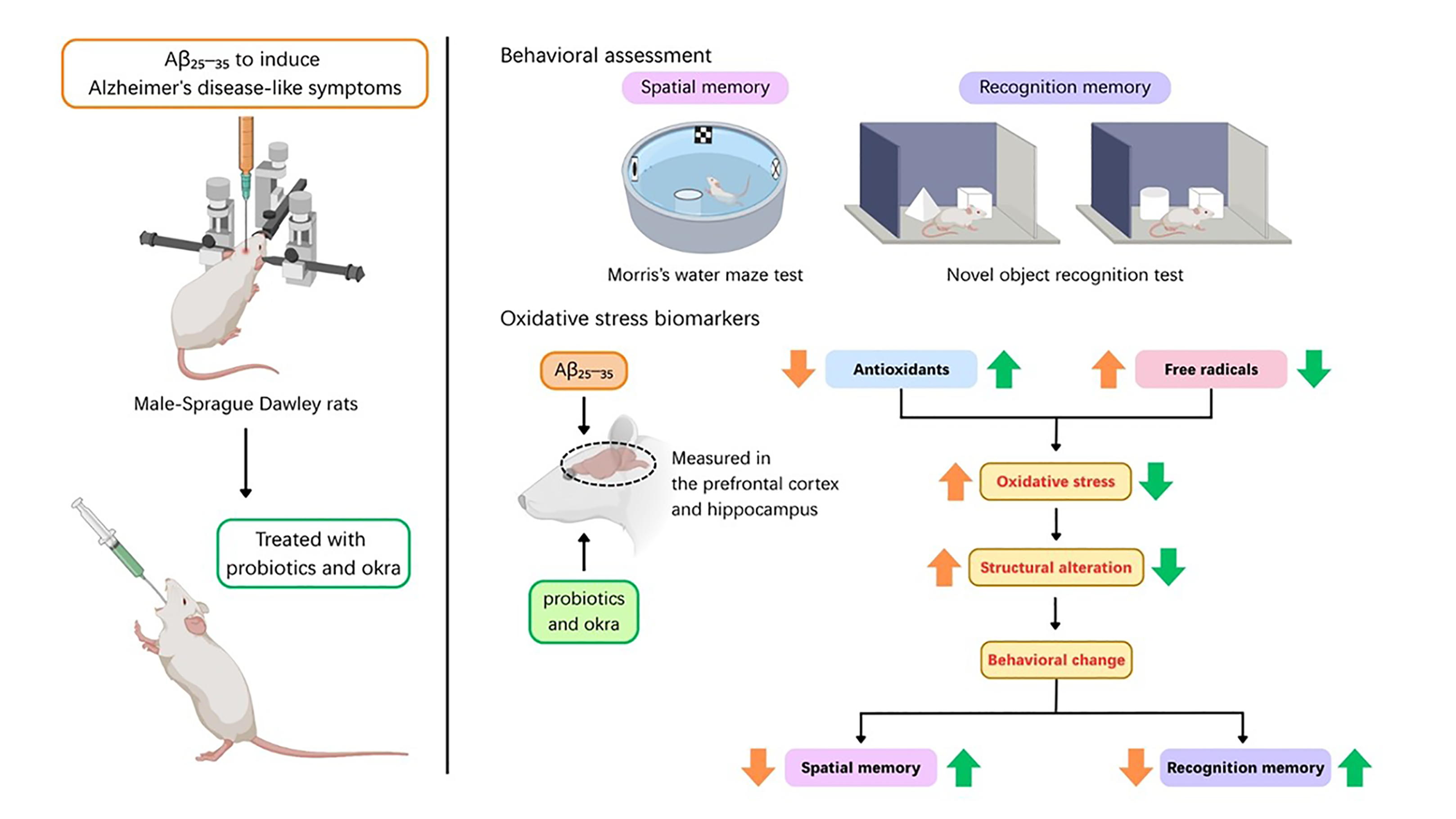
Downloads
References
B De Strooper and E Karran. The cellular phase of alzheimer’s disease. Cell 2016; 164(4), 603-615.
A Mirakhur, D Craig, DJ Hart, SP McLlroy and AP Passmore. Behavioural and psychological syndromes in Alzheimer’s disease. International Journal of Geriatric Psychiatry 2004; 19(11), 1035-1039.
P K Kamat, A Kalani, S Rai, S Swarnkar, S Tota, C Nath and N Tyagi. Mechanism of oxidative stress and synapse dysfunction in the pathogenesis of alzheimer’s disease: Understanding the therapeutics strategies. Molecular Neurobiology 2016; 53(1), 648-661.
S Bhatt, L Puli and CR Patil. Role of reactive oxygen species in the progression of Alzheimer’s disease. Drug Discovery Today 2021; 26(3), 794-803.
DA Butterfield and CM Lauderback. Lipid peroxidation and protein oxidation in Alzheimer’s disease brain: Potential causes and consequences involving amyloid beta-peptide-associated free radical oxidative stress. Free Radical Biology Medicine 2002; 32(11), 1050-1060.
MA Ansari and SW Scheff. Oxidative stress in the progression of Alzheimer disease in the frontal cortex. Journal of Neuropathology & Experimental Neurology 2010; 69(2), 155-167.
SB Chidambaram, N Anand, SR Varma, S Ramamurthy, C Vichitra, A Sharma, AM Mahalakshmi and MM Essa. Superoxide dismutase and neurological disorders. IBRO Neuroscience Reports 2024; 16, 373-394.
G Canet, C Zussy, C Hernandez, T Maurice, C Desrumaux and L Givalois. The pathomimetic oAβ25-35 model of Alzheimer’s disease: Potential for screening of new therapeutic agents. Pharmacology & Therapeutics 2023; 245, 108398.
A Cuco, AP Serro, JP Farinha, B Saramago and AG da Silva. Interaction of the Alzheimer Aβ(25-35) peptide segment with model membranes. Colloids Surf B Biointerfaces 2016; 141, 10-18.
GF Chen, TH Xu, Y Yan, YR Zhou, Y Jiang, K Melcher and HE Xu. Amyloid beta: structure, biology and structure-based therapeutic development. Acta Pharmacologica Sinica 2017; 38(9), 1205-1235.
K Rajanala, N Kumar and MR Chamallamudi. Modulation of gut-brain axis by probiotics: A promising anti-depressant approach. Current Neuropharmacology 2021; 19(7), 990-1006.
T Doifode, VV Giridharan, JS Generoso, G Bhatti, A Collodel, PE Schulz, OV Forlenza and T Barichello. The impact of the microbiota-gut-brain axis on Alzheimer’s disease pathophysiology. Pharmacological Research 2021; 164, 105314.
JF Cryan, KJ O’Riordan, CS Cowan, KV Sandhu, TF Bastiaanssen, M Boehme, MG Codagnone, S Cussotto, C Fulling, AV Golubeva and KE Guzzetta. The microbiota-gut-brain axis. Physiological Review 2019; 99(4), 1877-2013.
MH Mohajeri, G La Fata, RE Steinert and P Weber. Relationship between the gut microbiome and brain function. Nutrition Reviews 2018; 76(7), 481-496.
R Zhang, N Ding, X Feng and W Liao. The gut microbiome, immune modulation, and cognitive decline: Insights on the gut-brain axis. Frontiers in Immunology 2025; 16, 1529958.
JH Kim, Y Choi, S Lee and MS Oh. Probiotics as potential treatments for neurodegenerative diseases: A review of the evidence from in vivo to clinical trial. Biomolecules & Therapeutics 2025; 33(1), 54-74.
G PKumar and F Khanum. Neuroprotective potential of phytochemicals. Pharmacognosy Reviews 2012; 6(12), 81-90.
HF Gemede, N Ratta, GD Haki and AZWF Beyene. Nutritional quality and health benefits of “Okra” (Abelmoschus esculentus): A review. Global Journal of Medical Research: K Interdisciplinary 2015; 14(5), 28-37.
P Jumnongprakhon, K Pasakawee, P Banjongsinsiri, N Donrung, S Daodee and P Chonpathompikunlert. The effects of ethanolic extract of Okra fruit, Abelmoschus esculentus (L.) Moench on cellular senescence in aging neuron. Songklanakarin Journal of Science and Technology 2021; 43, 1367-1373.
W Nakdook, O Khongsombat, P Taepavarapruk, N Taepavarapruk and K Ingkaninan. The effects of Tabernaemontana divaricata root extract on amyloid beta-peptide 25-35 peptides induced cognitive deficits in mice. Journal of Ethnopharmacology 2010; 130(1), 122-126.
S Satarker, PC Gurram, A Nassar, S Manandhar, RJ Vibhavari, DL Yarlagadda, J Mudgal, S Lewis, D Arora and M Nampoothiri. Evaluating the role of n-acetyl-l-tryptophan in the Aβ 1-42-induced neuroinflammation and cognitive decline in alzheimer’s disease. Molecular Neurobiology 2024; 61(7), 442140.
T Phothi, S Tunsophon, W Tiyaboonchai and O Khongsomba. Effects of curcumin and γ-oryzanol solid dispersion on the brain of middle-aged rats. Biomedical Reports 2022; 17(1), 59.
O Khongsombat, F Kamsaen, N Buapheng, P Choemsuwan, K Klinprathap and S Tunsophon. Effects of phycocyanin on oxidative stress in the brain of prolonged strenuous exercise rats. Trends in Sciences 2025; 22(7), 9967.
S Marklund and G Marklund. Involvement of the superoxide anion radical in the autoxidation of pyrogallol and a convenient assay for superoxide dismutase. European Journal of Biochemistry 1974; 47(3), 469-474.
RF Beers and IW Sizer. A spectrophotometric method for measuring the breakdown of hydrogen peroxide by catalase. Journal of Biological Chemistry 1952; 195(1), 133-140.
PE Smith, RI Krohn, GT Hermanson, AK Mallia, FH Gartner, M Provenzano, EK Fujimoto, NM Goeke, BJ Olson and DC Klenk. Measurement of protein using bicinchoninic acid. Analytical Biochemistry 1985; 150(1), 76-85.
X Ma, YJ Shin, HM Jang, MK Joo, JW Yoo and DH Kim. Lactobacillus rhamnosus and Bifidobacterium longum alleviate colitis and cognitive impairment in mice by regulating IFN-γ to IL-10 and TNF-α to IL-10 expression ratios. Science Reports 2023; 13(1), 735.
C Ruiz-Gonzalez, D Cardona, L Rueda-Ruzafa, M Rodriguez-Arrastia, C Ropero-Padilla and P Roman. Cognitive and emotional effect of a multi-species probiotic containing lactobacillus rhamnosus and bifidobacterium lactis in healthy older adults: A double-blind randomized placebo-controlled crossover trial. Probiotics and Antimicrobial Proteins 2024. https://doi.org/10.1007/s12602-024-10315-2
T Yan, B Liu, N Wang, Z Liao, B Wu, B He, Y Jia and T Yan. The flavonoids of okra insulates against oxidative stress, neuroinflammation and restores BDNF levels in Aβ1-42 induced mouse model of Alzheimer’s disease. Experimental Gerontology 2021; 147, 111263.
DA Butterfield and B Halliwell. Oxidative stress, dysfunctional glucose metabolism and Alzheimer disease. Nature Reviews Neuroscience 2019; 20(3), 148-160.
R Sultana, M Perluigi and DA Butterfield. Lipid peroxidation triggers neurodegeneration: A redox proteomics view into the Alzheimer disease brain. Free Radic Biological Medicine 2013; 62, 157-169.
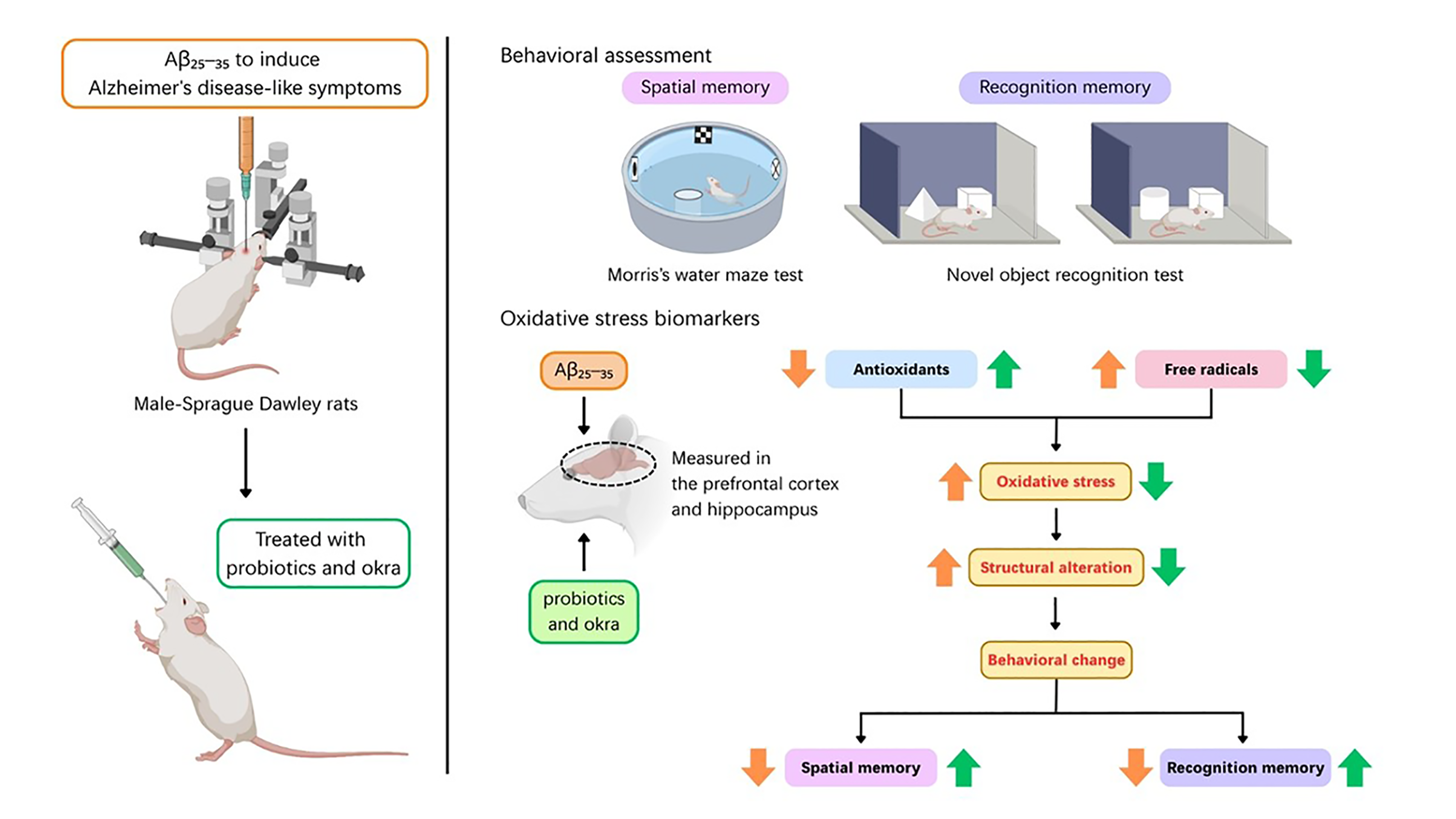
Published
How to Cite
Issue
Section
License
Copyright (c) 2025 Walailak University

This work is licensed under a Creative Commons Attribution-NonCommercial-NoDerivatives 4.0 International License.





