
Physicochemical Gradients from Seashore to Culture area in Phetchaburi Province, Thailand
DOI:
https://doi.org/10.48048/tis.2026.11427Keywords:
Aquaculture, Coastal area, Economic seaweeds, Gulf of Thailand, Mariculture, Physicochemical gradient, Seawater circulationAbstract
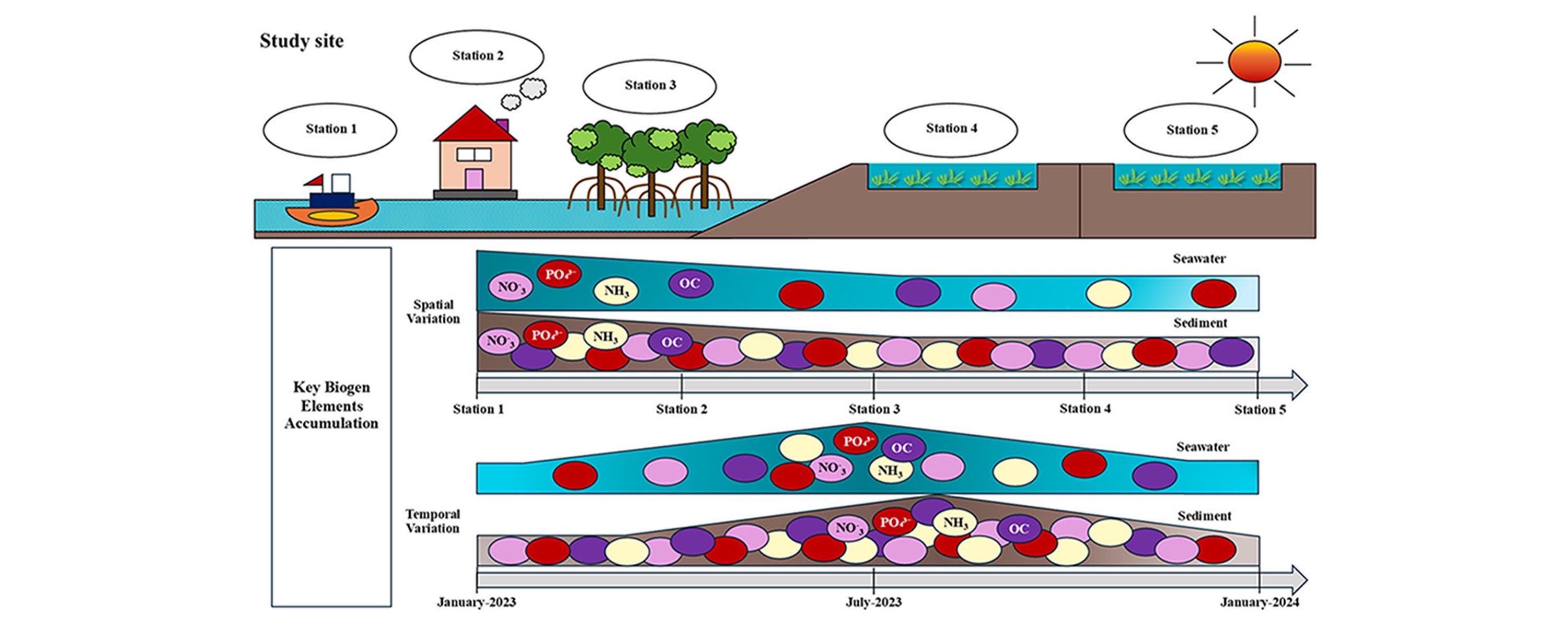
Nowadays, nature becoming to imbalance conditions from global warming issue. This effect has widely spread in many countries, especially coastal areas. The characteristics and intensity of environmental issues depend on geography in each area. Also, the Gulf of Thailand confront of rising sea surface temperatures and temporary eutrophication for many years now. Coastal culture is one of the important incomes for Thailand especially marine aquaculture - marine fish, shrimp, oyster and seaweed. Many open ponds are related directly to environment scheme. For seaweed culture, seawater is directly used in circulation by flowing from the natural area. Therefore, the quality of seaweed would not only depend on pond managements but also the environmental sources. This study aims to investigate physicochemical factors that change along the seashore to land use area. Twelve physicochemical factors were collected every 2 months from January 2023 to January 2024 from seashore to the sea grapes aquaculture ponds. Water and sediment samples were collected to analyze the amounts of ammonia, nitrate, phosphate, chemical oxygen demand, organic carbon, temperature, salinity, pH value, dissolved oxygen. The spatial and temporal parameters differences were performed by 2-way ANOVA at 95% confidence interval. The result showed the many physicochemical factors had spatial and temporal variation except the air temperature, had merely temporal variation. Moreover, the key biogenic elements were accumulated in sediment more than seawater. The physicochemical factor change depends on seasonal change in the Gulf of Thailand. The findings of this study indicate that all stations where the coastal area are impacted by environmental issues.
HIGHLIGHTS
Physicochemical factors across the 5 stations - from the seashore to the aquaculture area - were primarily influenced by seasonal variation. Sediment samples exhibited higher accumulation of biogenic compounds, including nitrate, ammonia, phosphate, and organic carbon, compared to seawater. The findings of this study also indicate that all coastal stations are affected by environmental stressors, suggesting a broader impact on the ecosystem. Given the ongoing progression of global warming and climate change, it is likely that environmental conditions in coastal aquaculture ponds will continue to deteriorate. Therefore, Thailand must implement adaptive strategies to ensure food security in the near future.
GRAPHICAL ABSTRACT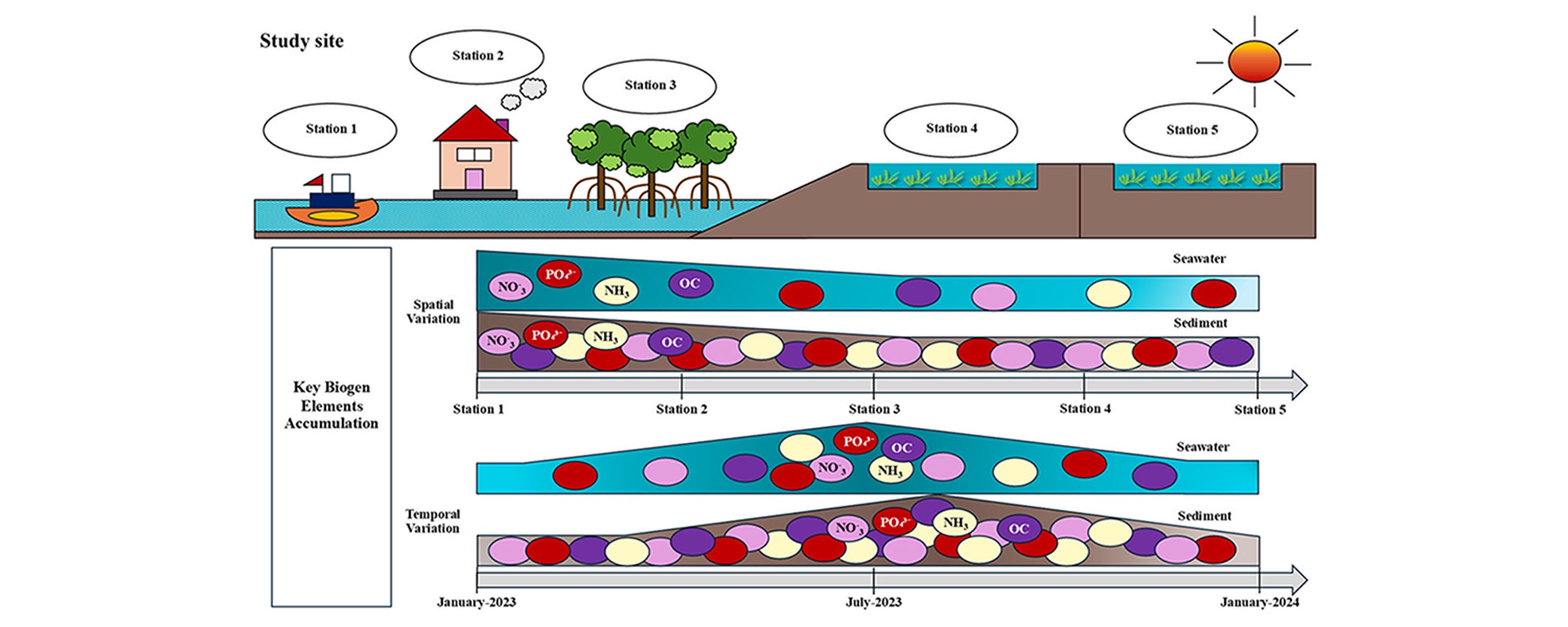
Downloads
References
J Zhang, PY Tishchenko, ZJ Jiang, PY Semkin, PP Tishchenko, W Zheng, VB Lobanov, AF Sergeev and S Jiang. Diverse nature of the seasonally coastal eutrophication dominated by oceanic nutrients: An eco-system based analysis characterized by salmon migration and aquaculture. Marine Pollution Bulletin 2023; 193, 115150.
B Timur. Spatio-temporal variations of climate variables and extreme indices over the aral sea basin during 1960 - 2017. Trends in Sciences 2023; 20(12), 5664.
A Limsakul and P Singhruck. Long-term trends and variability of total and extreme precipitation in Thailand. Atmospheric Research 2015; 169, 301-317.
B Wichachucherd, S Sirimahawan, P Duanghwang and E Rodcharoen. Year-round occurrence of crustacean holoplankton in Mae Klong River Mouth as indicators of natural food availability in the Gulf of Thailand. ScienceAsia 2025; 51(3), 1.
S Sarker, M Akter, MS Rahman, MM Islam, O Hasan, MA Kabir and MM Rahman. Spatial prediction of seaweed habitat for mariculture in the coastal area of Bangladesh using a Generalized Additive Model. Algal Research 2021; 60, 102490.
L Xu, Y Yang, Z Cui and Q Wang. Carbon dynamics in seawater and sediment: A case study of shellfish and seaweed mariculture systems. Marine Environmental Research 2025; 204, 106897.
J Luo, N Wang, Y Zhu, Z Wu, Z Ye, G Christakos and J Wu. Seasonal effects of fish, seaweed and abalone cultures on dissolved organic matter and carbon sequestration potential in Sansha Bay, China. Science of the Total Environment 2024; 945, 174144.
H Liu, Y Fan, E Su, S Liu, Y Ming, Z Huang, H Yu, F Liu, C Wang, X Yu, M Niu, K Wu, Y Yang, Z He, T Zhang and Q Yan. Mariculture increases microbially-driven carbon metabolism and sequestration in coastal ecosystems. Journal of Environmental Management 2025; 386, 125756.
Y Xiong, L Gao, L Qu, J Xu, Z Ma and G Gao. The contribution of fish and seaweed mariculture to the coastal fluxes of biogenic elements in 2 important aquaculture areas, China. Science of the Total Environment 2023; 856, 159056.
JF de Oliveira-Júnior, D Mendes, HD Porto, KRA Cardoso, JAF Neto, EBC da Silva, M de Aquino Pereira, MCD Mendes, BBD Baracho and P Jamjareegulgarn. Analysis of drought and extreme precipitation events in Thailand: Trends, climate modeling, and implications for climate change adaptation. Scientific Reports 2025; 15(1), 4501.
The Nation. Department of Fisheries accelerates seaweed production, positioning it as “food of the future, Available at: https://www.nationthailand.com/life/food/40048582, accessed April 2025.
B Wichachucherd, K Sagulsawasdipan and E Rodcharoen. Changing of chlorophyll contents in Caulerpa lentillifera after 5-day harvest. ASEAN Journal of Scientific and Technological Reports 2023; 26(4), 7.
Smart Water Operation. Rainfall data for Ban Laem District, Phetchaburi Province (in Thai), Available at: https://swocrf.rid.go.th, accessed January 2025.
AOAC International. Official method of analysis. 16th ed. AOAC International, Washington, D. C., United States, 2002
American Public Health Association. Standard methods for the examination of water and wastewater. American Water Works Association and Water Environmental Federation, Washington, D. C., United States, 1998.
Climate Data, Available at: https://diva-gis.org/data.html, accessed June 2025.
Natural Earth. 1:10 m physical vectors, Available at: www.naturalearthdata.com, accessed June 2025.
T Na-U-Dom, A Buranapratheprat and S Tong-U-Dom. The spatial and temporal variations and trends of sea surface temperature in the Gulf of Thailand from satellite imageries (in Thai). 2020; 19(1), 110-123.
L Yu, F Bingham, T Lee, E Dinnat, S Fournier, O Melnichenko, W Tang and S Yueh. Revisiting the global patterns of seasonal cycle in sea surface salinity. Journal of Geophysical Research: Oceans 2021; 126(4), e2020JC016789.
D Yi, O Melnichenko, P Hacker and J Potemra. Remote sensing of sea surface salinity variability in the South China Sea. Journal of Geophysical Research: Oceans 2020; 125(12), e2020JC016827.
TG Thompson and RU Bonnar. The buffer capacity of sea water. Industrial & Engineering Chemistry Analytical Edition 1931; 3(4), 393-395.
U Krummea, LS Herbeck and T Wang. Tide- and rainfall-induced variations of physical and chemical parameters in a mangrove-depleted estuary of East Hainan (South China Sea). Marine Environmental Research 2012; 82, 28-39.
Marine Tourism Warning System. Seawater quality standards (in Thai), Available at: https://warning.dmcr.go.th/, accessed December 2024.
Z Xun, Z Hua, Z Liang, S Ye, Y Xia, L Rui and Z Li. Some factors affecting TDS and pH values in groundwater of the Beihai coastal area in southern Guangxi, China. Environmental Geology 2007; 53(2), 317-323.
K Yang, M Peng, Y Liu, S Zhang, S Weng, C Zhong, S Liu and H Chen. Identifying key drivers of short-term abnormally low dissolved oxygen concentrations at a trans-provincial reservoir in the Dongjiang Headwater Watershed, China. Journal of Hydrology: Regional Studies 2025; 58, 102202.
M Hou, J Xiong, K Wang, X Ye, R Ye, Q Wang, C Hu and D Zhang. Communities of sediment ammonia-oxidizing bacteria along a coastal pollution gradient in the East China Sea. Marine Pollution Bulletin 2014; 86(1), 147-153.
Y Li, D Cheng, NA Adam, S Mirzalevens and G Zhang. Exploring the nexus between coastal tourism growth and eutrophication: Challenges for environmental management. Marine Pollution Bulletin 2025; 216, 117922.
Y Suteja and AIS Purwiyanto. Nitrate and phosphate from rivers as mitigation of eutrophication in Benoa bay, Bali-Indonesia. IOP Conference Series: Earth and Environmental Science 2018; 162, 012021.
D Tufford, C Samarghitan, N Hank, D Porter and J Hussey. Impact of urbanization on nutrient concentrations in small southeastern coastal streams. JAWRA Journal of the American Water Resources Association 2003; 39(2), 301-312.
MZ Iqbal and CL Fields. Mapping of accumulated nitrogen in the sediment pore water of a eutrophic lake in Iowa, USA. Environmental Geology 2009; 57(2), 465-475.
Z Ning, R Xia, B Yang, C Fang, W Jiang and G Song. Sedimentary nitrogen dynamics in a coastal reef area with relatively high nitrogen concentration. Acta Oceanologica Sinica 2023; 42(4), 33-40.
KJA Vendel, RJ Wichink Kruit, M Blom, P van den Bulk, B van Egmond, A Frumau, S Rutledge-Jonker, A Hensen and MC van Zanten. Dry deposition of ammonia in a coastal dune area: Measurements and modeling. Atmospheric Environment 2023; 298, 119596.
JZ Zhang and X Huang. Effect of temperature and salinity on phosphate sorption on marine sediments. Environmental Science & Technology 2011; 45(16), 6831-6837.
B Sundby, C Gobeil, N Silverberg and A Mucci. The phosphorus cycle in marine sediments. Limnology and Oceanography1992; 37(6), 1129-1145.
Y Hayami and N Fujii. Decadal-scale variation in COD and DIN dynamics during the summer in the inner area of the Ariake Sea, Japan. Journal of Oceanography 2018; 74(6), 551-563.
D Dubber and N Gray. Replacement of chemical oxygen demand (COD) with total organic carbon (TOC) for monitoring wastewater treatment performance to minimize disposal of toxic analytical waste. Journal of Environmental Science and Health Part A 2010; 45(12), 1595-600.
S Kerdmolee, N Damphin, A Piwnil and S Huntayung. Population and distribution of hard clams (Meretrix spp.) in the mudflat area front of the king’s royally initiated laem phak bia environmental research and development project, Phetchaburi Province, Thailand. EnvironmentAsia 2025; 18, 30-42.
P Lorpittayakorn. Circulation patterns in the Gulf of Thailand from model (in Thai). Science and Technology Journal 2015; 23(3), 20.
C Chindanonda, S Saramul, P Bhattarakosol and A Piumsomboon. Seasonal physico-chemical impacts on community structure of microphytobenthos in a mudflat inside vs outside a breakwater system in the inner Gulf of Thailand. Tropical Natural History 2019; 19(2), 51-69.
O Sarajit, K Nakhapakorn, S Jirakajohnkool, K Tienwong and A Pansuwan. EnvironmentAsia 2015; 8(1), 115-123.
T Tochamnanvita and W Muttitanon. Investigation of coastline changes in 3 provinces of Thailand using remote sensing. International Archives of the Photogrammetry, Remote Sensing and Spatial Information Sciences 2014; 40, 1079-1083.
T Lee, JH Moon, SK Jung, G Park, S Kwon, SH Min and YB Son. Changes in the nutrient budget due to physiochemical factors in the coastal area of Jeju, Korea. Journal of Coastal Research 2020; 95(SI), 57-74.
Published
How to Cite
Issue
Section
License
Copyright (c) 2025 Walailak University

This work is licensed under a Creative Commons Attribution-NonCommercial-NoDerivatives 4.0 International License.





