
Review Multifunctional Hybrids of Graphene Quantum Dots with Inorganic Nanoparticles (Metal, Metal Oxide and MOF) - Topical State and Evolutions
DOI:
https://doi.org/10.48048/tis.2025.9924Keywords:
Graphene quantum dots, Metal/metal oxides, MOF, Hybrids, Optical sensors, Photocatalysts, Wound healingAbstract
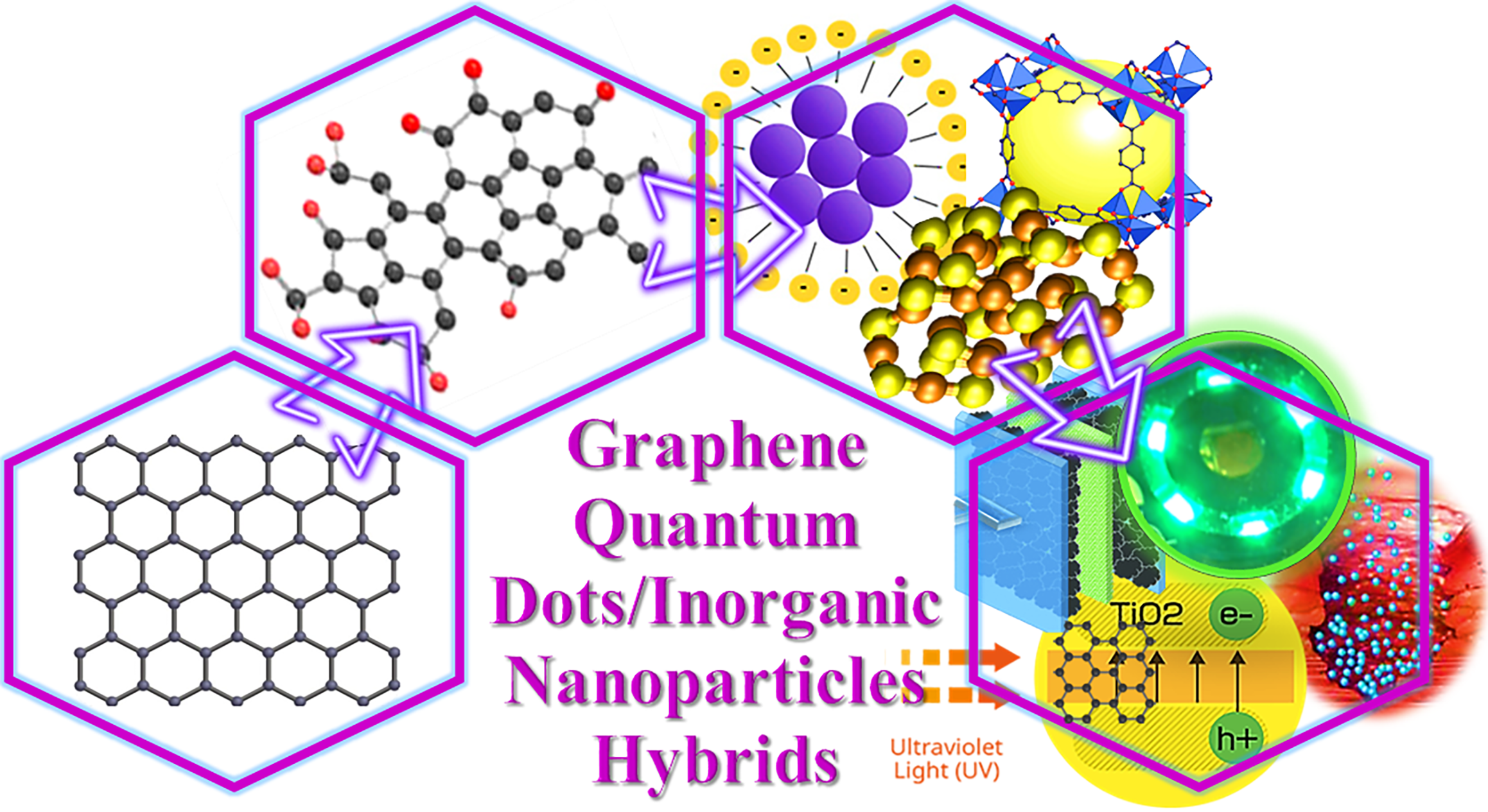
Carbon based quantum dots have been discovered as unique florescent nanoentities having different types, such as carbon nanodots, graphene quantum dots, and polymer dots. Out of these, graphene quantum dots can be seen as zero dimensional derivatives of graphene (2 dimensional nanosheet). Due to recent advancement in the field of graphene quantum dots, various inorganic and organic hybrids have been reported in the literature so far. In this concern, inorganic nanoparticles like metal, metal oxide, as well as metal organic framework (MOF) have been used to design graphene quantum dots/metal nanoparticles, graphene quantum dots/metal oxide nanoparticles, and graphene quantum dot/MOF type hybrids. These nanomaterials have been designed using efficient synthesis strategies including hydrothermal, solvothermal, freeze dying, solution, in situ, and several other methods. Accordingly, this state-of-the-art review article aims to highlight advantageous physical properties, such as microstructure, electron/charge conduction, florescence, catalytic activity, etc., in addition to dispersion, compatibility, and interface formation of graphene quantum dots with inorganic nanoparticles. Consequently, high tech application areas of graphene quantum dots/inorganic nanoparticle hybrids have been identified for optical sensors, supercapacitors, photocatalysts for environmental treatment, and antimicrobials for wound healing purposes. Despite the success of graphene quantum dots/inorganic nanoparticle hybrids so far, focused future research efforts on these nanomaterials may lead to large/commercial scale applications in energy, electronics, environment, and biomedical fields by overcoming underlying design/synthesis/performance challenges.
HIGHLIGHTS
- Graphene quantum dots recognized as unique 0-dimensional graphene derivatives having inherent quantum confinement, surface/edge effects, florescence, and innumerable beneficial physical characteristics.
- Hybrids of graphene quantum dots with inorganic nanoparticles, like metal, metal oxide, and MOF, designed using efficient processing techniques (hydrothermal, solvothermal, solution, etc.).
- Graphene quantum dot/inorganic hybrids investigated for design variations, microstructure, electron/charge conductivity, florescence, catalytic activity, antimicrobial nature, etc.
- Fine dispersion, compatibility, and interfacial effects of graphene quantum dots with inorganic nanoparticles led to high tech applications for optical sensors, photocatalysts, supercapacitors, and wound healing purposes.
- Future research on advanced graphene quantum dot/inorganic hybrids using novel nanostructural designs, optimum synthesis tactics, and overcoming field challenges desirable for industrial applications in energy, electronics, environment, and biomedical fields.
GRAPHICAL ABSTRACT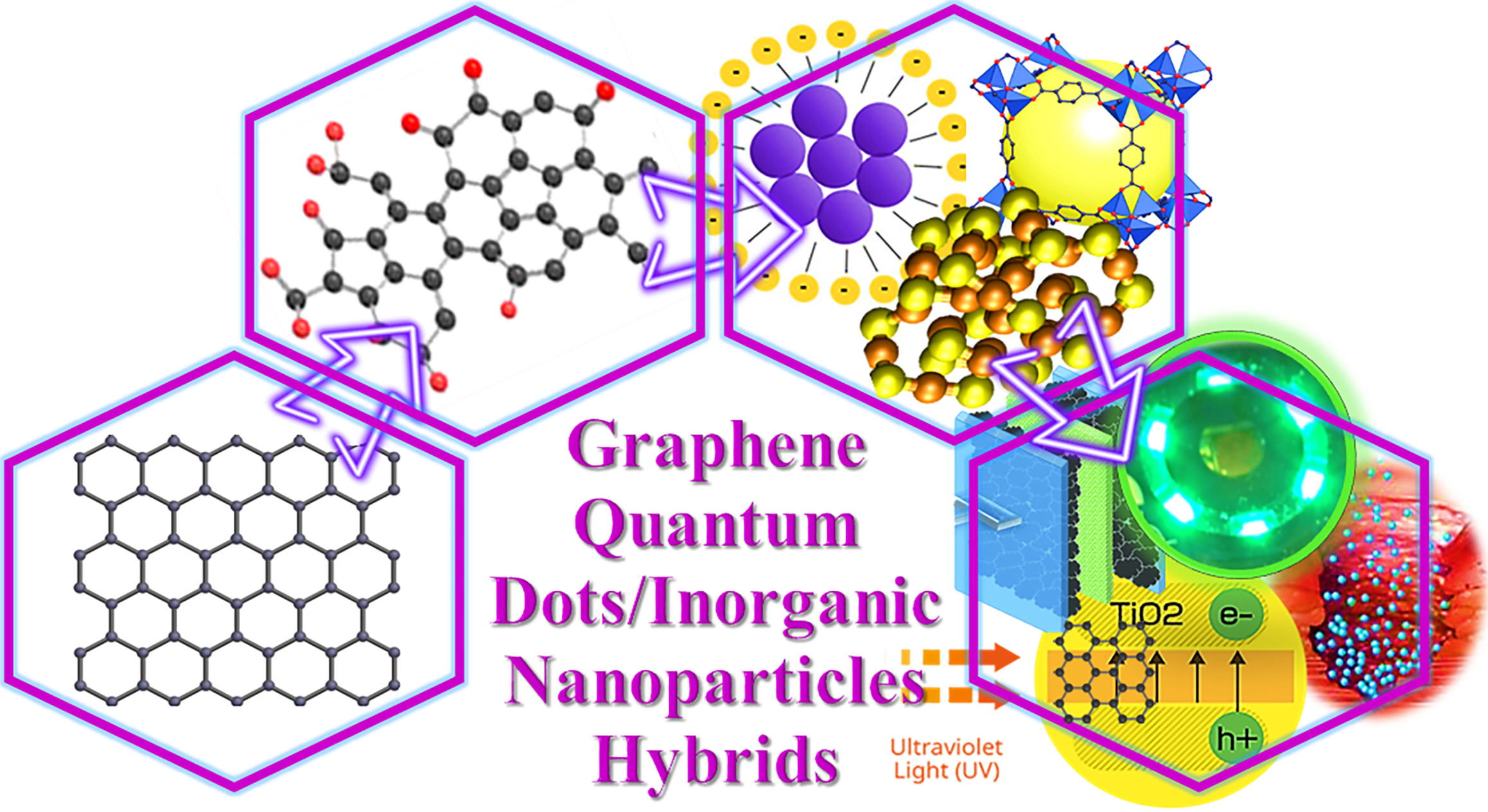
Downloads
References
P Praiypan and U Pinsook. Impact of electron-phonon coupling on graphene intercalation compounds from self energy: Polynomial models selection. Trends in Sciences 2024; 21(8), 7907.
S Anitasari, HS Budi, YK Shen, S Yani and N Tandirogang. Optimizing the pore structure and geometry of polycaprolactone/graphene scaffold to promote osteogenesis. Trends in Sciences 2024; 21(11), 8297.
B Liu, J Sun, J Zhao and X Yun. Hybrid graphene and carbon nanotube-reinforced composites: Polymer, metal, and ceramic matrices. Advanced Composites and Hybrid Materials 2025; 8, 1.
M Dahiya, V Khanna and N Gupta. Computational studies of graphene reinforced nanocomposites: Techniques, parameters, and future perspectives. ECS Journal of Solid State Science and Technology 2024; 13(6), 061005.
R Garreis, C Tong, J Terle, MJ Ruckriegel, JD Gerber, LM Gächter, K Watanabe, T Taniguchi, T Ihn, K Ensslin and WW Huang. Long-lived valley states in bilayer graphene quantum dots. Nature Physics 2024; 20, 428-434.
Y Yan, J Gong, J Chen, Z Zeng, W Huang, K Pu, J Liu and P Chen. Recent advances on graphene quantum dots: From chemistry and physics to applications. Advanced Materials 2019; 31(21), 1808283.
H Cho, G Bae and BH Hong. Engineering functionalization and properties of graphene quantum dots (GQDs) with controllable synthesis for energy and display applications. Nanoscale 2024; 16(7), 3347-3378.
S Kadian, SK Sethi and G Manik. Recent advancements in synthesis and property control of graphene quantum dots for biomedical and optoelectronic applications. Materials Chemistry Frontiers 2021; 5(2), 627-658.
P Kumar, C Dhand, N Dwivedi, S Singh, R Khan, S Verma, A Singh, MK Gupta and S Kumar. Graphene quantum dots: A contemporary perspective on scope, opportunities, and sustainability. Renewable and Sustainable Energy Reviews 2022; 157, 111993.
Y Cui, L Liu, M Shi, Y Wang, X Meng, Y Chen, Q Huang and C Liu. A review of advances in graphene quantum dots: From preparation and modification methods to application. C - Journal of Carbon Research 2024; 10(1), 7.
A Kalkal, S Kadian, R Pradhan, G Manik and G Packirisamy. Recent advances in graphene quantum dot-based optical and electrochemical (bio) analytical sensors. Materials Advances 2021; 2(17), 5513-5541.
P Mohapatra, S Behera, S Sahoo, A Mishra, A Kesh, L Shubhadarshinee, BR Jali, P Mohapatra and AK Barick. Synergistic effect of silver nanoparticles decorated graphene quantum dots nanohybrids reinforced polyaniline ternary nanocomposites on optical, thermal, and dielectric properties. Composite Interfaces 2025; 32(1), 1-26.
M Madadi, MR Moghadam, P Salarizadeh, A Bazmandegan-Shamili and M Shahbakhsh. Sensitive electrochemical detection of dopamine using CuCo2O4/graphene quantum dots-modified carbon paste electrode. Inorganic Chemistry Communications 2025; 171, 113566.
R Ghasemzadeh and K Akhbari. Degradation of acid blue 41 with carbon quantum dots@ MOF-808 nanocomposite as a biocompatible photocatalyst under visible light. Journal of Photochemistry and Photobiology A: Chemistry 2025; 458, 115984.
JP Rodríguez-Caicedo, DR Joya-Cárdenas, MA Corona-Rivera, N Saldaña-Robles, CE Damian-Ascencio and A Saldaña-Robles. Efficiency of graphene quantum dots in water contaminant removal: Trends and future research directions. Water 2025; 17(2), 166.
SS Purohit, S Patra and SK Swain. Fluorescent carbon nanoparticles based biosensors. Elsevier, Amsterdam, The Netherlands, 2025. p. 337-366.
R Shaheen and MA Hanif. Nanocomposite materials for decontamination of highly toxic acid dye from aqueous streams. International Journal of Environmental Analytical Chemistry 2024. https://doi.org/10.1080/03067319.2024.2301926
N Nesakumar, S Srinivasan and S Alwarappan. Graphene quantum dots: Synthesis, properties, and applications to the development of optical and electrochemical sensors for chemical sensing. Microchimica Acta 2022; 189, 258.
L Cui, X Ren, M Sun, H Liu and L Xia. Carbon dots: Synthesisproperties and applications. Nanomaterials 2021; 11(12), 3419.
MH Karami, M Abdouss, A Rahdar and S Pandey. Graphene quantum dots: Background, synthesis methods, and applications as nanocarrier in drug delivery and cancer treatment: An updated review. Inorganic Chemistry Communications 2024; 161, 112032.
A Aly, M Ghali, A Osman and MK El Nimr. Non-synthetic luminescent graphene quantum dots in coconut water for aniline sensing applications. Materials Research Bulletin 2024; 171, 112603.
YJ Hsiao and LY Lin. Enhanced surface area, graphene quantum dots, and functional groups for the simple acid-treated carbon fiber electrode of flexible fiber-type solid-state supercapacitors without active materials. ACS Sustainable Chemistry & Engineering 2020; 8(6), 2453-2461.
A Gouda, A Masson, M Hoseinizadeh, F Soavi and C Santato. Biosourced quinones for high-performance Santatoentally benign electrochemical capacitors via interface engineering. Communications Chemistry 2022; 5(1), 98.
Y Guo, Q Huang, F Xu, Z Luo, Y Wei, Z Chen, Z Zeng, H Zhang and H Shi. A graphene quantum dots based dual-modal fluorometric and visualized detection of copper ions. Spectrochimica Acta Part A: Molecular and Biomolecular Spectroscopy 2025; 328, 125442.
M Cobos, I De-La-Pinta, G Quindós, MJ Fernández and MD Fernández. Graphene oxide–silver nanoparticle nanohybrids: Synthesis, characterization, and antimicrobial properties. Nanomaterials 2020; 10, 376.
AK Oyebamiji, SA Akintelu, SO Afolabi, O Ebenezer, ET Akintayo and CO Akintayo. A comprehensive review on mycosynthesis of nanoparticles, characteristics, applications, and limitations. Plasmonics 2025. https://doi.org10.1007/s11468-024-02755-x
EM Materón, CM Miyazaki, O Carr, N Joshi, PHS Picciani, CJ Dalmaschio and F Davis. Magnetic nanoparticles in biomedical applications: A review. Applied Surface Science Advances 2021; 6, 100163.
Z Du, Y Qi, J He, D Zhong and M Zhou. Recent advances in applications of nanoparticles in SERS in vivo imaging. Wiley Interdisciplinary Reviews: Nanomedicine and Nanobiotechnology 2021; 13(2), e1672.
F Batool, S Noreen, HY Gonadal, A Arshad, T Iqbal and S Iqbal. Waste-derived graphene for the removal of heavy metals: A sustainable approach toward environmental remediation. In: N Talreja, D Chauhan and M Ashfaq (Eds.). Waste-derived carbon nanostructures: Synthesis and applications. Springer, Cham, Switzerland, 2025, p. 149-175.
J Iqbal, S Ijaz, N Ijaz, BA Abbasi, T Yaseen, Z Ullah, R Iqbal, G Murtaza, Z Ashraf, T Mahmood, S Kanwal, I Ali, I Ullah and M Kazi. Microbial synthesis of metal nanoparticles for nanomedicinal and catalytic applications. In: AT Khalil and A Islam (Eds.). Expanding nanobiotechnology: Applications and commercialization. CRC Press, Boca Raton, United States, 2025, p. 88-124.
M Pandey, K Deshmukh and CM Hussain. Functionalized magnetic nanoparticles for theranostic applications. John Wiley & Sons, New York, 2025.
Z Zhao, D Wu, D Lv, X Zhang, L Chen and B Zhang. Supported of gold nanoparticles on carboxymethyl lignin modified magnetic nanoparticles as an efficient catalyst for reduction of nitroarenes and treatment of human melanoma. International Journal of Biological Macromolecules 2024; 270, 132250.
P Gupta, K Mishra, AK Mittal, N Handa and MK Paul. Current expansion of silver and gold nanomaterials towards cancer theranostics: Development of therapeutics. Current Nanoscience 2024; 20(3), 356-372.
K Bakht, A Ishaq, AM Khan, RA Khan, M Bilal, F Rabbani and AJ Shaikh. Evaluation of binding compatibility among transition metal nanoparticles towards graphene quantum dots and their magnetic properties. Journal of Nanoparticle Research 2023; 25(10), 210.
Y Song and S Chen. Graphene quantum-dot-supported platinum nanoparticles: defect-mediated electrocatalytic activity in oxygen reduction. ACS Applied Materials & Interfaces 2014; 6(16), 14050-14060.
AB Amor, H Hemmami, IB Amor, S Zeghoud, AA Alhamad, M Belkacem, NS Nair and AB Sruthimol. Advances in carbon quantum dot applications: Catalysis, sensing, and biomedical innovations. Materials Science in Semiconductor Processing 2025; 185, 108945.
D Ibarra, O Kharissova and I Gomez. Synthesis of graphene quantum dots coupled to au nanoparticles: A facile and versatile route using different carbon sources. C - Journal of Carbon Research 2023; 9(2), 45.
Q Zhang, S Du, F Tian, X Long, S Xie, S Tang and L Bao. Silver nanoparticle-functionalised nitrogen-doped carbon quantum dots for the highly efficient determination of uric acid. Molecules 2022; 27(14), 4586.
NAA Nazri, NH Azeman, MHA Bakar, NN Mobarak, Y Luo, N Arsad, THTA Aziz, ARM Zain and AAA Bakar. Localized surface plasmon resonance decorated with carbon quantum dots and triangular Ag nanoparticles for chlorophyll detection. Nanomaterials 2021; 12(1), 35.
M Tohari, A Lyras and M Alsalhi. Ultrafast energy transfer in the metal nanoparticles-graphene nanodisks-quantum dots hybrid systems. Plasmonics 2019; 14, 17-24.
W Saeed, Z Abbasi, M Bilal, SH Shah, A Waseem and AJ Shaikh. Interactive behavior of graphene quantum dots towards noble metal surfaces. Physica E: Low-Dimensional Systems and Nanostructures 2023; 147, 115596.
K Tungare, M Bhori, KS Racherla and S Sawant. Synthesis, characterization and biocompatibility studies of carbon quantum dots from Phoenix dactylifera. 3 Biotech 2020; 10(12), 540.
P Kamble, D Malavekar and AP Tiwari. Natural biowaste derived fluorescent carbon quantum dots: Synthesis, characterization and biocompatibility study. Journal of Fluorescence 2024; 34(1), 191-201.
S Kanungo, N Gupta, R Rawat, B Jain, A Solanki, A Panday, P Das and S Ganguly. Doped carbon quantum dots reinforced hydrogels for sustained delivery of molecular cargo. Journal of Functional Biomaterials 2023; 14(3), 166.
RA de Jesus, GC de Assis, RJ de Oliveira, JAS Costa, CMP da Silva, HMN Iqbal and LFR Ferreiraet. Metal/metal oxide nanoparticles: A revolution in the biosynthesis and medical applications. Nano-Structures & Nano-Objects 2024; 37, 101071.
UO Aigbe and AO Osibote. Green synthesis of metal oxide nanoparticles, and their various applications. Journal of Hazardous Materials Advances 2024; 13, 100401.
Y Zhu, Z Tang, L Yuan, B Li, Z Shao and W Guo. Beyond conventional structures: Emerging complex metal oxides for efficient oxygen and hydrogen electrocatalysis. Chemical Society Reviews 2025; 54(2), 1027-1092.
S Yadav, N Rani and K Saini. A review on transition metal oxides based nanocomposites, their synthesis techniques, different morphologies and potential applications. IOP Conference Series: Materials Science and Engineering 2022; 1225, 012004.
A Kaur, B Bajaj, A Kaushik, A Saini and D Sud. A review on template assisted synthesis of multi-functional metal oxide nanostructures: Status and prospects. Materials Science and Engineering: B 2022; 286, 116005.
X Wang, M Wang, G Liu, Y Zhang, G Han, A Vomiero and H Zhao. Colloidal carbon quantum dots as light absorber for efficient and stable ecofriendly photoelectrochemical hydrogen generation. Nano Energy 2021; 86, 106122.
ZW Heng, WC Chong, YL Pang and CH Koo. An overview of the recent advances of carbon quantum dots/metal oxides in the application of heterogeneous photocatalysis in photodegradation of pollutants towards visible-light and solar energy exploitation. Journal of Environmental Chemical Engineering 2021; 9, 105199.
L Jin, H Zhao, ZM Wang and F Rosei. Quantum dots‐based photoelectrochemical hydrogen evolution from water splitting. Advanced Energy Materials 2021; 11(12), 2003233.
C Cheng, Q Liang, M Yan, Z Liu, Q He, T Wu, S Luo, Y Pan, C Zhao and Y Liu. Advances in preparation, mechanism and applications of graphene quantum dots/semiconductor composite photocatalysts: A review. Journal of Hazardous Materials 2022; 424, 127721.
Y Yu, T Ma and H Huang. Semiconducting quantum dots for energy conversion and storage. Advanced Functional Materials 2023; 33(16), 2213770.
L Jin, H Zhao, ZM Wang and F Rosei. Quantum dots: Quantum dots‐based photoelectrochemical hydrogen evolution from water splitting (Adv. Energy Mater. 12/2021). Advanced Energy Materials 2021; 11(12), 1.
P Sudhagar, I Herraiz-Cardona, H Park, T Song, SH Noh, S Gimenez, IM Sero, F Fabregat-Santiago, J Bisquert, C Terashima, U Paik, YS Kang, A Fujishima and TH Han. Exploring graphene quantum dots/TiO2 interface in photoelectrochemical reactions: Solar to fuel conversion. Electrochimica Acta 2016; 187, 249-255.
A Raghavan, S Sarkar, LR Nagappagari, S Bojja, S MuthukondaVenkatakrishnan and S Ghosh. Decoration of graphene quantum dots on TiO2 nanostructures: Photosensitizer and cocatalyst role for enhanced hydrogen generation. Industrial & Engineering Chemistry Research 2020; 59(29), 13060-13068.
S Badrigilan, B Shaabani, N Gharehaghaji and A Mesbahi. Iron oxide/bismuth oxide nanocomposites coated by graphene quantum dots:“Three-in-one” theranostic agents for simultaneous CT/MR imaging-guided in vitro photothermal therapy. Photodiagnosis and Photodynamic Therapy 2019; 25, 504-514.
J Xi, C Xie, Y Zhang, L Wang, J Xiao, X Duan, J Ren, F Xiao and S Wang. Pd nanoparticles decorated N-doped graphene quantum dots@ N-doped carbon hollow nanospheres with high electrochemical sensing performance in cancer detection. ACS Applied Materials & Interfaces 2016; 8(34), 22563-22573.
B Achenbach, A Yurdusen, N Stock, G Maurin and C Serre. Synthetic aspects and characterization needs in MOF chemistry - from discovery to applications. Advanced Materials 2025. https://doi.org/10.1002/adma.202411359
A Kirchon, L Feng, HF Drake, EA Joseph and HC Zhou. From fundamentals to applications: A toolbox for robust and multifunctional MOF materials. Chemical Society Reviews 2018; 47(23), 8611-8638.
Y Feng, X Li, S Lu, R Li, Z Gong, X Shang, Y Pei, W Zheng, D Tu and X Chen. Modulator-directed assembly of hybrid composites based on metal-organic frameworks and upconversion nanoparticles. Nano Research 2023; 16(1), 1482-1490.
D Guo, L Chen and Y Li. MOF‐supported metal nanoparticles for catalytic applications. Catalysis in Confined Frameworks: Synthesis, Characterization, and Applications 2024. https://doi.org/10.1002/9783527839278.ch7
PK Sonkar and V Ganesan. Metal-organic frameworks. In: M Kathiresan and MA Kulandainathan (Eds.). Nanomaterials for sustainable energy applications. CRC Press, Boca Raton, 2024.
S Ramu, I Kainthla, L Chandrappa, JM Shivanna, B Kumaran and RG Balakrishna. Recent advances in metal organic frameworks-based magnetic nanomaterials for waste water treatment. Environmental Science and Pollution Research 2024; 31(1), 167-190.
M Hubab and MA Al-Ghouti. Recent advances and potential applications for metal-organic framework (MOFs) and MOFs-derived materials: Characterizations and antimicrobial activities. Biotechnology Reports 2024; 42, e00837.
A Chaouiki, S Fatimah, M Chafiq, J Ryu and YG Ko. State-of-the-art advancements in metal− organic framework nanoarchitectures for catalytic applications. Applied Materials Today 2024; 38, 102224.
M Davoudabadi Farahani and M Hasanzadeh. Investigation of the properties and applications of magnetic metal-organic framework (MMOF) composites for detection and removal of environmental pollutants. Advanced Materials and New Coatings 2021; 9(35), 2546-2572.
Z Haeri, B Ramezanzadeh and M Ramezanzadeh. Recent progress on the metal-organic frameworks decorated graphene oxide (MOFs-GO) nano-building application for epoxy coating mechanical-thermal/flame-retardant and anti-corrosion features improvement. Progress in Organic Coatings 2022; 163, 106645.
R Majidi, I Danaee, L Vrsalović and D Zarei. Development of a smart anticorrosion epoxy coating containing a pH-sensitive GO/MOF nanocarrier loaded with 2-mercaptobenzothiazole corrosion inhibitor. Materials Chemistry and Physics 2023; 308, 128291.
B Wei, X Wei, M Wang, Z Yao, Z Chen, P Chen, X He and J Zhou. Ultra-broadband microwave absorption of honeycomb-like 3-dimensional carbon foams embedded with zero-dimensional magnetic quantum dots. Journal of Alloys and Compounds 2023; 939, 168781.
S Mao, JW Shi, G Sun, Y Zhang, D Ma, K Song, Y Lv, J Zhou, H Wang and Y Cheng. PdS quantum dots as a hole attractor encapsulated into the MOF@Cd0.5Zn0.5S heterostructure for boosting photocatalytic hydrogen evolution under visible light. ACS Applied Materials & Interfaces 2022; 14(43), 48770-48779.
H Xu, S Zhou, L Xiao, H Wang, S Li and Q Yuan. Fabrication of a nitrogen-doped graphene quantum dot from MOF-derived porous carbon and its application for highly selective fluorescence detection of Fe3+. Journal of Materials Chemistry C 2015; 3(2), 291-297.
Z Tian, X Yao, K Ma, X Niu, J Grothe, Q Xu, L Liu, S Kaskel and Y Zhu. Metal-organic framework/graphene quantum dot nanoparticles used for synergistic chemo-and photothermal therapy. ACS Omega 2017; 2(3), 1249-1258.
T Tang, R Yuan, N Guo, J Zhu, X Gan, Q Li, F Qin, W Luo, L Wang, S Zhang, H Song and D Jia. Improving the surface area of metal organic framework-derived porous carbon through constructing inner support by compatible graphene quantum dots. Journal of Colloid and Interface Science 2022; 623, 77-85.
H Yu, W Zhu, H Zhou, J Liu, Z Yang, X Hu and A Yuan. Porous carbon derived from metal-organic framework@ graphene quantum dots as electrode materials for supercapacitors and lithium-ion batteries. RSC Advances 2019; 9(17), 9577-9583.
L Giri, SR Rout, RS Varma, M Otyepka, K Jayaramulu and R Dandela. Recent advancements in metal–organic frameworks integrating quantum dots (QDs@MOF) and their potential applications. Nanotechnology Reviews 2022; 11(1), 1947-1976.
A Sharma, DN Gopi, SM Mohammed and RK Thomas. Energy applications of metal and metal oxide nanoparticles. In: A Shukla, KH Asli, NK Rawat, AR Abraham and AK Haghi (Eds.). Technological advancement in clean energy production. Apple Academic Press, Florida, 2024, p. 75-96.
N Kajal, V Singh, R Gupta and S Gautam. Metal organic frameworks for electrochemical sensor applications: A review. Environmental Research 2022; 204, 112320.
CES Ferreira, SS Balula and L Cunha-Silva. Recent advances in catalytic compounds developed by thermal treatment of (Zr-based) metal-organic frameworks. Compounds 2024; 4(2), 315-337.
S Jain, M Nehra, R Kumar, N Dilbaghi and S Kumar. Quantum dots and conjugated metal-organic frameworks for targeted drug delivery and bioimaging of cancer. In: AK Kaushik, S Kumar and GR Chaudhary (Eds.). Engineered nanostructures for therapeutics and biomedical applications. Woodhead Publishing, Cambridge, 2023. p. 73-102.
GA Udourioh, MM Solomon, CO Matthews-Amune, EI Epelle, JA Okolie, VE Agbazue and U Onyenze. Current trends in the synthesis, characterization and application of metal-organic frameworks. Reaction Chemistry & Engineering 2023; 8(2), 278-310.
A Nair, JT Haponiuk, S Thomas and S Gopi. Natural carbon-based quantum dots and their applications in drug delivery: A review. Biomedicine & Pharmacotherapy 2020; 132, 110834.
K Barve, U Singh, P Yadav and D Bhatia. Carbon-based designer and programmable fluorescent quantum dots for targeted biological and biomedical applications. Materials Chemistry Frontiers 2023; 7(9), 1781-1802.
W Li, Y Wang, H Yin, J Chen, K Han, F Liu and R Zhang. Excitation-dependent emission in Sb3+-doped all-inorganic rare-earth double perovskites for anticounterfeiting applications. Inorganic Chemistry 2024; 63(23), 10481-10489.
K Barve, U Singh, P Yadav, K Kansara, P Vaswani, A Kumar and D Bhatia. Red fluorescent carbon nanoparticles derived from Spinacia oleracea L.: A versatile tool for bioimaging and biomedical applications. Materials Advances 2023; 4(23), 6277-6285.
N Manjubaashini, TD Thangadurai, D Nataraj and S Thomas. Future research on graphene quantum dots. In: N Manjubaashini, TD Thangadurai, D Nataraj and S Thomas (Eds.). Graphene quantum dots: The emerging luminescent nanolights. Springer, New York, 2024, p. 275-279.
A Buzid and JHT Luong. Electrochemical sensing and biosensing-based on carbon nanodots. In: UP Azad and P Chandra (Eds.). Handbook of nanobioelectrochemistry: Application in devices and biomolecular sensing. Springer, New York, 2023, p. 339-362.
M Nehra, N Dilbaghi, AA Hassan and S Kumar. Carbon-based nanomaterials for the development of sensitive nanosensor platforms. In: A Deep and S Kumar (Eds.). Advances in nanosensors for biological and environmental analysis. Elsevier, Amsterdam, The Netherlands, 2019, p. 1-25.
A Kaur, K Pandey, R Kaur, N Vashishat and M Kaur. Nanocomposites of carbon quantum dots and graphene quantum dots: Environmental applications as sensors. Chemosensors 2022; 10(9), 367.
X Zhang, WW Zhu, LH Mei, S Zhang, J Liu and F Wang. Machine learning-enhanced bacteria detection using a fluorescent sensor array with functionalized graphene quantum dots. ACS Applied Materials & Interfaces 2025; 17(2), 3084-3096.
PP Khobrekar, GA Zalmi, AP Raiturker, RW Jadhav, A Ganguly, A D’Costa, ST Bugde and SV Bhosale. Citric acid functionalized neomycin carbon dots for cytotoxicity and sensing application. Journal of Molecular Structure 2025; 1323, 140769.
S Mishra, RN Bharagava, N More, A Yadav, S Zainith, S Mani and P Chowdhary. Heavy metal contamination: An alarming threat to environment and human health. In: RC Sobti, NK Arora and R Kothari (Eds.). Environmental biotechnology: For sustainable future. Springer, Singapore, 2019, p. 103-125.
D Türkmen, M Bakhshpour, S Akgönüllü, S Aşır and A Denizli. Heavy metal ions removal from wastewater using cryogels: A review. Frontiers in Sustainability 2022; 3, 765592.
SK Raj, V Yadav, GR Bhadu, R Patidar, M Kumar and V Kulshrestha. Synthesis of highly fluorescent and water soluble graphene quantum dots for detection of heavy metal ions in aqueous media. Environmental Science and Pollution Research 2021; 28, 46336-46342.
NAA Anas, YW Fen, NA Yusof, NAS Omar, NS Ramdzan and WMEMM Daniyal. Investigating the properties of cetyltrimethylammonium bromide/hydroxylated graphene quantum dots thin film for potential optical detection of heavy metal ions. Materials 2020; 13(11), 2591.
EGL Oliveira, HP de Oliveira and ASL Gomes. Metal nanoparticles/carbon dots nanocomposites for SERS devices: Trends and perspectives. SN Applied Sciences 2020; 2(9), 1491.
XX Han, RS Rodriguez, CL Haynes, Y Ozaki and B Zhao. Surface-enhanced Raman spectroscopy. Nature Reviews Methods Primers 2021; 1, 87.
R Zheng, H Lin, L Sun, Y Ying, B He and Y Liu. Constructing nitrogen-doped graphene quantum dots embedded in CNT supported layered (Ni0.5Co0.5)3V2O8 self-supporting film for high-performance supercapacitor. Journal of Colloid and Interface Science 2025; 677, 49-58.
L Xiaoshan, L Ruiyi, L Zaijun, Y Yongqiang and L Xiaohao. Construction of advanced Nb9VO25 electrode material by introducing graphene quantum dot for high energy supercapacitors with exceptionally high diffusive capacitance. Journal of Industrial and Engineering Chemistry 2025; 141, 269-284.
I Zare, SZ Nasab, A Rahi, A Ghaee, M Koohkhezri, MR Farani, HM Gholipour, AH Atabaki, MR Hamblin, E Mostafavi and H Kang. Antimicrobial carbon materials-based quantum dots: From synthesis strategies to antibacterial properties for diagnostic and therapeutic applications in wound healing. Coordination Chemistry Reviews 2025; 522, 216211.
Y Qian, J Wang, X Geng, B Jia, L Wang, YQ Li, B Geng and W Huang. Graphene quantum dots nanoantibiotic‐sensitized TiO2−x heterojunctions for sonodynamic‐nanocatalytic therapy of multidrug‐resistant bacterial infections. Advanced Healthcare Materials 2024; 13(22), 2400659.
DZ Zmejkoski, ZM Marković, DD Mitić, NM Zdravković, NO Kozyrovska, N Bugárová and BMT Marković. Antibacterial composite hydrogels of graphene quantum dots and bacterial cellulose accelerate wound healing. Journal of Biomedical Materials Research Part B: Applied Biomaterials 2022; 110(8), 1796-1805.
F Norouzi, M Pourmadadi, F Yazdian, K Khoshmaram, J Mohammadnejad, MH Sanati, F Chogan, A Rahdar and F Baino. PVA-based nanofibers containing chitosan modified with graphene oxide and carbon quantum dot-doped TiO2 enhance wound healing in a rat model. Journal of Functional Biomaterials 2022; 13(4), 300.
B Bajorowicz, M Wilamowska-Zawłocka, W Lisowski, A Żak and T Klimczuk. N-doped graphene quantum dot-decorated MOF-derived yolk-shell ZnO/NiO hybrids to boost lithium and sodium ion battery performance. Applied Surface Science 2024; 655, 159702.
H Hassan, M Shoaib, MA Ghanem and M Osman. Graphene quantum dots decorated on chromium oxide and zirconium metal-organic framework composite (GQDs@Zr-MOF/Cr2O3) for asymmetric supercapacitors and hydrogen production. Materials Chemistry and Physics 2025; 332, 130225.
X Liang and G Ji. Metal organic framework (MOF)-anchored polymeric nanocomposite foams for electromagnetic interference shielding. In: S Thomas, C Paoloni and AR Pai (Eds.). Porous nanocomposites for electromagnetic interference shielding. Elsevier, Amsterdam, The Netherlands, 2024. p. 337-362.
W Lv, Y Song, H Pei and Z Mo. Synthesis strategies and applications of metal-organic framework-quantum dot (MOF@QDs) functional composites. Journal of Industrial and Engineering Chemistry 2023; 128, 17-54.
Q Jia, Z Li, C Guo, X Huang, Y Song, N Zhou, M Wang, Z Zhang, L He and M Du. A γ-cyclodextrin-based metal-organic framework embedded with graphene quantum dots and modified with PEGMA via SI-ATRP for anticancer drug delivery and therapy. Nanoscale 2019; 11(43), 20956-20967.
D Wei, W Tang, Y Gan and X Xu. Graphene quantum dot-sensitized Zn-MOFs for efficient visible-light-driven carbon dioxide reduction. Catalysis Science & Technology 2020; 10(16), 5666-5676.
Published
How to Cite
Issue
Section
License
Copyright (c) 2025 Walailak University

This work is licensed under a Creative Commons Attribution-NonCommercial-NoDerivatives 4.0 International License.





