
Green-Synthesized Colloidal Metal–B-Escin Bioconjugates for Nasal Delivery: A Hypothetical Prophylactic and Therapeutic Product Against SARS-CoV-2 Variants
DOI:
https://doi.org/10.48048/tis.2025.9826Keywords:
SARS-CoV-2, COVID-19, B-escin, Nanoparticles, Nasal delivery, Antiviral therapy, Computational modeling, Variant-specific targetingAbstract
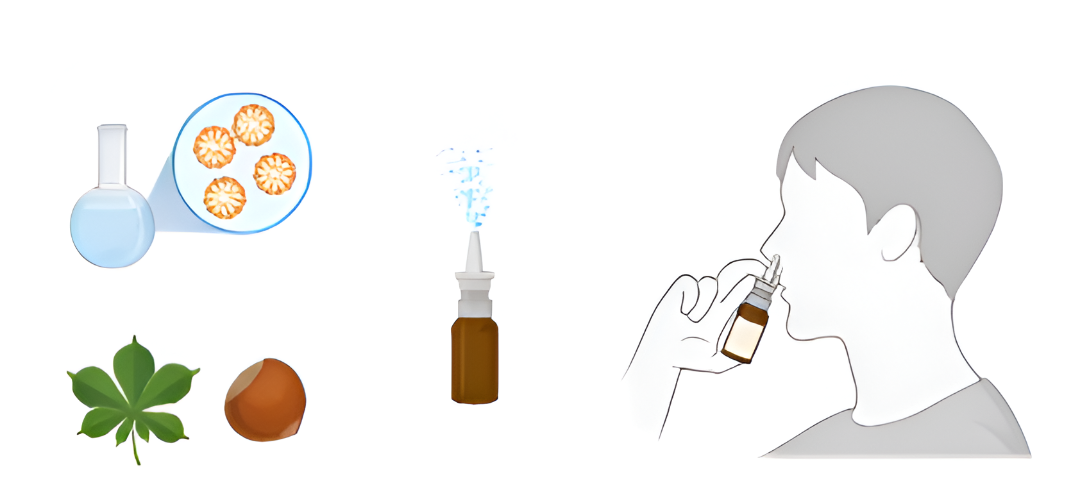
The emergence of SARS-CoV-2 variants continues to challenge global healthcare systems, necessitating the exploration of innovative preventive modalities. This study proposes a novel nasal prophylactic approach that combines the antiviral properties of B-escin, a natural compound, with green synthesized gold and silver nanoparticles. B-escin, extracted from horse chestnut seeds, exhibits notable efficacy against coronaviruses, while nanoparticles provide enhanced features for targeted delivery and stability. Through integrated computational analyses, including molecular docking, molecular dynamics simulations, and quantum mechanical calculations, we evaluate the potential of this combined strategy against prevalent COVID-19 variants, such as Alpha, Beta, Gamma, Delta, and Omicron. Specifically designed for nasal administration, our investigation highlights the synergistic interactions between B-escin and nanoparticles, elucidating their collective impact on viral targets specific to each variant within the nasal mucosa. Computational results demonstrate increased antiviral activity and target specificity when combining B-escin with gold and silver nanoparticles, surpassing individual efficacy. Moreover, we explore the influence of nanoparticle characteristics, such as size, morphology, and surface functionalization, on the observed synergistic effects. These findings underscore the potential of a nasal prophylactic utilizing natural compounds and nanotechnology, offering a promising frontline defense against the diverse spectrum of SARS-CoV-2 variants. While these findings underscore the potential of a nasal prophylactic utilizing natural compounds and nanotechnology, this study is entirely computational, and experimental validation is necessary to confirm its real-world applicability.
HIGHLIGHTS
- Innovative nasal prophylactic and therapeutic approach: Combines B-escin with green-synthesized nanoparticles for targeted antiviral action against SARS-CoV-2 variants, enhancing both delivery efficiency and molecular stability.
- Global health potential: Presents a promising, non-invasive strategy that could complement vaccination efforts—particularly valuable in regions with limited vaccine accessibility.
GRAPHICAL ABSTRACT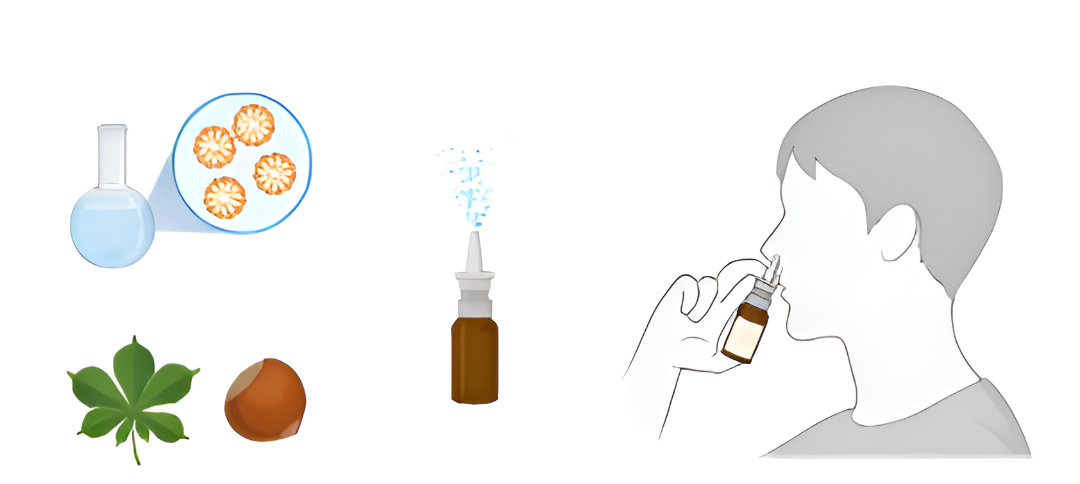
Downloads
References
W Zhou and W Wang. Fast-spreading SARS-CoV-2 variants: Challenges to and new design strategies of COVID-19 vaccines. Signal Transduction and Targeted Therapy 2021; 6(1), 226.
MZ Chaudhry, K Eschke, M Hoffmann, M Grashoff, L Abassi, Y Kim, L Brunotte, S Ludwig, A Kröger, F Klawonn, SH Pöhlmann and L Cicin-Sain. Rapid SARS-CoV-2 adaptation to available cellular proteases. Journal of Virology 2022; 96(5), e0218621.
VP Chavda, AB Patel, LK Vora, RK Singla, P Shah, VN Uversky and V Apostolopoulos. Nitric oxide and its derivatives containing nasal spray and inhalation therapy for the treatment of COVID-19. Current Pharmaceutical Design 2022; 28(46), 3658-3670.
K Rasheed, D Gupta, A Dubey and Y Singh. A review on β-escin. Indian Journal of Medical Research and Pharmaceutical Sciences 2021; 8(1), 10-16.
ZZ Lai, HH Shen and YM Lee. Inhibitory effect of β-escin on Zika virus infection through the interruption of viral binding, replication, and stability. Scientific Reports 2023; 13, 10014.
A Vernet-Crua, DM Cruz, E Mostafavi, LB Truong, H Barabadi, JL Cholula-Díaz, G Guisbiers and TJ Webster. Green-synthesized metallic nanoparticles for antimicrobial applications. In: TJ Webster (Ed.). Nanomedicine: Technologies and applications. Woodhead Publishing, Sawston, Cambridge, 2023, p. 297-338.
L Chen and J Liang. An overview of functional nanoparticles as novel emerging antiviral therapeutic agents. Materials Science and Engineering: C 2020; 112, 110924.
M Rai, A Yadav and A Gade. Silver nanoparticles as a new generation of antimicrobials. Biotechnology Advances 2009; 27(1), 76-83.
S Gurunathan, M Qasim, Y Choi, JT Do, C Park, K Hong, JH Kim and H Song. Antiviral potential of nanoparticles - Can nanoparticles fight against coronaviruses? Nanomaterials 2020; 10(9), 1645.
SJ Yu, YG Yin and JF Liu. Silver nanoparticles in the environment. Environmental Science: Process and Impacts 2013; 15(1), 78-92.
ZA Ratan, FR Mashrur, AP Chhoan, SM Shahriar, MF Haidere, NJ Runa, S Kim, DH Kweon, H Hosseinzadeh and JY Cho. Silver nanoparticles as potential antiviral agents. Pharmaceutics 2021; 13(12), 2034.
A Ravindran, P Chandran and SS Khan. Biofunctionalized silver nanoparticles: Advances and prospects. Colloids and Surfaces B: Biointerfaces 2013; 105, 342-352.
A Babaei, SM Mousavi, M Ghasemi, N Pirbonyeh, M Soleimani and A Moattari. Gold nanoparticles show potential in vitro antiviral and anticancer activity. Life Sciences 2021; 284, 119652.
R Sardar, AM Funston, P Mulvaney and RW Murray. Gold nanoparticles: Past, present, and future. Langmuir 2009; 25(24), 13840-13851.
S Liu, M Hu, X Liu, X Liu, T Chen, Y Zhu, T Liang, S Xiao, P Li and X Ma. Nanoparticles and antiviral vaccines. Vaccines 2023; 12(1), 30.
K Saravanan, S Elavarasi, G Revathi, P Karuppannan, M Ashokkumar, C Muthusamy and AR Kumar. Targeting SARS-CoV2 spike glycoprotein: Molecular insights into phytocompounds binding interactions - in-silico molecular docking. Journal of Biomaterials Science 2024; 36(3), 315-332.
N Wasukan, M Kuno and R Maniratanachote. Molecular docking as a promising predictive model for silver nanoparticle-mediated inhibition of cytochrome P450 enzymes. Journal of Chemical Information and Modeling 2019; 59(12), 5126-5134.
AC Kaushik, YJ Wang, X Wang, A Kumar, SP Singh, CT Pan, YL Shiue and DQ Wei. Evaluation of anti-EGFR-iRGD recombinant protein with GOLD nanoparticles: Synergistic effect on antitumor efficiency using optimized deep neural networks. RSC Advances 2019; 9(34), 19261-19270.
GM Morris, DS Goodsell, R Huey and AJ Olson. Distributed automated docking of flexible ligands to proteins: Parallel applications of AutoDock 2.4. Journal of Computer-Aided Molecular Design 1996; 10, 293-304.
BJ Ross. A Lamarckian evolution strategy for genetic algorithms. In: Practical handbook of genetic algorithms. CRC Press, Boca Raton, Florida, 2019, p. 1-16.
K Lakshmanan. A new Schrodinger Pymol plugin to view docking score of Autodock and Autodock vina virtual screening results, Available at: http://dx.doi.org/10.2139/ssrn.4170089, accessed October 2024.
M Hussain, N Jabeen, A Amanullah, AA Baig, B Aziz, S Shabbir, F Raza and N Uddin. Molecular docking between human TMPRSS2 and SARS-CoV-2 spike protein: Conformation and intermolecular interactions. AIMS Microbiology 2020; 6(3), 350-360.
M Shah and HG Woo. Omicron: A heavily mutated SARS-CoV-2 variant exhibits stronger binding to ACE2 and potently escapes approved COVID-19 therapeutic antibodies. Frontiers in Immunology 2022; 12, 830527.
S Abeywardhana, M Premathilaka, U Bandaranayake, D Perera and LDC Peiris. In silico study of SARS‐CoV‐2 spike protein RBD and human ACE‐2 affinity dynamics across variants and Omicron subvariants. Journal of Medical Virology 2023; 95(1), e28406.
S Kim, Y Liu, M Ziarnik, S Seo, Y Cao, XF Zhang and W Im. Binding of human ACE2 and RBD of omicron enhanced by unique interaction patterns among SARS‐CoV-2 variants of concern. Journal of Computational Chemistry 2023; 44(4), 594-601.
A Hassa and RK Arafa. On the search for COVID-19 therapeutics: Identification of potential SARS-CoV-2 main protease inhibitors by virtual screening, pharmacophore modeling and molecular dynamics. Journal of Biomolecular Structure and Dynamics 2022; 40(17), 7815-7828.
A Thakur, D Bansode, P Ghare and S Sakpal. Molecular docking and dynamic simulation of approved drugs targeting against spike protein (6VXX) of 2019-nCoV (novel coronavirus). Journal of the Indian Chemical Society 2022; 99(8), 100571.
I Zatla and L Boublenza. In silico evaluation of natural antiviral compounds targeting the RBM of SARS-CoV-2 spike glycoprotein. Tropical Journal of Natural Product Research 2023; 7(10), 4273-4283.
I Zatla and L Boublenza. Computational screening of natural compounds as antiviral candidates targeting the SARS-CoV-2 main protease. Journal of Integrated Omics 2024; 14(3), 234.
I Zatla and L Boublenza. Molecular simulation of diverse biomolecules inhibiting the SARS-CoV-2 RdRp function. Current Topics in Peptide and Protein Research 2024; 25, 13-26.
I Zatla and L Boublenza. Battling COVID-19 leveraging nanobiotechnology: Gold and silver nanoparticle-B-escin conjugates as SARS-CoV-2 inhibitors. Open Life Sciences 2025; 20(1), 20221047.
I Zatla and L Boublenza. A computational study on gold and silver nanoparticles against SARS-CoV-2 proteins. Proceedings 2024; 103(1), 23.
R Sharma, M Bhattu, A Tripathi, M Verma, R Acevedo, P Kumar, VD Rajput and J Singh. Potential medicinal plants to combat viral infections: A way forward to environmental biotechnology. Environmental Research 2023; 227, 115725.
RR Narkhede, RS Cheke, JP Ambhore and SD Shinde. The molecular docking study of potential drug candidates showing anti-COVID-19 activity by exploring of therapeutic targets of SARS-CoV-2. Eurasian Journal of Medicine and Oncology 2020; 4(3), 185-195.
X Huang, E Kon, X Han, X Zhang, N Kong, MJ Mitchell, D Peer and W Tao. Nanotechnology-based strategies against SARS-CoV-2 variants. Nature Nanotechnology 2022; 17(10), 1027-1037.
KP Das. Nanoparticles and convergence of artificial intelligence for targeted drug delivery for cancer therapy: Current progress and challenges. Frontiers in Medical Technology 2023; 4, 1067144.
RK Raja, P Nguyen-Tri, G Balasubramani, A Alagarsamy, S Hazir, S Ladhari, A Saidi, A Pugazhendhi and AA Samy. SARS-CoV-2 and its new variants: A comprehensive review on nanotechnological application insights into potential approaches. Applied Nanoscience 2023; 13(1), 65-93.
P Wang, MS Nair, L Liu, S Iketani, Y Luo, Y Guo, M Wang, J Yu, B Zhang, PD Kwong, BS Graham, JR Mascola, JY Chang, MT Yin, M Sobieszczyk, CA Kyratsous, L Shapiro, Z Sheng, Y Huang and DD Ho. Antibody resistance of SARS-CoV-2 variants B.1.351 and B.1.1.7. Nature 2021; 593(7857), 130-135.
Published
How to Cite
Issue
Section
License
Copyright (c) 2025 Walailak University

This work is licensed under a Creative Commons Attribution-NonCommercial-NoDerivatives 4.0 International License.





