
Study on Mass Transfer and Physicochemical Properties of Avocado During Osmotic Dehydration
DOI:
https://doi.org/10.48048/tis.2024.8567Keywords:
Mass transfer, Osmotic dehydration, Persea americana, Quality, SucroseAbstract
A previous study found that mass transfer occurring during the osmotic dehydration (OD) process. This phenomena is possible causing modification in physicochemical properties; therefore, understanding the OD effect on quality attributes is important. This research aimed to study the impact of sucrose concentration and immersion time on the kinetics of mass transfer and the physicochemical properties of avocado (Persea americana var. Miki) during the OD process. The samples were immersed in a sucrose solution (45, 55 and 65 ° Brix) for up to 300 min, then the mass transfer parameter and physicochemical properties were evaluated. The results showed that the highest rate of water removal (WR) was –0.037 g.g–1.h–1 using the 55 ° Brix solution, which also led to an increase in the soluble solid gain (SSG) value to 0.0126 g.g–1.h–1, while the highest WR/SSG ratio was obtained after 180 min of immersion using 65 ° Brix (2.451). A 2nd-order polynomial model accurately describes avocado mass transfer kinetics and their relationship to physicochemical properties. The model showed the best adjustment for WR, SSG, and weight loss (WL), as pointed out by R2 = 0.9671, 0.8968 and 0.9573, respectively. WR has a negative effect on firmness (R2 = 0.9278), vitamin C (R2 = 0.9349), and total fat (R2 = 0.8954). The uptake of sucrose correlated with decrease of vitamin C (R2 = 0.9391), whereas WL also affected the loss of total fat (R2 = 0.8288). The OD process modified the chroma of the avocado by reducing lightness, increasing greenness and yellowness, and yet protecting the flesh from the browning effect. Overall, this study provides insights into the relationship between mass transfer and physicochemical properties, and it is useful to predict the final condition of the osmo-avocado before subsequent processes.
HIGHLIGHTS
- Immersing the avocado in a 55 ° Brix solution resulted in the highest rate of water removal (WR) and soluble solid gain (SSG).
- The highest ratio of WR and soluble solid gain (WR/SSG) was obtained at 180 min of immersion using a 65 ° Brix solution.
- The 2nd-order polynomial model fits the mass transfer parameters (WR, SSG, and weight loss/WL).
- WR contributed to a softened texture, color contrast, degradation of vitamin C, and total fat content.
- The combination of mass transfer and physicochemical property models is useful for designing the OD process and predicting the final condition of osmo-avocado.
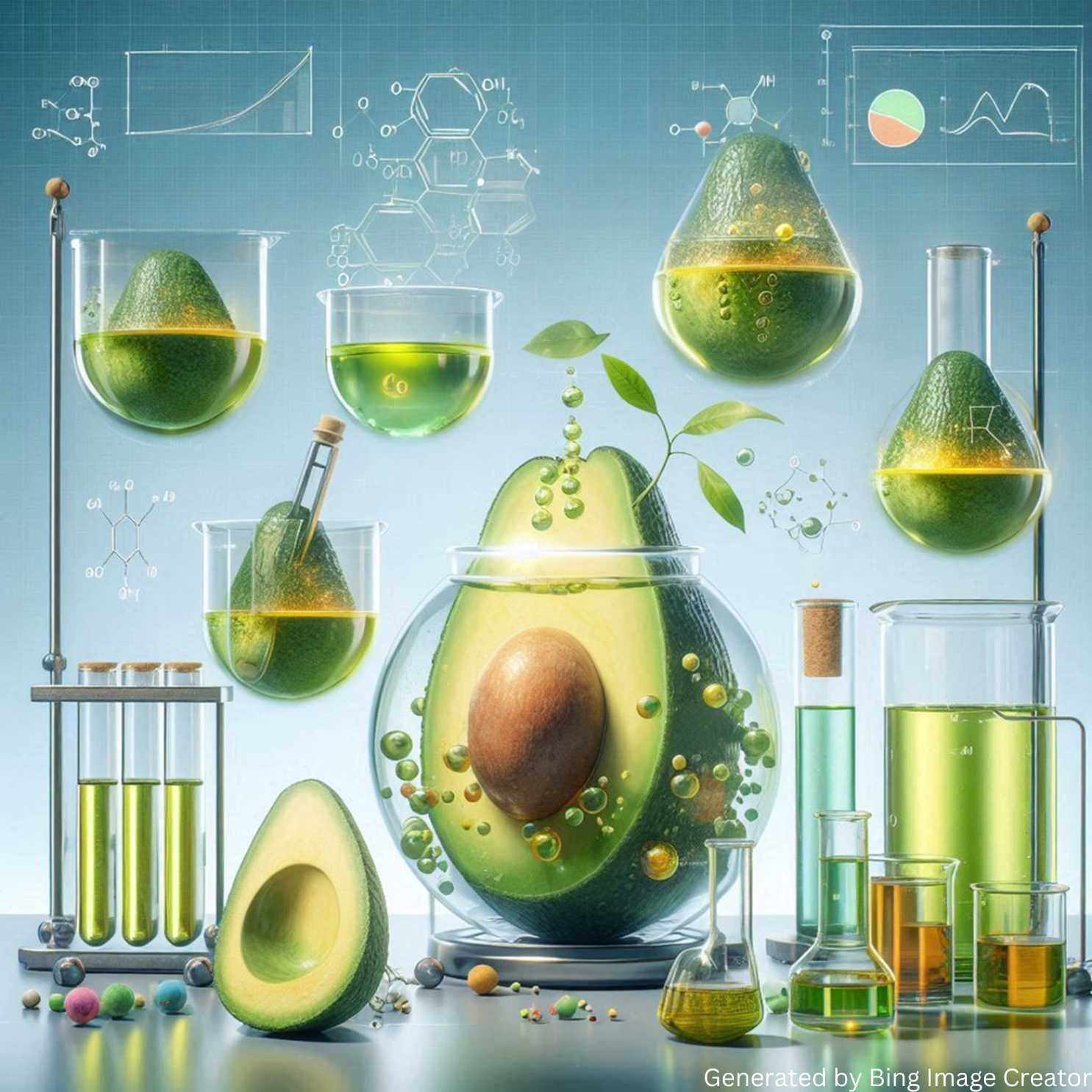
GRAPHICAL ABSTRACT
Downloads
References
S Ospina, DL Ortiz and CE Orrego. Enzymatic browning and color evolution in frozen storage of two kinds of minimally processed avocado puree. Int. J. Food Eng. 2019, https://doi.org/10.1515/ijfe-2018-0431.
M Vargas-Ortiz, G Rodríguez-Jimenes, M Salgado-Cervantes and D Pallet. Minimally processed avocado through flash vacuum-expansion: Its effect in major physicochemical aspects of the puree and stability on storage J. Food Process. Preserv. 2017; 41, 10.
ER Daiuto, RL Vieites, LR de Carvalhon and MA Tremocoldi. Sensorial and biochemical parameters of avocado product with addition of α-tocopherol and ascorbic acid. J. Nat. Prod. 2012; 2, 171-9.
MC Giannakourou, EK Dermesonlouoglou and PS Taoukis. Osmodehydrofreezing: An integrated process for food preservation during frozen storage. Foods 2020; 9, 1042.
JR Wang, XY Wu, CB Cui and JF Bi. Effect of osmotic dehydration combined with vacuum freeze-drying treatment on characteristic aroma components of peach slices. Food Chem. X 2024; 22, 101337.
L Yang, J Cheng, K Cui, X Shen, J Liu, X Zhou, J Sun, S Guo, Q Chen, X Zhu and B Liu. Inhibition of enzymatic browning in freeze-thawed apricot fruit by combined chlorogenic acid and osmotic dehydration treatments. LWT 2024; 198, 116066.
KO Falade and JC Igbeka. Osmotic dehydration of tropical fruits and vegetables. Food Rev. Int. 2007; 23, 373-405.
J Shi and ML Maguer. Osmotic dehydration of foods: mass transfer and modeling aspects. Food Rev. Int. 2002; 18, 305-35.
I Sulistyawati, R Verkerk, V Fogliano and M Dekker. Modeling the kinetics of osmotic dehydration of mango: Optimizing process conditions and pre-treatment for health aspects. J. Food Eng. 2020; 280, 109985.
M Aguirre-García, P Hernández-Carranza, O Cortés-Zavaleta, CE Ochoa-Velasco and II Ruiz-López. Mass transfer analysis of bioactive compounds in apples wedges impregnated with beetroot juice: A 3D modelling approach. J. Food Eng. 2020; 282, 110003.
K Grzelak-Blaszczyk, M Grzegorzewska and R Klewicki. Retention of flavonols in onion after osmotic dehydration. LWT 2021; 150, 112067.
B Brochier, JM Inacio and CPZ Norena. Study of osmotic dehydration of kiwi fruit using sucrose solution. Braz. J. Food Tech. 2019; 22, e2018146.
M Maldonado and JG Pacheco. Mathematical modelling of mass transfer phenomena for sucrose and lactitol molecules during osmotic dehydration of cherries. Heliyon 2022; 8, e08788.
AO Oladejo, M Haile, Q Wenjuan, C Zhou and B Wu. Effects of ultrasound on mass transfer kinetics, structure, carotenoid and vitamin C content of osmodehydrated sweet potato (Ipomea Batatas). Food Bioprocess Tech. 2017; 10, 1162-72.
F Wang, J Lyu, J Xie and J Bi. Texture formation of dehydrated yellow peach slices pretreated by osmotic dehydration with different sugars via cell wall pectin polymers modification. Food Hydrocoll. 2023; 134, 108080.
S Dhiman, V Kumar, R Kaur, S Kumar and R Sharma. Osmotic dehydration of mulberry: Effect of pretreatment and processing conditions on the quality attributes. Appl. Food Res. 2022; 2, 100172.
M Geethu, G Saji and KA Kumar. Physicochemical, sensorial and microbiological quality of frozen avocado (Persea americana Mill.) slices. Asian J. Dairy Food Res. 2022; 42, 123-8.
NK Rastogi, KSMS Raghavarao, K Niranjan and D Knorr. Recent develompments in osmotic dehydration: Methods to enhance mass transfer. Trends Food Sci. Tech. 2002; 13, 48-59.
I Sulistyawati, M Dekker, V Fogliano and R Verkerk. Osmotic dehydration of mango: Effect of vacuum impregnation, high pressure, pectin methylesterase and ripeness on quality. LWT 2018; 98, 179-86.
MA Hossain, S Talukder, AU Zaman, A Sarkar, M Yasin and R Biswas. Effective drying processes for Taikor (Garcinia pedunculata Roxb.) fruit by ultrasound-assisted osmotic pretreatment: Analysis of quality and kinetic models. Ultrason. Sonochem. 2024; 103, 106784.
SS Nielsen. Chapter 15: Vitamin C determination by indophenol method. In: SS Nielsen (Ed.). Food analysis laboratory manual. Springer, New York, 2017, p. 143-6.
J Cichowska, A Figiel, L Stasiak-Różańska and D Witrowa-Rajchert. Modeling of osmotic dehydration of apples in sugar alcohols and dihydroxyacetone (DHA) solutions. Foods 2019; 8, 20.
C James, G Purnell and SJ James. A critical review of dehydrofreezing of fruits and vegetables. Food Bioprocess Tech. 2014; 7, 1219-34.
A Rincon and WL Kerr. Influence of osmotic dehydration, ripeness and frozen storage on physicochemical properties of mango. J. Food Process. Preserv. 2010; 34, 887-903.
SAA Khanom, MM Rahman and MB Uddin. Preparation of pineapple (Ananas comosus) candy using osmotic dehydration combined with solar drying. The Agriculturists 2015; 13, 87-93.
MB Uddin, P Ainsworth and S Ibanoglu. Evaluation of mass exchange during osmotic dehydration of carrots using response surface methodology. J. Food Eng. 2004; 65, 473-7.
JA García-Toledo, II Ruiz-López, CE Martínez-Sánchez, J Rodríguez-Miranda, R Carmona-García, JG Torruco-Uco, LA Ochoa-Martinez and E Herman-Lara. Effect of osmotic dehydration on the physical and chemical properties of Mexican ginger (Zingiber officinale var. Grand Cayman). CyTA J. Food 2015; 14, 27-34.
CC Ferrari and MD Hubinger. Evaluation of the mechanical properties and diffusion coefficients of osmodehydrated melon cubes. Int. J. Food Sci. Tech. 2008; 43, 2065-74.
F Wang, J Bi, M Lyu and J Lyu. Insight into the effect of osmosis agents on macro- and micro-texture, water distribution, and thermal stability of instant controlled pressure drop drying peach chips. Food Chem. 2024; 440, 138236.
EK Dermesonlouoglou and MC Giannakourou. Modelling dehydration of apricot in a non-conventional multi-component osmotic solution: Effect on mass transfer kinetics and quality characteristics. J. Food Sci. Tech. 2018; 55, 4079-89.
C Prinzivalli, A Brambilla, D Maffi, R Lo Scalzo and D Torreggiani. Effect of osmosis time on structure, texture and pectic composition of strawberry tissue. Eur. Food Res. Tech. 2006; 224, 119-27.
A Chiralt, N Martinez-Navarrete, J Martinez-Monzo, P Talens, G Moraga, A Ayala and P Fito. Changes in mechanical properties throughout osmotic processes cryoprotectant effect. J. Food Eng. 2001; 49, 129-35.
R Biswas, MA Hossain and W Zzaman. Thin layer modeling of drying kinetics, rehydration kinetics and color changes of osmotic pre-treated pineapple (Ananas comosus) slice during drying: Development of a mechanistic model for mass transfer. Innov. Food Sci. Emerg. Tech. 2022; 80, 103094.
KO Falade, JC Igbeka and FA Ayanwuyi. Kinetics of mass transfer, and color changes during osmotic dehydration of watermelon. J. Food Eng. 2007; 80, 979-85.
SPM Germer, MA Morgano, MGD Silva, NFA Silveira and EC Guerreiro. Effect of reconditioning and reuse of sucrose syrup in quality properties and retention of nutrients in osmotic dehydration of guava. Dry. Tech. 2016; 34, 997-1008.
G Roueita, M Hojjati and M Noshad. Study of physicochemical properties of dried kiwifruits using the natural hyertonic solution in ultrasaound-assisted osmotic dehydration as pretreatment. Int. J. Fruit Sci. 2020; 20, S491-S507.
Downloads
Published
How to Cite
Issue
Section
License
Copyright (c) 2024 Walailak University

This work is licensed under a Creative Commons Attribution-NonCommercial-NoDerivatives 4.0 International License.





