
The Effect of LED Lighting Durations on Growth, Yield and Quality of Mustard (Brassica juncea L.) under Greenhouse Condition
DOI:
https://doi.org/10.48048/tis.2024.8447Keywords:
Biomass, Yield, Artificial lighting, Extended photoperiodsAbstract
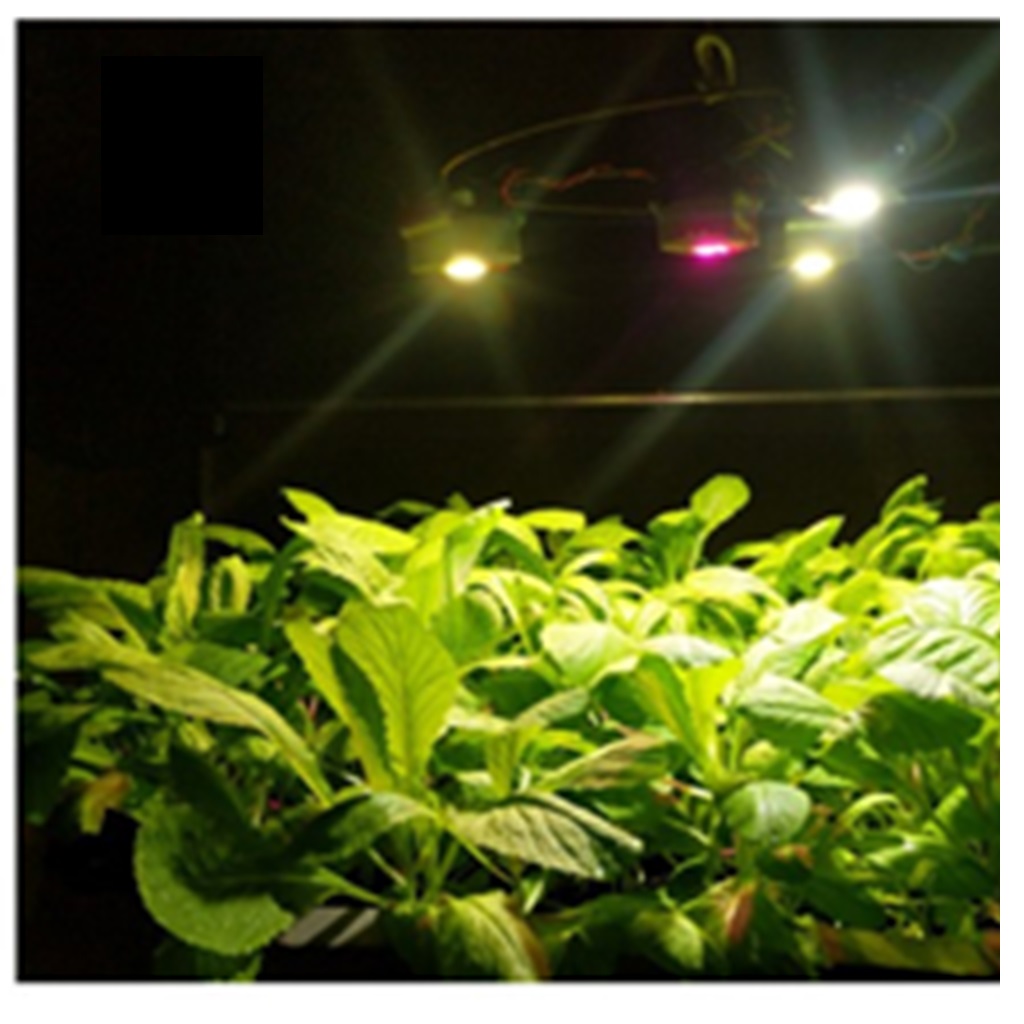
Light-emitting diodes (LEDs) show promise as a radiation source for intensive crop cultivation systems, especially for vegetables in the greenhouse. Regarding mustard greens, most studies have investigated the effects of LED lights at the seedling stage under chamber conditions for microgreens not addressed throughout their growing period up to harvest. Therefore, this study is focused to evaluate the effect of additional LED lighting time from 6 pm on the growth, yield and quality of mustard greens under a greenhouse in Kien Giang province as a typical tropical region. The experiment was arranged in a completely randomized design with 3 replications, from August 1st to September 18th, 2023. Four treatments: AL0, AL2, AL4 and AL6 correspond to lighting durations of 0, 2, 4 and 6 h of LED light, which includes a combination of 3 white lights: 1 pink light, 58 μmol·m−2·s−1 PPFD, and a Blue (18 %): Green (41 %): Red (41 %) ratio. Results showed that AL4 had the most significant positive impact on mustard plant growth, with higher dry and fresh weight, plant height, leaf width and length. However, AL6 inhibited most parameters except leaf number. Additionally, under AL4 conditions, mustard allocated more biomass to leaves, while those under AL6 conditions allocated more biomass to stems. In terms of quality, LED lighting duration negatively influenced protein content. For instance, AL0 showed the significantly greatest protein value (2.87 ± 0.08 g·kg−1) compared to others. Apart from AL0, AL6 had a considerably higher value of protein content (2.58 ± 0.2 g·kg−1) compared to AL2 (1.74 ± 0.04 g·kg−1) and AL4 (2.17 ± 0.07 g·kg−1). The additional durations of LED lighting influenced mature mustard greens’ morphology, physiology and quality, providing valuable scientific information for improving vegetable quality and quantity in tropical zones.
HIGHLIGHTS
- 4 hours of additional LED light had the most significant positive impact on mustard plant growth, with higher dry and fresh weight, plant height, leaf width, and length. Additionally, leaf number increased under 6 hours of additional LED light.
- Under 4 hours of additional LED light, mustard allocated more biomass to leaves, while those under 6 hours of additional LED light allocated more biomass to stems.
- Lighting with LED resulted in a lower protein value, and different durations of LED lighting resulted in varying protein content values.
GRAPHICAL ABSTRACT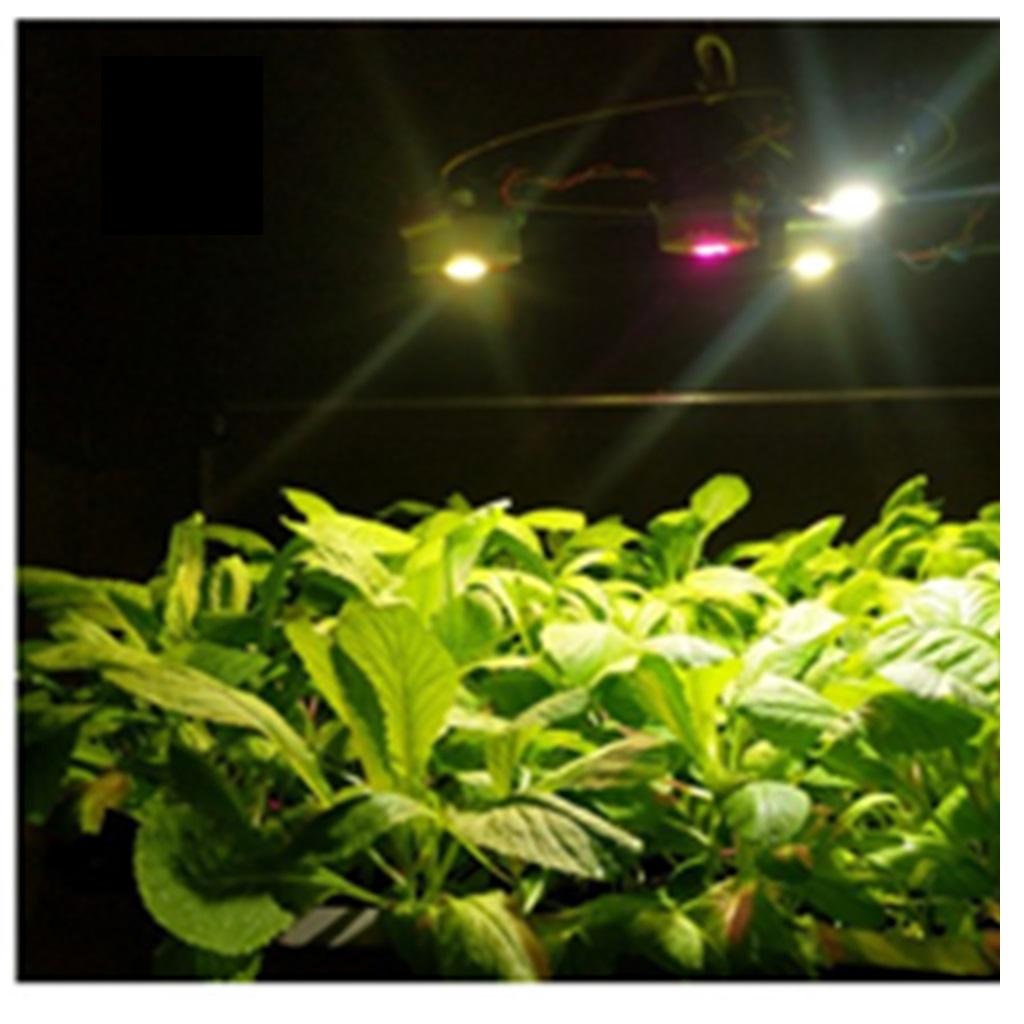
Downloads
References
Intergovernmental Panel on Climate Change. Climate change 2013 - The physical science basis: Working group I contribution to the fifth assessment report of the intergovernmental panel on climate change. Cambridge University Press, Cambridge, 2014.
NR Das. Human development report 2007/2008 fighting climate change: Human solidarity in a divided world, UNDP, New York. Soc. Change 2009; 39, 154-9.
N Mehboob, H Farag and A Sawas. Energy consumption model for indoor cannabis cultivation facility. IEEE Open Access J. Power Energ. 2020; 7, 222-33.
TM Ha. Production of safe vegetables in Thai Nguyen province - Technical report. Australia Award Alumni Program, Thái Nguyên, Vietnam, 2011.
ECHO Community. Mustard greens, Availble at: https://www.echocommunity.org/en/resources/f6b a2096-3f1e-4e3a-aaa0-b3aa64cb5219, accessed April 2024.
SB Zhang, H Hu, K Xu, ZR Li and YP Yang. Flexible and reversible responses to different irradiance levels during photosynthetic acclimation of Cypripedium guttatum. J. Plant Physiol. 2007; 164, 611-20.
B Alam, R Singh, M Chaturvedi, R Newaj and OP Chaturvedi. Determination of critical low light limit and adaptive physiological and biochemical traits regulating growth and yield of mustard (Brassica juncea Coss.). Physiol. Mol. Biol. Plants 2018; 24, 985-92.
T Jishi and K Fujiwara. Time-varying photosynthetic photon flux density and relative spectral photon flux density distribution to improve plant growth and morphology in plant factories with artificial lighting. Hortic. J. 2021; 90, 147-53.
K Hidaka, K Dan and H Imamura. Effect of supplemental lighting from different light sources on growth and yield of strawberry. Environ. Control Biol. 2013; 51, 41-7.
H Wei, M Wang and BR Jeong. Effect of supplementary lighting duration on growth and activity of antioxidant enzymes in grafted watermelon seedlings. Agronomy 2020; 10, 337.
SY Nam, HS Lee, SY Soh and RAM Cabahug. Effects of supplementary lighting intensity and duration on hydroponically grown Crassulaceae species. Flower Res. J. 2016; 24, 1-9.
KH Lin, MY Huang, WD Huang, MH Hsu, ZW Yang and CM Yang. The effects of red, blue, and white light-emitting diodes on the growth, development, and edible quality of hydroponically grown lettuce (Lactuca sativa L. var. capitata). Sci. Hortic. 2013; 150, 86-91.
L Yudina, E Sukhova, M Mudrilov, V Nerush, A Pecherina, AA Smirnov, AS Dorokhov, NO Chilingaryan, V Vodeneev and V Sukhov. Ratio of intensities of blue and red light at cultivation influences photosynthetic light reactions, respiration, growth, and reflectance indices in lettuce. Biology 2022; 1, 60.
ME Hoenecke, RJ Bula and TW Tibbitts. Importance of “blue” photon levels for lettuce seedlings grown under red-light-emitting diodes. HortScience 1992; 27, 427-30.
L Yudina, E Sukhova, E Gromova, M Mudrilov, Y Zolin, A Popova, V Nerush, A Pecherina, AA Grishin, AA Dorokhov and V Sukhov. Effect of duration of LED lighting on growth, photosynthesis and respiration in lettuce. Plants 2023; 12, 442.
PN Nhi, PN Long, TTS Non, VTB Thuy, LV Thuc and TT Ba. Effects of color led light intensities and different photoperiod regimes on growth of hydroponic lettuce (Latuca sativa L.). Can Tho Univ. J. Sci. 2016; 2, 1-7.
X Li, C Wang, J Liu, Y Guo, F Cheng, Y Yang and Z Yan. Long supplementary light duration under same daily light integral provided by white plus blue light-emitting diodes improves the quality of greenhouse-grown tomato seedlings. Hortic. Environ. Biotechnol. 2023; 64, 963-75.
A Songsaeng, P Tittabutr, K Umnajkitikorn, N Boonkerd, J Wongdee, P Songwattana, P Piromyou, T Greetatorn, T Girdthai and N Teaumroong. Application of light-emitting diodes with plant growth-promoting rhizobacteria and arbuscular mycorrhiza fungi for tomato seedling production. Agronomy 2022; 12, 2458.
R Hernández and C Kubota. Growth and morphological response of cucumber seedlings to supplemental red and blue photon flux ratios under varied solar daily light integrals. Sci. Hortic. 2014; 173, 92-9.
M Moazzeni, S Reezi and MG Ghehsareh. Growth and chlorophyll fluorescence characteristics of sinningia speciosa under red, blue and white light-emitting diodes and sunlight. Adv. Hortic. Sci. 2020; 34, 419-30.
PV So and BTN Thuan. Kiểm nghiệm lương thực, thực phẩm (in Vietnamese). Đại học Bách Khoa, Hanoi, Vietnam, 1991.
S Mussa and I Elsharaa. Determination of vitamin C (ascorbic acid) contents in vegetable samples by UV-spectrophotometry and redox titration methods and estimation the effect of time, cooking and frozen on ascorbic acid contents. Int. J. Prog. Sci. Tech. 2019; 15, 281-93.
NT Hien, PT Thuy, NT Hang and LL Chi. Analytical methods for fermentation technology. Science and Technology Publishing House, Hanoi, Vietnam, 2005.
Vietnam Quality Standards Institute. Plant - Determination of nitrate and nitrite by colorimetric method. Vietnam Quality Standards Institute, Hanoi, Vietnam, 2011.
L Yudina, E Gromova, M Grinberg, A Popova, E Sukhova and V Sukhov. Influence of burning-induced electrical signals on photosynthesis in pea can be modified by soil water shortage. Plants 2022; 11, 534.
T Verwijst and DZ Wen. Leaf allometry of Salix viminalis during the first growing season. Tree Physiol. 1996; 16, 655-60.
KJ Walters, AA Hurt and RG Lopez. Flowering, stem extension growth, and cutting yield of foliage annuals in response to photoperiod. HortScience 2019; 54, 661-6.
NA Semenova, AA Smirnov, AS Dorokhov, YA Proshkin, AS Ivanitskikh, NO Chilingaryan, AA Dorokhov, DV Yanykin, SV Gudkov and AY Izmailov. Evaluation of the effectiveness of different LED irradiators when growing red mustard (Brassica juncea L.) in indoor farming. Energies 2022; 15, 8076.
SP Long, XG Zhu, SL Naidu and DR Ort. Can improvement in photosynthesis increase crop yields? Plant Cell Environ. 2006; 29, 315-30.
RC Morrow. LED lighting in horticulture. HortScience 2008; 43, 1947-50.
M Naveed, U Bansal and BN Kaiser. Impact of low light intensity on biomass partitioning and genetic diversity in a chickpea mapping population. Front. Plant Sci. 2024; 15, 1292753.
S Muneer, EJ Kim, JS Park and JH Lee. Influence of green, red and blue light emitting diodes on multiprotein complex proteins and photosynthetic activity under different light intensities in lettuce leaves (Lactuca sativa L.). Int. J. Mol. Sci. 2014; 15, 4657-70.
M Moosavi-Nezhad, B Alibeigi, A Estaji, NS Gruda and S Aliniaeifard. Growth, biomass partitioning, and photosynthetic performance of chrysanthemum cuttings in response to different light spectra. Plants 2022; 11, 3337.
I Wijaya, GT Sigmarawan and IPG Budisanjaya. LED (Light Emitting Diode) light provides positive effects on growth and productivity of pakcoy mustard (Brassica Rapa L.). IOP Conf. Ser. Earth Environ. Sci. 2019; 355, 012082.
KD Bonifas and JLL John. Predicting biomass partitioning to root versus shoot in corn and velvetleaf (Abutilon theophrasti). Weed Sci. 2006; 54, 133-7.
H Poorter and O Nagel. The role of biomass allocation in the growth response of plants to different levels of light, CO2, nutrients and water: A quantitative review. Funct. Plant Biol. 2000; 27, 595-607.
YZ Luo, G Li, G Yan, H Liu and NC Turner. Morphological features and biomass partitioning of lucerne plants (Medicago sativa L.) subjected to water stress. Agronomy 2020; 10, 322.
S Moradi, M Kafi, S Aliniaeifard, SA Salami, M Shokrpour, C Pedersen, M Moosavi-Nezhad, J Wróbel and HM Kalaji. Blue light improves photosynthetic performance and biomass partitioning toward harvestable organs in saffron (Crocus sativus L.). Cells 2021; 10, 1994.
S Debnath, RS Ramakrishnan, RK Kumawat, M Ghogare, PP Singh, A Kumar, S Sharma, R Sharma and PS Nayak. Plant growth regulators application on biomass partitioning in source and sink tissues under timely sown and high temperature stress condition in chickpea. Biol. Forum Int. J. 2022; 14, 318-27.
S Kant, D Singh, VU Rao and R Singh. Dry matter partitioning in mustard (Brassica juncea) varieties under different sowing dates. Crop Res. Hisar 1999; 18, 349-53.
M Singh, Mk Khushu, V Gupta and J Kumar. Biomass partitioning and water use efficiency of mustard cultivars sown under different environments. Ann. Plant Soil Res. 2013; 15, 9-14.
N Patel, PK Tyagi and KC Shukla. Effect of sowing dates and varieties on total dry matter and its partitioning in different plant parts and yield of Indian mustard. Ann. Plant Soil Res. 2015; 17, 413-7.
KY Kamal, M Khodaeiaminjan, AA El‐Tantawy, DA Moneim, AA Salam, SMAI Ash‐shormillesy, A Attia, MAS Ali, R Herranz, MA El‐Esawi, AA Nassrallah and MF Ramadan. Evaluation of growth and nutritional value of Brassica microgreens grown under red, blue and green LEDs combinations. Physiol. Plant. 2020; 169, 625-38.
GD Massa, HH Kim, RM Wheeler and CA Mitchell. Plant productivity in response to LED lighting. HortScience 2008; 43, 1951-6.
SK Lee and AA Kader. Preharvest and postharvest factors influencing vitamin C content of horticultural crops. Postharvest Biol. Tech. 2000; 20, 207-20.
G Samuolienė, A Brazaitytė, J Jankauskienė, A Viršilė, R Sirtautas, A Novičkovas, S Sakalauskienė, J Sakalauskaitė and P Duchovskis. LED irradiance level affects growth and nutritional quality of Brassica microgreens. Open Life Sci. 2013; 8, 1241-9.
A Podsędek, B Frąszczak, D Sosnowska, D Kajszczak, K Szymczak and R Bonikowski. LED light quality affected bioactive compounds, antioxidant potential, and nutritional value of red and white cabbage microgreens. Appl. Sci. 2023; 13, 5435.
Downloads
Published
How to Cite
Issue
Section
License
Copyright (c) 2024 Walailak University

This work is licensed under a Creative Commons Attribution-NonCommercial-NoDerivatives 4.0 International License.





