
Effect of CCl4 on Renal Tissues of Male Mice and Prevented by Pretreatment with Bromelain Loaded with Gold Nanoparticles: Histopathological and Caspase-9 Expression Alterations
DOI:
https://doi.org/10.48048/tis.2024.8358Keywords:
Kidney, Gold nanoparticles, Bromelain, Antioxidant, Anti-inflammatory, Histopathological, ImmunohistochemicalAbstract
The study aimed to investigate the potential protective effect of bromelain on renal histopathological changes induced by carbon tetrachloride (CCl4) in albino mice. CCl4 is widely used in the chemical industry but is also known to cause toxicity to various organs including the brain, liver, kidneys and lungs. In this study, 49 animals were divided into 7 equal groups. The kidneys of the mice were examined to assess histopathological changes and immunohistochemical markers, specifically caspase-9. The groups that received bromelain solution coated with gold nanoparticles demonstrated greater protective effects against CCl4-induced kidney damage. The findings suggest that kidney damage induced by CCl4 may be attributed to oxidative stress, which disrupts the antioxidant defense system, enzyme function and biochemical markers. However, administration of bromelain significantly mitigated CCl4 toxicity by enhancing the antioxidant defense system and reducing the production of free radicals. Notably, the study found that a dose of 300 mg of bromelain effectively reduced CCl4-induced toxicity in rats. This highlights the potential therapeutic value of bromelain in protecting against chemical-induced kidney damage.
HIGHLIGHTS
- The kidney damage from carbon tetrachloride can occur through oxidative stress, altering the antioxidant defense system, enzyme function, and biochemical markers.
- The bromelain can decreased the toxicity of CCL4.
- The 300 mg bromelain solution proved to be more efficacious than the 100 mg dose.
GRAPHICAL ABSTRACT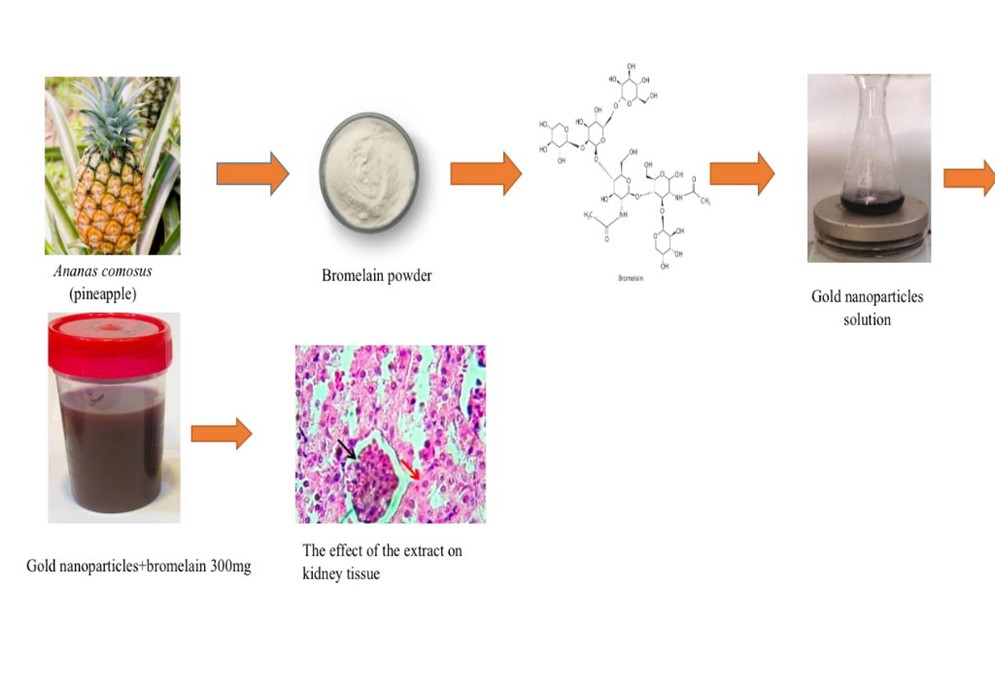
Downloads
References
F Provincial. Guidelines for Canadian drinking water quality: Guideline technical document - carbon tetrachloride. Health Canada, Ottawa, Cananda, 2010.
KJ Lee, ER Woo, CY Chio, DW Shin, DG Lee, HJ You and HG Jeong. Protective effect of octreotide on carbon tetrachloride-induced hepatotoxicity. Life Sci. 2004; 74, 1051-64.
YM Abd-Elhakim, MH Ghoneim, LLM Ebraheim and TS Imam. Taurine and hesperidin rescue carbon tetrachloride-triggered testicular and kidney damage in rats via modulating oxidative stress and inflammation. Life Sci. 2020; 254, 117782.
J Koh, SM Kang, SJ Kim, MK Cha and YJ Kwon. Effect of pineapple protease on the characteristics of protein fibers. Fibers Polym. 2006; 7, 180-5.
C Chaisakdanugull, C Theerakulkait and RE Wrolstad. Pineapple juice and its fractions in enzymatic browning inhibition of banana (Musa (AAA Group) Gros Michel). J. Agr. Food Chem. 2007; 55, 4252-7.
BN Tochi, Z Wang, SY Xu and W Zhang. Therapeutic application of pineapple protease (bromelain): A review. Pak. J. Nutr. 2008; 7, 513-20.
A Manosroi, C Chankhampan, K Pattamapun, W Manosroi and J Manosroi. Antioxidant and gelatinolytic activities of papain from papaya latex and bromelain from pineapple fruits. Chiang Mai J. Sci. 2014; 41, 635-48.
M Al-Jubori, AA Hassan and R Al-Bahrani. Evaluation of antioxidants for Agaricus bisporus and different strains of Pleurotus ostreatus. Iraqi J. Sci. 2023; 57, 316-24.
SI Hussein, AF Kaluf, Y Ahmed, B Ahmed and A Iyad. Determination of inhibition activity of α-amylase enzyme, antioxidant activity, antibacterial activity, and phenolic compounds by using some medical plants. Iraqi J. Agr. Sci. 2020; 51, 411-21.
IS Young and JV Woodside. Antioxidants in health and disease. J. Clin. Pathol. 2001; 54, 176-86.
TA Muhsen, SN Hawar, TS Mahdi and R Khaleel. Effect of Eucalyptus and Myrtus extracts identification by gas chromatography-mass spectrometry on some species of Candida as a model of medical plants. Ann. Trop. Med. Public Health 2020, https://doi.org/10.36295/ASRO.2020.231032.
E Abdalrazaq, AAQ Jbarah, TH Al-Noor, GT Shinain and MM Jawad. Synthesis, DFT calculations, DNA interaction, and antimicrobial studies of some mixed ligand complexes of oxalic acid and Schiff base Trimethoprim with various metal ions. Indones. J. Chem. 2022; 22, 1348-64.
SI Hussein, SS Shubber and NY Yaseen. Bio-distribution of gold nanoparticles in tumor mass and different organs in implanted mice with mammary adenocarcinoma AM3 (in vivo study). Iraqi J. Vet. Med. 2019; 43, 17-22.
Z Li, N Song and YW Yang. Stimuli-responsive drug-delivery systems based on supramolecular nano valves. Matter 2019; 1, 345-68.
O Schickling, AH Stegh, J Byrd and ME Peter. Nuclear localization of DEDD leads to caspase-6 activation through its death effector domain and inhibition of RNA polymerase I-dependent transcription. Cell Death Differ. 2001; 8, 1157-68.
JB Denault and GS Salvesen. Caspases: Keys in the ignition of cell death. Chem. Rev. 2002; 102, 4489-500.
AK Khan, R Rashid, G Murtaza and A Zahra. Gold nanoparticles: Synthesis and applications in drug delivery. Trop. J. Pharm. Res. 2014; 13, 1169-77.
HAS Al-Shmgani, WH Mohammed, GM Sulaiman and AH Saadoon. Biosynthesis of silver nanoparticles from Catharanthus roseus leaf extract and assessing their antioxidant, antimicrobial, and wound-healing activities. Artif. Cells Nanomed. Biotechnol. 2017; 45, 1234-40.
BS Abeed and HA Al-Shmgani. Evaluation of the potential protective role of Galangin associated with gold nanoparticles in the histological and functional structure of testes of adult male albino mice administrated with carbon tetrachloride. Baghdad Sci. J. 2024, https://doi.org/10.21123/ bsj.2024.9086.
A Stevens and JD Bancroft. Theory and practice of histological techniques. Churchill Livingston, London, 2010.
P Mulvaney, M Giersig and A Henglein. Electrochemistry of multilayer colloids: Preparation and absorption spectrum of gold-coated silver particles. J. Phys. Chem. 1993; 97, 7061-4.
HH Al-Salhie and EJ Al-Kalifawi. Antimicrobial and antivirulence activity of magnesium oxide nanoparticles synthesized using Klebsilla pneumonia culture filtrate. Biochem. Cell. Arch. 2020; 20, 3991-4001.
RK Tekade. Biomaterials and bionanotechnology. Elsevier, London, 2019.
AM Mohammed and MT Sultan. Synthesis, characterization and biological activities of new nano Schiff bases composites. Ibn Al Haitham J. Pure Appl. Sci. 2020; 33, 55-67.
AJ Abdulghani and SK Mohuee. Synthesis of gold nanoparticles using ceftriaxone sodium as a reducing and stabilizing agent. Iraqi J. Sci. 2015; 56, 2425-38.
SN Hawar, HS Al-Shmgani, ZA Al-Kubaisi, GM Sulaiman, YH Dewir and JJ Rikisahedew. Green synthesis of silver nanoparticles from Alhagi graecorum leaf extract and evaluation of their cytotoxicity and antifungal activity. J. Nanomater. 2022; 2022, 1058119.
AHA Dujaily and AK Mahmood. The effectiveness of biogenic silver nanoparticles in the treatment of caprine mastitis induced by Staphylococcus aureus. Iraqi J. Vet. Sci. 2021; 35, 73-8.
M Sharma and D Chaudhary. Exploration of bromelain laden nanostructured lipid carriers: An oral platform for bromelain delivery in rheumatoid arthritis management. Int. J. Pharmaceut. 2021; 594, 120176.
B Marie. 2017, Synthesis, physicochemical characterisation and biological evaluation of polymer-functionalised gold nanoparticles for cancer treatment. Ph.D. Dissertation. Imperial College London, London, England.
HH Qasim, HA Abdullah and AR Mujahid. Effect of Olea europea L extraction and TiO2 nanoparticles against Pseudomonas aeruginosa. Indian J. Publ. Health Res. Dev. 2019; 10, 1218-23.
HS Hakeem and NK Abbas. Preparing and studying structural and optical properties of Pb1-xCdxS nanoparticles of solar cells applications. Baghdad Sci. J. 2021; 18, 640.
MHA Latif and YF Mahmood. Isolation and characterization of microcrystalline cellulose and preparation of nano-crystalline cellulose from tropical water hyacinth. Ibn Al Haitham J. Pure Appl. Sci. 2018; 31, 180-8.
R Debnath, DD Purkayastha, S Hazra, NN Ghosh, CR Bhattacharjee and J Rout. Biogenic synthesis of antioxidant, shape selective gold nanomaterials mediated by high altitude lichens. Mater. Lett. 2016; 169, 58-61.
A Doğukan, N Akpolat, H Celiker, N Ilhan, IH Bahçecioğlu and AI Günal. Protective effect of interferon-alpha on carbon tetrachloride-induced nephrotoxicity. J. Nephrol. 2023; 16, 81-4.
F Ozturk, M Ucar, IC Ozturk, N Vardi and K Batcioglu. Carbon tetrachloride-induced nephrotoxicity and protective effect of betaine in Sprague-Dawley rats. Urology 2003; 62, 353-6.
G Venkatanarayana, G Sudhakara, P Sivajyothi and P Indira. Protective effects of curcumin and vitamin E on carbon tetrachloride-induced nephrotoxicity in rats. EXCLI J. 2012; 11, 641-50.
WR Al-Otaibi, P Virk and M Elobeid. Ameliorative potential of stem bromelain on lead-induced toxicity in Wistar rats. Acta Biologica Hungarica 2015; 66, 149-60.
KJ Livak and TD Schmittgen. Analysis of relative gene expression data using real-time quantitative PCR and the 2(-Delta Delta C(T)) method. Methods 2001; 25, 402-8.
JD Bancroft and GA Stevens. Theory and practice of histological techniques. Churchill Livingstone, London, 1990.
RM Mainardes and RC Evangelista. PLGA nanoparticles containing praziquantel: Effects of formulation variables on size distribution. Int. J. Pharmaceut. 2005; 290, 137-44.
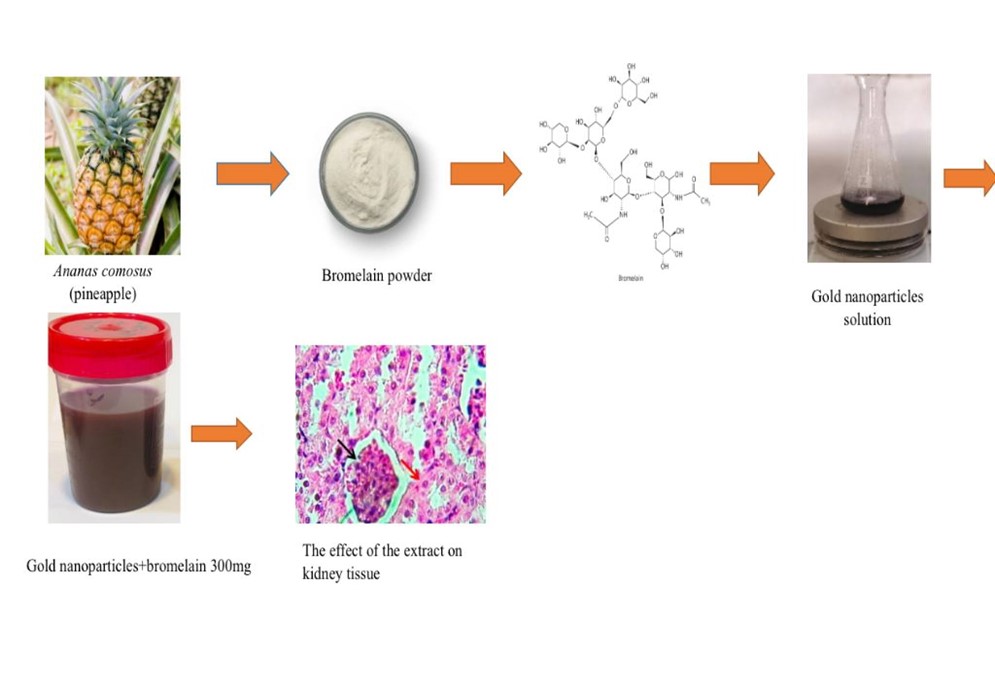
Downloads
Published
How to Cite
Issue
Section
License
Copyright (c) 2024 Walailak University

This work is licensed under a Creative Commons Attribution-NonCommercial-NoDerivatives 4.0 International License.





