
Phytochemical Screening, Antioxidant, Cytotoxic, Analgesic, Antidiarrheal Activity and GC-MS Analysis of the Leaves of Stachyphrynium Placentarium
DOI:
https://doi.org/10.48048/tis.2024.8073Keywords:
Stachyphrynium placentarium, Antioxidant, Cytotoxicity, Analgesic, Anti-diarrheal, GC-MSAbstract
The goal of the present study is to analyze the phytochemicals, antioxidants, cytotoxic, analgesic and anti-diarrheal properties of the leaves of Stachyphrynium placentarium methanol extract as well as its dichloromethane soluble fraction using GC-MS technique. The leaves of the S. placentarium were extracted with methanol and designated as SPM. Phytochemicals investigation exhibited the presence of several important secondary metabolites. Antioxidants such as total phenolic content, flavonoids content, total antioxidant, reducing power capacity and DPPH (2,2-diphenyl-1-picrylhydrazyl) free radical scavenging assay SPM revealed non-significant antioxidant properties. The cytotoxicity study of the extract showed significant cytotoxicity (LC50 35.1093 µg/mL) compared to standard vincristine sulfate (LC50 0.482 µg/mL). Analgesic study of S. placentarium by hot plate model indicates both the doses exhibited significant central analgesic activity compared with the control. The maximum analgesic activity was observed at 90 min. SPM (500 mg/kg) is 60.21 %. SPM250 also showed a significant percentage of elongation or latency from 30 to 150 min 57.00, 59.64, 59.88, 58.07 and 53.71 %, respectively 30 min time interval. In the acetic acid writhing test, S. placentarium significantly outperformed the control and standard (SPM250 - 52.27 %, SPM500 - 34.09 and STD - 27.27 %), showing a significant increase in peripheral analgesic activity (p < 0.001). Antidiarrheal activity of SPM showed that SPM250 and SPM500 substantially decreased the feces in castor oil-induced diarrhea (p < 0.05). According to the study, the incidence and severity of diarrhea are significantly reduced by SPM500. Four chemicals are found in the dichloromethane-soluble portion of the methanol extract of S. placentarium leaves, according to GC-MS studies such as Octadecane, 6-methyl- (1.326 %), Dodecane (1.02 %), 1-Iodo-2-methylundecane (0.47 %), tetradecanoic acid 12-methyl, methyl ester (72.64 %). Tetradecanoic acid exhibits anti-inflammatory, anticancer, 5-reductase inhibitory, antioxidant, hemolytic and antifibrinolytic properties.
HIGHLIGHTS
The phytochemicals, antioxidants, cytotoxic, analgesic and anti-diarrheal properties of Stachyphrynium placentarium methanol extract (SPM) leaves. The dichloromethane soluble fraction is examined using Gas chromatography–mass spectrometry (GC-MS) and identified Octadecane, 6-methyl-, Dodecane, 1-Iodo-2-methylundecane, tetradecanoic acid 12-methyl, methyl ester. The brine shrimp lethality test exhibited that SPM has significant cytotoxicity (LC50 35.1093 µg/mL) compared to vincristine sulphate (LC50 0.482µg/mL), the extract showed significant cytotoxicity (LC50 35.1093 µg/mL). S. placentarium at both dosages (250 and 500 mg) provided significant central analgesia compared to the control in a hot plate model. In the acetic acid writhing test, S. placentarium showed significantly higher peripheral analgesic action (SPM250 - 52.27, SPM500 - 34.09 and STD - 27.27 %) compared to control and standard. In castor oil-induced diarrhoea, SPM250 and SPM500 (250 and 500 mg) showed significantly reduced faeces production (p < 0.05).
GRAPHICAL ABSTRACT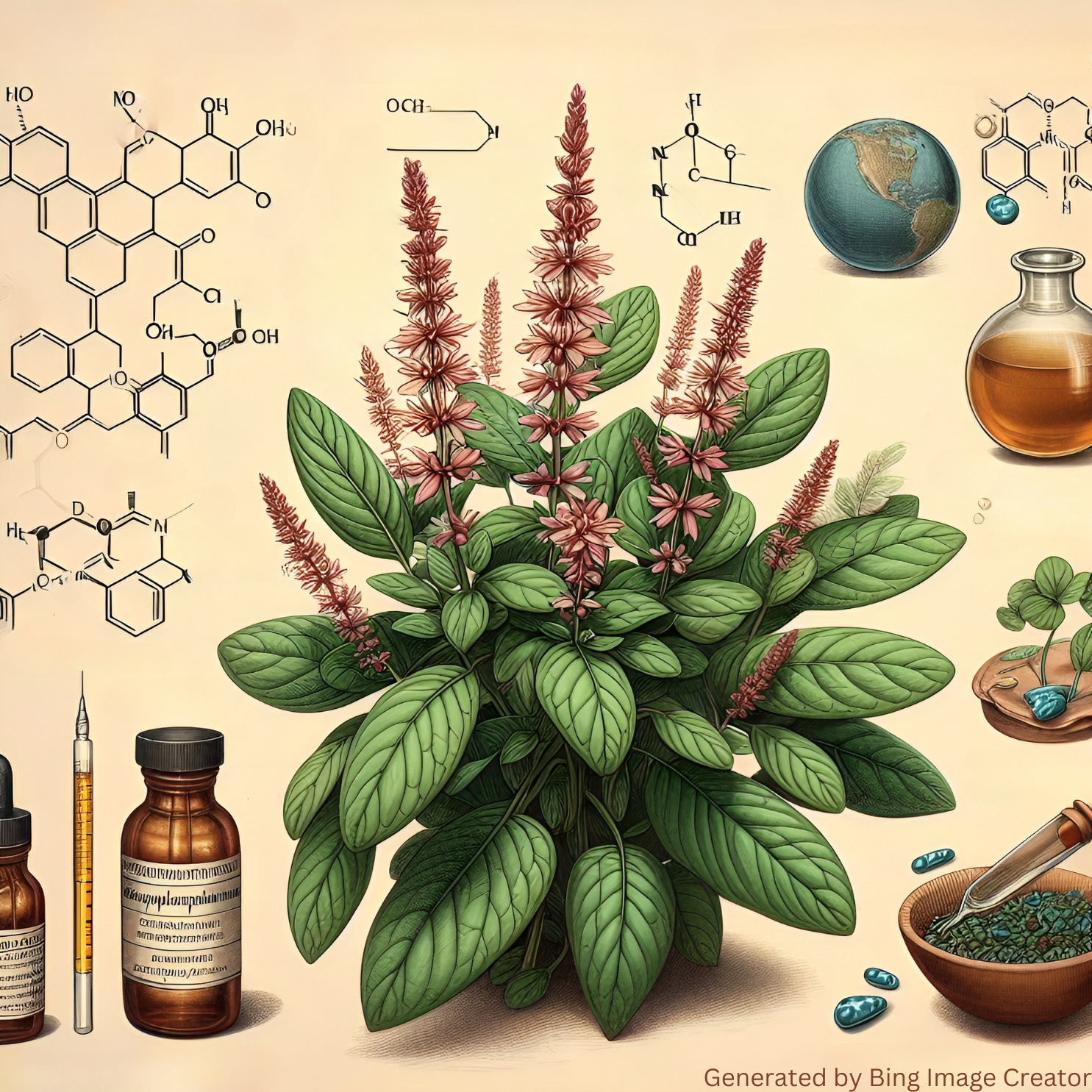
Downloads
References
A Gurib-Fakim. Medicinal plants: Traditions of yesterday and drugs of tomorrow. Mol. Aspects Med. 2006; 27, 1-93.
ASV Wyk and G Prinsloo. Health, safety and quality concerns of plant-based traditional medicines and herbal remedies. S. Afr. J. Bot. 2020; 133, 54-62.
MW Iwu, AR Duncan and CO Okunji. New antimicrobials of plant origin. ASHS Press, Alexandria, Virginia, 1999.
H Westh, CS Zinn and VT Rosdahl. An international multicenter study of antimicrobial consumption and resistance in Staphylococcus aureus isolates from 15 hospitals in 14 countries. Microb. Drug Resist. 2004; 10, 169-76.
B Aryal, BK Raut, S Bhattarai, S Bhandari, P Tandan, K Gyawali, K Sharma, D Ranabhat, R Thapa, D Aryal, A Ojha, HP Devkota and N Parajuli. Potential therapeutic applications of plant-derived alkaloids against inflammatory and neurodegenerative diseases. Evid. Based Complement. Alternat. Med. 2022; 2022, 7299778.
JT Ramsey, BC Shropshire, TR Nagy, KD Chambers, Y Li and KS Korach. Focus: Plant-based medicine and pharmacology: Essential oils and health. Yale J. Biol. Med. 2020; 93, 291.
A Ullah, S Munir, SL Badshah, N Khan, L Ghani, BG Poulson, AH Emwas and M Jaremko. Important flavonoids and their role as a therapeutic agent. Molecules 2020; 25, 5243.
M Fraga-Corral, P Otero, L Cassani, J Echave, P Garcia-Oliveira, M Carpena, F Chamorro, C Lourenço-Lopes, MA Prieto and J Simal-Gandara. Traditional applications of tannin rich extracts supported by scientific data: Chemical composition, bioavailability and bioaccessibility. Foods 2021; 10, 251.
D Cox-Georgian, N Ramadoss, C Dona and C Basu. Therapeutic and medicinal uses of terpenes. In: N Joshee, SA Dhekney and P Parajuli (Eds.). Medicinal plants: From farm to pharmacy. Springer Nature, Charm, Switzerland, 2019.
MF Balandrin. Commercial utilization of plant-derived saponins: An overview of medicinal, pharmaceutical, and industrial applications. Saponins used in traditional and modern medicine. Plenum Press, New York, 1996, p. 1-14.
W Sun and MH Shahrajabian. Therapeutic potential of phenolic compounds in medicinal plants-natural health products for human health. Molecules 2023; 28, 1845.
KKS Bhat. Medicinal and plant information databases. In: G Bodeker and P Vantomne (Eds.). Medicinal plants for forests: Conservation and Health Care. Non-Wood Forest Products, Rome, Italy, 1997.
WC Evans. Trease and Evans’ pharmacognosy. Elsevier, London, 2009.
JO Igoli, OG Ogaji, TA Tor-Ayiin and NP Igoli. Traditional medicine practice amongst the Igede people of Nigeria. Part II. Afr. J. Tradit. Complement. Alternat. Med. 2005; 2, 134-52.
B Joshi, GP Sah, BB Basnet, MR Bhatt, D Sharma, K Subedi, P Janardhan and R Malla. Phytochemical extraction and antimicrobial properties of different medicinal plants: Ocimum sanctum (Tulsi), Eugenia caryophyllata (Clove), Achyranthes bidentata (Datiwan) and Azadirachta indica (Neem). J. Microbiol. Antimicrob. 2011; 3, 1-7.
N Jalli, KVS Sri, S Hnamte, S Pattnaik, P Paramanantham and B Siddhardha. Antioxidant, anti-quorum sensing and anti-biofilm potential of ethanolic leaf extract of Phrynium capitatum and Dryptes indica. Asian. Pac. J. Trop. Biomed. 2019; 9, 323-32.
UC De, J Bhowmik, S Chowdhury, A Basak and B Dinda. Isolation and characterization of a new flavonoid glucoside from aerial parts of phrynium placentarium. Chem. Nat. Compd. 2015; 51, 444-7.
H Norsyamimi, M Masturah, A Nurina and NB Syarul. Solvent selection in extraction of essential oil and bioactive compounds from Polygonum minus. J. App. Sci. 2014; 14, 1440-4.
A Borges, H José, V Homem and M Simões. Comparison of techniques and solvents on the antimicrobial and antioxidant potential of extracts from acacia dealbata and olea europaea. Antibiotics 2020; 9, 48.
JK Nandi, S Sultana, KMH Rahman, S Rahman, MM Rahman and M Rahmatullah. Oral glucose tolerance, phytochemical screening, acute toxicity and analgesic activity evaluation of leaves of Phrynium capitatum. World J. Pharmaceut. Res. 2014; 3, 35-44.
MSH Kabir, MAM Dinar, MM Hossain, MAA Noman, FZ Lubna, MR Hossain, A Hasanat, R Dash, MM Rahman and SMZ Hosen. Effects of ethanol extract and its different fractions of Phrynium imbricatum (Roxb.) leaves on in vitro anthelmintic and their condensed tannin content. Pharmaceut. Anal. Chem. Open Access. 2015; 1, 109.
H Wagner and S Bladt. Plant drug analysis: A thin layer chromatography atlas. Springer, Brooklyn, New York, 1996.
S Ramakrishnan. Textbook of medical biochemistry. Orient Blackswan, Telangana, India, 2004.
CK Kokate. Practical pharmacognosy. 4th eds. Vallabh Prakashan, New Delhi, India, 1999, p. 107-11.
WC Evans. Trease and Evans’ pharmacognosy. Elsevier, London, 2009.
K Das, PP Kalita, MP Sarma, N Talukdar and P Kakoti. Extraction, estimation and comparison of proteins and carbohydrates from different parts of Costus speciosus and a brief study on its phytochemicals content. Int. J. of Bas. App. Bio. 2014; 2, 81-5.
P Garg and R Garg. Phytochemical screening and quantitative estimation of total flavonoids of Ocimum sanctum in different solvent extract. Pharma Innovation J. 2019; 8, 16-21.
MS Uddin, S Ferdosh, MJH Akanda, K Ghafoor, AH Rukshana, ME Ali, K Yunus, MB Fauzi, S Hadijah, SM Shaarani and MZI Sarker. Techniques for the extraction of phytosterols and their benefits in human health: A review. Sep. Sci. Tech. 2018; 53, 2206-23.
A Khoddami, MA Wilkes and TH Roberts. Techniques for analysis of plant phenolic compounds. Molecules 2013; 18, 2328-75.
N Harbourne, E Marete, JC Jacquier and D O’Riordan. Effect of drying methods on the phenolic constituents of meadowsweet (Filipendula ulmaria) and willow (Salix alba). LWT Food. Sci. Tech. 2009; 42, 1468-73.
CC Chang, MH Yang, HM Wen and JC Chern. Estimation of total flavonoid content in propolis by two complementary colorimetric methods. J. Food Drug Anal. 2002; 10, 178-82.
A Braca, N De Tommasi, L Di Bari, C Pizza, M Politi and I Morelli. Antioxidant principles from Bauhinia tarapotensis. J. Nat. Prod. 2001; 64, 892-95.
P Prieto, M Pineda and M Aguilar. Spectrophotometric quantitation of antioxidant capacity through the formation of a phosphomolybdenum complex: Specific application to the determination of vitamin E. Anal. Biochem. 1999; 269, 337-41.
M Oyaizu. Studies on products of browning reaction antioxidative activities of products of browning reaction prepared from glucosamine. Jpn. J. Nutr. Diet. 1986; 44, 307-15.
BN Meyer, NR Ferrigni, JE Putnam, LB Jacobsen, DE Nichols and JL McLaughlin. Brine shrimp: A convenient general bioassay for active plant constituents. Planta Med. 1982; 45, 31-4.
JM Worlein. Guide for the care and use of laboratory animals. The National Academies Press, Washington DC, 2011.
D Lorke. A new approach to practical acute toxicity testing. Arch. Toxicol. 1983; 54, 275-87.
AG Neto, JMLC Costa, CC Belati, AHC Vinhólis, LS Possebom, AADS Filho, WR Cunha, JCT Carvalho, JK Bastos and MLAE Silva. Analgesic and anti-inflammatory activity of a crude root extract of Pfaffia glomerata (Spreng) Pedersen. J. Ethnopharmacol. 2005; 96, 87-91.
SK Raju, B Rajkapoor, P Perumal, T Dhanasekaran, MA Jose and C Jothimanivannan. Anti-inflammatory and analgesic activities of ethanol extract of Indigofera trita Linn. Pharmacologyonline 2009; 1, 278-89.
SB Uddin, M Mahabub-Uz-Zaman, R Akter and NU Ahmed. Antidiarrheal activity of ethanolic bark extract of Mitragyna diversifolia. Bangladesh J. Pharmacol. 2009; 4, 144-6.
MZ Imam, S Sultana and S Akter. Antinociceptive, antidiarrheal, and neuropharmacological activities of Barringtonia acutangula. Pharmaceut. Biol. 2012; 50, 1078-84.
NS Afrin, MA Hossain and K Saha. Phytochemical screening of plant extracts and GC-MS analysis of n-Hexane soluble part of crude chloroform extract of Cuscuta reflexa (Roxb.). J. Pharmacogn. Phytochem. 2019; 8, 560-4.
MA Al-Mansur, M Siddiqi, MA Akbor and K Saha. Phytochemical screening and GC-MS chemical profiling of ethyl acetate extract of seed and stem of Anethum sowa Linn. Dhaka Univ. J. Pharmaceut. Sci. 2017; 16, 187-94.
J Javanmardi, C Stushnoff, E Locke and JM Vivanco. Antioxidant activity and total phenolic content of Iranian Ocimum accessions. Food Chem. 2003; 83, 547-50.
MF Nazarudin, ISM Yasin, NAIN Mazli, AR Saadi, MHS Azizee, MA Nooraini, N Saad, UT Ferdous and IM Fakhrulddin. Preliminary screening of antioxidant and cytotoxic potential of green seaweed, Halimeda opuntia (Linnaeus) Lamouroux. Saudi J. Biol. Sci. 2022; 29, 2698-705.
EL Ghisalberti. Detection and isolation of bioactive natural products. In: SM Colegate and RJ Molyneux (Eds.). Bioactive natural products. CRC Press, Florida, 2008, p. 25-90.
G Zhao, Y Hui, JK Rupprecht, JL McLaughlin and KV Wood. Additional bioactive compounds and trilobacin, a novel highly cytotoxic acetogenin, from the bark of Asimina triloba. J. Nat. Prod. 1992; 55, 347-56.
S Achiraman, G Archunan, P Ponmanickam, K Rameshkumar, S Kannan and G John. 1-Iodo-2 methylundecane [1I2MU]: An estrogen-dependent urinary sex pheromone of female mice. Theriogenology 2010; 74, 345-53.
M Amudha and S Rani. Molecular docking on the phytoconstituents of Cordia retusa (Vahl) Masam for its anti-infertility activity. World J. Pharmaceut. Res. 2014; 2, 1592-990.
G Venkatesan and NC Sarada. GC-MS analysis of bioactive compounds from bark and leaf of Boswellia ovalifoliolata. Asian J. Chem. 2018; 30, 15-9.
Downloads
Published
How to Cite
Issue
Section
License
Copyright (c) 2024 Walailak University

This work is licensed under a Creative Commons Attribution-NonCommercial-NoDerivatives 4.0 International License.





