
Mathematical Modeling of LDL-C and Blood Flow through an Inclined Channel with Heat in the Presence of Magnetic Field
DOI:
https://doi.org/10.48048/tis.2022.5693Keywords:
Blood, LDL-C, Heat, Magnetic Field, Atherosclerosis, Treatment, Metabolism, Hypertension, Cardiovascular systemAbstract
This investigation revealed that LDL-C and blood flow through an inclined channel with heat in the presence of magnetic field. In this study,mathematical models were formulated for LDL-C and blood flow and energy transfer as a coupled system of partial differential equations (PDEs), the PDEs were scaled using the dimensionless quantities to dimensionless partial differential equations, they are further reduced to an ordinary differential equations (ODEs) using the perturbation method involving the oscillatory term, the governing equations are solved directly using the method of undetermined coefficient. The velocity and temperature functions are obtained with some governing parameters involved, and simulation codes were developed using Mathematica to study the effect of entering parameters on the profiles, and are found to be effective in controlling the flow profiles. It is observed that the governing parameters influenced the flow profiles; also the angle of inclination also influences the flow profile.
HIGHLIGHTS
- Heart attack occurs when blood flow decreases or blood stopped from entering the heart, thereby causing damage to the heart muscle
- Atherosclerosis is an inflammatory disease resulting in the pathological alteration of the intima and media of arteries such as e.g. the aorta
- Use mathematical models to investigate the pulsating flow of blood in an atherosclerotic artery in an inclined fashion
- Carrying out numerical simulation using Mathematica to investigate the impact of the model parameters on the velocity and temperature distribution of the blood. The analysis is relevant in the sense that it helps determine how best clinicians can administer treatment and care
GRAPHICAL ABSTRACT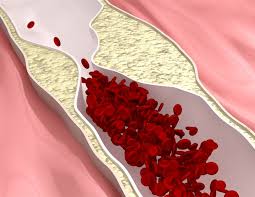
Downloads
References
KW Bunonyo and E Amos. Lipid concentration effect on blood flow through an inclined arterial channel with magnetic field. Math. Model. Appl. 2020; 5, 129-37.
CJ Cooper, TP Murphy, DE Cutlip, K Jamerson, W Henrich, DM Reid, DJ Cohen, AH Matsumoto, M Steffes, MR Jaff, MR Prince, EF Lewis, KR Tuttle, JI Shapiro, JH Rundback, JM Massaro, SRB D'Agostino and LD Dworkin. Stenting and medical therapy for atherosclerotic renal-artery stenosis. N. Engl. J.Med. 2014; 370, 13-22.
WJ Jean, I Al‐Bitar, DL Zwicke, SC Port, DH Schmidt and TK Bajwa. High incidence of renal artery stenosis in patients with coronary artery disease. Cath.Cardiovasc.Diagn. 1994; 32, 8-10.
KS Mekheimer and MAE Kot. The micropolar fluid model for blood flow through a tapered artery with a stenosis. Acta Mech. Sin. 2008; 24, 637-44.
S Kamangar, G Kalimuthu, IA Badruddin, A Badarudin, NJS Ahmed and TMY Khan. Numerical investigation of the effect of stenosis geometry on the coronary diagnostic parameters. Sci. World J. 2014; 2014, 354946.
B Tripathi and BK Sharma. Influence of heat and mass transfer on MHD two-phase blood flow with radiation. AIP Conf. Proc. 2018; 1975, 030009.
MM Bhatti and A Zeeshan. Study of variable magnetic field and endoscope on peristaltic blood flow of particle-fluid suspension through an annulus. Biomed. Eng. Lett. 2016; 6, 242-9.
K Buckenmaier, A Pedersen, P SanGiorgio, K Scheffler, J Clarke and B Inglis. Feasibility of functional MRI at ultralow magnetic field via changes in cerebral blood volume. Neuroimage 2019; 186, 185-91.
JC Misra, A Sinha and GC Shit. A numerical model for the magnetohydrodynamic flow of blood in a porous channel. J. Mech. Med. Biol. 2011; 11, 547-62.
MM Bhatti, A Zeeshan, R Ellahi and N Ijaz. Heat and mass transfer of two-phase flow with Electric double layer effects induced due to peristaltic propulsion in the presence of transverse magnetic field. J. Mol. Liq. 2017; 230, 237-46.
R Ponalagusamy and RT Selvi. Blood flow in stenosed arteries with radially variable viscosity, peripheral plasma layer thickness and magnetic field. Meccanica 2013; 48, 2427-38.
T Hayat, S Ayub, A Tanveer and A Alsaedi. Slip and Joule heating effects on peristaltic transport in an inclined channel. J. Thermal Sci. Eng. Appl. 2018; 10, 031004.
BK Sharma, A Mishra and S Gupta. Heat and mass transfer in magneto-biofluid flow through a non-Darcian porous medium with Joule effect. J. Eng. Phys. Thermophys. 2013; 86, 766-74.
M Sheikholeslami and SA Shehzad. Simulation of water based nanofluid convective flow inside a porous enclosure via non-equilibrium model. Int. J. Heat Mass Transf. 2018; 120, 1200-12.
KW Bunonyo, C Israel-Cookey and E Amos. Modeling of blood flow through stenosed artery with heat in the presence of magnetic field. Asian Res. J. Math. 2018; 8, 37767.
OD Makinde. MHD mixed-convection interaction with thermal radiation and nth order chemical reaction past a vertical porous plate embedded in a porous medium. Chem. Eng.Commun. 2010; 198, 590-608.
B Tripathi andBK Sharma. Influence of heat and mass transfer on two-phase blood flow with joule heating and variable viscosity in the presence of variable magnetic field. Int. J. Comput. Meth. 2020; 17, 1850139.
KW Bunonyo and E Amos. Impact of treatment parameter on blood flow in an atherosclerotic artery. Am. J. Theor. Appl. Stat. 2020; 9, 74-9.
C Midya, GC Layek, AS Gupta and TR Mahapatra. Magnetohydrodynamic viscous flow separation in a channel with constrictions. J. Fluids Eng. 2003; 125, 952-62.
KW Bunonyo and IC Eli. Mathematical modeling of an oscillatory MHD blood flow through a lipid saturated porous channel with metabolic heat and magnetic field. Commun. Phys. Sci. 2020; 6, 783-92.
Downloads
Published
How to Cite
Issue
Section
License

This work is licensed under a Creative Commons Attribution-NonCommercial-NoDerivatives 4.0 International License.





