
Formulation Development and Evaluation of Once Daily Fexofenadine Hydrochloride Microsponge Tablets
DOI:
https://doi.org/10.48048/tis.2023.4271Keywords:
Microsponge technology, BCS class-III drug, Eudragit EPO, Once daily, Quality by design, Central composite design, Response surface methodAbstract
The objective of present study was to formulate and develop once daily Fexofenadine Hydrochloride tablets to improve the aqueous solubility by microsponge technology. Fexofenadine Hydrochloride is an antihistamine and belongs to BCS class-III with low permeability and poor bioavailability about 30 - 35 %. The microsponges were prepared by Quashi emulsion solvent diffusion method with Quality by design approach. The study of effect of independent variables Eudragit EPO (500 to 1,000 mg), internal phase volume (DM: ETH) (5 to 10 mL) and RPM (500 to 1,000) on responses were analyzed to optimize the formulation with desirable results by using central composite design and response surface method. Optimized formulation F22 showed percent production yield (99.10 %), percent drug entrapment (99.45 %), particle size (94.12 µm) and percent drug release of prepared tablets at 5, 10, 15 and 30 min were 60.6, 80.75, 87.47 and 92.85 %, respectively. It showed Higuchi mechanism of release kinetics by diffusion. In vivo pharmacokinetics of the prepared tablets was studied in rabbits (IAEC/NRML/2022–2023/09) with and without permeation enhancer to find the rate of absorption. when compared to Marketed product -Allegra 24 (F21) with (t1/2 absorption) 0.192711±0.00278 h and MRT 19.10608±0.257571 h and formulation without poloxamer 407 (F22) (t1/2 absorption) 0.165013±0.024164 h and MRT 19.32228±0.764531 h, maximum absorption was observed for the Formulation F23 with poloxamer 407 (15 %) with (t1/2 absorption) of 0.144662±0.006787 h and Mean residence time (MRT) of 24.10796±1.01232 h. Microsponge technique improved the aqueous solubility of the fexofenadine Hydrochloride and Eudragit EPO extended the mean residence time up to 24 h along with improved permeability in presence of Poloxamer 407 to full fill the needs of BCS class-III drug.
HIGHLIGHTS
- Fexofenadine Hydrochloride has poor aqueous solubility and low passive permeability
- P-Glycoprotein efflux induced intestinal secretion is the reason for the incomplete absorption (35 %) following oral absorption
- There is a need to increase bioavailability and maintenance of steady state plasma concentration
- Microsponge drug delivery systems improvise the solubility of drug due to its porous nature
- Microsponge drug delivery system can fulfill the requirements by increasing the permeability and modifying the drug release from dosage form
GRAPHICAL ABSTRACT 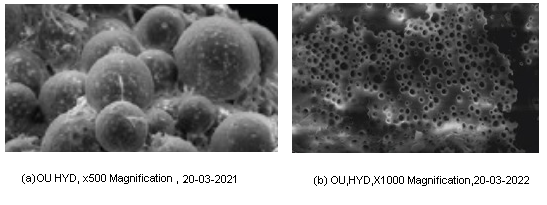
Downloads
References
S Kaity, S Maiti, AK Ghosh, DK Pal, A Ghosh and S Banerjee. Microsponges: A novel strategy for drug delivery system. J. Adv. Pharm. Technol. Res. 2010; 1, 28390.
PS Rawat, A Dhyani, V Singh and D Juyal. A brief review of microsponges: An update. J. Pharm. Innov. 2017; 6, 134-9.
R Srivastava and K Pathak. Microsponges: A futuristic approach for oral drug delivery. Expert Opin. Drug Deliv. 2012; 9, 863-78.
D Axelrod and L Bielory. Fexofenadine hydrochloride in the treatment of allergic disease: A review. J. Asthma Allergy 2008; 19, 19-29.
KV Godse, NJ Nadkarni, G Jani and S Ghate. Fexofenadine in higher doses in chronic spontaneous urticaria. Indian Dermatol. Online J. 2010; 1, 45-6.
S Sachdeva, V Gupta, SS Amin and M Tahseen. Chronic urticaria. Indian J. Dermatol. 2011; 56, 622- 8.
J Malakar, AK Nayak and S Goswami. Use of response surface methodology in the formulation and optimization of bisoprolol fumarate matrix tablets for sustained drug release. ISRN Pharm. 2012; 2012, 730624.
S Dey, HB Samal, SA Srinivas, GS Reddy, P Mounika, R Gujrati, S Preetika, K Choudhary and P Prashanth. RP-HPLC method for the estimation of fexofenadine in bulk and in dosage forms. J. Pharm. Res. 2011; 4, 7.
S Shah, S Madan and S Agrawal. Formulation and evaluation of microsphere based Oro dispersible tablets of itopride hydrochloride. Daru 2012; 20, 24.
AR Pawar, NA Shete, PV Jadhav, VK Deshmukh and JS Mehetre. Enhancement of aqueous solubility, dissolution profile, and oral bioavailability of pentoxifylline by microsponges. Pharmaceut. Fronts 2021; 3, e200-e207.
LX Yu, G Amidon, MA Khan, SW Hoag, J Polli, GK Raju and J Woodcock. Understanding pharmaceutical quality by design. AAPS J. 2014; 16, 771-83.
L Kumar, MS Alam, CL Meena, R Jain and AK Bansal. Chapter 4 fexofenadine hydrochloride. Profiles Drug Subst. Excip. Relat. Methodol. 2009; 34, 153-92.
J Mohammed, S Mohammed, MSA Khan, Y Alshehary, NR Alrwaili, YA Alzahrani, SI Syed and S Alsheri. Preparation and In vitro-In vivo evaluation of lutiolin loaded gastroretentive microsponge for the eradication of helicobacter pylori infections. Pharmaceutics. 2021; 13, 2094.
M Preis, L Grother, P Axe, J Breitkreutz, J Breitkreutz. In-vitro and in-vivo evaluation of taste-masked cetirizine hydrochloride formulated in oral lyophilisates. Int. J. Pharm. 2015; 491, 8-16.
S Nagadani, V Maravajhala. Formulation, In vitro and In vivo evaluation of taste-masked oral disintegrating tablets of fexofenadine hydrochloride using semi synthetic and natural superdisintegrants. Int. J. Appl. Pharm. 2021; 13, 99-108.
AM Nasr, MK Qushawy, MM Elkhoudary, AY Gawish, SS Elhady and SA Swidan. Quality by design for the development and analysis of enhanced In-Situ forming vesicles for the improvement of the bioavailability of fexofenadine hydrochloride In vitro and In vivo. Pharmaceutics 2020; 12, 409.
S Maher, DJ Brayden, L Casettari and L Illum. Application of permeation enhancers in oral delivery of macromolecules: An update. Pharmaceutics 2019; 11, 41.
SNA Alhammid. Enhancement of the solubility and the dissolution rate of candesartan cilexetil using microsponge technology. Asian J. Pharm. Clin. Res. 2018; 11, 385-90.
A Moin, TK Deb, RA Osmani, RR Bhosale and U Hani. Fabrication, characterization, and evaluation of microsponge delivery system for facilitated fungal therapy. J. Basic Clin. Pharm. 2016; 7, 39-48.
NA Rajab and MS Jawad. Formulation and In vitro evaluation of piroxicam microsponge as a tablet. Int. J. Pharm. Sci. 2016; 8, 104-14.
D Patel, DH Patel, D Gohil, H Sheth, S Patel, K Pandya and CH Shah. Formulation and evaluation of floating microsponges of allopurinol. Pharma Sci. Monit. 2016; 7, 135-54.
W Chen, A Palazzo, WE Hennink and RJ kok. Effect of particle size on drug loading and release kinetics of gefitinib-loaded PLGA microspheres. Mol. Pharm. 2017; 14, 459-67.
R Srivastava, D Kumar and K Pathak. Colonic luminal surface retention of meloxicam microsponges delivered by erosion based colon-targeted matrix tablet. Int. J. Pharm. 2012; 427, 153-62.
M Desavathu, R Pathuri and M Chunduru. Design, development and characterization of valsartan microsponges by quasi emulsion technique and the impact of stirring rate on microsponge formation. J. Appl. Pharm. Sci. 2017, 7, 193-8.
MDM Rahman, S Roy, S Hasan, MDA Alam, MK Jha, MDQ Ahsan and MDJ Ferdaus. Effect of mode of addition of disintegrants on dissolution of model drug from wet granulation tablets. Int. J. Pharm. Sci. Res. 2011; 2, 84-92.
SK Swamy, G Arun, S Bethi and AB Goud. Effect of various super disintegrants on the drug release profile of orally disintegrating tablets. Asian J. Pharm. Tech. 2016; 6, 99-105.
HP Patel, P Karwa, B Rama and Patel NJ. Formulation and evaluation of immediate release tablets of zolpidem tartrate by direct compression. Int. J. Pharm. Sci. Rev. Res. 2011; 7, 80-6.
P Arefin, I Hasan and MS Reza. Design, characterization and In vitro evaluation of HPMC K100 M CR loaded fexofenadine hydrochloride microspheres. Springerplus 2016; 5, 691.
BB Eedara, D Nyavanandi, S Narala, PR Veerareddy and S Bandari. Improved dissolution rate and intestinal absorption of fexofenadine hydrochloride by the preparation of solid dispersions: In vitro and In Situ evaluation. Pharmaceutics 2021; 13, 310.

Downloads
Published
How to Cite
Issue
Section
License
Copyright (c) 2022 Walailak University

This work is licensed under a Creative Commons Attribution-NonCommercial-NoDerivatives 4.0 International License.





