
Comparison Study of Time Domain Reflectometry (TDR) Measurement Methods for Detecting Wire Interconnect Related Open-Contact and Short-Contact Failures in Power Semiconductor
DOI:
https://doi.org/10.48048/tis.2022.4207Keywords:
Time domain reflectometry, TDR, Open-contact, Short-contact, Measurement methodAbstract
Open-contact and short-contact are 2 common failures that causing power semiconductor to have electrical malfunctioned. One of the reasons of these failures relate to defective in the wire interconnect. Time domain reflectometry (TDR) is a common method widely used to detect failures in semiconductor devices. This study focused on comparing 3 different TDR measurement methods in detecting wire related open and short failure for power semiconductor, namely Single-Ended method, Single-Pin Grounded method and All-Pin Grounded method. A special custom-made jig is used during the measurements to ensure all the methods are measured under the same conditions. This study shows that all the 3 TDR measurement methods are able to detect wire related open and short failures in power semiconductor. The Single-Pin grounded method is the preferred method because it is easy in term of setup and having the good capability in detecting both open and short failures. Furthermore, the study also shows that the TDR is able to detect the location of open and short failures that is not able to achieve by using the conventional electrical testing method.
HIGHLIGHTS
- Comparison study on Single-Ended, Single-Pin Grounded and All-Pin Grounded TDR measurement methods in detecting open-contact and short-contact failure in power semiconductor
- The study shows Single-Pin Grounded TDR measurement method is the preferred method since it is easy in term of setup and able to detect both the open-contact and short-contact failures
- TDR measurement method is also able to locate the location of open-contact and short-contact failures
GRAPHICAL ABSTRACT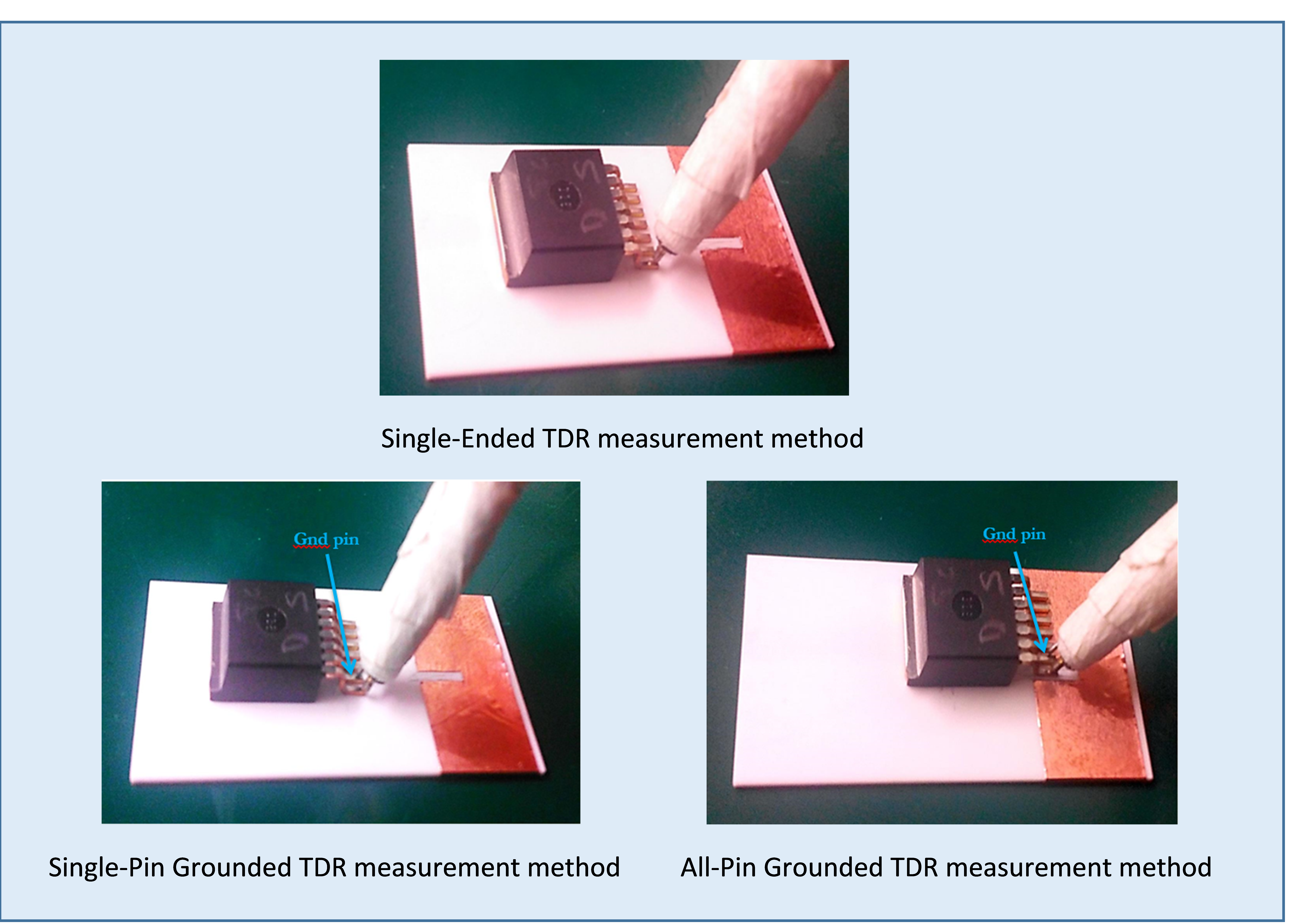
Downloads
References
JG Kassakian and TM Jahns. Evolving and emerging applications of power electronics in systems. IEEE J. Emerg. Sel. Top. Power Electron. 2013; 1, 47-58.
BK Bose. Power electronics and motor drives: Advances and trends. Academic Press, Cambridge, 2010.
M Mataray. Modern power semiconductor devices (a review). Int. J. Comput. Sci. Inf. Technol. 2012; 3, 4571-4.
M Rahimo. Future trends in high-power bipolar metal-oxide semi-conductor controlled power semi-conductors. IET Circuits Devices Syst. 2014; 8, 155-67.
V Benda. Power semiconductors - state of art and future. AIP Conf. Proc. 2011; 1337, 16-24.
G Harman. Wire bonding in microelectronics. McGraw-Hill, New York, 2010.
BK Appelt, A Tseng, CH Chen and YS Lai. Fine pitch copper wire bonding in high volume production. Microelectron. Reliab. 2011; 51, 13-20.
P Liu, L Tong, J Wang, L Shi and H Tang. Challenges and developments of copper wire bonding technology. Microelectron. Reliab. 2012; 52, 1092-8.
ZW Zhong. Fine and ultra-fine pitch wire bonding: Challenges and solutions. Microelectron. Int. 2009; 26, 10-8.
W Shualdi, WMSW Suliman, A Isnin and NA Mohamad. Constructional analysis for QFN stacked die failure identification. Solid State Sci. Technol. 2008; 16, 92-8.
HK Kung, HS Chen, JM Jou and HC Hsu. The experimental measurement of wire sag of long wire bonds for 3-dimentiona and multi-chip module packaging. In: Proceedings of the 4th International Microsystems, Packaging, Assembly and Circuits Technology Conference, Taipei, Taiwan. 2009, p. 274-7.
M Mirgkizoudi, C Liu, PP Conway and S Riches. Mechanical and electrical characterisation of Au wire interconnects in electronic packages under the combined vibration and thermal testing conditions. Microelectron. Reliab. 2015; 55, 952-60.
T Srisawat and P Chutima. Final electrical test process enhancement for integrated circuits. In: Proceedings of the IEEE 6th International Conference on Industrial Engineering and Applications, Tokyo, Japan. 2019, p. 17-21.
ER Hnatek. Integrated circuit quality and reliability. CRC Press, Florida, 2018.
M Bushnell and V Agrawal. Essentials of electronic testing for digital, memory and mixed-signal VLSI circuits. Springer Science & Business Media, Berlin, Heidelberg, Germany, 2006.
L Cao, HB Chong, JM Chin and RN Master. Non-destructive analysis on flip chip package with TDR (time domain reflectometry) and SQUID (superconducting quantum interference device). In: Proceedings of the 4th Electronics Packaging Technology Conference, 2002, Singapore. 2002, p. 50-5.
D Smolyansky. Electronic package fault isolation using TDR. In: Microelectronic failure analysis desk reference. 5th eds. ASM International, Ohio, 2004, p. 289-302.
JM Chin, V Narang, X Zhao, MY Tay, A Phoa, V Ravikumar, LH Ei, SH Lim, CW Teo, S Zulkifli, MC Ong and MC Tan. Fault isolation in semiconductor product, process, physical and package failure analysis: Importance and overview. Microelectron. Reliab. 2011; 51, 1440-8.
L Cao, L Tran, AR Prabhu and MY Tay. Flip-chip package soft failure analysis and case studies using time domain reflectometry. In: Proceedings of the 17th IEEE International Symposium Physical and Failure Analysis of Integrated Circuits, Singapore. 2010, p. 1-4.
S Hashino and T Shimizu. Characterization of parasitic impedance in a power electronics circuit board using TDR. In: Proceedings of the International Power Electronics Conference, Sapporo, Japan. 2010, p. 900-5.
Z Ariga, K Wada and T Shimizu. TDR measurement method for voltage-dependent capacitance of power devices and components. IEEE Trans. Power Electron. 2012; 27, 3444-51.
D Kwon, MH Azarian and M Pecht. Nondestructive sensing of interconnect failure mechanisms using time-domain reflectometry. IEEE Sens. J. 2011; 11, 1236-41.
Q Li, W Fang, J Xiao, W Li, W Chen, H Qiu, J Cui and B Zhou. TDR measurement of a solder under temperature cycle test. In: Proceedings of the 11th International Conference on Reliability, Maintainability and Safety, Hangzhou, China. 2016, p. 1-4.
R Ong and KY Cheong. Non-destructive electrical test detection on copper wire micro-crack weld defect in semiconductor device. In: Proceedings of the 37th International Electronics Manufacturing Technology & 18th Electronics Materials and Packaging Conference, George Town, Malaysia. 2016, p. 1-6.
G Shirkoohi and K Hasan. Enhanced TDR technique for fault detection in electrical wires and cables. In: Proceedings of the 2nd International Symposium on NDT in Aerospace, Hamburg, Germany. 2010, p. 1-6.
KK Ng and CK Sin. Investigation of Time Domain Reflectometry (TDR) on Power Mosfet semiconductor device. In: proceedings of the 20th IEEE international Symposium on the Physical and Failure Analysis of Integrated Circuits, Suzhou, China. 2013, p. 107-11.
CC Tai and MK Chen. Nondestructive analysis of signal interconnection on thermally enhanced ball grid array. In: Proceedings of the 12th Asia-Pacific Conference on NDT, Auckland, New Zealand. 2006.
MK Chen, CC Tai and YJ Huang. Nondestructive analysis of interconnection in two-die BGA using TDR. IEEE Trans. Instrum. Meas. 2006; 55, 400-5.
Agilent Technologies. Time domain reflectometry theory. Agilent Technologies, California, 2006, p. 1304-2.
Time Domain Analysis (TDA) Systems. TDR Primer. TDA Systems, Oregon, 2002.
Tektronix. TDR impedance measurements: A foundation for signal integrity. Tektronix, Beaverton, Oregon, 2007.
Downloads
Published
How to Cite
Issue
Section
License

This work is licensed under a Creative Commons Attribution-NonCommercial-NoDerivatives 4.0 International License.





