
Optimizing Compressive Strength Properties of Binary Blended Cement Rice Husk Concrete for Road Pavement
DOI:
https://doi.org/10.48048/tis.2022.3972Keywords:
Pozzolanic reaction, Compressive strength, Microstructure, Strength activityAbstract
Different supplementary cementitious materials are often blended with cement to produce sustainable concrete. More often than not, the strength of blended concrete is compromised, if the constituent materials are not carefully selected. In this study, optimization of strength properties of blended cement-rice husk ash (RHA) was carried out to determine the best mix ratio that produced binary blended concrete of high strength. Different mix ratios of cement and RHA were studied at a water cement ratio of 0.4 to produce concrete specimens. RHA was produced by burning 700 ℃ for an hour and its chemical composition was determined using the X-Ray Fluoresce (XRF) technique. RHA produced was used to replace cement at replacement levels of 2.5, 5, 7.5, and 10 %, and was used as binder. The compressive strength of each concrete mix was determined at 7, 28, and 56 days. Approximately 250 concrete cubes were tested and the results were subjected to statistical analysis. The results showed that compressive strength and internal structure varied with RHA as a replacement for cement. Optimal strength was achieved for a concrete mixture, prepared at a water: cement: aggregate ratio of 1:1.5:3, respectively, and a RHA replacement ratio of 5 %.
HIGHLIGHTS
- Cement is the most utilized construction material. The energy-intensive processes that are involved in its production contribute up to 10 % of total global CO2emissions, with potentially adverse environmental implications. It is however possible, that energy and cost efficiency can be achieved by reducing on the amount of clinker, and in its place utilising supplementary cementitious materials (SCMs) or pozzolans
- Currently, most sustainable concrete uses either GGBS (slag) or PFA (fly ash) to reduce the quantity of cement used in construction and highways applications. GGBS and PFA come from industries (steel and coal waste respectively) which are in decline that should not be relied upon in the long term. Therefore, for long term sustainability it is imperative to focus attention on other alternative pozzolans
- This report shows that cement in concrete can also be replaced with rice husk ash (RHA) which actually enhances the mechanical properties. Findings show the usage of up to 5 % rice husk ash as a partial cement replacement can enhance the strength of concrete whilst reducing the embodied CO2
GRAPHICAL ABSTRACT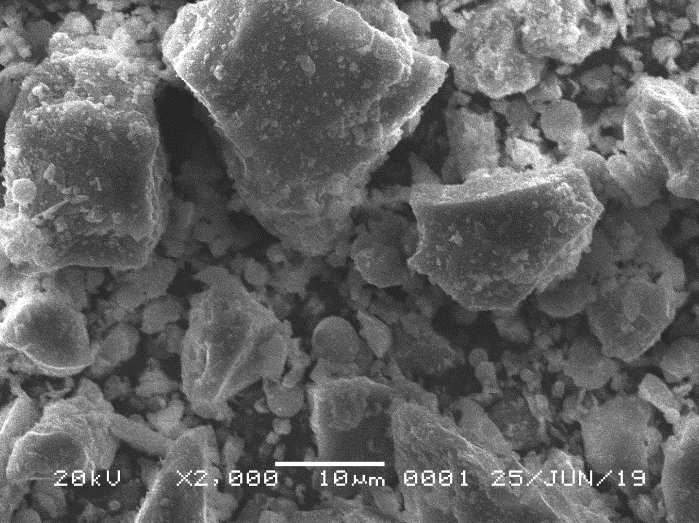
Downloads
References
P Shafigh, HB Mahmud, MZ Jumaat and M Zargar. Agricultural wastes as aggregate in concrete mixtures: A review. Construct. Build. Mater. 2014; 53, 110-7.
T Boden, G Marland and RJ Andres. Global, regional, and national fossil-fuel CO2 emissions, Available at: http://cdiac.ornl.gov/trends/emis/overview_ 2014.html, accessed June 2017.
R Khan, A Jabbar, I Ahmad, W Khan, AN Khan and J Mirza. Reduction in environmental problems using rice-husk ash in concrete. Construct. Build. Mater. 2012; 30, 360-5.
K Carstensen and O Rapf. A blueprint for a climate friendly cement industry. WWF, Nürnberg, Germany, 2008.
Cembureau. Cement and concrete: Key facts and figures. Cembureau, Brussels, Belgium, 2016.
P Edwards. The rise and potential peak of cement demand in the urbanized world. Available at: http://cornerstonemag.net/the-rise-andpotential-peak-of-cement-demand-in-the-urbanized-world/, accessed June 2016.
M Lequien, J Dare, TV Poortvliet and C Smith. Road infrastructure in Africa. Africa Energy Forum, London, 2016.
J Jonbi, A Tjahjani, N Tinumbia, AM Pattinaja and SB Haryono. Repair of rigid pavement using micro concrete material. MATEC Web Conf. 2018; 195, 01014.
Ecosmart. Environmental impact - cement production and the CO2 challenge, Available at: http://www.ecosmartconcrete.com/enviro_cement.cfm, accessed April 2016.
K Murumi and S Gupta. Experimental investigation on viable limit of fly ash utilization in concrete. Jordan J. Civ. Eng. 2019; 13, 235-49.
A Abed and S Eyada. The use of cement production waste to improve the properties of hot mix asphalt concrete. Jordan J. Civ. Eng. 2019; 13, 394-404.
H Mohammed and KA Olonade. Effect of cassava peel ash a partial replacement of for granite dust in asphaltic concrete. Nigeria J. Eng. 2018; 24, 16-22.
M Frías, E Villar-Cociña and E Valencia-Morales. Characterisation of sugar cane straw waste as pozzolanic material for construction: Calcining temperature and kinetic parameters. J. Waste Manag. 2007; 27, 533-8.
Food and agriculture organization, Available at: http://www.factfish.com/statistic/cassava%20 production%20quantity, accessed January 2017.
N Bhanumathidas and PK Mehta. Concrete mixtures made with ternary blended cements containing fly ash and rice-husk ash. Symp. Paper 2001; 199, 379-92.
AN Swaminathen and SR Ravi. Use of rice husk ash and metakaolin as pozzolans for concrete: A review. Int. J. Appl. Eng. Res. 2016; 11, 656-64.
MH Zhang and VM Malhotra. High-performance concrete incorporating rice husk ash as a supplementary cementing material. ACI Mater. J. 1996; 93, 629-36.
Q Feng, HYamamichi, M Shoya and S Sugita. Study on the pozzolanic properties of rice husk ash by hydrochloric acid pretreatment. Cement Concr. Res. 2004; 34, 521-6.
GC Isaia, ALG Gastaldini and R Moraes. Physical and pozzolanic action of mineral additions on the mechanical strength of high-performance concrete. Cement Concr. Compos. 2003; 25: 69-76.
P Chindaprasirt and S Rukzon. Strength, porosity and corrosion resistance of ternary blend Portland cement, rice husk ash and fly ash mortar. Construct. Build. Mater. 2008; 22, 1601-6.
GA Habeeb and MM Fayyadh. Rice husk ash concrete: The effect of RHA average particle size on mechanical properties and drying shrinkage. Aust. J. Basic Appl. Sci. 2009; 3, 1616-22.
S Bansal and H Singh. Utilization of rice husk ash in highways. Int. J. Eng. Res. Tech. 2014; 3, 1371-5.
AH Patil, AR Shirsat, RA Phadke, AA Mohire, GH Junawane, NN Hake and H Lunkad. Use of rice husk in road construction. Civ. Environ. Res. 2014; 6, 1-5.
MB Ahsan and Z Hossain. Effect of particle size of rice husk ash (RHA) in mitigating alkali silica reaction (ASR) in concrete pavement. Int. J. Pavement Res. Tech. 2018; 11, 861-6.
RK Aboud, HK Awadand SD Mohammed. Fire flame effect on the compressive strength of reactive powder concrete using different methods of cooling. IOP Conf. Ser. Mater. Sci. Eng. 2019; 518, 022029.
Standards for Highways. Manual of contract documents for highway works. Vol 1. Specification for highway works. Series 1000: Road pavements - concrete materials. Standards for Highways, 2021.
BS EN 1097-3. Tests for mechanical and physical properties of aggregates. British Standard Institution, London, 1996.
JEOL. A guide to scanning microscope observation. Hightec JEOL, Tokyo, Japan, 2004.
Indonesia - roads, paved (% of total roads), Available at: https://tradingeconomics.com/ indonesia/roads-paved-percent -of-total-roads-wb-data.html, accessed June 2020.
R Jenkins and RL Snyder. Introduction to x-ray powder diffractometry. Vol CXXXVIII. John Wiley & Sons, New York, 1996.
BS EN 196-2. Methods of testing cement: Chemical analysis of cement. British Standard Institution, London, 1995.
M Clark. Clinker C3S paramount, Available at: https://www.cemnet.com/home/tags /blended%20cement, accessed May 2019.
British Standard Institution. Chemical analysis of cement. British Standard Institution, London, 2020.
MB Ahsan and Z Hossain. Supplemental use of rice husk ash (RHA) as a cementitious material in concrete industry. Construct. Build. Mater. 2018; 178, 1-9.
AN Givia, SA Rashidb, FNA Azizc and MAM Sallehb. Assessment of the effects of rice husk ash particle size on strength, water permeability and workability of binary blended concrete. Construct. Build. Mater. 2010; 24, 2145-50.
KY Foong, UJ Alengaram, MZ Jumaat and KH Mo. Enhancement of the mechanical properties of lightweight oil palm shell concrete using rice husk ash and manufactured sand. J. Zhejiang Univ. Sci. Appl. Phys. Eng. 2015; 16, 59-69.
MH Zhang, R Lastra and VM Malhotra. Rice-husk ash paste and concrete: Some aspects of hydration and the microstructure of the interfacial zone between the aggregate and paste. Cement Concr. Res. 1996; 26, 963-77.
KN Farooque, M Zaman, E Halim, S Islam, M Hossain, S Islam, YA Mollah and AJ Mahmood. Characterization and utilization of rice husk ash (RHA) from rice mill of Bangladesh. J. Sci. Ind. Res. 2009; 44, 157-62.
MN Al-Khalaf and HA Yousif. Use of rice husk ash in concrete. Int. J. Cement Compos. Lightweight Concr. 1984; 6, 241-8.
American Association of State Highway and Transportation Officials. AASHTO guide for design of pavement structures. American Association of State Highway and Transportation Officials, Washington DC, 1993.
ASTM C618-19. Standard specification for coal fly ash and raw or calcined natural Pozzolan for use in concrete. ASTM International, West Conshohocken, 2019.
Downloads
Published
How to Cite
Issue
Section
License

This work is licensed under a Creative Commons Attribution-NonCommercial-NoDerivatives 4.0 International License.





