
Investigation of Screen Time Inclination and the Accompanying Visual and Musculoskeletal Discomfort in Young Smartphone Users
DOI:
https://doi.org/10.48048/tis.2022.1753Keywords:
Smartphone, Screen time, Visual discomfort, Musculoskeletal discomfortAbstract
The purpose of this study is to investigate the screen time inclination and its accompanying visual and musculoskeletal discomfort in young smartphone users. Thirty-one smartphone users aged between 20 - 30 years old were recruited through convenient sampling. The screen time patterns were recorded daily for a week and documented using Action Dash on Google Play Store according to the times of the day (morning, afternoon evening and night). Accompanying visual and musculoskeletal symptoms were examined through a self-reporting questionnaire survey. The questions used in the questionnaire were adapted and modified from the Asthenopia Questionnaire and Nordic Musculoskeletal Questionnaire. Results showed that young smartphone users spent approximately 30 % of their time on screen and were relatively similar for different times of the day. Daily screen time was approximately 7.36 ± 1.74 h. Most users engaged in WhatsApp (74 %), followed by YouTube (68 %), Instagram (65 %) and Twitter (39 %). Tired eyes were reported by all smartphone users. A positive correlation was only found between weekly screen time and eye strain (p < 0.05). All musculoskeletal symptoms were self-reported by young smartphone users in our study but anatomical locations varied in percentages. Neck pain was the most significant musculoskeletal symptom associated with screen time (OR = 4.80, 95 % CI: 0.95 - 24.14, p < 0.05). Every smartphone user reported at least 1 type of visual symptom. All smartphone users reported tired eyes. In conclusion, our results showed that smartphone users spent one third of their time daily on-screen and mostly on social media. Tired eyes and neck pain were the most common accompanying symptoms. Visuo-skeletal symptoms are common among young and healthy smartphone users. Our findings advocate that future strategic plans to address digital related health problems from the perspective of health education, promotion and protection should be inclusive of youth.
HIGHLIGHTS
- Excessive screen time is a public health concern
- Adverse health implications have been linked to excessive electronic usage
- Smartphone users spend one-third of their time daily on-screen and mostly on social media
- Visuo-skeletal symptoms are common among young and healthy smartphone users
- Tired eyes and neck pain are the most common accompanying symptoms
GRAPHICAL ABSTRACT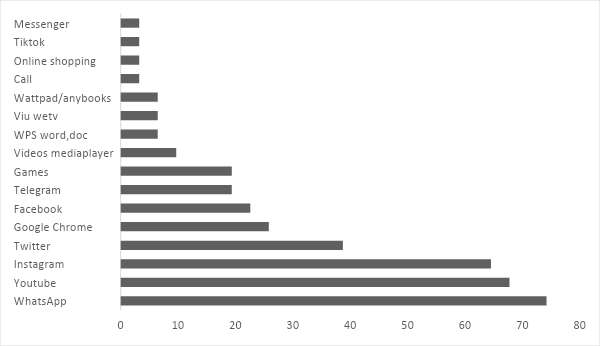
Downloads
References
KI Proper, AS Singh, WV Mechelen and MJM Chinapaw. Sedentary behaviors and health outcomes among adults: A systematic review of prospective studies. Am. J. Prev. Med. 2011; 40, 174-82.
K Palmer, M Ciccarelli, T Falkmer and R Parsons. Associations between exposure to information and communication technology (ICT) and reported discomfort among adolescents. Work 2014; 48, 16573.
ST Lee, JE Wong, SN Shanita, MN Ismail, P Deurenberg and BK Poh. Daily physical activity and screen time, but not other sedentary activities, are associated with measures of obesity during childhood. Int. J. Environ. Res. Public Health 2014; 12, 146-61.
G Lissak. Adverse physiological and psychological effects of screen time on children and adolescents: Literature review and case study. Environ. Res. 2018; 164, 149-57.
SS Thosar, BD Johnson, JD Johnston and JP Wallace. Sitting and endothelial dysfunction: The role of shear stress. Med. Sci. Monit. 2012; 18, RA173-RA180.
DW Dunstan, B Howard, GN Healy and N Owen. Too much sitting - A health hazard. Diabetes Res. Clin. Pract. 2012; 97, 368-76.
AJ Atkin, SJ Sharp, K Corder and EMFV Sluijs. Prevalence and correlates of screen time in youth: An international perspective. Am. J. Prev. Med. 2014; 47, 803-7.
HJ Kim and JS Kim. The relationship between smartphone use and subjective musculoskeletal symptoms and university students. J. Phys. Ther. Sci. 2015; 27, 575-9.
AL Sheppard and JS Wolffsohn. Digital eye strain: Prevalence, measurement and amelioration. BMJ Open Ophthalmol. 2018; 3, e000146.
V Carson, S Hunter, N Kuzik, CE Gray, VJ Poitras, JP Chaput, TJ Saunders, PT Katzmarzyk, AD Okely, SC Gorber, ME Kho, M Sampson, H Lee and MS Tremblay. Systematic review of sedentary behaviour and health indicators in school-aged children and youth: An update. Appl. Physiol. Nutr. Metab. 2016; 41, S240-S265.
J Kim, Y Hwang, S Kang, M Kim, TS Kim, J Kim, J Seo, H Ahn, S Yoon, JP Yun, YL Lee, H Ham, HG Yu and SK Park. Association between exposure to smartphones and ocular health in adolescents. Ophthalmic Epidemiol. 2016; 23, 269-76.
V Woods. Musculoskeletal disorders and visual strain in intensive data processing workers. Occup. Med. 2005; 55, 121-7.
DCH Siu, LA Tse, ITS Yu and SM Griffiths. Computer products usage and prevalence of computer related musculoskeletal discomfort among adolescents. Work 2009; 34, 449-54.
S Berolo, RP Wells and BC Amick. Musculoskeletal symptoms among mobile hand-held device users and their relationship to device use: A preliminary study in a Canadian university population. Appl. Ergon. 2011; 42, 371-8.
JR Hayes, JE Sheedy, JA Stelmack and CA Heaney. Computer use, symptoms, and quality of life. Optom. Vis. Sci. 2007; 84, 738-44.
E Hoare, K Milton, C Foster and S Allender. The associations between sedentary behaviour and mental health among adolescents: A systematic review. Int. J. Behav. Nutr. Phys. Act. 2016; 13, 108.
JH Moon, KW Kim and NJ Moon. Smartphone use is a risk factor for pediatric dry eye disease according to region and age: A case control study. BMC Ophthalmol. 2016; 16, 188.
MM Maducdoc, A Haider, A Nalbandian, JH Youm, PV Morgan and RW Crow. Visual consequences of electronic reader use: A pilot study. Int. Ophthal. 2017; 37, 433-9.
S Munshi, A Varghese and S Dhar-Munshi. Computer vision syndrome-A common cause of unexplained visual symptoms in the modern era. Int. J. Clin. Pract. 2017; 71, e12962.
I Jaadane, P Boulenguez, S Chahory, S Carre, M Savoldelli, L Jonet, F Behar-Cohen, C Martinsons and A Torriglia. Retinal damage induced by commercial light emitting diodes (LEDs). Free Radic. Biol. Med. 2015; 84, 373-84.
JB Lee, SH Kim, SC Lee, HG Kim, HG Ahn, Z Li and KC Yoon. Blue light-induced oxidative stress in human corneal epithelial cells: Protective effects of ethanol extracts of various medicinal plant mixtures. Invest. Ophthalmol. Vis. Sci. 2014; 55, 4119-27.
Y Niwano, T Kanno, A Iwasawa, M Ayaki and K Tsubota. Blue light injures corneal epithelial cells in the mitotic phase in vitro. Br. J. Ophthalmol. 2014; 98, 990-2.
JH Choi, Y Li, SH Kim, R Jin, YH Kim, W Choi, IC You and KC Yoon. The influences of smartphone use on the status of the tear film and ocular surface. PLoS ONE 2018; 13, e0206541.
S Jaiswal, L Asper, J Long, A Lee, K Harrison and B Golebiowski. Ocular and visual discomfort associated with smartphones, tablets and computers: What we do and do not know. Clin. Exp. Optom. 2019; 102, 463-77.
DJ Kim, CY Lim, N Gu and CY Park. Visual fatigue induced by viewing a tablet computer with a high-resolution display. Korean J. Ophthalmol. 2017; 31, 388-93.
SE Domoff, AL Borgen, RP Foley and A Maffett. Excessive use of mobile devices and children’s physical health. Hum. Behav. Emerg. Technol. 2019; 1, 169-75.
P Ichhpujani, RB Singh, W Foulsham, S Thakur and AS Lamba. Visual implications of digital device usage in school children: A cross-sectional study. BMC Ophthalmol. 2019; 19, 76.
Y Xu, G Deng, W Wang, S Xiong and X Xu. Correlation between handheld digital device use and asthenopia in Chinese college students: A Shanghai study. Acta Ophthalmol. 2019; 97, e442-e447.
R Fejer and A Ruhe. What is the prevalence of musculoskeletal problems in the elderly population in developed countries? A systematic critical literature review. Chiropr. Man. Ther. 2012; 20, 31.
M Grimaldi-Puyana, JM Fernández-Batanero, C Fennell and B Sañudo. Associations of objectively-assessed smartphone use with physical activity, sedentary behavior, mood, and sleep quality in young adults: A cross-sectional study. Int. J. Environ. Res. Public Health 2020; 17, 3499.
AH Chen, SA Rosli, and JK Hovis. A survey on daily activity inclination and health complaints among urban youth in Malaysia. J. Environ. Public Health 2020; 2020, 9793425.
TJ Saunders and JK Vallance. Screen time and health indicators among children and youth: Current evidence, limitations and future directions. Appl. Health Econ. Health Policy 2017; 15, 323-31.
SB Sisson, TS Church, CK Martin, C Tudor-Locke, SR Smith, C Bouchard, CP Earnest, T Rankinen, RL Newton and PT Katzmarzyk. Profiles of sedentary behavior in children and adolescents: The US National Health and Nutrition Examination Survey, 2001 - 2006. Int. J. Pediatr. Obes. 2009; 4, 353-9.
E Banks, L Jorm, K Rogers, M Clements and A Bauman. Screen-time, obesity, ageing and disability: Findings from 91 266 participants in the 45 and Up Study. Public Health Nutr. 2011; 14, 34-43.
MA Christensen, L Bettencourt, L Kaye, ST Moturu, KT Nguyen, JE Olgin, MJ Pletcher and GM Marcus. Direct measurements of smartphone screen-time: Relationships with demographics and sleep. PLoS ONE 2016; 11, e0165331.
JE Boone, P Gordon-Larsen, LS Adair and BM Popkin. Screen time and physical activity during adolescence: Longitudinal effects on obesity in young adulthood. Int. J. Behav. Nutr. Phys. Act. 2007; 4, 26.
SB Sisson, ST Broyles, BL Baker and PT Katzmarzyk. Screen time, physical activity, and overweight in U.S. youth: National survey of children’s health 2003. J. Adolesc. Health 2010; 47, 309-11.
LR Larson, R Szczytko, EP Bowers, LE Stephens, KT Stevenson and MF Floyd. Outdoor time, screen time, and connection to nature: Troubling trends among rural youth? Environ. Behav. 2019; 51, 966-91.
N Cain and M Gradisar. Electronic media use and sleep in school-aged children and adolescents: A review. Sleep Med. 2010; 11, 735-42.
LD Rosen, AF Lim, J Felt, LM Carrier, NA Cheever, JM Lara-Ruiz, JS Mendoza and J Rokkum. Media and technology use predicts ill-being among children, preteens and teenagers independent of the negative health impacts of exercise and eating habits. Comput. Hum. Behav. 2014; 35, 364-75.
M Foerster, A Henneke, S Chetty-Mhlanga and M Roosli. Impact of adolescents’ screen time and nocturnal mobile phone-related awakenings on sleep and general health symptoms: A prospective cohort study. Int. J. Environ. Res. Public Health 2019; 16, 518.
KC Madhav, SP Sherchand and S Sherchan. Association between screen time and depression among US adults. Prev. Med. Rep. 2017; 8, 67-71.
LD Wit, AV Straten, F Lamers, P Cuijpers and B Penninx. Are sedentary television watching and computer use behaviors associated with anxiety and depressive disorders? Psychiatry Res. 2011; 186, 239-43.
YY Chan, KK Lim, KH Lim, CH Teh, CC Kee, SM Cheong, YY Khoo, A Baharudin, MY Ling, MA Omar, MA Omar and NA Ahmad. Physical activity and overweight/obesity among Malaysian adults: Findings from the 2015 National Health and morbidity survey (NHMS). BMC Public Health 2017; 17, 733.
M Alagappan, L Rampal and MS Zalilah. Prevalence of overweight/obesity and its associated factors among secondary school students in semi urban area in Malaysia. Med. J. Malaysia 2019; 74, 513-20.
H Byeon and S Hong. Relationship between television viewing and language delay in toddlers: Evidence from a Korea national cross-sectional survey. PLoS ONE 2015; 10, e0120663.
I Mylona, ES Deres, GDS Dere, I Tsinopoulos and M Glynatsis. The impact of internet and videogaming addiction on adolescent vision: A review of the literature. Front. Public Health 2020; 8, 63.
T Borhany, E Shahid, WA Siddique and H Ali. Musculoskeletal problems in frequent computer and internet users. J. Family Med. Prim. Care 2018; 7, 337-9.
DU Lee. Impact of personal computer use on musculoskeletal symptoms in middle and high school students. J. Korean Acad. Fam. Med. 2002; 23, 760-8.
SP Wu, CH Yang, CP Ho and DH Jane. VDT screen height and inclination effects on visual and musculoskeletal discomfort for Chinese wheelchair users with spinal cord injuries. Ind. Health 2009; 47, 89-93.
RA Bonney and EN Corlett. Head posture and loading of the cervical spine. Appl. Ergon. 2002; 33, 415-7.
C Fernandez-de-las-Penas, C Alonso-Blanco, ML Cuadradoa and JA Pareja. Forward head posture and neck mobility in chronic tension-type headache: A blinded, controlled study. Cephalalgia 2006; 26, 314-9.
P Janwantanakul, E Sitthipornvorakul and A Paksaichol. Risk factors for the onset of nonspecific low back pain in office workers: A systematic review of prospective cohort studies. J. Manipulative Physiol. Ther. 2012; 35, 568-77.
SI Jung, NK Lee, KW Kang, K Kim and DY Lee. The effect of smartphone usage time on posture and respiratory function. J. Phys. Ther. Sci. 2016; 28, 186-9.
AA Abusharha. Changes in blink rate and ocular symptoms during different reading tasks. Clin. Optom. 2017; 9, 133-8.

Downloads
Published
How to Cite
Issue
Section
License

This work is licensed under a Creative Commons Attribution-NonCommercial-NoDerivatives 4.0 International License.





