
Measurement of Alcohol Type and Concentration in Hand Gel Sanitizers During the COVID-19 Era: A Review Article for the Future World Health Pandemic Situation
DOI:
https://doi.org/10.48048/tis.2026.13035Keywords:
Alcohol-based hand sanitizers, COVID-19 pandemic, Alcohol concentration measurement, Regulatory compliance, Public health safety, Analytical techniques (GC, HPLC, FTIR, NMR), Alcohol-based hand sanitizers, COVID-19 pandemic, Alcohol concentration measurement, Regulatory compliance, Public health safety, Analytical techniques (GC, HPLC, FTIR, NMR)Abstract
The COVID-19 pandemic drastically altered public health practices worldwide, highlighting the critical role of hand hygiene in controlling viral transmission. In response, alcohol-based hand sanitizers (ABHS) became essential preventive tools, prompting unprecedented global demand, regulatory adaptations, and scientific scrutiny. This review critically examines the types and concentrations of alcohol used in hand sanitizers, the analytical techniques for their measurement, and the evolving regulatory frameworks that govern their production and use. It synthesizes current knowledge on ethanol and isopropanol efficacy, explores safety considerations such as skin irritation and ingestion risks, and evaluates global compliance challenges, particularly in the wake of counterfeit and substandard products. The review also compares advanced measurement techniques - including GC, HPLC, FTIR, and NMR - for their precision, cost, and usability in different settings. Additionally, it discusses market dynamics during the pandemic, shifting consumer preferences, and key research gaps, notably in standardized testing and long-term safety. By integrating multidisciplinary insights from analytical chemistry, public health, regulatory science, and consumer behavior, this paper offers forward-looking recommendations for improving hand sanitizer quality, safety, and pandemic preparedness. The findings aim to support researchers, manufacturers, and policymakers in developing more robust, effective, and trusted hand hygiene solutions for future global health emergencies.
HIGHLIGHTS
- Comprehensive review of alcohol concentration measurement techniques (GC, HPLC, FTIR, NMR) used to ensure the safety and efficacy of hand sanitizers during the COVID-19 pandemic.
- Comparative analysis of ethanol and isopropanol in terms of antimicrobial effectiveness, formulation safety, and long-term dermatological impact.
- Critical evaluation of global regulatory frameworks (WHO, FDA, EU) and their role in preventing counterfeit and substandard hand sanitizers in crisis conditions.
- Identification of research gaps and future directions, including the need for standardized testing protocols and studies on prolonged sanitizer use.
GRAPHICAL ABSTRACT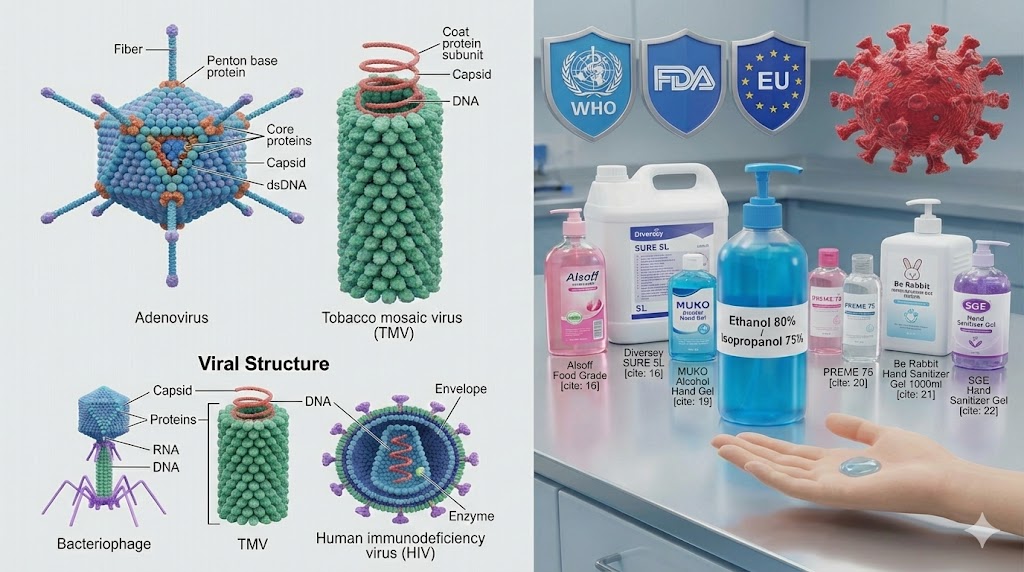
Downloads
References
MP Cruz, E Santos, MAV Cervantes and ML Juárez. COVID-19, a worldwide public health emergency. Revista Clínica Española 2021; 221(1), 55-61.
G Battineni, N Chintalapudi and F Amenta. Forecasting of COVID-19 epidemic size in four high hitting nations (USA, Brazil, India and Russia) by Fb-Prophet machine learning model. Applied Computing and Informatics 2025; 21, 2-11.
A Blair, M de Pasquale, V Gabeff, M Rufi and A Flahault. The end of the elimination strategy: Decisive factors towards sustainable management of COVID-19 in New Zealand. Epidemiologia 2022; 3(1), 135-147.
S Dalasile, E Itoba Tombo, BS Madonsela, PP Mpungose, N Mshicileli and M Menziwa. Alcohol-based hand sanitizers used for COVID-19 prevention in the informal settlements of Cape Town, South Africa. COVID 2024; 4, 1655-1675.
RK Masters, LY Aron and SH Woolf. Life expectancy changes during the COVID-19 pandemic, 2019-2021: Highly racialized deaths in young and middle adulthood in the United States as compared with other high-income countries. American Journal of Epidemiology 2024; 193(1), 26-35.
M Meier and E Pinto.COVID-19 supply chain disruptions. European Economic Review 2020; 48(1), 139-170.
KO Ahmed. Impact of COVID-19 pandemic on hand washing process and water consumption. Eurasian Journal of Science & Engineering 2021; 7(1), 228-245.
World Health Organization. Guide to local production: WHO-recommended handrub formulations, Available at: https://www.who.int/gpsc/5may/Guide_to_Local_Production.pdf, accessed November 2025.
HV Annegowda, M Zuber, JC Darshan, S Ghosh and P Paul. Hand sanitizer: A comprehensive narrative review. International Journal of Pharmaceutical Science 2021; 66(1), 109-114.
MN Selam. Hand sanitizers marketed in the streets of Addis Ababa, Ethiopia, in the era of COVID-19: A quality concern. Risk Management and Healthcare Policy 2021; 66(1), 109-114.
AP Golin, D Choi and A Ghahary. Hand sanitizers: A review of ingredients, mechanisms of action, modes of delivery, and efficacy against coronaviruses. American Journal of Infection Control 2020; 48(9), 1062-1067.
M Islam, K Shahin Ahmed, R Karim, BD Nath, S Prosad Moulick, R Islam, SM Hassan, H Hossain, M Moniruzzaman, S Jahan, AA Shaikh and PE Georghiou. Alcohol‐based hand sanitizers amid COVID‐19: Chemical formulation, analysis, safety. ChemistrySelect 2022; 7(45), e202203290.
MA Misri, KH Qadr and MA Rahmatullah. SEIR mathematical model with the use of hand sanitizers to prevent the spread of covid-19 disease. CAUCHY: Jurnal Matematika Murni dan Aplikasi 2024; 9, 138-154.
MA Cook and N Brooke. Event-based surveillance of poisonings and potentially hazardous exposures over 12 months of the COVID-19 pandemic. International Journal of Environmental Research and Public Health 2021; 18(21), 11133.
KG Piparva, S Dutta, S Singhal and R Shah. A critical evaluation of contents, labeling, and cost of hand sanitizers marketed in India during COVID-19 pandemic. Journal of Family Medicine and Primary Care 2024; 13, 2289-2294.
JLJ Jing, T Pei Yi, RJC Bose, JR McCarthy, N Tharmalingam and T Madheswaran. Hand sanitizers: A review on formulation aspects, adverse effects, and regulations. International Journal of Environmental Research and Public Health 2020; 17(9), 3326.
D Singh, K Joshi, A Samuel, J Patra and N Mahindroo. Alcohol-based hand sanitisers as first line of defence against SARS-CoV-2: A review of biology, chemistry and formulations. Epidemiology & Infection 2020; 148, e229.
G McDonnell and AD Russell. Antiseptics and disinfectants: Activity, action, and resistance. Clinical Microbiology Reviews 2020; 12, 147-179.
U.S. Food and Drug Administration. Temporary policy for preparation of certain alcohol-based hand sanitizer products during the public health emergency (COVID-19) guidance for industry. Center for Drug Evaluation and Research (CDER), Food and Drug Administration, Maryland, USA.
G Kampf and A Kramer. Epidemiologic background of hand hygiene and evaluation of the most important agents for scrubs and rubs. Clinical Microbiology Reviews 2004; 17(4), 863-893.
A Mahmood, M Eqan, S Pervez, HA Alghamdi, AB Tabinda, A Yasar, K Brindhadevi and A Pugazhendhi. COVID-19 and frequent use of hand sanitizers; human health and environmental hazards by exposure pathways. Science of the Total Environment 2020; 742, 140561.
P Khaenamkaew, C Tanghengjaroen, D Manop, WPN Ayuthaya, K Wongsorntam and N Noulkhow. Assessment of uncertainty estimation for measurement of ethanol concentration in COVID-19 hand sanitizer using FTIR spectroscopy. Journal of Chemical Metrology 2023; 17(1), 1-14.
M Adugo, SJ Bunu, NT Jonathan and D Ogoina. Physicochemical evaluation of the potency and viability of alcohol-based hand sanitizers. EAS Journal of Parasitology and Infectious Diseases 2023; 5(6), 61-65.
P Prajapati, H Desai and C Chandarana. Hand sanitizers as a preventive measure in COVID-19 pandemic, its characteristics, and harmful effects: A review. Journal of the Egyptian Public Health Association 2022; 97(1), 6.
RY Booq, AA Alshehri, FA Almughem, NM Zaidan, WS Aburayan, AA Bakr, SH Kabli, HA Alshaya, MS Alsuabeyl, EJ Alyamani and EA Tawfik. Formulation and evaluation of alcohol-free hand sanitizer gels to prevent the spread of infections during pandemics. International Journal of Environmental Research and Public Health 2021; 18(12), 6252.
F Fallica, C Leonardi, V Toscano, D Santonocito, P Leonardi and C Puglia. Assessment of Alcohol-based hand sanitizers for long-term use, formulated with addition of natural ingredients in comparison to WHO formulation 1. Pharmaceutics 2021; 13(4), 571.
NQ Thang and LV Tan. Determination of methanol, acetaldehyde, and ethyl acetate in thousand folds of ethanol sample by headspace gas chromatography with mass spectrometry. International Journal of Analytical Chemistry 2023; 2023(1), 8851265.
C Quan, HM Li, T Huang, W Zhang, ZT Ding and YX Shen. High-precision analysis of ethanol in bioethanol by gas chromatography with flame ionization detector. Accreditation and Quality Assurance 2012; 17, 535-541.
ND Nisbar, SK Jamal Khair, NB Bujang and AY Mohd Yusop. Determination of ethanol, isopropyl alcohol and methanol in alcohol-based hand sanitiser to ensure product quality, safety and efficacy. Scientific Reports 2023; 13(1), 9478.
DI Ellis, J Ellis, H Muhamadali, Y Xu, AB Horn and R Goodacre. Rapid, high-throughput, and quantitative determination of orange juice adulteration by Fourier-transform infrared spectroscopy. Analytical Methods 2016; 8(28), 5581-5586.
S Banik, SK Melanthota, AA Vannathan, KK Mahato, SS Mal and N Mazumder. Spectroscopic methods for assessment of hand sanitizers. Chemical Papers 2022; 76(8), 4907-4918.
AR Chowdhury, U Burney, D King, TA Lee, D Hutter and T Hutter. Detection of toxic contaminants in alcohol-based hand sanitizers using infrared spectroscopy. Applied Spectroscopy Practica 2023; 1(2), 27551857231204630.
SA Roget, TR Heck, KA Carter-Fenk and MD Fayer. Ion/water network structural dynamics in highly concentrated lithium chloride and lithium bromide solutions probed with ultrafast infrared spectroscopy. The Journal of Physical Chemistry B 2023; 127(20), 4532-4543.
S Fantini and A Sassaroli. Frequency-domain techniques for cerebral and functional near-infrared spectroscopy. Frontiers in Neuroscience 2020; 14, 300.
MA Butt, M Juchniewicz, M Słowikowski, Ł Kozłowski and R Piramidowicz. Mid-infrared photonic sensors: exploring fundamentals, advanced materials, and cutting-edge applications. Sensors 2025; 25(4), 1102.
A Dabrowska, A Schwaighofer and B Lendl. Mid-infrared dispersion spectroscopy as a tool for monitoring time-resolved chemical reactions on the examples of enzyme kinetics and mutarotation of sugars. Applied Spectroscopy 2024; 78(9), 982-992.
M Bedner, M Bedner, JA Murray, AA Urbas, WA MacCrehan and WB Wilson. A comparison of measurement methods for alcohol-based hand sanitizers (NISTIR 8342). US Department of Commerce, National Institute of Standards and Technology, Maryland, United States.
A Gupta, SP Stratton and PB Myrdal. An HPLC method for quantitation of perillyl alcohol in a topical pharmaceutical cream formulation. Journal of Pharmaceutical and Biomedical Analysis 2005; 37(3), 447-452.
R Bachhav, P Bachhav, M Bhamare, R Bachhav and G Sonawane. A concise review on high-per-formance liquid chromatography. Journal of Pharmaceutical Research 2023; 8(2), 340.
HJR Caleja-Ballesteros, JI Ballesteros and MC Villena. Non-deuterated 1H NMR spectrometric method for the rapid and direct analysis of alcohol content in hand sanitizers. Philippine Journal of Science 2022; 151(3), 937-344.
AE AISBL, G Graß and P Madsen. Application of regulation (EU) No 528/2012 (“BPR”) to disinfectant biocidal active substances generated in situ by devices. Aqua Europa AISBL, Brussels, Belgium, 2017.
C Prakash and R Mahar. Chemical profiling and quality assessment of food products employing magnetic resonance technologies. Foods 2025; 14(14), 2417.
PK Kumar, PB Dudhe and SS Nilewar. Analytical method validation in pharmaceutical quality control: Current guidelines and challenges. Journal of Pharmaceutical Research and Integrated Medical Sciences 2025; 2025, 26-39.
MMS Alanazi, YSJ Alruwaili, MMR Alruwaili, HMR Alrwayli, MJN Alruwaili, FHBF Alanazi, SGS Alanazi, BGS Alanazi6, AKD Alanazi and AIA Alenezi. Advancements in analytical techniques for pharmaceutical quality control. Journal of International Crisis and Risk Communication Research 2024; 7(S10), 51-72.
O Pani and T Górecki. Comprehensive 2-dimensional gas chromatography (GC×GC) in environmental analysis and monitoring. Analytical and Bioanalytical Chemistry 2006; 386(4), 1013-1023.
ISA Alsharari, AMDA Alsharari and F Alsharari. Quality control of laboratory medicine: Preventing errors for diagnostic reliability. Saudi Journal of Medicine and Public Health 2024; 1(1), 114-123.
J Ruohonen. A review of product safety regulations in the European Union. International Cybersecurity Law Review 2024; 1(1), 114-123.
KO Hogan and GR Fraga. Compliance with standards for STARD 2015 reporting recommendations in pathology. American Journal of Clinical Pathology 2020; 154(6), 828-836.
A Kramer, M Arvand, B Christiansen, S Dancer, M Eggers, M Exner, D Müller, NT Mutters, I Schwebke and D Pittet. Ethanol is indispensable for virucidal hand antisepsis: memorandum from the alcohol-based hand rub (ABHR) Task Force, WHO Collaborating Centre on Patient Safety, and the Commission for Hospital Hygiene and Infection Prevention (KRINKO), Robert Koch Institute, Berlin, Germany. Antimicrobial Resistance & Infection Control 2022; 11, 93.
N Abrigo, C Ruzicka, P Faustino, N Stiber, A NguyenPho, T O’Connor and D Shakleya. Development and validation of a headspace GC-MS method to evaluate the interconversion of impurities and the product quality of liquid hand sanitizers. AAPS Open 2022; 8(1), 1.
F De Ridder, R Braspenning, JS Ordonez, G Klarenbeek, P Lauwers, KJ Ledeganck, D Delbeke and CD Block. Early feasibility study with an implantable near-infrared spectroscopy sensor for glucose, ketones, lactate and ethanol. Plos One 2024; 19, e0301041.
The British Standards Institution. Chemical disinfectants and antiseptics-hygienic handrub-test method and requirements (phase 2, step 2). BSI Standards, London, 1997.
DS Ramkumar. EN 14476 Standard for infection control. pp. Swiss CRO and testing lab, Available at: https://microbe-investigations.com/en-14476-standard-for-infection-control, accessed November 2025.
ML Wang, YM Choong, NW Su and MS Lee. A rapid method for determination of ethanol in alcoholic beverages using capillary gas chromatography. Journal of Food and Drug Analysis 2003; 11(2), 3.
MMS Alanazi, YSJ Alruwaili, MMR Alruwaili, HMR Alrwayli, MJN Alruwaili, FHBF Alanazi, SGS Alanazi, BGS Alanazi6, AKD Alanazi and AIA Alenezi. Advancements in analytical techniques for pharmaceutical quality control. Journal of International Crisis and Risk Communication Research 2024; 7(S10), 51-72.
Riyanto and DANP Sumira. Validation method and quality control of the hand sanitizer for Covid-19 using gas chromatography. AIP Conference Proceedings 2022; 2645(1), 030008.
CDC Handwashing. Clean hands save lives. Centers for Disease Control and Prevention, Atlanta, United States, 2020.
FN Faizah, AN Khabibah and S Afidah. Panic buying in the era of covid-19 pandemic: Consumer behavior perspective of Monzer Khaf. ISLAMICONOMIC: Jurnal Ekonomi Islam 2022; 13, 23-40.
A Afework and A Tamene. Uncovering the obstacles: A comprehensive analysis of barriers to hand hygiene adherence among healthcare providers: A systematic review. BMC Infectious Diseases 2025; 25(1), 502.
S Vuppu, T Mishra and A Chinamgari. Use of hand sanitizers in COVID-19 prevention: A comprehensive overview. Pharmacoepidemiology 2023; 2(3), 257-271.
CA Enwuru, OO Awoderu and E Emelda. Evaluation of antibacterial efficacy of randomly selected alcohol based hand sanitizers sourced from grocery shops within lagos metropolis on some local bacterial strains in COVID-19 era. Microbiology & Infectious Diseases 2021; 5(3), 1-9.
DD Gummin, JB Mowry, MC Beuhler, DA Spyker, AC Bronstein, LJ Rivers, BS Nathaniel, PT Pham and J Weber. 2020 annual report of the American association of poison control centers’ national poison data system (NPDS): 38th annual report. Clinical Toxicology 2021; 59, 1282-1501.
RA Leslie, SS Zhou and DR Macinga. Inactivation of SARS-CoV-2 by commercially available alcohol-based hand sanitizers. American Journal of Infection Control 2021; 49(3), 401-402.
Organisation for Economic Co-operation and Development. Local lymph node assay. OECD guidelines for the testing of chemicals. Organisation for Economic Co-operation and Development, Paris, France, 2002.
M Pomffyová and L Veselovská. The impact of COVID-19 on purchase behavior changes in smart regions. Computers 2023; 12(2), 38.
D Cucinotta and M Vanelli. WHO declares COVID-19 a pandemic. Acta Biomedica 2020; 19, 157-160.
F Torko. 2025, The efficacy of foam-based hand sanitizers for the control of enveloped and non-enveloped virus transmission. Master’s Thesis. University of Arkansas, Arkansas, United States.
Published
How to Cite
Issue
Section
License
Copyright (c) 2026 Walailak University

This work is licensed under a Creative Commons Attribution-NonCommercial-NoDerivatives 4.0 International License.





