
Effect of Sonneratia alba Fruit Extract on LOX-1 and Nrf2 Expression in the Aortic Arches of High Fat Diet Induced Rats
DOI:
https://doi.org/10.48048/tis.2026.12450Keywords:
Atherosclerosis, LOX-1, MnSOD, Nrf2, Sonneratia alba, Atherosclerosis, Antioxidant, Foam cells, Hyperlipidemia, LOX-1, Nrf2, MnSOD, Sonneratia albaAbstract
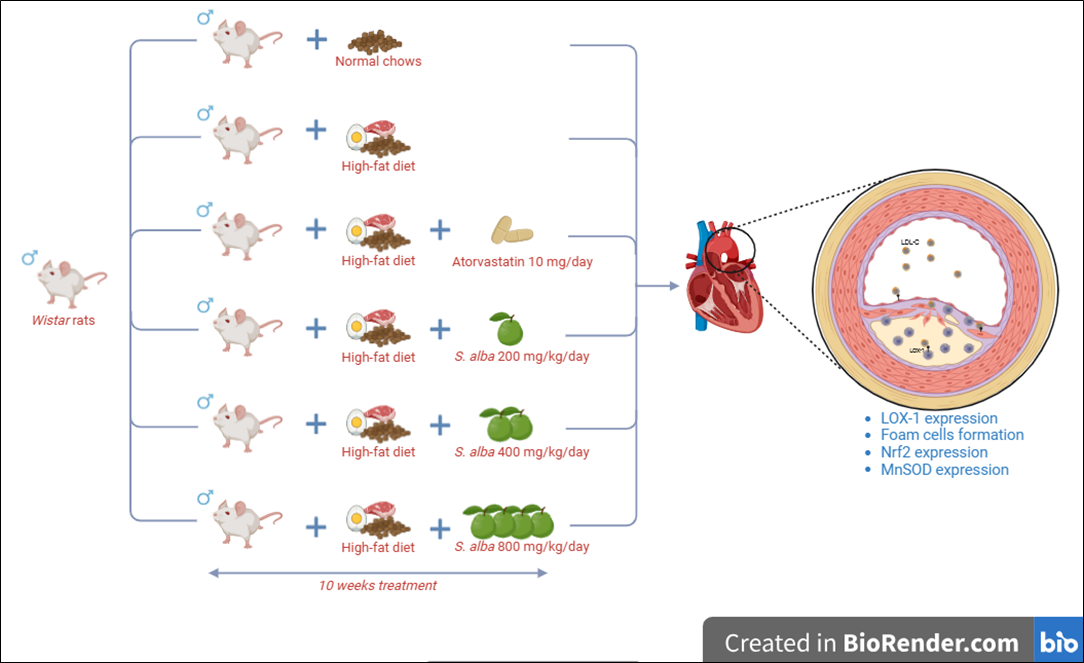
Atherosclerosis, the primary cause of ischemic heart disease, is a major contributor to global mortality. This highlights the urgent need for therapeutic strategies that are not only beneficial and safe but also economically sustainable, such as those derived from natural bioactive compounds. This study investigated the anti-atherogenic effect of mangrove Sonneratia alba, a source of bioactive compounds with known antioxidant and anti-inflammatory properties. The objective was to determine the extract’s effect on the pro-atherogenic receptor LOX-1 and its subsequent effect on foam cell formation and the endogenous antioxidant axis Nrf2-MnSOD in the aortic arch of male Wistar rats exposed to a 10-week high-fat diet. A total of twenty-four rats were randomly divided into six groups; normal control, HFD control, atorvastatin control (10 mg/day) and HFD groups treated with S. alba extract at 200, 400 and 800 mg/kg/day. The expression of LOX-1, Nrf2, and MnSOD was assessed using immunohistochemistry, while foam cells were identified through H&E staining. The results showed S. alba fruit extract at the dose of 800 mg/kg/day significantly reduced circulating LDL-C levels. Within the aortic arch, the S. alba extract at the same dose significantly suppressed LOX-1 expression, significantly reduced approximately 82% of foam cell formation and significantly elevated Nrf2 expression. The expression of MnSOD was enhanced however this change did not reach statistical significance. These data collectively suggest that S. alba fruit extract ameliorates early atherogenic features, associated with the modulation of key regulatory proteins LOX-1 and Nrf2, and subsequent reduction in foam cell formation. Thus, the extract seems promising as a natural agent for vascular protection, but further functional investigations are needed to definitively confirm the underlying mechanism.
HIGHLIGHTS
- Sonneratia alba fruit possesses diverse secondary metabolites and exhibits strong antioxidant activity.
- The extract was administered to male Wistar rats to counteract high-fat diet-induced atherogenesis.
- Treatment significantly reduced circulating LDL, suppressed LOX-1 expression and inhibited foam cell formation in the aortic arch of hyperlipidemic rats.
- The therapeutic protection is likely mediated through the upregulation of Nrf2 expression.
- Sonneratia alba extract exhibits potential as a novel Nrf2 activator for mitigating vascular oxidative stress.
GRAPHICAL ABSTRACT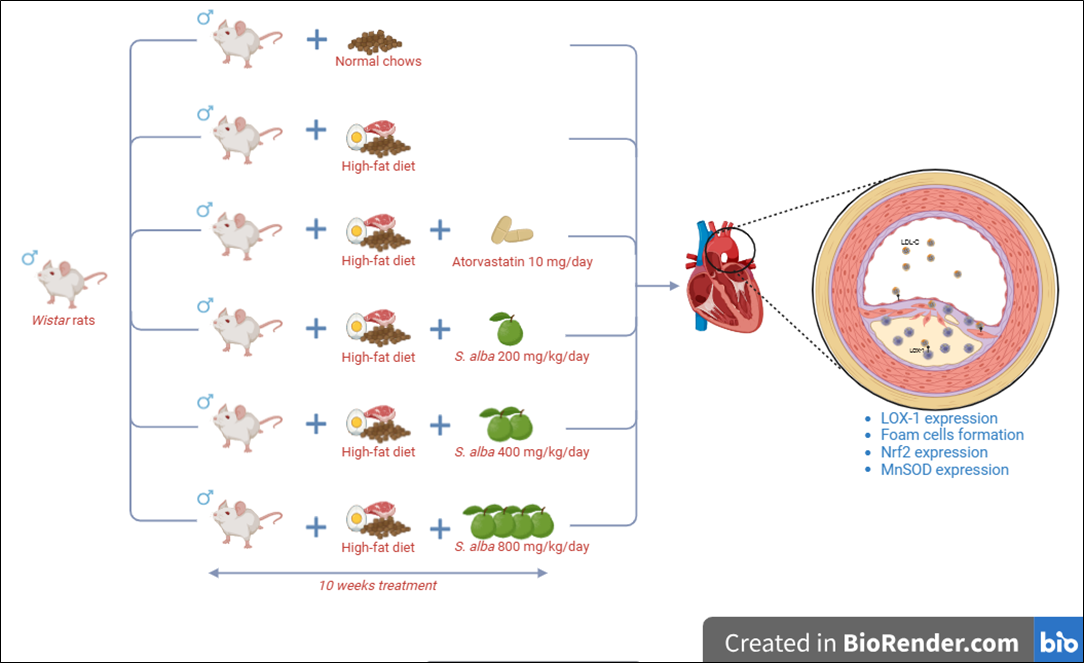
Downloads
References
GBD 2023 initiateds of Death Collaborators. Global burden of 292 causes of death in 204 countries and territories and 660 subnational locations, 1990-2023: A systematic analysis for the Global Burden of Disease Study 2023. The Lancet 2025; 406(10513), 1811-1872.
W Chen, Z Li, Y Zhao, Y Chen and R Huang. Global and national burden of atherosclerosis from 1990 to 2019: Trend analysis based on the Global Burden of Disease Study 2019. Chinese Medical Journal (English) 2023; 136(20), 2442-2450.
Y Wang, Q Li, L Bi, B Wang, T Lv and P Zhang. Global trends in the burden of ischemic heart disease based on the global burden of disease study 2021: The role of metabolic risk factors. BMC Public Health 2025; 25(1), 310.
S Zhong, L Li, X Shen, Q Li, W Xu, X Wang, Y Tao and H Yin. An update on lipid oxidation and inflammation in cardiovascular diseases. Free Radical Biology and Medicine 2019; 144, 266-278.
C Khatana, NK Saini, S Chakrabarti, V Saini, A Sharma, RV Saini and AK Shaini. Mechanistic insights into the oxidized low-density lipoprotein-induced atherosclerosis. Oxidative Medicine and Cellular Longevity 2020; 2020, 5245308.
X Guo, Y Guo, Z Wang, B Cao, C Zheng, Z Zeng and Y Wei. Reducing the damage of Ox‐LDL/LOX‐1 pathway to vascular endothelial barrier can inhibit atherosclerosis. Oxidative Medicine and Cellular Longevity 2022; 2022, 7541411.
N Pyrpyris, K Dimitriadis, E Beneki, P Iliakis, S Soulaidopoulos, P Tsioufis, E Adamopoulou, A Kasiakogias, A Sakalidis, G Koutsopoulos, K Aggeli and K Tsioufis. LOX-1 receptor: A diagnostic tool and therapeutic target in atherogenesis. Current Problem in Cardiology 2024; 49(1), 102117.
G Garcia-Llorens, ME Ouardi and V Valls-Belles. Oxidative stress fundamentals: Unraveling the pathophysiological role of redox imbalance in non-communicable diseases. Applied Sciences 2025; 15(18), 10191.
C Thomas, D Leleu and D Masson. Cholesterol and HIF-1α: Dangerous liaisons in atherosclerosis. Frontiers in Immunology 2022; 13, 868958.
AV Poznyak, NG Nikiforov, AM Markin, DA Kashirskikh, VA Myasodoca, EV Gerasimova and AN Orekhov. Overview of OxLDL and its impact on cardiovascular health: Focus on atherosclerosis. Frontiers in Pharmacology 2021; 11, 613780.
J Gutiérrez-Cuevas, M Galicia-Moreno, HC Monroy-Ramirez, A Sandoval-Rodriguez, J Garcia-Banuelos, A Santos and J Armendariz-Borunda. The role of Nrf2 in obesity-associated cardiovascular risk factors. Antioxidants 2022; 11(2), 235.
H Tkaczenko and N Kurhaluk. Antioxidant-rich functional foods and exercise: Unlocking metabolic health through Nrf2 and related pathways. International Journal of Molecular Sciences 2025; 26(3), 1098.
X Wu, J Wei, Y Yi, Q Gong and J Gao. Activation of Nrf2 signaling: A key molecular mechanism of protection against cardiovascular diseases by natural products. Frontiers in Pharmacology 2022; 13, 1057918.
C Zhong, K Deng, X Lang, D Shan, Y Xie, W Pan and J Yu. Therapeutic potential of natural flavonoids in atherosclerosis through endothelium-protective mechanisms: An update. Pharmacology & Therapeutics 2025; 271, 108864.
CP Kulkarnii and SM Manohar. A review of botany, phytochemistry, and pharmacology of the mangrove apple Sonneratia alba J. Sm. Journal of Applied Pharmaceutical Science 2024; 14(5), 001-011.
IM Deviarni, A Yunus, S Prabawa and C Anam. Antioxidant activity and bioactive compound identification in Sonneratia alba fruit. IOP Conference Serries: Earth Environment Sciences 2025; 1490, 012029.
CY Ragasa, VD Ebajo, MM De Los Reyes, EH Mandia, R Brkljača and S Urban. Triterpenes and sterols from Sonneratia alba. International Journal of Current Pharmaceutical Review and Research 2015; 6(6), 256-261.
Y Pan, F Zhou, Z Song, H Huang, Y Chen, Y Shen, Y Jia and J Chen. Oleanolic acid protects against pathogenesis of atherosclerosis, possibly via FXR-mediated angiotensin (Ang)-(1–7) upregulation. Biomedicine & Pharmacotherapy 2018; 97, 1694-1700.
Q Jiang, D Wang, Y Han, Z Han, W Zhong, and C Wang. Modulation of oxidized-LDL receptor-1 (LOX1) contributes to the antiatherosclerosis effect of oleanolic acid. The International Journal of Biochemistry and Cell Biology 2015; 69, 142-152.
F Alam, AK Kharya, RK Srivastav, J Akhtar, MI Khan and M Ahmad. Synergetic effect of lupeol and naringin against bile duct ligation induced cardiac injury in rats via modulating nitrite level (eNos) and NF-kB /p65 expression. Drug Research (Stuttg) 2023; 73(1), 23-29.
S Saha, E Profumo, AR Togna, R Riganò, L Saso and B Buttari. Lupeol counteracts the proinflammatory signalling triggered in macrophages by 7-keto-cholesterol: New perspectives in the therapy of atherosclerosis. Oxidative Medicine and Cellular Longevity 2020; 2020, 1232816.
J Li, X Ma, J Yang, L Wang, Y Huang and Y Zhu. Lupeol alleviates myocardial ischemia-reperfusion injury in rats by regulating NF-[Formula: See text]B and Nrf2 pathways. The American Journal of Chinese Medicine 2022; 50(5), 1269-1280.
B Lu, F Xiao, Q Zhang, Y Xie, M Wang, J Simal-Gandara, Y Liu, T Efferth, W Huang, J Shen and J Xiao. Stigmasterol attenuates atherosclerosis by inhibiting inflammatory signaling and foam cell formation. iMetaOmics 2025; 2(4), 70056.
H Masdar, G Revilla, EF Elfi and E Darwin. Sonneratia alba fruit extract’s potential to reduce atherogenic index of plasma and prevent atherogenesis in aortic arch of high-fat diet induced Wistar rats. Tropical Journal of Natural Product Research 2025; 9(10), 5051-5060.
H Masdar, MY Hamidy, Darmawi, R Trihardi, A Perwira and D Utari. Anti-atherosclerotic effects of Sonneratia alba fruit extract in atherosclerotic-induced rats. International Journal of Applied Pharmaceutic 2020; 12(3), 41-43.
H Masdar, MY Hamidy and E Maryanti. Efek inhibisi ekstrak buah mangrove Sonneratia alba terhadap ekspresi tumor growth factor-beta 1 pada aorta abdominal tikus yang diinduksi aterosklerosis. Jurnal Kedokteran Syiah Kuala 2022; 22(1), 7-10.
D Wonggo, C Anwar, V Dotulong, A Reo, N Taher, RA Syaputra, F Nurkolis, TE Tallei, B Kim and A Tsopmo. Subcritical water extraction of mangrove fruit extract (Sonneratia alba) and its antioxidant activity, network pharmacology, and molecular connectivity studies. Journal of Agriculture and Food Research 2024; 18, 101334.
Ismawati, I Romus, Mukhyarjon, J Salsabilqis and N Wulandari. Effect of proteasome inhibitor on serum 8-OHdG and aortic SOD2 in a rat model of atherosclerosis. Bali Medical Journal 2022; 11(1), 391-396.
E Sinaga, Suprihatin, Yenisbar, M Iswahyudi, S Setyowati, and VD Prasasty. Effect of supplementation of Rhodomyrtus tomentosa fruit juice in preventing hypercholesterolemia and atherosclerosis development in rats fed with high fat high cholesterol diet. Biomedicine & Pharmacotherapy 2021; 142, 111996.
NA Cacciola, P De Cicco, M Milanovic, I Milovanovic, A Misan, D Kokic, J Sumeunovic, D Blagojevic, T Popovic, A Arsic, V Pilija, A Mandic, F Borrelli and N Milic. Role of Arthrospira platensis in preventing and treating high-fat diet-induced hypercholesterolemia in adult rats. Nutrients 2024; 16(12), 1827.
M Cheurfa, HH Abdallah, R Allem, A Noui, CMN Picot-Allain and F Mahomoodally. Hypocholesterolaemic and antioxidant composition of Olea europaea L. leaves by Chlef province, Algeria utilizing in vitro, in vivo and in silico approaches. Food & Chemical Toxicology 2019; 123, 98-105.
CA Bursill and PD Roach. A green tea catechin bioactive compound upregulates the hepatic low‐density lipoprotein receptor in rats. Lipids 2007; 42(7), 621-627.
IPBA Saputra and IPD Arjita. The opportunity of flavonoid derivative compounds as inhibitors of the HMG-CoA reductase enzyme for candidate of hypercholesterolemia drugs. Jurnal Penelitian Pendidikan IPA 2024; 10(5), 2286-2293.
M Palumbo, M Ugolotti, F Zimetti and MP Adorni. Anti-atherosclerotic effects of natural compounds targeting lipid metabolism and inflammation: Focus on PPARs, LXRs, and PCSK9. Atherosclerosis Plus 2025; 59, 39-53.
ML Majeed, FA Ghafil, G Fatima, NR Hadi and HF Mahdi. Anti-atherosclerotic and anti-inflammatory effects of curcumin on hypercholesterolemic male rabbits. Indian Journal of Clinical Biochemistry 2021; 36(1), 74-80.
P Hasvold, M Thuresson, J Sundstrom, N Hammar, SE Kjeldsen, G Johansson, I Holme and J Bodegard. Association between paradoxical HDL cholesterol decrease and risk of major adverse cardiovascular events in patients initiated on statin treatment in a primary care setting. Clinical Drug Investigation 2016; 36(3), 225-233.
A von Eckardstein, BG Nordestgaard, AT Remaley and AL Catapano. High-density lipoprotein revisited: Biological functions and clinical relevance. European Heart Journal 2023; 44(16), 1394-1407.
Y Zhao, H Qu, Y Wang, W Xiao, Y Zhang and D Shi. Small rodent models of atherosclerosis. Biomedicne & Pharmacotherapy 2020; 129, 110426.
A Akhmedov, T Sawamura, CH Chen, S Kraler, D Vdovenko and TF Lüscher. Lectin-like oxidized low-density lipoprotein receptor-1 (LOX-1): A crucial driver of atherosclerotic cardiovascular ailment. European Heart Journal 2021; 42(18), 1797-1807.
S Jebari-Benslaiman, U Galicia-Garcia, A Larrea-Sebal, JR Olaetxea, I Alloza, K Vandenbroeck, A Benito-Vicente and C Martin. Pathophysiology of atherosclerosis. International Journal of Molecular Sciences 2022; 23(6), 3346.
Y Ke, P Karki, Y Li, K Promnares, CO Zhang, TL Eggerman, AV Bocharov, AA Birukova and KG Birukov. Aging-related plaque deposit of truncated oxidized phospholipids augments infectious lung injury and endothelial dysfunction via cluster of differentiation 36-dependent functional pathway. Cells 2023; 12(15), 1937.
A Pirillo, GD Norata and AL Catapano. LOX-1, OxLDL, and atherosclerosis. Mediators of Inflammation 2013; 2013, 152786.
Y Feng, ZR Cai, Y Tang, G Hu, J Lu, D He and S Wang. TLR4/NF-κB signaling pathway-mediated and oxLDL-induced up-regulation of LOX-1, MCP-1, and VCAM-1 expressions in human umbilical vein endothelial cells. Genetics and Molecular Research 2014; 13(1), 680-695.
Y Morofuji, S Nakagawa, K Ujifuku, T Fujimoto, K Otsuka, M Niwa and K Tsutsumi. Beyond lipid-lowering: Influences of statins on cardiovascular and cerebrovascular ailments and cancer. Pharmaceuticals 2022; 15(2), 151.
M Huang, X Xie, R Yuan, Q Xin, S Ma, H Guo, Y Miao, C Hu, Y Zhu and W Cong. The multifaceted anti-atherosclerotic properties of herbal flavonoids: A comprehensive review. Pharmacological Research 2025; 211, 107551.
X Bai, S Wang, L Shu, Q Cao, H Hu, Y Zhu and C Chen. Hawthorn leaf flavonoids alleviate the deterioration of atherosclerosis by inhibiting SCAP-SREBP2-LDLR pathway through sPLA2-ⅡA signaling in macrophages in mice. Journal of Ethnopharmacology 2024; 327, 118006.
S Asad, M Hamiduzzaman, ATMZ Azam, M Ahsan and MM Masud. Lupeol, oleanic acid & steroids from Sonneratia alba j.e. Sm (sonneratiaceae) and antioxidant, antibacterial & cytotoxic activities of its extracts. International Journal of Advanced Research in Pharmaceutical and Bio Sciences 2013; 3(4), 1-10.
YE Puspitasari, Hardoko, TD Sulistiyati, AN Fajrin and HO Tampubolon. Identifikasi senyawa fitokimia dari daun mangrove Sonneratia alba dan analisis in silico sebagai antidiabetes. Jurnal Perikanan dan Kelautan 2022; 27(2), 241-248.
AJ Kattoor, A Goel and JL Mehta. LOX-1: Regulation, signaling and its role in atherosclerosis. Antioxidants 2019; 8(7), 218.
MPT Le, CK Marasinghe and JY Je. Chitosan oligosaccharides: A potential therapeutic agent for inhibiting foam cell formation in atherosclerosis. International Journal of Biological Macromolecules 2024; 282, 137186.
S Franceschelli, FD Cecco, M Pesce, P Ripari, MT Guagnano, AB Nuevo, A Grili, S Sancilio and L Speranza. Hydroxytyrosol reduces foam cell formation and endothelial inflammation regulating the PPARγ/LXRα/ABCA1 pathway. International Journal of Molecular Sciences 2023; 24(3), 2057.
Y Wang, JA Dubland, S Allahverdian, E Asonye, B Sahin, JE Jaw, DD Sin, MA Seidman, NJ Leeper and GA Francis. Smooth muscle cells contribute the majority of foam cells in ApoE (Apolipoprotein E)-Deficient mouse atherosclerosis. Arteriosclerosis Thrombosis and Vascular Biology 2019; 39(5), 876-887.
S Allahverdian, AC Chehroudi, BM McManus, T Abraham and GA Francis. Contribution of intimal smooth muscle cells to cholesterol plaque deposit and macrophage-like cells in human atherosclerosis. Circulation 2014; 129(15), 1551-1559.
Y Li, H Zhu, Q Zhang, X Han, Z Zhang, L Shen, L Wang, KO Lui, B He and B Zhou. Smooth muscle-derived macrophage-like cells contribute to multiple cell lineages in the atherosclerotic plaque. Cell Discovery 2021; 7(1), 111.
AB Jena, RR Samal, NK Bhol and AK Duttaroy. Cellular Red-Ox system in health and disease: The latest update. Biomedicine &. Pharmacotherapy 2023; 162, 114606.
L Baird and M Yamamoto. The molecular mechanisms regulating the KEAP1-NRF2 pathway. Molecular and Cellular Biology 2020; 40(13), 0009920.
S Vomund, A Schäfer, MJ Parnham, B Brüne and AV Knethen. Nrf2, the master regulator of anti-oxidative responses. International Journal of Molecular Sciences 2017; 18(12), 2772.
Q Zhang, J Liu, H Duan, R Li, W Peng and C Wu. Activation of Nrf2/HO-1 signaling: An important molecular mechanism of herbal medicine in the treatment of atherosclerosis via the protection of vascular endothelial cells from oxidative stress. Journal of Advanced Research 2021; 34, 43-63.
AK Ruotsalainen, M Inkala, ME Partanen, JP Lappalainen, E Kansanen, PI Mäkinen, SE Heinonen, HM Laitinen, J Heikkilä, T Vatanen, S Hörkkö, M Yamamoto, S Ylä-Herttuala, M Jauhiainen and AL Levonen. The absence of macrophage Nrf2 promotes early atherogenesis. Cardiovascular Research 2013; 98(1), 107-115.
MMJPE Sthijns, PM Schiffers, GM Janssen, KJA Lemmens, B Ides, P Vangrieken, FG Bouwman, EC Mariman, I Pader, ESJ Arner, K Johansson, A Bast and GRMM Haenen. Rutin protects decreased H2O2-triggered impaired relaxation of placental arterioles and induces Nrf2-mediated adaptation in human umbilical vein endothelial cells exposed to oxidative stress. Biochimica et Biophysica Acta (BBA) - General Subjects 2017; 1861(5), 1177-1189.
R Erkens, CM Kramer, W Lückstädt, C Panknin, L Krause, M Weidenbach, J Dirzka, T Krenz, E Mergia, T Suvorava, M Kelm and MM Cortese-Krott. Left ventricular diastolic dysfunction in Nrf2 knock out mice is associated with cardiac hypertrophy, decreased expression of SERCA2a, and preserved endothelial function. Free Radical Biology and Medicine 2015; 89, 906-917.
AT Mikhailov and M Torrado. Myocardial transcription factors in diastolic dysfunction: Clues for model systems and disease. Heart Failure Reviews 2016; 21(6), 783-794.
Y Huang, W Li, Z Su and ANT Kong. The complexity of the Nrf2 pathway: Beyond the antioxidant response. The Journal of Nutritional Biochemistry 2015; 26(12), 1401-1413.
Y Li, TT Huang, EJ Carlson, S Melov, PC Ursell, JL Olson, LJ Noble, MP Yoshimura, C Berger, PH Chan, DC Wallace and CJ Epstein. Dilated cardiomyopathy and neonatal lethality in mutant mice lacking manganese superoxide dismutase. Nature Genetic 1995; 11(4), 376-381.
I Perrotta, E Perrotta, S Sesti, M Cassese and S Mazzulla. MnSOD expression in human atherosclerotic plaques: An immunohistochemical and ultrastructural research. Cardiovascular Pathology 2013; 22(6), 428-437.
Published
How to Cite
Issue
Section
License
Copyright (c) 2025 Walailak University

This work is licensed under a Creative Commons Attribution-NonCommercial-NoDerivatives 4.0 International License.





