
Recent Advances in Ionic Liquid-Modified Graphene Oxide as A QuEChERS Compatible Sorbent for Pharmaceutical Analysis of Water Samples
DOI:
https://doi.org/10.48048/tis.2025.10675Keywords:
Ionic liquid, Graphene oxide, Sorbent, QuEChERs, Dispersive micro solid phase extraction, Pharmaceutical, Water samplesAbstract
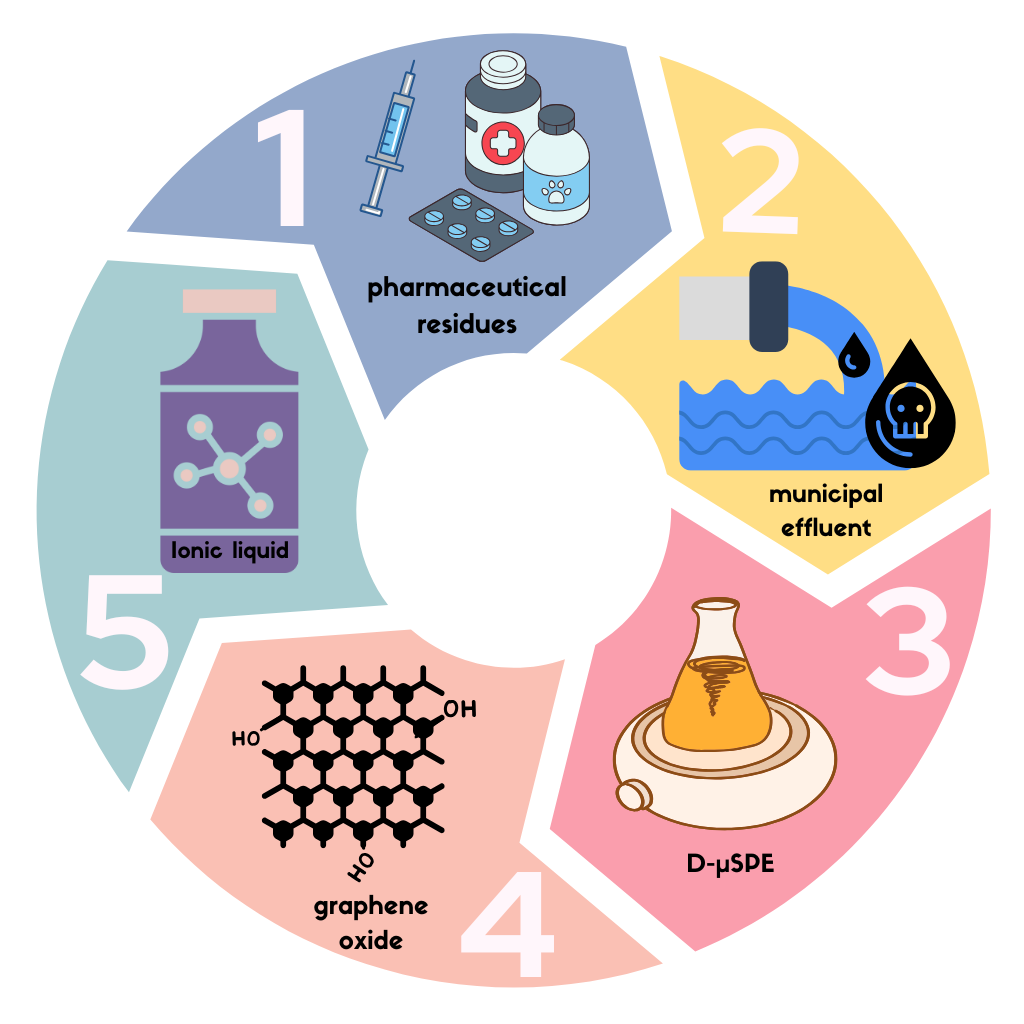
Dispersive micro-solid phase extraction (D-µ-SPE), particularly in the form of QuEChERS (quick, easy, cheap, effective, rugged, and safe), has emerged as a leading analytical method due to its minimal solvent use and high extraction efficiency. This review focuses on the application of ionic liquid-modified graphene oxide (IL-GO) as an advanced QuEChERS-compatible sorbent for pharmaceutical analysis in aqueous environments. The incorporation of ionic liquids (ILs) into GO enhances sorbent performance through synergistic interactions such as π-π stacking, hydrogen bonding, and electrostatic attraction have been described. Both covalent and non-covalent functionalization strategies are explored, along with their respective strengths, limitations, and stability. Parameters including pH, temperature, IL loading, and contact time are discussed in relation to extraction efficiency. This review also outlines the relevance of IL-GO to green chemistry and challenges in the application of IL-GO nanosorbents such as IL leaching and toxicity. Future directions include the use of covalently bound and biocompatible ILs to enhance sustainability and analytical reliability. IL-GO sorbents represent a promising highly efficient, green analytical method in environmental monitoring.
HIGHLIGHTS
- The application of dispersive micro solid phase extraction (D-µ-SPE), particularly as a QuEChERS method is described.
- The recent advances in IL/GO in D-µ-SPE for pharmaceutical analysis of water samples are summarized.
- The outstanding performance of ionic liquid modified graphene oxide towards pharmaceuticals elimination is due to its good adsorption efficiency, hydrophilicity, stability and reusability are discussed.
- Factors Affecting Extraction Efficiency by IL-GO is described
- Further improvement of Ionic Liquid-Modified Graphene Oxide nanosorbents are suggested and discussed.
GRAPHICAL ABSTRACT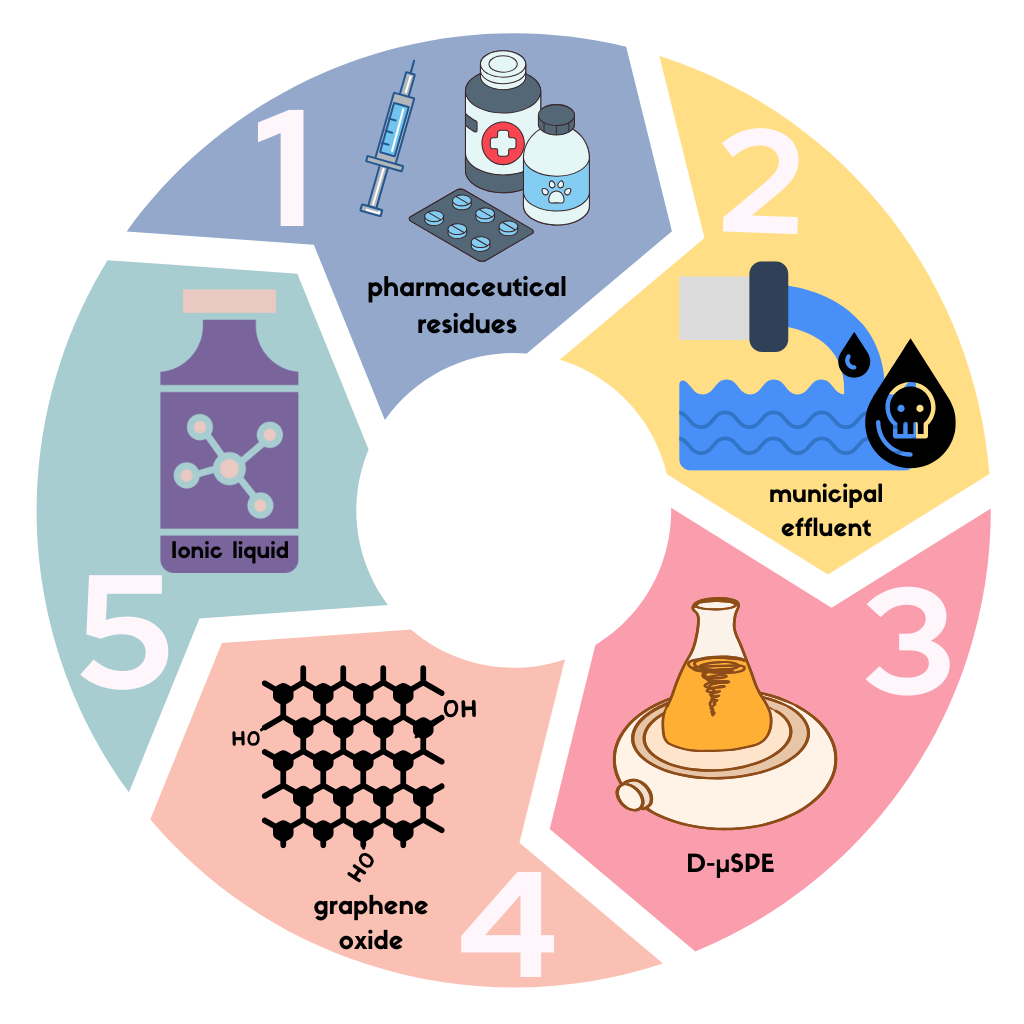
Downloads
References
A Chisvert, S Cardenas and R Lucena. Dispersive micro-solid phase extraction. Trends in Analytical Chemistry 2019; 112, 226-233.
M Anastassiades and SJ Lehotey. Fast and easy multiresidue method employing acetonitrile extraction/partitioning and ‘dispersive solid-phase extraction’ for the determination of pesticide residues in produce. Journal of AOAC International 2003; 86(2), 412-431.
M Gonzalez-Curbelo, B Socas-Rodriguez, AV Herrera-Herrera, J Gonzalez-Salamo, J Hernandez-Borges and M Rodriguez-Delgado. Evolution and applications of the QuEChERS method. TrAC Trends in Analytical Chemistry 2015; 71, 169-185.
M Sajid, MK Nazal and I Ihsanullah. Novel materials for dispersive (micro) solid-phase extraction of polycyclic aromatic hydrocarbons in environmental water samples: A review. Analytica Chimica Acta 2021; 1141, 246-262.
L Shearer, S Pap and SW Gibb. Removal of pharmaceuticals from wastewater: A review of adsorptive approaches, modelling and mechanisms for metformin and macrolides. Journal of Environmental Chemical Engineering 2022; 10(4), 108106.
A Bhuyan and M Ahmaruzzaman. Recent advances in new generation nanocomposite materials for adsorption of pharmaceuticals from aqueous environment. Environmental Science and Pollution Research 2023; 30, 39377-39417.
AJ Ebele, MA Abdallah and S Harrad. Pharmaceuticals and personal care products (PPCPs) in the freshwater aquatic environment. Emerging Contaminants 2017; 3(1), 1-16.
OFS Khasawneh and P Palaniandy. Occurrence and removal of pharmaceuticals in wastewater treatment plants. Institution of Chemical Engineers 2021; 150, 532-556.
M Ghorbani, M Aghamohammadhassan, H Ghorbani and A Zabihi. Trends in sorbent development for dispersive micro-solid phase extraction. Microchemical Journal 2020; 158, 105250.
IA Vacchi, C Menard-Moyon and A Bianco. Chemical functionalization of graphene family members. Physical Sciences Reviews 2012; 2(1), 20160103.
S Hu, W Cao, J Da, H Dai, J Cao, L Ye, X Li and C Chu. Dispersive micro solid-phase extraction with graphene oxide for the determination of phenolic compounds in dietary supplements by ultra high performance liquid chromatography coupled with quadrupole time-of-flight tandem mass spectrometry. Food Analytical Methods 2015; 8, 833-840.
AC Sophia, EC Lima, N Allaudeen and S Rajan. Application of graphene based materials for adsorption of pharmaceutical traces from water and wastewater- a review. Desalination and Water Treatment 2016; 57(57), 27573-27586.
JVB Borsatto and FM Lancas. Recent trends in graphene-based sorbents for LC analysis of food and environmental water samples. Molecules 2023; 28(13), 5134.
C Jon, L Meng and D Li. Recent review on carbon nanomaterials functionalized with ionic liquids in sample pretreatment application. TrAC Trends in Analytical Chemistry 2019; 120, 115641.
B Anegbe, IH Ifijen, M Maliki, IE Uwidia and AI Aigbodion. Graphene oxide synthesis and applications in emerging contaminant removal: A comprehensive review. Environmental Sciences Europe 2024; 36, 15.
B Zhang, W Ning, J Zhang, X Qiao, J Zhang, J He and C Liu. Stable dispersions of reduced graphene oxide in ionic liquids. Journal of Materials Chemistry 2010; 20, 5401-5403.
A Ayati, S Ranjbari, B Tanhaei and M Sillanpaa. Ionic liquid-modified composites for the adsorptive removal of emerging water contaminants: A review. Journal of Molecular Liquids 2019; 275, 71-83.
K Yavir, K Konieczna, L Marcinkowski and A Kloskowski. Ionic liquids in the microextraction techniques: The influence of ILs structure and properties. TrAC Trends in Analytical Chemistry 2020; 130, 115994.
JSDS Burato, DAV Medina, ALD Toffoli, EVS Maciel and FM Lancas. Recent advances and trends in miniaturized sample preparation techniques. Journal of Separation Science 2020; 43(1), 202-225.
S Aldroubi, N Brun, IB Malham and A Mehdi. When graphene meets ionic liquids: A good match for the design of functional materials. Nanoscale 2021; 13(5), 2750-2779.
T Chatzimitakos and C Stalikas. Carbon-based nanomaterials functionalized with ionic liquids for microextraction in sample preparation. Separations 2017; 4(2), 14.
EVS Maciel, ALD Toffoli, ES Neto, CED Nazario and FM Lancas. New materials in sample preparation: Recent advances and future trends. TrAC Trends in Analytical Chemistry 2019; 119, 115633.
TAD Beek, F Weber, A Bergmann, S Hickmann, I Ebert, A Hein and A Kuster. Pharmaceuticals in the environment-Global occurrences and perspectives. Environmental Toxicology and Chemistry 2016; 35(4), 823-835.
CN Chichirez-Mihaela. The aquatic environment and pharmaceutical products - a review. RA Journal of Applied Research 2023; 9(11), 549-562.
KD Daniels, M Park, Z Huang, A Jia, GS Flores, HK Lee and SA Snyder. A review of extraction methods for the analysis of pharmaceuticals in environmental Waters. Critical Reviews in Environmental Science and Technology 2020; 50(21), 2271-2299.
Y Ben, C Fu, M Hu, L Liu, MH Wong and C Zheng. Human health risk assessment of antibiotic resistance associated with antibiotic residues in the environment: A review. Environmental Research 2019; 169, 483-493.
C Hignite and DL Azarnoff. Drugs and drug metabolites as environmental contaminants: Chlorophenoxyisobutyrate and salicylic acid in sewage water effluent. Life Sciences 1977; 20(2), 337-342.
ML Richardson and JM Bowron. The fate of pharmaceutical chemicals in the aquatic environment. Journal of Pharmacy and Pharmacology 1985; 37(1), 1-12.
T Malchi, Y Maor, G Tadmor, M Shenker and B Chefetz. Irrigation of root vegetables with treated wastewater: Evaluating uptake of pharmaceuticals and the associated human health risks. Environmental Science & Technology 2014; 48(16), 9325-9333.
VDJ Gaffney, CMM Almeida, A Rodrigues, E Ferreira, MJ Benoliel and VV Cardoso. Occurrence of pharmaceuticals in a water supply system and related human health risk assessment. Water Research 2015; 72, 199-208.
Y Jari, N Roche, MC Necibi, SE Hajjaji, D Dhiba and A Chehbouni. Emerging pollutants in moroccan wastewater: Occurrence, impact, and removal technologies. Journal of Chemistry 2022; 2022(1), 2727857.
JL Sims, AR Cole, ZS Moran, CM Mansfield, B Possamai, M Rojo, RS King, CW Matson and BW Brooks. The tissue-specific eco-exposome: Differential pharmaceutical bioaccumulation and disposition in fish among trophic positions. Environmental Toxicology and Chemistry 2024; 43(8), 1894-1902.
H Yang, G Lu, Z Yan, J Liu, H Dong, X Bao, X Zhang and Y Sun. Residues, bioaccumulation, and trophic transfer of pharmaceuticals and personal care products in highly urbanized rivers affected by water diversion. Journal of Hazardous Materials 2020; 391, 122245.
MDC Gomez-Regalado, J Martin, JL Santos, I Aparicio, E Alonso and A Zafra-Gomez. Bioaccumulation/bioconcentration of pharmaceutical active compounds in aquatic organisms: Assessment and factors database. Science of The Total Environment 2023; 861, 160638.
M Shen, Y Hu, K Zhao, C Li, B Liu, M Li, C Lyu, L Sun and S Zhong. Occurrence, bioaccumulation, metabolism and ecotoxicity of fluoroquinolones in the aquatic environment: A review. Toxics 2023; 11(12), 966.
KA Kidd, PJ Blanchfield, KH Mills, VP Palace, RE Evans, JM Lazorchak, RW Flick. Collapse of a fish population after exposure to a synthetic estrogen. Proceedings of the National Academy of Sciences of the United States of America 2006; 104(21), 8897-8901.
L Jackson and P Klerks. Effects of the synthetic estrogen 17α-ethinylestradiol on heterandria formosa populations: Does matrotrophy circumvent population collapse? Aquatic Toxicology 2020; 229, 105659.
LM Jackson, BE Felgenhauer and PL Klerks. Feminization, altered gonadal development, and liver damage in least killifish (Heterandria formosa) exposed to sublethal concentrations of 17α-ethinylestradiol. Ecotoxicology and Environmental Safety 2019; 170, 331-337.
X Qin, KP Lai, RSS Wu and RYC Kong. Continuous 17α-ethinylestradiol exposure impairs the sperm quality of marine medaka (Oryzias melastigma). Marine Pollution Bulletin 2022; 183, 114093.
T Porseryd, K Volkova, NR Caspillo, T Kallman, P Dinnetz and IP Hallstrom. Persistent effects of developmental exposure to 17α-ethinylestradiol on the zebrafish (Danio rerio) brain transcriptome and behavior. Frontiers in Behavioral Neuroscience 2017; 11, 69.
J Gong, C Lin, X Xiong, D Chen, Y Chen, Y Zhou, C Wu and Y Du. Occurrence, distribution, and potential risks of environmental corticosteroids in surface waters from the Pearl River Delta, South China. Environmental Pollution 2019; 251, 102-109.
Y Liang, L Zhong, M Jiang, M Lu, C Li, Z Dong and Z Lin. Physiological and transcriptional effects in the male western mosquitofish (gambusia affinis) following exposure to dexamethasone. Ecotoxicology and Environmental Safety 2023; 254, 114722.
AO Hidasi, KJ Groh, MJF Suter and K Schirmer. Clobetasol propionate causes immunosuppression in zebrafish (Danio rerio) at environmentally relevant concentrations. Ecotoxicology and Environmental Safety 2017; 138, 16-24.
RA Willi, N Salgueiro-Gonzalez, G Carcaiso and K Fent. Glucocorticoid mixtures of fluticasone propionate, triamcinolone acetonide and clobetasol propionate induce additive effects in zebrafish embryos. Journal of Hazardous Materials 2019; 374, 101-109.
S Schmid, RA Willi and K Fent. Effects of environmental steroid mixtures are regulated by individual steroid receptor signaling. Aquatic Toxicology 2020; 226, 105562.
N Xin, S Liu, Y Zhou, Y Cheng and Y Jiang. Effects of prednisolone on behavior and hypothalamic–pituitary–interrenal axis activity in zebrafish. Environmental Toxicology and Pharmacology 2020; 75, 103325.
S Faltermann, T Hettich, N Kung and K Fent. Effects of the glucocorticoid clobetasol propionate and its mixture with cortisol and different class steroids in adult female zebrafish. Aquatic Toxicology 2020; 218, 105372.
CD Miranda, C Concha, FA Godoy and MR Lee. Aquatic environments as hotspots of transferable low-level quinolone resistance and their potential contribution to high-level quinolone resistance. Antibiotics 2022; 11(11), 1487.
L Tian, H Fang, Q Mao, Y Bai, Z Ye, D Hu, X Wang, Y Hou, N Ye, S Zhang and Y Ma. Low concentrations of antibiotics alter microbial communities and induce high abundances of antibiotic-resistant genes in ornamental water. Water 2023; 15(17), 3047.
S Li, J Chen, J Zhao, W Qi and H Liu. The response of microbial compositions and functions to chronic single and multiple antibiotic exposure by batch experiment. Environment International 2023; 179, 108181.
Y Tao, C Zhou, Y Xie, A Chen, K Liu, X Wu, H Wei and C Liu. Effects of long-term exposure to sulfamethoxazole on the sediments in sewage pipe: Extracellular polymeric substance, microbial communities, and antibiotic resistance genes. Journal of Environmental Chemical Engineering 2025; 13(1), 115116.
V Rilstone, Y Filion and P Champagne. Study on the persistence of ciprofloxacin and sulfamethoxazole in simulated drinking water systems. Environmental Systems Research 2025; 14, 7.
ZM Elisabeth. Antibiotic residues in food. Elsevier Science, Amsterdam, Netherlands, 2023.
B Bojarski, B Kot and M Witeska. Antibacterials in aquatic environment and their toxicity to fish. Pharmaceuticals 2020; 13(8), 189.
Z Li, T Lu, M Li, M Mortimer and L Guo. Direct and gut microbiota-mediated toxicities of environmental antibiotics to fish and aquatic invertebrates. Chemosphere 2023; 329, 138692.
AH Shang, J Ye, DH Chen, XX Lu, HD Lu, CN Liu and LM Wang. Physiological effects of tetracycline antibiotic pollutants on non-target aquatic Microcystis aeruginosa. Journal of Environmental Science and Health, Part B 2015; 50(11), 809-819.
TAD Beek, F Weber, A Bergmann, S Hickmann, I Ebert, A Hein and A Kuster. Pharmaceuticals in the environment-Global occurrences and perspectives. Environmental Toxicology and Chemistry 2016; 35(4), 823-835.
J Hu, X Tang, M Qi and J Cheng. New models for estimating the sorption of sulfonamide and tetracycline antibiotics in soils. International Journal of Environmental Research and Public Health 2022; 19(24), 16771.
S Thiele-Bruhn, T Seibicke, HR Schulten and P Leinweber. Sorption of sulfonamide pharmaceutical antibiotics on whole soils and particle-size fractions. Journal of Environmental Quality 2004; 33(4), 1331-1342.
J Schwaiger, H Ferling, U Mallow, H Wintermayr and RD Negele. Toxic effects of the non-steroidal anti-inflammatory drug diclofenac. Part I: Histopathological alterations and bioaccumulation in rainbow trout. Aquatic Toxicology 2004; 68(2), 141-150.
N Hodkovicova, A Hollerova, J Blahova, P Mikula, M Crhanova, D Karasova, A Franc, S Pavlokova, J Mares, E Postulkova, F Tichy, P Marsalek, J Lanikova, M Faldyna and Z Svobodova. Non-steroidal anti-inflammatory drugs caused an outbreak of inflammation and oxidative stress with changes in the gut microbiota in rainbow trout (Oncorhynchus mykiss). Science of The Total Environment 2022; 849, 157921.
E Mennillo, C Pretti, F Cappelli, G Luci, L Intorre, V Meucci and A Arukwe. Novel organ-specific effects of Ketoprofen and its enantiomer, dexketoprofen on toxicological response transcripts and their functional products in salmon. Aquatic Toxicology 2020; 229, 105677.
GE Swan, R Cuthbert, M Quevedo, RE Green, DJ Pain, P Bartels, AA Cunningham, N Duncan, AA Meharg, JL Oaks, J Parry-Jones, S Shultz, MA Taggart, G Verdoorn and K Wolter. Toxicity of diclofenac to Gyps vultures. Biology Letters 2006; 2(2), 279-282.
SE Cook, RE Green, E Lieberherr, CGR Bowden, MJI Chaudhry, ABMS Alam, S Bharathidasan, V Prakash, A Ghoshal, A Margalida, M Shobrak and I Thapa. Current policies in Europe and South Asia do not prevent veterinary use of drugs toxic to vultures. Ecological Solutions and Evidence 2024; 5(2), e12357.
B Nethathe, J Chipangura, IZ Hassan, N Duncan, EO Adawaren, L Havenga and V Naidoo. Diclofenac toxicity in susceptible bird species results from a combination of reduced glomerular filtration and plasma flow with subsequent renal tubular necrosis. PeerJ 2021; 9, e12002.
J Weinberger and R Klaper. Environmental concentrations of the selective serotonin reuptake inhibitor fluoxetine impact specific behaviors involved in reproduction, feeding and predator avoidance in the fish Pimephales promelas (fathead minnow). Aquatic Toxicology 2014; 151, 77-83.
M Saaristo, A McLennan, CP Johnstone, BO Clarke and BBM Wong. Impacts of the antidepressant fluoxetine on the anti-predator behaviours of wild guppies (Poecilia reticulata). Aquatic Toxicology 2017; 183, 38-45.
M Pelli and VP Connaughton. Chronic exposure to environmentally-relevant concentrations of fluoxetine (Prozac) decreases survival, increases abnormal behaviors, and delays predator escape responses in guppies. Chemosphere 2015; 139, 2020-209.
PP Fong and AT Ford. The biological effects of antidepressants on the molluscs and crustaceans: A review. Aquatic Toxicology 2014; 151, 4-13.
P Sehonova, Z Svobodova, P Dolezelova, P Vosmerova and C Faggio. Effects of waterborne antidepressants on non-target animals living in the aquatic environment: A review. Science of The Total Environment 2018; 631-632, 789-794.
WA Thompson and MM Vijayan. Antidepressants as endocrine disrupting compounds in fish. Frontiers in Endocrinology 2022; 13, 895064.
JS Camara, R Perestrelo, CV Berenguer, CFP Andrade, TM Gomes, B Olayanju, A Kabir, CMR Rocha, JA Teixeira and JAM Pereira. Green extraction techniques as advanced sample preparation approaches in biological, food, and environmental matrices: A review. Molecules 2022; 27(9), 2953.
M Perrucci, EM Ricci, M Locatelli, I Ali, FR Mansour, A Kabir and HI Ulusoy. Recent trends in microsampling and reduced-volume sample preparation procedures. Advances in Sample Preparation 2025; 14, 100182.
JM Kokosa and A Przyjazny. Green microextraction methodologies for sample preparations. Green Analytical Chemistry 2022; 3, 100023.
A Salemi, A Luta and TC Schmidt. Greenness assessment of exemplary US EPA and DIN standard analytical methods using the AGREEprep model. Green Analytical Chemistry 2024; 11, 100180.
E Yilmaz and M Soylak. Latest trends, green aspects, and innovations in liquid-phase-based microextraction techniques: A review. Turkish Journal of Chemistry 2016; 40(6), 868-893.
RB Hoff and TM Pizzolato. Combining extraction and purification steps in sample preparation for environmental matrices: A review of matrix solid phase dispersion (MSPD) and pressurized liquid extraction (PLE) applications. TrAC Trends in Analytical Chemistry 2018; 109, 83-96.
MDF Alpendurada. Solid-phase microextraction: A promising technique for sample preparation in environmental analysis. Journal of Chromatography A 2000; 889(1-2), 3-14.
MEI Badawy, MAM El-Nouby, PK Kimani, LW Lim and EI Rabea. A review of the modern principles and applications of solid-phase extraction techniques in chromatographic analysis. Analytical Sciences 2022; 38, 1457-1487.
M Anastassiades and SJ Lehotay. Fast and easy multiresidue method employing acetonitrile extraction/partitioning and ‘dispersive solid-phase extraction’ for the determination of pesticide residues in produce. Journal of AOAC International 2003; 86(2), 412-431.
B Buszewski and M Szultka. Past, present, and future of solid phase extraction: A review. Critical Reviews in Analytical Chemistry 2012; 42(3), 198-213.
NSM Hanapi, SA Amraa, AL Anis, N Zaini, WNW Ibrahim and NN Bonnia. Rapid and sensitive determination of polycyclic aromatic hydrocarbons in green tea samples by dispersive liquid-liquid microextraction coupled to high-performance liquid chromatography-diode array detection. Trends in Sciences 2022; 19(20), 6232.
S Armenta, S Garrigues, FA Esteve-Turrillas and MDL Guardia. Green extraction techniques in green analytical chemistry. TrAC Trends in Analytical Chemistry 2019; 116, 248-253.
NSM Hanapi, MM Sanagi, AK Ismail, N Saim, WNW Ibrahim, WAW Ibrahim and FM Marsin. Rapid determination of non-steroidal anti-inflammatory drugs in aquatic matrices by two-phase micro-electrodriven membrane extraction combined with liquid chromatography. Journal of Chromatographic Science 2018; 56(2), 166-176.
W Yan, Y Huang, Y Xu, L Huang and Y Chen. Rapid and effective functionalization of graphene oxide by ionic liquid. Journal of Nanoscience and Nanotechnology 2012; 12(3), 2270-2277.
A Gutierrez-Serpa, PI Napolitano-Tabares, SI Pacheco-Fernandez and V Pino. Role of ionic liquids in composites in analytical sample preparation. Separations 2020; 7(3), 37.
MJS Trevino, S Zarazua and J Plotka-Wasylka. Nanosorbents as materials for extraction processes of environmental contaminants and others. Molecules 2022; 27(3), 1067.
V Georgakilas, M Otyepka, AB Bourlinos, V Chandra, N Kim, KC Kemp, P Hobza, R Zboril and KS Kim. Functionalization of graphene: Covalent and non-covalent approaches, derivatives and applications. Chemical Reviews 2012; 112(11), 6156-6214.
AK Dizaji, HR Mortaheb and B Mokhtarani. Noncovalently functionalized graphene oxide/graphene with imidazolium-based ionic liquids for adsorptive removal of dibenzothiophene from model fuel. Journal of Materials Science 2016; 51, 10092-10103.
M Serrano, T Chatzimitakos, M Gallego and CD Stalikas. 1-Butyl-3-aminopropyl imidazolium-functionalized graphene oxide as a nanoadsorbent for the simultaneous extraction of steroids and β-blockers via dispersive solid-phase microextraction. Journal of Chromatography A 2016; 1436, 9-18.
N. Zaini, NSM Hanapil, WNW Ibrahim, R Osman, S Kamaruzaman, N Yahaya and AL Anis. Dispersive micro-solid-phase extraction (D-µ-SPE) with polypyrrole-graphene oxide (PPy-GO) nanocomposite sorbent for the determination of tetracycline antibiotics in water samples. Malaysian Journal of Analytical Sciences 2022; 26(5), 953-964.
S. Tan, D Zhang, M Nguyen, V Shutthanandan, T Varga, R Rousseau, GE Johnson, V Glezakou and V Prabhakaran. Tuning the charge and hydrophobicity of graphene oxide membranes by functionalization with ionic liquids at epoxide sites. ACS Applied Materials & Interfaces 2022; 14(16), 19031-19042.
IA Lawal, MM Lawal, SO Akpotu, HK Okoro, M Klink and P Ndungu. Noncovalent graphene oxide functionalized with ionic liquid: Theoretical, isotherm, kinetics, and regeneration studies on the adsorption of pharmaceuticals. Industrial & Engineering Chemistry 2020; 59(11), 4945-4957.
RM Yusof, WNAMW Kamalludin, N Zaini, NSM Hanapi, AL Anis and NN Bonnia. Dispersive micro solid phase extraction using graphene oxide for the pre-concentration of hydrocortisone in water samples by liquid chromatography analysis. Malaysian Journal of Chemistry 2024; 26(5), 614-621.
X Hou, X Lu, S Tang, L Wang and Y Guo. Graphene oxide reinforced ionic liquid-functionalized adsorbent for solid-phase extraction of phenolic acids. Journal of Chromatography B 2018; 1072, 123-129.
SNZM Zain and NSM Hanapi. A dispersive micro-solid phase extraction using ionic liquid-modified graphene oxide sorbent for pre-concentration and extraction of acid drug from water sample using liquid chromatography. Junior Science Communications 2024; 39, 1.
AT Cardoso and FM Lancas. Graphene oxide functionalized with hydrophilic ionic liquid as stir bar coating: Sorptive extraction of selected triazines in grape juice samples. Analytica Chimica Acta 2025; 1343, 343691.
Q Kong, S Preis, L Li, P Luo, C Wei, Z Li, Y Hu and C Wei. Relations between metal ion characteristics and adsorption performance of graphene oxide: A comprehensive experimental and theoretical study. Separation and Purification Technology 2020; 232, 115956.
WAW Ibrahim, HR Nodeh and MM Sanagi. Graphene-based materials as solid phase extraction sorbent for trace metal ions, organic compounds, and biological sample preparation. Critical Reviews in Analytical Chemistry 2016; 46(4), 267-283.
X Hou, S Liu, P Zhou, J Li, X Liu, L Wang and Y Guo. Polymeric ionic liquid modified graphene oxide-grafted silica for solid-phase extraction to analyze the excretion-dynamics of flavonoids in urine by box-behnken statistical design. Journal of Chromatography A 2016; 1456, 10-18.
S Seidi, H Abolhasani, Y Razeghi, M Shanehsaz and M Manouchehri. Electrochemically deposition of ionic liquid modified graphene oxide for circulated headspace in-tube solid phase microextraction of naphthalene from honey samples followed by on-line liquid chromatography analysis. Journal of Chromatography A 2020; 1628; 461486.
Y Zhang, H Zhou, Z Zhang, X Wu, W Chen, Y Zhu, C Fang and Y Zhao, Three-dimensional ionic liquid functionalized magnetic graphene oxide nanocomposite for the magnetic dispersive solid phase extraction of 16 polycyclic aromatic hydrocarbons in vegetable oils. Journal of Chromatography A 2017; 1489, 29-38.
X Xu, M Zhang, L Wang, S Zhang, M Liu, N Long, X Qi, Z Cui and L Zhang. Determination of rhodamine B in food using ionic liquid–coated multiwalled carbon nanotube–based ultrasound-assisted dispersive solid-phase microextraction followed by high-performance liquid chromatography. Food Analytical Methods 2016; 9, 1696-1705.
N Manousi, E Rosenberg, E Deliyanni, GA Zachariadis and V Samanidou. Magnetic solid-phase extraction of organic compounds based on graphene oxide nanocomposites. Molecules 2020; 25(5), 1148.
N Manousi, I Sarakatsianos and V Samanidou. Extraction techniques of phenolic compounds and other bioactive compounds from medicinal and aromatic plants. Elsevier Science, Amsterdam, Netherlands, 2019.
BT Zhang, X Zheng, HF Li and JM Lin. Application of carbon-based nanomaterials in sample preparation: A review. Analytica Chimica Acta 2013; 784, 1-17.
H Zhou, S Bai, Y Zhang, D Xu and M Wang. Recent advances in ionic liquids and ionic liquid-functionalized graphene: Catalytic application and environmental remediation. International Journal of Environmental Research 2022; 19(13), 7584.
Q Jiang, S Zhang and M Sun. Recent advances on graphene and graphene oxide as extraction materials in solid-phase (micro)extraction. TrAC Trends in Analytical Chemistry 2023; 168, 117283.
BY Zhao, P Xu, FX Yang, H Wu, MH Zong and WY Lou. Biocompatible deep eutectic solvents based on choline chloride: Characterization and application to the extraction of rutin from sophora japonica. ACS Sustainable Chemistry & Engineering 2015; 3(11), 2746-2755.
S Miao, R Atkin and G Warr. Design and applications of biocompatible choline amino acid ionic liquids. Green Chemistry 2022; 24(19), 7281-7304.
A Tzani, MA Karadendrou, S Kalafateli, V Kakokefalou and A Detsi. Current trends in green solvents: Biocompatible ionic liquids. Crystals 2022; 12(12), 1776.
IO Saheed, SO Azeez and FBM Suah. Imidazolium based ionic liquids modified polysaccharides for adsorption and solid-phase extraction applications: A review. Carbohydrate Polymers 2022; 298, 120138.
S Abbasi and S Ammar Haeri. Biodegradable materials and their applications in sample preparation techniques–A review. Microchemical Journal 2021; 171, 106831.
Published
How to Cite
Issue
Section
License
Copyright (c) 2025 Walailak University

This work is licensed under a Creative Commons Attribution-NonCommercial-NoDerivatives 4.0 International License.





